
UPPER LIP MOVEMENT CONSULTATION · OAKLEIGH, MELBOURNE
Upper lip movement when you smile.
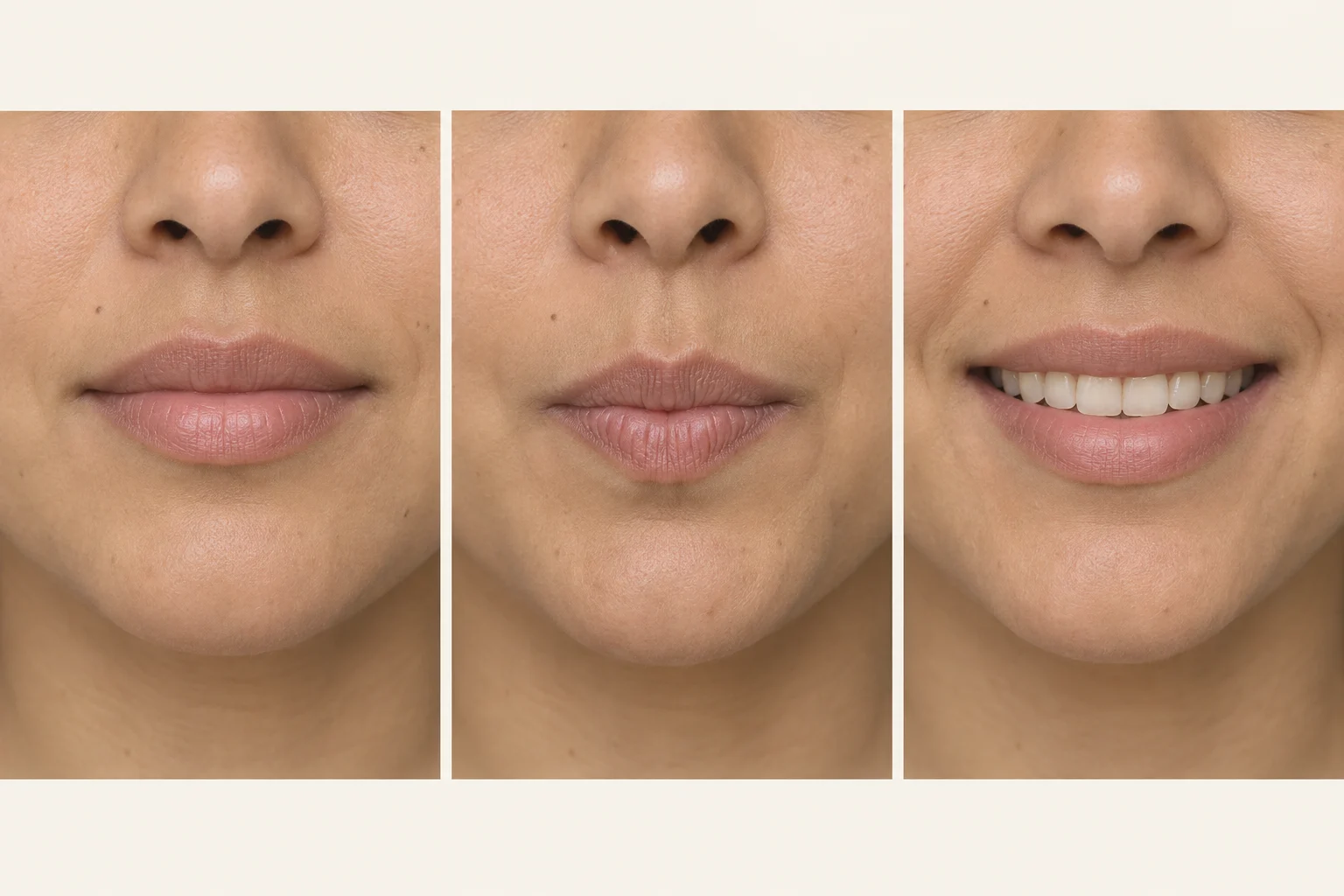
Your upper lip can look thinner when you smile because it lifts and stretches as your mouth widens. That is different from having a thin lip at rest. Corey compares both, along with speech, tooth and gum show, to explain what may help and what should stay unchanged.
Initial consultation at no charge. Generally 30 minutes. No pressure to proceed.
AT REST · LIPS PURSED · SMILING
UPPER LIP MOVEMENT QUESTIONS
What counts as an upper lip movement concern?
It is a change you notice as the upper lip moves, rather than a feature seen only in a relaxed face. The lip may lift higher, pull more to one side, cover less of the teeth, or feel different during speech, smiling, drinking or lip closure. Some variation is normal, and noticing it does not mean treatment is needed.
Why does my upper lip look thinner or seem to disappear when I smile?
As you smile, the mouth widens and the upper lip lifts. Dynamic lip and smile assessment. The visible pink height of the upper lip can become smaller, so a lip that looks full at rest may look narrower or less visible in a smile. How much this happens varies, and tooth and gum display can change the overall impression. Speech and a natural smile are useful to compare with the relaxed lip.
Is upper lip movement the same as lip shape or fullness?
No. For example, someone can have a full-looking upper lip in a relaxed photograph but see much less pink lip when smiling because the mouth widens and the lip lifts. Another person may see a thin upper lip both at rest and in a smile. Those are different patterns, so changing resting fullness cannot be assumed to change smile movement, or the other way around.
Is showing more gum when I smile only an upper lip movement issue?
No. Upper lip movement can contribute, but tooth position or eruption, gum level or health, lip length, jaw proportions and more than one factor may affect gum display. Corey can observe the movement pattern, but a dentist or another appropriate practitioner may be needed when the main factor appears dental, gum related or structural.
Are lines above my upper lip the same concern?
No. Lines above the lip are creases in the skin; a movement concern is about how the lip lifts, spreads or closes. Pursing or speaking can make lines clearer, while ageing and sun exposure can contribute to creases that remain at rest. You can have both, but changing how the lip moves cannot be assumed to remove a line already present in the skin.
Can my upper lip stay more visible when I smile?
Sometimes, but the reason it becomes less visible needs to be clear first. A lip that lifts or spreads strongly is different from a lip that is thin at rest, and teeth, gums or jaw proportions may also shape the smile. Corey can explain whether any cosmetic option is suitable for the movement itself; a dentist or another practitioner may be needed when the main factor is dental, gum related or structural. Any change may be modest, and an exact amount of visible lip cannot be promised.
Is a slightly uneven upper lip when I smile always a problem?
No. Mild side-to-side differences can become clearer during a smile even when the relaxed face looks even. If the pattern is long-standing, comfortable and does not bother you, no treatment is needed. An ordinary unfiltered video can help show a repeatable movement that is hard to see in a still photograph.
What if the movement changed after previous cosmetic or dental care?
Mention what changed, when you noticed it and the dates and areas of previous care. Records and ordinary unfiltered photographs or videos can help if available. Timing alone does not prove the cause. Advice may include waiting, obtaining records, or seeking dental or medical assessment before making a cosmetic decision.
YOUR APPOINTMENT
What happens at an upper lip movement consultation?
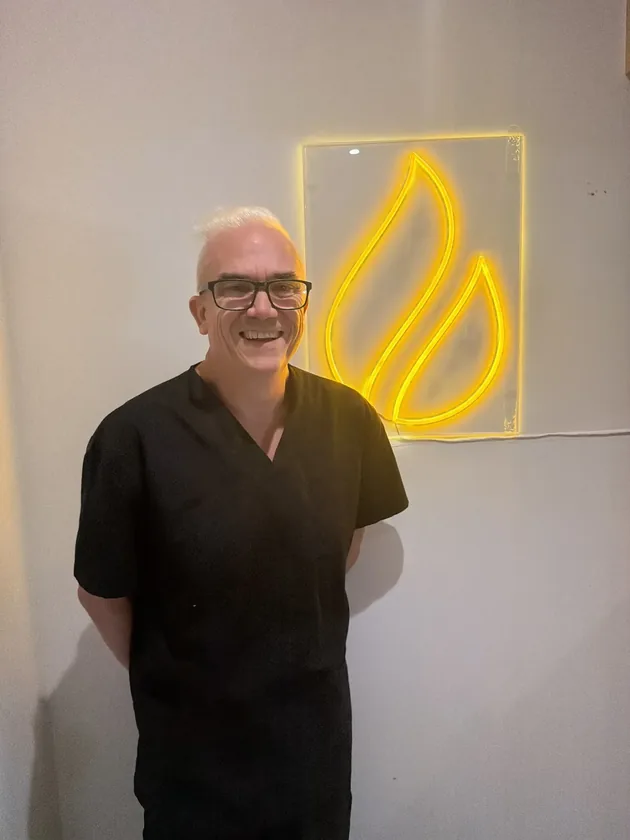
Your initial consultation with Corey Anderson RN is at no charge and generally takes 30 minutes at 12A Atherton Road, Oakleigh. He observes your lip at rest, during ordinary speech and in a natural smile, comparing movement, lip shape and tooth and gum show. He reviews your health, dental history and previous care. You discuss suitable options, realistic limits, risks, recovery and review. Itemised costs are explained and agreed before any treatment.
What happens if I want treatment that day?
Treatment can usually be arranged at the end of your consultation. It can proceed once Corey confirms it is suitable for you, the required clinical arrangements are complete, you have given informed consent and costs are agreed. Previous care, mouth symptoms or a need for dental or medical assessment may mean another day is more appropriate. Corey explains why and what happens next. You can leave with information only, without pressure or obligation.
What should I bring or mention?
Bring your medicine and supplement list, relevant health history and details of previous cosmetic or dental care. Mention allergies, pregnancy or breastfeeding where relevant, cold sores, mouth or skin problems, and changes in speech, drinking or lip closure. Tell Corey if you sing, play a wind instrument or depend on precise lip movement for work. Ordinary unfiltered photos or videos are useful but optional. Do not stop prescribed medicines unless your treating clinician advises it.
When should I book around dental work or an event?
For an event, book the consultation around 2 to 3 weeks beforehand as a starting point. Mention recent or planned dental work, travel and the event date. Any treatment, recovery or review may need longer, and dental or medical assessment may need to come first. Call or message the clinic if you cannot find a suitable appointment. You can attend for information only; an event deadline does not make treatment suitable or promise that you will be ready.
Is this appointment suitable for you?
An upper lip movement difference does not mean you need treatment. Advice may include observation, more time, obtaining previous records, dental or medical assessment, or leaving normal variation as it is.
Risks depend on any care being considered and your health history. Before deciding, ask about possible unwanted changes to your smile, speech, lip closure, symmetry or tooth and gum display, as well as aftercare, warning symptoms and review arrangements.
CORE AESTHETICS · OAKLEIGH
Book an upper lip movement consultation
Book an upper lip consultationHave a booking question? Message us on WhatsAppFind us in Oakleigh.
Core Aesthetics12A Atherton Road
Oakleigh VIC 3166Get directions
No pressure. No obligation.
You can use the whole appointment for information and leave without treatment.