A previous treatment review should begin with a care record, not a request for a particular corrective procedure. Sort the concern into one of three lanes: urgent medical assessment now, prompt contact with the original treating team or prescriber, or a stable scheduled review. Then bring the dates, provider contacts, written aftercare, photographs and a plain description of what changed. The review may lead to monitoring, referral, return to the original team, a later consultation or no further cosmetic care.
What Is The Useful First Move?
A previous treatment review should begin with a care record, not a request for a particular corrective procedure. Sort the concern into one of three lanes: urgent medical assessment now, prompt contact with the original treating team or prescriber, or a stable scheduled review. Then bring the dates, provider contacts, written aftercare, photographs and a plain description of what changed. The review may lead to monitoring, referral, return to the original team, a later consultation or no further cosmetic care.
Choose The Right Lane Before You Collect Details
| Lane | What places the concern here | Next contact |
|---|---|---|
| Urgent medical assessment | Sudden vision change, breathing difficulty, collapse, severe pain, marked colour change, rapidly increasing swelling, spreading redness, fever, new weakness or fast deterioration. | Emergency services or an appropriate urgent medical service. Do not wait for a website reply or routine booking. |
| Prompt continuity contact | The concern is not an emergency, but it is recent, changing, symptomatic or already being managed. | The original treating team or prescriber, using the aftercare contact supplied. Follow their escalation instructions. |
| Stable scheduled review | The concern is stable, there are no urgent symptoms and the reader wants the history, appearance or next decision assessed. | A planned review with the records packet below. Another clinician may still recommend referral or return to the original team. |
This table is a routing aid, not an online diagnosis. When symptoms feel medically unsafe, choose the more urgent lane.
Build A Three Envelope Record
You can use three folders, three notes on your phone or three headings on one page.
- What happened: date, area, clinic, treating practitioner, prescriber contact and the written treatment or aftercare record supplied to you.
- What changed: first reliable time, exact location, rest or movement, stable or worsening pattern, symptoms and a few unedited dated photographs.
- What happened next: every call, message, review, instruction, medicine, dental or medical event and the response over time.
Leave blanks where facts are unknown. A clearly labelled gap is safer than a confident guess.
Use A Sixty Second Handover
I had previous care on [date] involving [area]. I first noticed [one observable change] at [time]. It is [stable, intermittent or worsening] and appears [at rest, in movement or both]. My current symptoms are [plain list]. I contacted [person or service] on [date] and was advised [summary]. My records are [available, partial or unavailable]. I need help deciding the correct care pathway.
This handover gives the next clinician chronology without telling them what diagnosis or procedure to choose.
What Counts As A Useful Photograph?
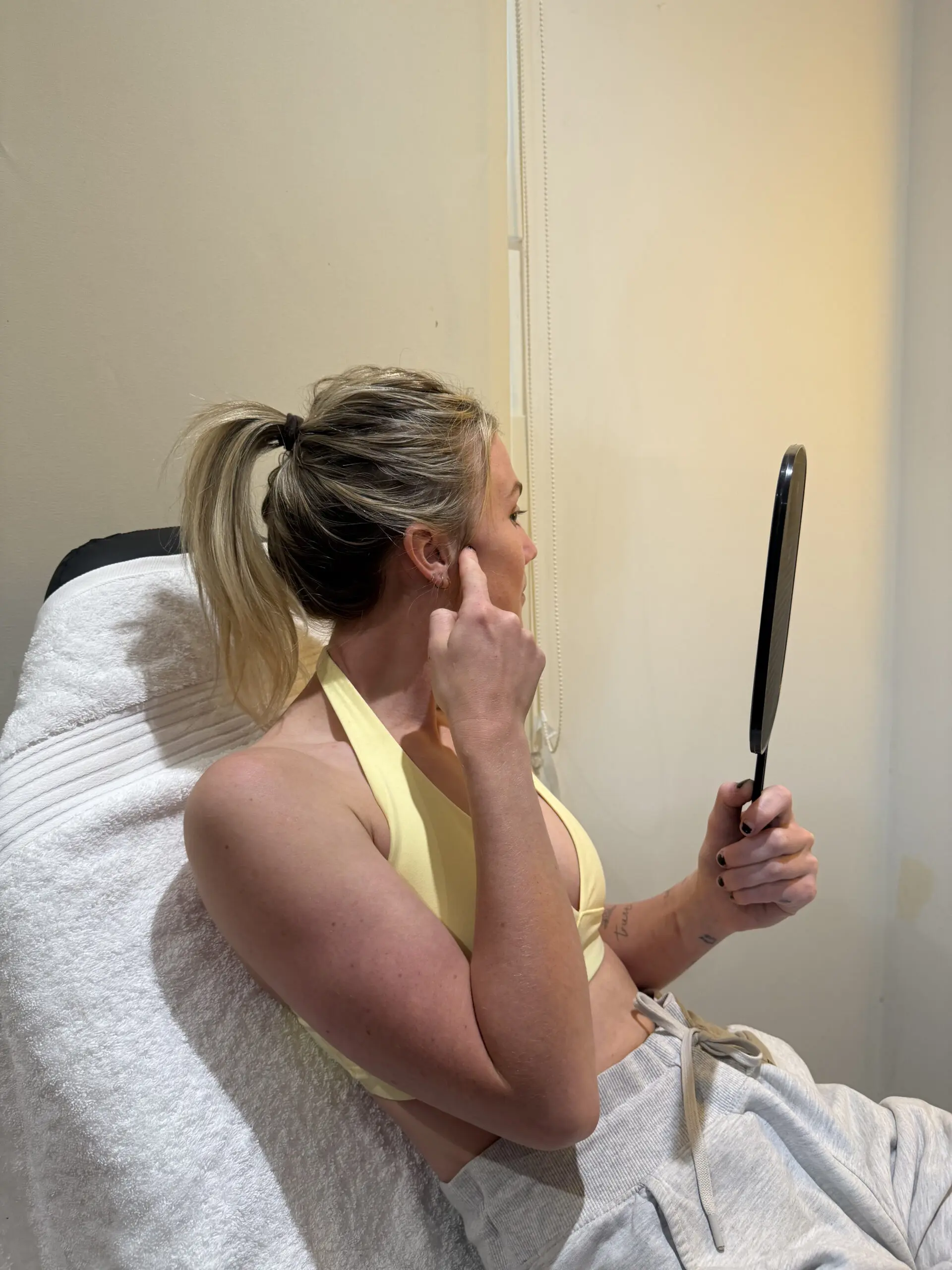
Use a few unedited images with dates. If possible, compare similar camera distance, head position, expression and light. Write whether the feature appears in the mirror, only in photographs, at rest or during movement.
Do not measure a shadow as proof of lost or added volume. A photograph can document change and help choose questions, but it cannot establish the material, tissue layer or cause.
What Can Corey Assess At A Stable Review?
Corey Anderson RN can listen to the chronology, review available documents, observe the area at rest and in movement, record current symptoms and decide whether the concern fits clinic scope. He can explain uncertainty, identify missing information and discuss whether continuity with the original team, referral, observation or a later cosmetic consultation is the responsible lane.
The appointment cannot recreate missing records, establish every medical cause or confirm that active cosmetic care is appropriate.
How I Review Previous Cosmetic Care Without Guessing The Fix
My First Decision Is The Care Pathway
Corey Anderson RN: When someone comes to me worried after cosmetic care they had elsewhere, the first thing I establish isn’t the fix. It’s whether this needs emergency help, prompt medical review, contact with the original treating team, or a scheduled consultation. Sudden visual change or rapid deterioration require immediate emergency assessment. Loss of consciousness, sudden weakness, collapse or serious breathing difficulty should prompt a call to 000. A changing concern may be best directed back to the original team where that is safe and practical. A routine consultation is not a substitute for urgent assessment, and a request for correction doesn’t replace that decision.
I Build The Record Before Making A Recommendation
Corey Anderson RN: I ask for the date, the area, the clinic, the treating practitioner, any prescriber details you have, the written aftercare, unedited dated photographs, and a plain description of what changed. I also want the reviews, medicines, dental events and instructions since. Where a fact is missing, I label it unknown rather than filling the gap with an assumption. A photograph can establish chronology. It can’t identify a material, a tissue layer or a cause. Records mostly make the limits of my assessment clearer, which is the point of collecting them.
I Keep Correction Separate From A New Goal
Corey Anderson RN: I separate resolving the previous concern from choosing any new cosmetic goal. First: is the area stable, who is responsible for follow up, which facts are reliable, and what remains uncertain. A review may lead to monitoring, a referral, contact with the original team, a later consultation, or no further cosmetic care. It isn’t a promise that correction will be offered. If the record is incomplete, or the concern is still changing, I may recommend waiting before any new appearance decision.
Why The Original Team And Prescriber Still Matter
Current Ahpra guidance expects post procedure information to include who prescribed and performed the care, who is responsible when they are unavailable, what was done and the product details. Those records can materially change later assessment.
A new reviewer should not casually replace an active care pathway. If the original team is responding and the concern is being managed, ask who currently owns follow up and when responsibility transfers.
Do Not Combine Two Decisions
Resolving a previous care concern and choosing a new cosmetic goal are separate decisions. First establish the care lane, the missing facts and whether the area is stable. Only then should a future appearance question be considered, if it remains relevant.
A birthday, event, holiday or prepaid appointment should not compress that sequence. You should leave understanding the concern, suitable options, practical timing and the next step.
Leave With A Five Line Review Receipt
- Current lane: urgent care, continuity contact, stable review or another named pathway.
- Known facts: the dates, records and observations accepted as reliable.
- Open gaps: what still needs confirmation and who may hold it.
- Next owner and date: who you contact next and when.
- Escalation rule: which changes mean seeking help sooner.
If those five lines are unclear, ask for them before adding another cosmetic decision.
How This Page Differs From Nearby Guides
| Guide | Reader job |
|---|---|
| This previous treatment review | Build the three envelope record, choose the care lane and leave with a five line receipt. |
| Complication management consultation | Understand clinic escalation, responsibility and urgent care systems. |
| Second opinion guide | Compare advice without turning another opinion into an automatic procedure request. |
| Correction or a separate new concern | Keep an unresolved previous issue separate from a fresh cosmetic goal. |
| Aftercare guide | Prepare routine follow up questions and understand when symptoms need escalation. |
Why The Public Language Is Consultation Only
The TGA states that public advertising for health services involving prescription only cosmetic goods should refer to the type of consultation offered, not directly or indirectly advertise a product or product class. This page is limited to a previous treatment review and its decision process. It does not name, recommend or promote a therapeutic good.
Ahpra guidance also requires factual advertising, risk information, realistic expectations and clear registration details. Those rules shape the neutral wording and genuine consultation imagery used here.
Verify The Practitioner And Clinic
Core Aesthetics is at 12A Atherton Road, Oakleigh VIC 3166. Corey Anderson is listed as a Registered Nurse with Ahpra registration NMW0001047575. Check the Core Aesthetics verification page and the public Ahpra register before booking.
This guide was reviewed on 5 September 2026 against current TGA and Ahpra guidance. It is intended for adults and does not replace emergency, medical, dental or prescribing care.
Explore The Question In More Detail
Questions About A Previous Treatment Review
What is the first thing to do when previous cosmetic care worries me?
First decide whether there are urgent symptoms. Sudden vision change, breathing difficulty, collapse, severe or rapidly worsening symptoms need urgent medical help rather than a routine cosmetic booking. If the concern is stable, write down the date, area, change, symptoms and advice already received.
Do I need the exact product record before booking a review?
Bring any written treatment and aftercare record you have, but do not guess if information is missing. The absence of records is itself relevant and may make waiting, contact with the original team or referral more appropriate than an active cosmetic decision.
What photographs are useful for a previous treatment review?
Choose a small number of dated, unedited photographs that show the area before the concern and as it changed. Note differences in light, angle, expression and camera distance. Photographs can clarify chronology but cannot diagnose the cause.
Should I contact the original clinic before seeking another review?
Often yes, especially when the original team or prescriber holds the treatment record and remains responsible for follow up. A separate review can still be useful, but it should not break an urgent or active care pathway already in place.
Does a review mean corrective care will be offered?
No. A review is an assessment and information appointment. The responsible outcome may be urgent care, referral, monitoring, a return to the original team, more time, a later discussion or no further cosmetic care.
What if the concern looks different only in photographs?
Compare rest and movement in-person and check whether lens, angle, light, expression or image processing changed. A one image difference should be recorded as uncertain rather than treated as proof of a structural change.
Can a new cosmetic goal be discussed at the same appointment?
It may be recorded, but it should remain separate from the unresolved previous care concern. Combining correction pressure with a new appearance decision can make consent and risk discussion less clear.
What should I leave the review with?
Ask for a written summary naming the current lane, missing information, who is responsible for the next contact, when review is due and which symptoms should trigger earlier medical help.
Is this for you?
Consider booking a consultation if
- You are an adult concerned about a previous aesthetic treatment
- You want assessment before deciding whether correction, waiting or referral is appropriate
- You can provide previous treatment details or are willing to discuss uncertainty around them
- You value a conservative opinion that may include no treatment
This may not be for you if
- You have urgent symptoms that need emergency or medical review before an aesthetic consultation
- You want a promised reversal or promised appearance change
- You want treatment without assessment, consent and risk discussion
- You are seeking elective cosmetic care for someone who is not an adult
Suitability is confirmed at consultation. This list is general guidance, not a substitute for clinical assessment.