
JAWLINE CONSULTATION · OAKLEIGH VIC
Jawline consultation in Oakleigh: what happens?
Book a jawline consultation in Oakleigh to discuss the jaw border, fullness below it or width near the jaw angle. You do not need to choose a treatment first. You can attend for information only; booking does not guarantee treatment.
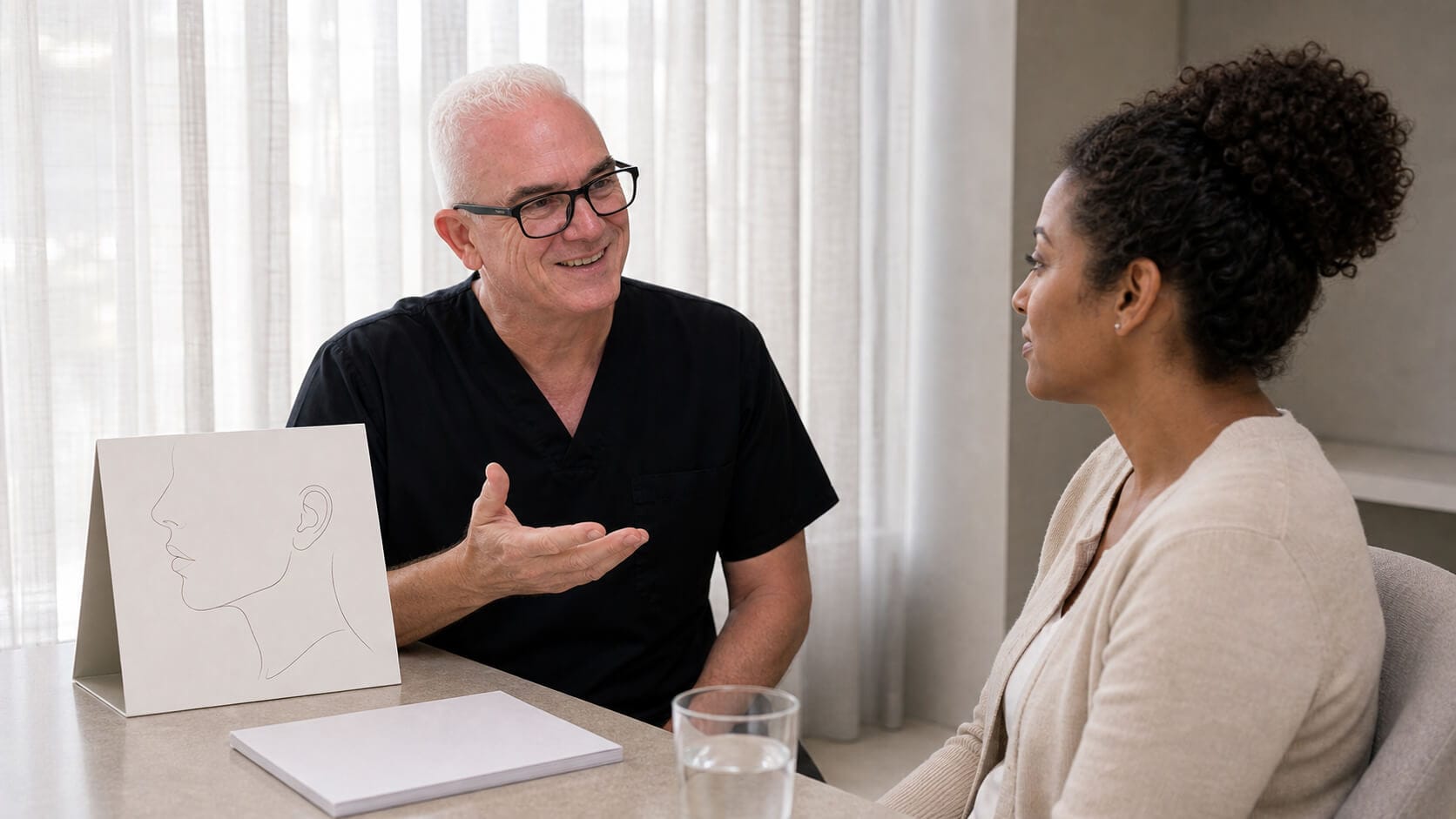
Start with the part you have noticed
Point to the location and explain when you noticed the change. A softer border, fullness underneath, width at the back angle and a central chin concern can raise different questions. You do not need to identify the cause before attending.
| What you notice | Question to bring | Related reading |
|---|---|---|
| An interruption beside the chin | Is the question about the jaw border, skin or nearby fullness? | Jawline definition |
| Fullness below the jaw | Is the area beneath the chin the main concern, rather than the jaw edge? | Chin and jawline guide |
| Width near the back angle | Has the shape always been this way, or has it recently changed? | Jaw muscle consultation |
| A central chin or profile difference | Would a focused chin discussion help explain what I notice? | Chin consultation |
Outside edge or internal shadow?
The outer silhouette is the edge of your face against the background, often easiest to describe from the side. The internal jaw border is a line or shadow within the lower face, often noticed from the front or an angle. You might describe a changed edge from the jaw angle towards the chin, or a less continuous shadow beneath the cheek. One can look familiar while the other changes with lighting or posture. Neither view proves that volume is missing or identifies a suitable procedure.
Say whether you mean the outside edge of your face against the background or a line or shadow within the lower face. These descriptions help explain the concern; neither is a diagnostic test or proof that volume is missing.
What happens during the appointment?
Mention whether the difference appears at rest, in ordinary speech or smiling, or only in a posed photograph. Chin lift, chin tuck and head turn can change the apparent edge and internal shadow. Comfortable ordinary posture helps explain the concern; a deliberately posed angle is not a treatment target. Optional older photographs may help describe when a change appeared, without setting a promised result.
Corey asks about your concern, when it appeared, relevant health and dental history, medicines, weight change and previous cosmetic care. Assessment considers front, angled and profile views, at rest and during comfortable ordinary movement. Tell him what you like about your face and want to leave unchanged.
The explanation should connect the observations with your question, acknowledge uncertainty and distinguish what an option might address from what it would leave unchanged. A focused discussion, records review, another health professional, waiting or no cosmetic care may be appropriate. Broader anatomy is explained in the chin and jawline guide.
What should be clear before you decide?
Ask what was found, why an option is being discussed, what it could and could not change, its material risks, alternatives, full costs and review arrangements. You can decline, wait or seek another opinion. The decision questions can help you prepare.
Risks depend on the procedure and your health. They can include bruising, swelling, infection, altered sensation and unwanted changes in appearance or movement. Certain procedures also carry serious risks, including interrupted blood supply causing tissue damage or visual injury. Not every risk applies to every option. Ask which risks apply to you, which could be permanent and what warning symptoms need urgent help. Ahpra explains procedure-dependent risks.
Suitable options can be discussed after assessment. Proceeding that day is a separate decision, after explanation of risks, alternatives and full costs, informed consent and any required clinical arrangements. Booking does not guarantee treatment. Informed choice includes the right to decline.
Ask for written recovery and aftercare information, review arrangements and instructions for concerns, including whom to contact if your usual practitioner is unavailable. A review two weeks after treatment is free to attend; additional treatment has a separate fee if needed and agreed. Do not wait for a scheduled review or clinic reply if symptoms need prompt or urgent medical care.
When should dental or medical care come first?
New pain, swelling, redness, trouble chewing, jaw locking, tooth wear or a changed bite need appropriate dental or medical assessment before cosmetic planning. A change after dental care also needs advice. Healthdirect describes jaw-joint problems; seeing muscle movement cannot diagnose one.
For toothache or gum swelling with breathing or speaking difficulty, or swelling around the eye or neck, seek emergency medical care. Healthdirect explains toothache and facial swelling.
Sudden facial droop, arm weakness or speech difficulty can be a stroke sign: call triple zero (000) immediately, even if symptoms improve. Healthdirect describes the warning signs. Do not wait for a routine cosmetic appointment or clinic reply.
Prepare your history and questions
Bring medicines and supplements, relevant health and dental history, previous-care dates or records and any earlier reactions. Mention allergies, pregnancy or breastfeeding when relevant, recent illness, skin irritation, dental plans, jaw pain, swelling, numbness or bite changes. Unknown details should stay unknown rather than guessed.
Ordinary unfiltered photographs are optional. Bring your own words about what changed and what you hope to preserve. Do not stop prescribed medicines unless your treating clinician advises it; see safe medication use. New or worsening symptoms should be assessed promptly rather than waiting to gather records.
Mention travel, an event or difficulty returning for review before agreeing to care. Recovery varies and a date does not make treatment suitable. There is no universal waiting period that guarantees a particular appearance by an event.
Arrange a jawline consultation in Oakleigh
Travelling from Moorabbin? Consultations are at the Oakleigh address below; Core Aesthetics has no Moorabbin branch. Use your actual starting point and the full clinic address in the planner linked from our journey-planning guidance. Check connections, disruptions and the final walk for your appointment date, and consider whether returning for review is practical. Call 0491 706 705 if the entrance step may affect access.
Meet Corey Anderson RN at Core Aesthetics, inside BeautyTHEQUE, 12A Atherton Road, Oakleigh VIC 3166. You can attend for information only. Appointments are preferred; walk-ins may ask questions or have a consultation when Corey is available.
One initial general consultation is complimentary per person. Other appointment types may have a fee. Ask the clinic about the appropriate appointment, its duration and cost; you do not need to choose a treatment first. See current fees and review arrangements.
The arrival guide explains the Atherton Road entrance, single step and parking. Ask about access needs before visiting. You can verify Corey’s registration and contact the clinic, or call 0491 706 705 for practical help.
Common questions about the visit
Find your jawline question
If you are comparing views, read about head position and ordinary movement or the outside edge and internal shadow. For appointment questions, read about same-day decisions, risks and consent or the Oakleigh clinic location. The questions below cover the wider consultation.
Why does my jawline look less defined?
The appearance of the jaw border can reflect underlying bone, skin and soft tissue, a jowl beside the chin or fullness beneath the jaw. More than one factor may contribute. Describe where the border first looks different and when you noticed it. That is more useful at the appointment than assuming the whole lower face has one cause.
Are jowls just fat along the jaw?
No. A jowl is a soft-tissue prominence beside the chin, involving relationships between skin and the tissue beneath it rather than fat alone. Fullness underneath the chin is a different location. Point out which area you mean because a discussion about one may leave the other unchanged. Appearance alone cannot determine the cause or the appropriate care.
Minelli and colleagues’ anatomical study examined 49 cadaver heads, mostly older adults. It explains tissue relationships, not your diagnosis, treatment suitability or expected result.
For the wider explanation, see jowl and jawline changes.
Is fullness under my jaw part of the same concern?
Not always. Fullness beneath the chin or jaw is different from a jowl at the side of the face. Skin, fat and the shape of the chin, jaw and neck can affect its appearance. A consultation can explore what appears relevant, but a discussion focused on the jaw border should not assume it will address fullness underneath.
Can bone shape affect how clear the jaw border looks?
Yes. The mandible is the lower jawbone and forms part of the framework beneath the visible border. Its shape and relationship to the chin matter alongside the overlying tissue. Appearance alone cannot diagnose a skeletal or bite problem. If jaw position, bite or function is a concern, dental, orthodontic or medical assessment may be the better first step.
The mandible anatomy reference explains the underlying bone.
Could jaw muscle contribute to a wider lower face?
The masseter is a chewing muscle near the back of the jaw. Its prominence and contraction can contribute to width there, which is separate from jowls or fullness underneath. Corey may observe rest and comfortable movement. This does not diagnose grinding or a jaw-joint condition; pain, tooth wear, locking or bite changes need dental or medical assessment.
The masseter anatomy reference describes this chewing muscle. See jaw-muscle consultation for the distinct appointment.
Why can my jawline look different in photographs?
Camera position, head position and expression can change the apparent outline. One close selfie cannot establish what causes a concern or whether treatment is suitable. Bring ordinary, unfiltered photographs only if they help explain what changed or when. Corey can compare your description with several views at the appointment rather than treat one photograph as a diagnosis.
What if one side looks different from the other?
A difference may relate to natural shape, soft tissue, muscle, dental history, head position or previous care. Explain whether it is longstanding, newly noticed or changing. New pain, swelling, numbness or bite change needs health assessment. For sudden facial droop, arm weakness or speech difficulty, call triple zero (000), even if symptoms improve; do not wait for cosmetic review.
Do I need to know whether the concern is my chin or jawline?
No. Point to the part that concerns you. The jawline runs from the back angle towards the chin; a central chin question may concern profile, shape or movement. Corey can consider them together and explain which question should lead. You can ask for a focused chin discussion without assuming that other areas also need treatment.
Compare jawline and chin questions or read the chin appointment guide.
Can a jawline consultation lead to no treatment?
Yes. You may attend for information only. A concern can involve several structures, and an option may address one part while leaving others unchanged. The discussion should explain realistic limits and alternatives, including a dental, medical or surgical opinion where appropriate. Waiting, seeking another opinion or having no cosmetic care remain valid choices.
What should I expect from the appointment?
Expect a discussion of your concern, relevant health and dental history, medicines, previous care and what you wish to preserve. Corey assesses several views and comfortable movement, then explains observations, uncertainties and suitable next steps. Ask about the selected appointment’s duration and fee beforehand. One initial general consultation is complimentary per person; other appointment types may have a fee.
Can treatment happen on the consultation day?
Suitable options can be discussed after assessment. Proceeding that day is a separate decision and depends on suitability, informed consent after risks, alternatives and costs are explained, and any required clinical arrangements. More information, another opinion or a later appointment may be appropriate. Booking does not guarantee treatment, and you can use the visit for information only.
What should I bring or mention?
Bring medicines and supplements, relevant health and dental history, previous-care details and reactions, plus questions in your own words. Mention pregnancy or breastfeeding when relevant, illness, skin changes and jaw symptoms. Optional unfiltered photographs may help describe timing. Do not stop prescribed medicines unless your treating clinician advises it, or delay medical care while collecting records.
How should I plan around an event, travel or dental care?
Tell Corey about planned dental work, travel, events and whether you can return for review. Assessment, recovery or follow-up may need longer than the time available. There is no universal two- or three-week interval that guarantees readiness for an event. Waiting can be appropriate, and a date should not pressure you to proceed before you are ready.
Your next step
Which related question matters most?
For clenching, grinding or width near the back of the jaw, read the Moorabbin jaw-muscle guide; pain or jaw-function symptoms still need appropriate health assessment. For the front endpoint, compare jawline and chin. If the border change is mainly beside the chin, read the jowl consultation guide.
If your question is about understanding the jaw border and the visit itself, you can book a consultation or ask a practical question. You do not need to request a procedure, and can take time after the assessment to decide.
For a broader comparison of concerns and options, read the jawline assessment overview. Practitioner details and current pricing are available before your visit.
Sources and limits
Updated 28 October 2026. Editorial content: Core Aesthetics.
Anatomy references explain structures; they do not diagnose your face, establish treatment suitability or validate a clinic’s results. Minelli’s study examined 49 cadaver heads, with an average age of 75. It supports a skin and soft-tissue description of the jowl, not a treatment outcome. Healthdirect supports dental and medical boundaries. Ahpra and the Australian Commission support informed choice and risk discussion. Clinic fees and access arrangements are Core Aesthetics policies.
- Minelli et al. (2023): an anatomical study of the jowl
- StatPearls: anatomy of the mandible
- StatPearls: anatomy of the masseter muscle
- Healthdirect: temporomandibular joint dysfunction
- Healthdirect: toothache and gum swelling
- Healthdirect: stroke warning signs
- Australian Commission: making informed choices
- Ahpra: cosmetic procedure risks and informed choice
- Ahpra: cosmetic procedure guidelines
- Better Health Channel: safe medication use