
MARIONETTE LINE CONSULTATION · OAKLEIGH, MELBOURNE
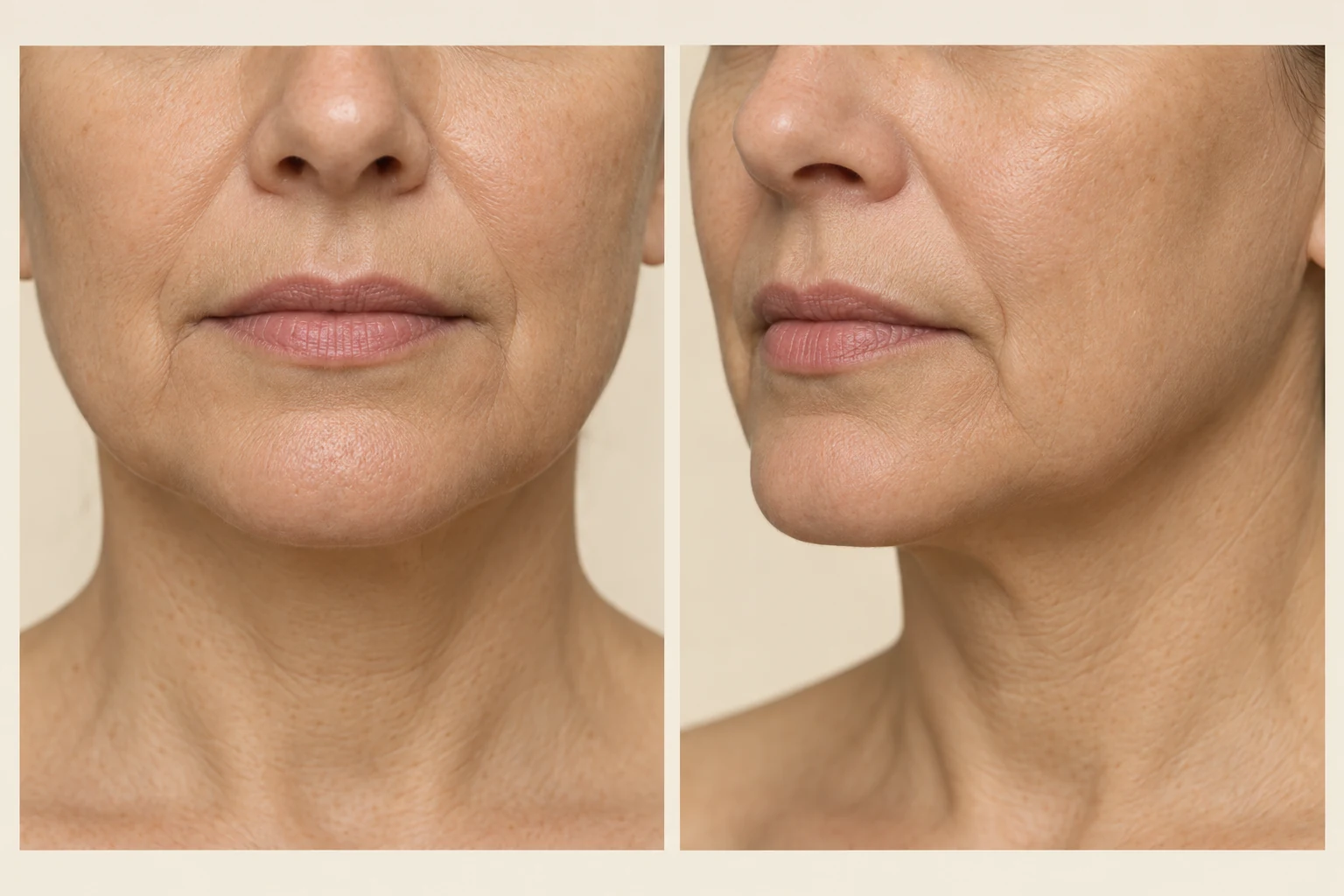
Lines from the mouth corners towards the chin.
Marionette lines are the folds or shadows running down from the mouth corners towards the chin. Skin, underlying tissue and facial movement all affect their appearance. A line below the mouth, a downturned mouth corner and a nearby jowl can look connected, but they are different features and may need different approaches.
Generally 30 minutes. No pressure to proceed.
LOWER-FACE ORIENTATION
MARIONETTE LINE QUESTIONS
What are marionette lines, and why do they form?
They are folds or depressions that begin near the mouth corners and extend towards the chin or lower jaw. DermNet describes marionette lines as a lower-face concern. Their shape reflects the skin, the tissue beneath it and the points where those tissues are attached. Ageing and facial movement can make this boundary more visible. The reason one person has a deeper fold may differ from another person with a similar-looking line.
Are marionette lines the same as downturned mouth corners?
No. A marionette line is a fold or shadow below the mouth corner, while a downturned mouth corner describes the position or movement of the point where the lips meet. They can occur together or separately. Softening a fold cannot be assumed to turn the mouth corner upwards, and changing how a corner moves may leave a resting fold visible.
Are marionette lines the same as nasolabial folds?
No. Nasolabial folds run from beside the nose towards the mouth corners. Marionette lines start near the mouth corners and run down towards the chin or jaw. Pointing to where your line starts is a simple way to distinguish them. You can have both, and improving one area does not necessarily change the other.
Are marionette lines the same as jowls?
No. A jowl is a change in the soft-tissue outline near the lower cheek and jaw border, while a marionette line is a fold or depression closer to the mouth corner. A nearby jowl can deepen the shadow beside a marionette line, so both may contribute to what you see. Addressing the line cannot be assumed to sharpen the jawline or remove a jowl.
Why does the line look different when I speak or smile?
The line can look different because lower-face movement can deepen, shorten or change its angle, while a feature that remains visible when the face is relaxed also has a resting component. Corey compares the area at rest, during ordinary speech and smiling, and with a brief comfortable movement. You do not need to force a pout or exaggerated expression, because that may not represent the concern you notice in daily life.
What if the line is new or much deeper on one side?
If the line is genuinely new, rapidly changing or much deeper on one side, seek medical or dental advice before treating it as a cosmetic concern. If it is longstanding, bring older photos if helpful; a new line with pain, swelling, numbness, weakness or a changed bite needs prompt assessment. See the medical-help guidance at the bottom of this page.
Can marionette lines be made less noticeable?
Some marionette lines can be made less noticeable, but softening a fold is a more realistic aim than making the whole area completely smooth. The appropriate approach depends on the depth of the fold, the skin and nearby tissues. A separate downturned mouth corner or jowl may remain even if the line improves, so those features need to be considered before choosing care.
How do options differ for a moving line, a resting fold or a jowl?
Skin care may help dryness and some fine surface lines, but a cream cannot lift a jowl. A deeper fold, a hollow or a change in mouth-corner movement needs a different assessment. Where loose tissue is the main concern, a surgical opinion may be more useful. Corey explains which feature an option could address and which parts are likely to remain unchanged.
What if previous care made the area look heavy or uneven?
Have the change assessed before agreeing to further treatment. Bring the dates, areas treated and any records, and explain when the heaviness or unevenness appeared. If you do not know what was used, tell Corey. He may recommend waiting, obtaining records, returning to the original clinician or seeking another opinion. New pain, swelling, colour change or problems with movement need prompt advice rather than a routine cosmetic review.
YOUR APPOINTMENT
What happens at a marionette line consultation?
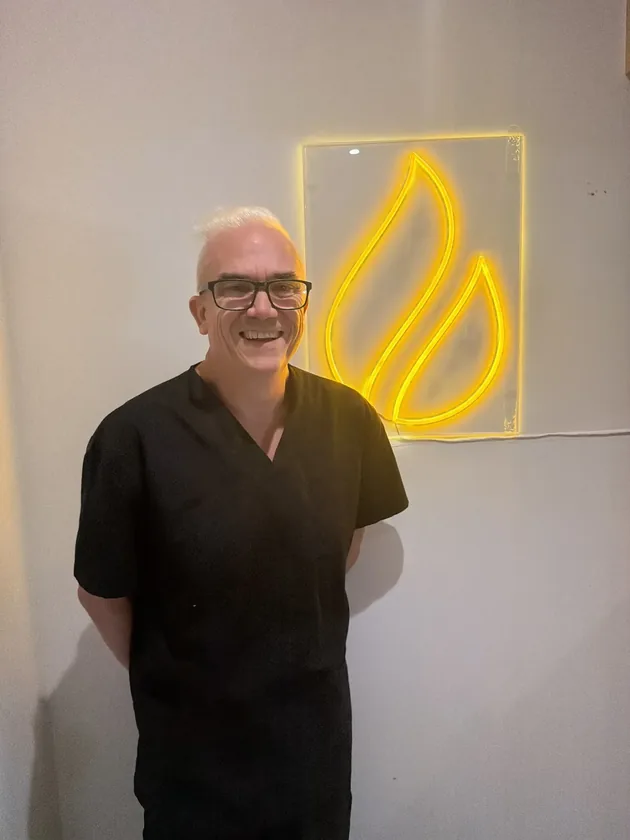
Allow around 30 minutes with Corey Anderson RN at 12A Atherton Road, Oakleigh. He reviews what you have noticed, relevant health, dental and previous-care history, then compares the mouth corners, folds, chin and jawline at rest and during ordinary expression. Suitable options, practical limits and risks are discussed, and costs are explained and agreed before you decide. You can attend for information only, with no pressure or obligation. Same-day care is considered only if assessment, consent and the clinical arrangements make it appropriate; booking does not guarantee treatment.
Check Corey's registrationWhat should I bring or mention?
Bring your medicine and supplement list, relevant health history and details of previous facial, dental, medical or cosmetic care. Mention allergies, pregnancy or breastfeeding where relevant, recent weight or bite change, pain, swelling, numbness, weakness and any change in speaking, eating or mouth movement. Older ordinary photographs may help establish timing, but they are optional. Do not stop prescribed medicines unless your treating clinician advises it.
How much recovery time should I allow before travel or an event?
An information-only consultation has no procedure recovery period. If you decide to consider treatment, the time needed depends on the actual procedure, your health and how you recover. Ask about likely swelling or bruising, activity restrictions and when a review would occur before choosing a date. Mention travel, dental care and events when booking the assessment; leave room to postpone if proceeding is unsuitable.
Is this appointment suitable for you?
A visible marionette line does not mean treatment is needed. Advice may include observation, allowing more time after previous care or weight change, obtaining records, dental or medical assessment, a surgical opinion where the concern is outside conservative scope, another clinical opinion, or leaving normal facial variation alone.
Before agreeing to a procedure, ask about its short-term effects, possible unwanted contour changes or asymmetry, effects on mouth movement, serious complications, warning symptoms, aftercare and how to obtain review. The relevant risks depend on the procedure and your health history.
CORE AESTHETICS · OAKLEIGH
Book a marionette line
consultation.
Book a marionette line consultationHave a booking question? Message us on WhatsApp Find us in Oakleigh.
Core Aesthetics12A Atherton Road
Oakleigh VIC 3166Get directions
No pressure. No obligation.
You can use the whole appointment for information and leave without treatment.