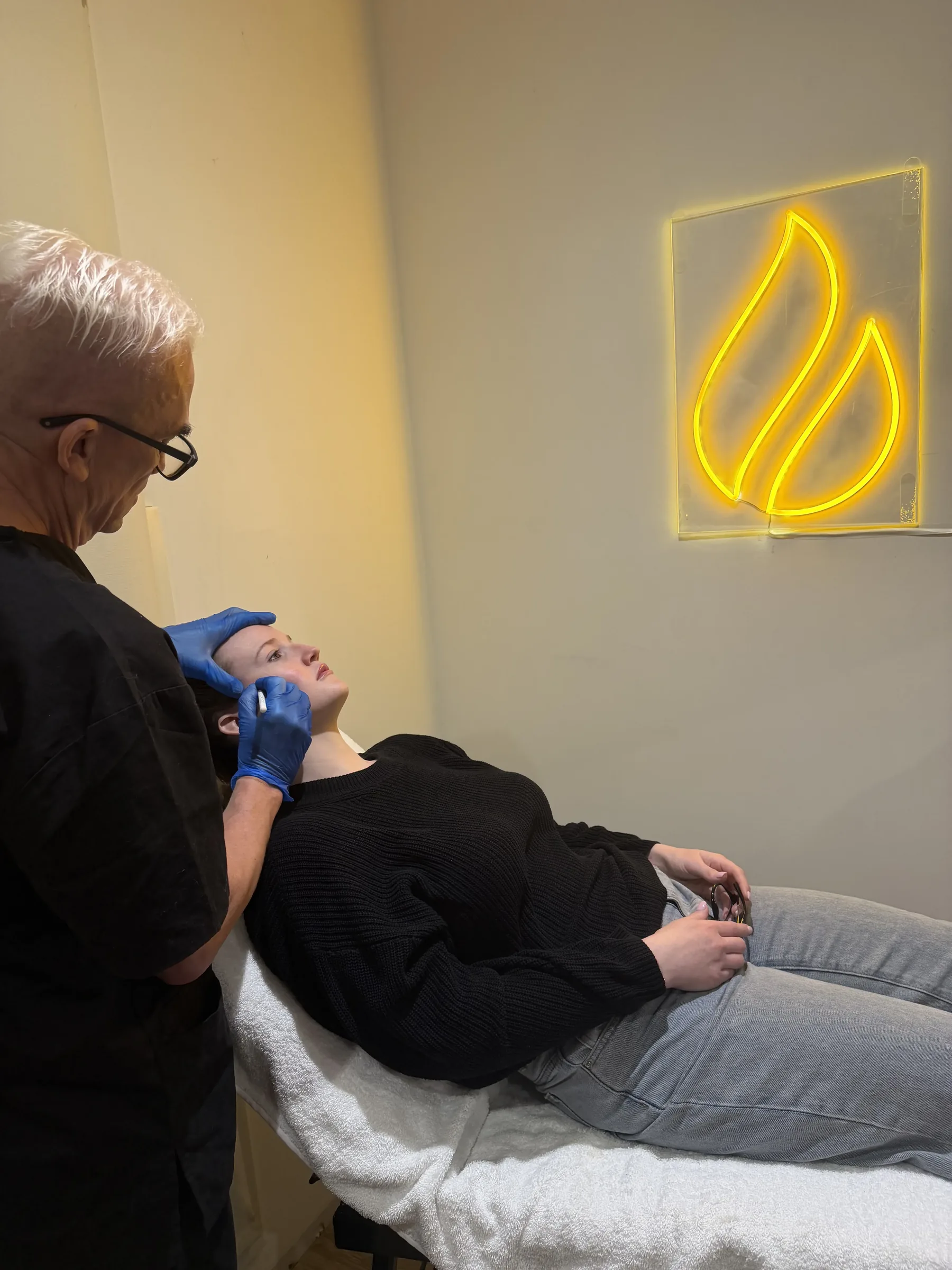
A facial ageing assessment is an in person, whole face consultation for adults who want a visible change considered in context. Corey Anderson RN listens to what has changed, observes the face at rest and in everyday expression, and considers skin, facial balance, relevant history, expectations, risks and timing. It is not a diagnosis or a promise of treatment. The next step may be information, monitoring, skin focused care, medical review, referral, a staged discussion or a staged assessment plan.
A Visible Change Is A Clue, Not A Conclusion
Most people arrive with one detail in mind: a shadow beneath the eyes, a line that catches the light, a lower face that feels heavier, or a photograph that no longer feels familiar. That observation is worth taking seriously. It is not, on its own, an explanation.
A change can look different with lighting, expression, skin condition, facial shape or the way nearby features sit together. A facial ageing assessment begins with what you have noticed, then places it beside the rest of the face and the rest of your story. A mirror or a photograph can start a useful question, but neither can settle the cause.
The Conversation Comes Before The Mirror
Corey begins by asking what you have noticed, when it became more apparent and what you would like to understand. Relevant health history, current medicines, skin concerns and previous cosmetic treatment belong in that conversation too. You do not need to arrive with the name of a treatment. Being curious, cautious or undecided is useful information in its own right.
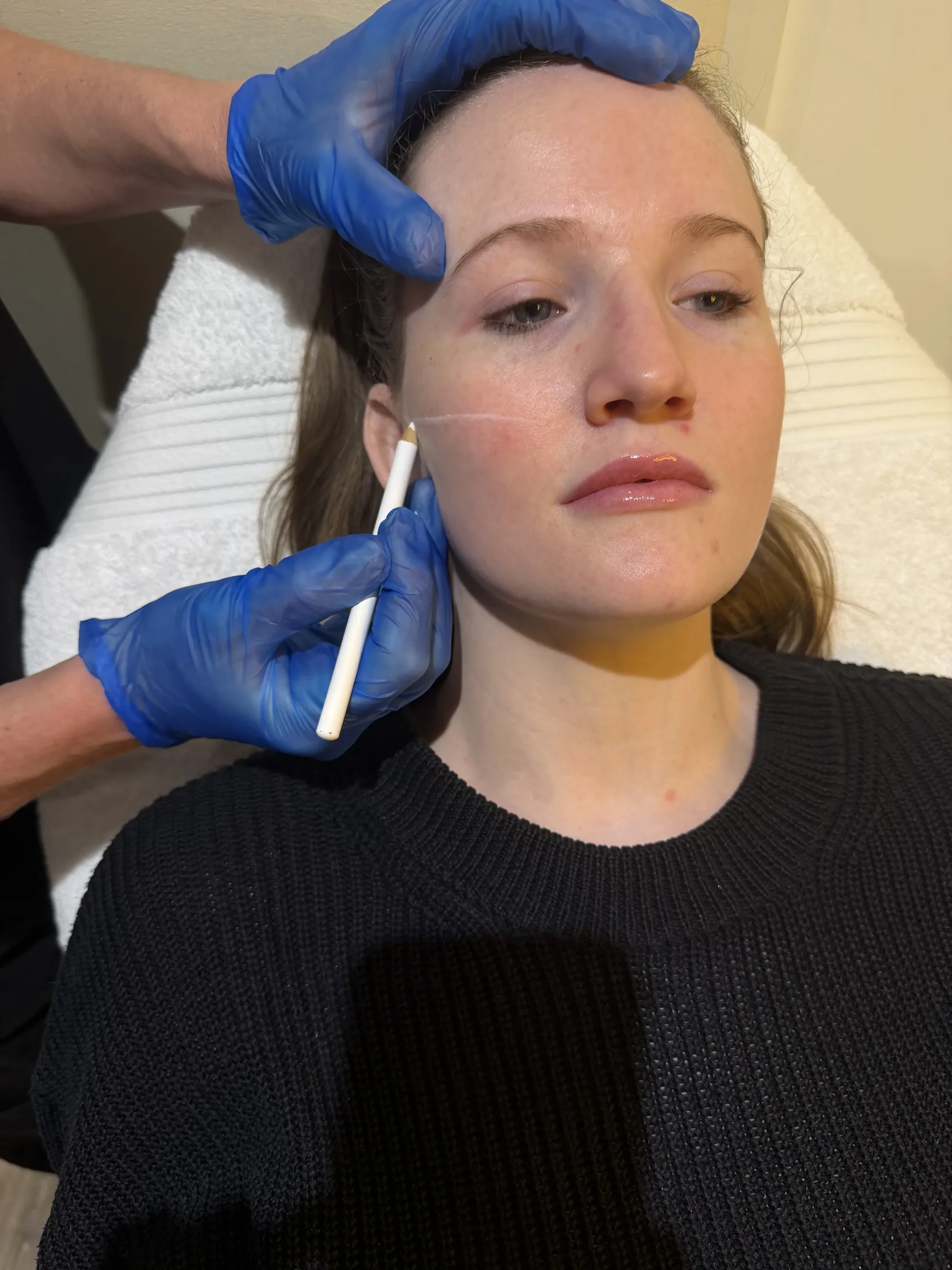
Then the visual assessment has context. Corey considers the face in a relaxed position and while you speak or make everyday expressions. A feature that appears pronounced in one photograph, angle or expression can look quite different when the whole face is considered.
Five Things A Whole Face Assessment Tries To Clarify
A whole face assessment is not a scorecard. It is a way to ask better questions about a visible concern.
- Where and when is it noticeable? Corey considers whether the change is present at rest, appears with expression, changes in photographs, or is more apparent at certain times.
- Does movement matter? A feature may look different when you speak, smile or make another ordinary expression.
- What sits around it? Skin quality, light, facial balance, facial shape and nearby features can influence how one area is seen.
- What personal or health context matters? Current medicines, relevant history, skin condition, previous cosmetic care and timing can change what is sensible to discuss.
- What is the responsible next step? The answer may be information, monitoring, skin focused care, medical review, referral, a staged conversation or no elective treatment.
These questions overlap. A line may relate to both expression and skin quality, while a shadow may have more than one possible contributor. A careful assessment does not force every concern into a single explanation.
What Might Change The Next Step?
What is visible is only part of the picture. Corey also asks about medical history, current medicines, relevant skin conditions, healing history, previous cosmetic treatment and anything that has changed recently. A current illness, active skin concern, pregnancy or breastfeeding, an upcoming event, or a history that needs clarification can affect whether it is sensible to discuss elective treatment now, later or not at all.
Your preference matters too. It is reasonable to say that you are curious, cautious or unsure whether you want anything done. A careful assessment makes room for uncertainty rather than treating it as an obstacle to overcome.
Which Changes Need A Medical Starting Point?
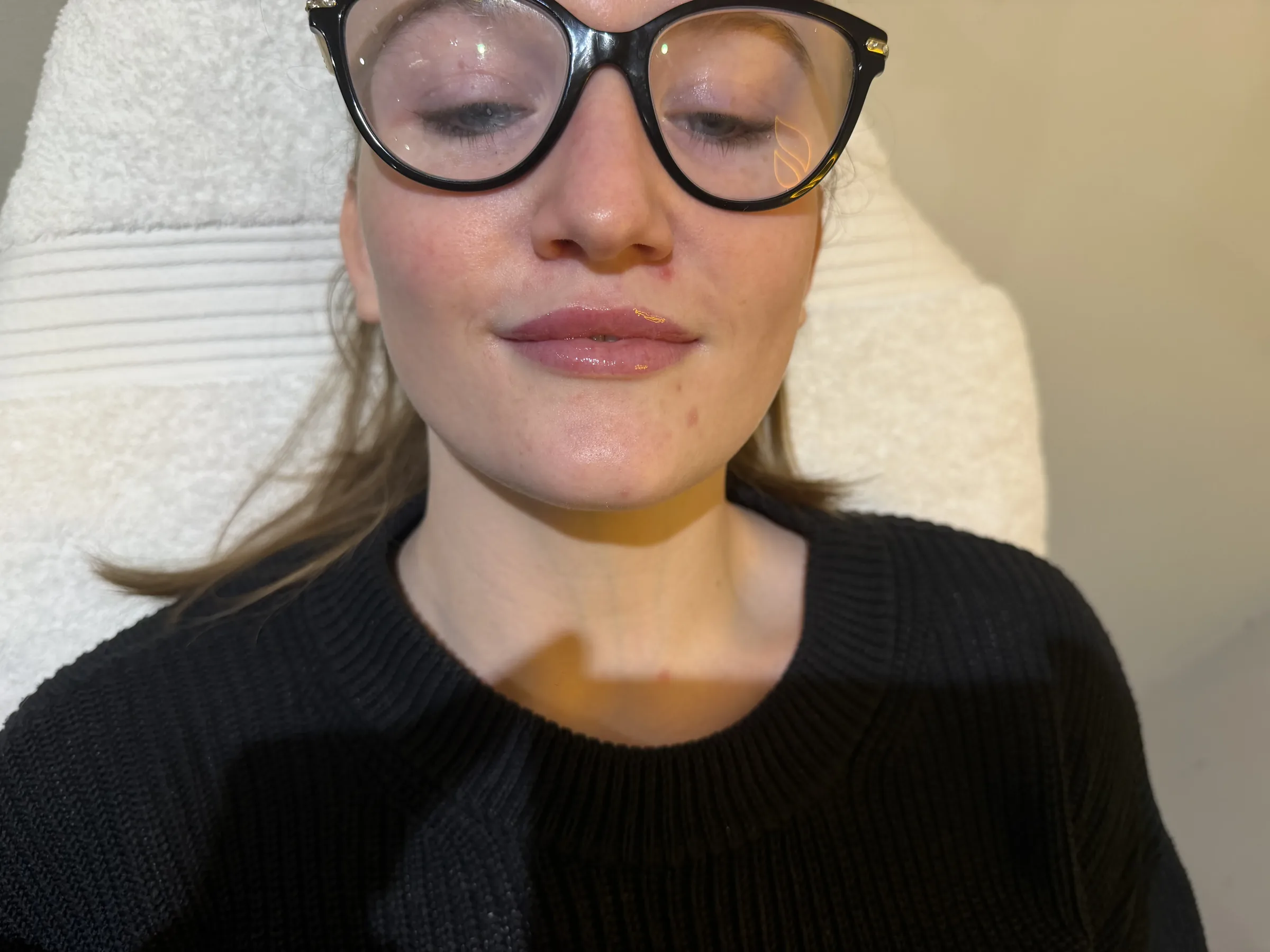
Most gradual facial-ageing concerns can begin with a calm cosmetic consultation. A sudden, painful, persistent one-sided or otherwise worrying facial change needs timely advice from an appropriate health practitioner because it may require diagnosis outside cosmetic care.
If skin is irritated or unhealed, or important history still needs clarification, Corey can help define the safest sequence. That may mean settling the skin, obtaining information or involving another clinician before returning to the cosmetic question.
What Clear Answers Can The Assessment Give You?
A whole-face assessment can clarify which visible changes appear connected, which concerns deserve priority and which options fit your anatomy, history and preferences. It can also separate ordinary cosmetic questions from changes that need another kind of health assessment.
You should leave understanding the reasoning: what Corey observed, what remains uncertain, which suitable pathways can be discussed and what timing would make sense. The assessment does not label a face as needing change; it gives you reliable context for deciding whether and how you would like to proceed.
Consent Allows Time To Think
An assessment should leave room for questions. Informed consent is more than agreeing quickly to a proposed plan. It involves understanding what is being considered, what remains uncertain, the relevant risks and limits, the alternatives and the option not to proceed.
The treatment suitability assessment and patient safety in aesthetic consultation guides explain why the conversation matters as much as the visible concern.
How Do Separate Facial Clues Become One Sensible Plan?
Corey brings the clues together rather than matching each visible change to a separate treatment. For example, an under-eye shadow may be considered beside cheek support, skin quality, expression and the way light crosses the midface. That whole-face reading helps identify which concern is leading the picture and which details are secondary.
From there, the plan can be proportionate. When assessment supports a cosmetic option and informed consent is complete, Corey can explain what could be addressed first, what may be better reviewed later and how the choices relate to your priorities. You leave with an ordered pathway instead of a list of disconnected possibilities.
How To Arrive Ready, Without Preparing A Case
You do not need to arrive with a diagnosis or a treatment request. It can help to ask what may be contributing to a change, whether it looks different at rest and in movement, whether another area influences it, what might make a cosmetic approach unsuitable, and what would be sensible to monitor instead.
Bring a current medication list, relevant medical history and details of previous cosmetic treatment if you have them. Photographs are optional. They can provide context for a change over time, but no photograph can determine suitability or promise an outcome.
Read According To The Question You Have
If you are trying to work out whether a visible change is more about skin, movement or facial structure, begin with Skin, Structure Or Movement Ageing. For a closer explanation of the facial layers that can influence change over time, read How Facial Anatomy Changes With Age.
If you already know your concern but are unsure what to do with it, What Should I Do Next About Facial Ageing? is the practical next step guide. If the question is whether any cosmetic treatment is suitable, read Am I A Candidate For Facial Ageing Treatment? before booking.
Fees Follow The Assessment, Not The Other Way Around
A whole face assessment is not a quote for a treatment chosen before the assessment. The pricing page provides general context. If a treatment pathway is appropriate to discuss, costs, risks, alternatives and the option to wait should be considered together, with time for questions.
Check The Practitioner And Clinic Details
Before booking or attending, you can verify Corey Anderson RN’s registration details and the clinic information. Corey’s Ahpra registration number is NMW0001047575. Core Aesthetics consults from 12A Atherton Road, Oakleigh.
Arrange A Facial Ageing Assessment
If you want a concern considered in the context of your whole face rather than a single feature, arrange a consultation with Corey at Core Aesthetics in Oakleigh. You do not need to choose a treatment before the appointment.
Book a consultation to discuss what you have noticed, the relevant risks and the options that may suit you. When assessment and informed consent support proceeding, Corey can explain a proportionate plan and suitable timing; if another clinical step should come first, you will leave knowing exactly what that step is.
General information only. This page does not replace advice from an appropriately qualified health practitioner. Suitability, risks, options and timing vary between individuals.
Explore The Question In More Detail
Is this for you?
Consider booking a consultation if
- Adults who notice a facial change and want to understand it before making a cosmetic decision
- People who want one concern considered alongside facial balance, skin quality, movement and personal history
- People who are open to information, time to reflect, medical review, referral or no elective treatment
This may not be for you if
- People seeking a promised cosmetic outcome or a treatment answer set in advance before an in person assessment
- People seeking elective cosmetic care for someone who is not an adult
- People who need assessment of a sudden, painful, persistent change on one side of the face, or another medically concerning facial change, before a cosmetic discussion
- People with active infection, unhealed skin or an unresolved medical concern in the area to be assessed
- People who are pregnant or trying to conceive and are seeking elective cosmetic treatment, as the timing may need to be deferred
Suitability is confirmed at consultation. This list is general guidance, not a substitute for clinical assessment.
Frequently asked questions
What happens during a facial ageing assessment?
Corey asks what has changed, when you notice it and what you hope to understand. He considers the face at rest and in everyday expression, then reviews skin, facial balance, relevant health history, previous cosmetic treatment, expectations, risks and timing. You leave with a clearer explanation and an individually considered next step.
Why does a facial ageing assessment look at the whole face?
The feature that catches your attention may be influenced by nearby features, facial movement, skin quality, facial shape, light and previous cosmetic treatment. Looking at the whole face puts that feature in context and avoids assuming one explanation before any cosmetic decision is discussed.
Can a photograph explain the change I am seeing?
No. A photograph can be useful context, but it records one angle, expression and set of lighting conditions. It cannot determine suitability, explain every contributor to a concern or predict an outcome. An in person assessment lets Corey consider the change in conversation and ordinary expression.
Will the assessment tell me which treatment to choose?
It can clarify which suitable options relate to the concern and how they could be prioritised. Corey explains the reasoning, relevant risks, alternatives and timing so you can make an informed decision without needing to choose a treatment before the appointment.
What if a facial change is sudden or unusual?
Do not assume a sudden, painful, persistent change on one side of the face, or another worrying facial change, is ageing. Seek advice from an appropriate health practitioner instead. A cosmetic assessment is not a diagnostic service, and Corey may recommend medical review rather than a cosmetic plan.
What should I bring to the appointment?
Bring a current medication list, relevant medical history and details of previous cosmetic treatment if available. Optional photographs can provide context for a change over time. You do not need to know what treatment you want before attending, and no photograph can determine suitability.
Can I take time to decide after the assessment?
Yes. You can ask questions, consider the options, risks, limits and alternatives, and choose the timing that feels right. If assessment and informed consent support proceeding, a suitable plan can be discussed; you remain in control of the decision.
Will I leave knowing what happens next?
The aim is a clear, ordered next step. When assessment supports a cosmetic option, Corey explains suitable choices, timing and consent. If skin care, further information, medical review or staged planning should come first, he explains how that fits into the pathway.