Whole face assessment

Full Face Assessment: When the Concern Isn’t One Area

A full face assessment maps facial zones, movement, skin quality, support, proportion and suitability before any treatment pathway is discussed.

Quick summary

Not everyone arrives with a single thing they want to change. Many people come in with a more general feeling that they look tired, or older than they feel, or just not quite themselves, without being able to point to one feature. When the concern cannot be reduced to a single area, trying to pick one treatment off a list rarely helps.

Why the whole face matters

The face ages as a system, not as a set of separate parts. Movement lines, changes in the deep and superficial fat compartments, gradual remodelling of the underlying bone, and the steady decline of skin collagen, which falls by roughly one to one and a half percent each year from the mid twenties, all happen together and influence one another.

A change in one area often shows up as a concern in another, which is why a tired or aged appearance is so often the sum of several small things rather than one obvious cause.

This is the reason a full face assessment is so useful. By mapping how movement, support, skin quality and proportion interact across your face, it becomes possible to understand what is actually driving the overall impression, rather than guessing at a single feature and hoping it is the right one.

What Does Corey Assess?

  • How movement, facial support, skin quality and proportion interact across the whole face.
  • Which factors are contributing most to the overall impression.
  • How the different areas relate to and balance one another.
  • What sequence, if any, would make sense, and what could simply be left alone.
  • Your medical history, medications, previous treatment and timing.
  • Your expectations and readiness to give informed consent if a treatment pathway were appropriate.

The value of sequencing and restraint

One of the most useful outcomes of a full face assessment is a sense of priority. Even where several things could be considered, it rarely makes sense to address everything at once. Understanding what matters most, what can wait, and what is best left untouched is often more valuable than any single treatment. A good assessment can just as easily conclude that very little is needed, or that the most sensible plan is to do nothing for now.

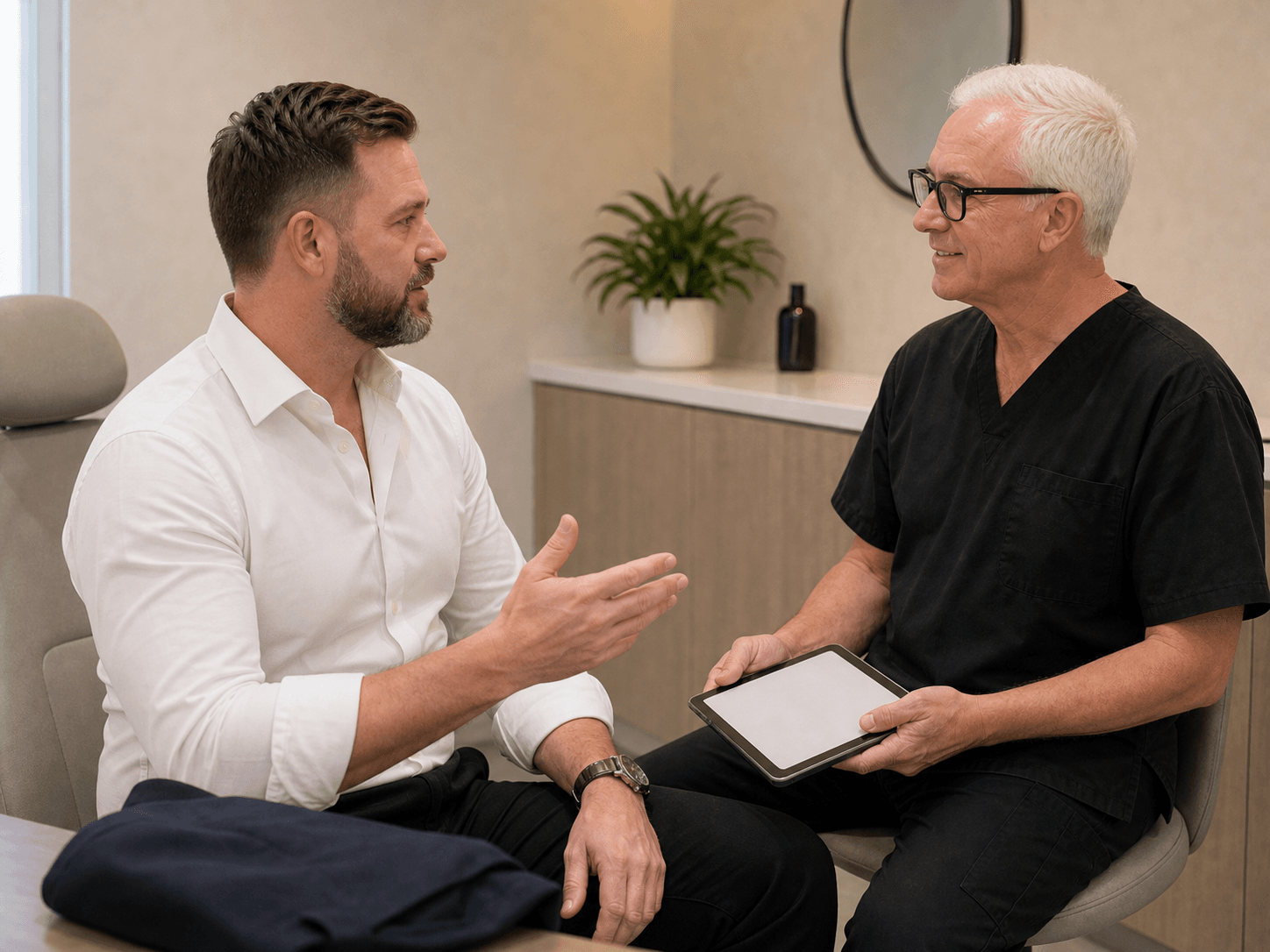
Facial ageing education and assessment context for consultation planning at Core Aesthetics in Oakleigh
Facial ageing education and assessment context for consultation planning at Core Aesthetics in Oakleigh. Illustrative consultation or assessment image only. Individual anatomy, suitability and treatment response vary. Not a treatment result or before-and-after image.

What Next Steps Can Follow The Consultation?

  • A structured plan that sets out priorities and sequence, where treatment is appropriate to discuss.
  • A focus on skin health and the fundamentals, where that is the most useful starting point.
  • Waiting and reviewing.
  • A referral, where another pathway is more appropriate for part of the picture.
  • No treatment, which is a entirely valid conclusion.

No outcome is claimed, and any treatment is only discussed where it is clinically appropriate following assessment.

Facial ageing education and assessment context for consultation planning at Core Aesthetics in Oakleigh
Facial ageing education and assessment context for consultation planning at Core Aesthetics in Oakleigh. Illustrative consultation or assessment image only. Individual anatomy, suitability and treatment response vary. Not a treatment result or before-and-after image.

How Does Corey Anderson Approach This Consultation?

Corey Anderson is a Registered Nurse who has been registered with AHPRA since 1996. A whole face perspective is exactly where his experience shows, in resisting the urge to treat individual features in isolation and in being honest about what genuinely matters. He is comfortable advising restraint or no treatment, and you see the same practitioner throughout.

Facial ageing education and assessment context for consultation planning at Core Aesthetics in Oakleigh
Facial ageing education and assessment context for consultation planning at Core Aesthetics in Oakleigh. Illustrative consultation or assessment image only. Individual anatomy, suitability and treatment response vary. Not a treatment result or before-and-after image.

How Do Natural Looking Goals Stay Grounded?

Looking at the whole face is itself a safeguard against an overdone result, because it keeps the focus on balance rather than on chasing one feature. The aim is always a face that looks like you, refreshed rather than altered, and a considered assessment is what keeps any plan grounded.

What a full face assessment is not

  • It is not a commitment to any treatment, and certainly not to several.
  • It is not a certain result of a particular result.
  • It is not a single template approach.
  • It is not a sales appointment, and you will not be pressured.
  • It is not the right step if something feels physically wrong. If you ever have severe or worsening symptoms after any treatment, contact your treating practitioner, seek urgent medical care, or call 000.

When Might Treatment Not Be Appropriate?

There are circumstances in which treatment, or some part of a plan, would not be recommended. Some health conditions, certain medications, and situations such as pregnancy or breastfeeding may mean treatment is not appropriate, and this is always assessed individually. A full face assessment may equally conclude that the most useful step is restraint rather than action.

A typical full face assessment

To give a realistic sense of how it unfolds, imagine someone who simply feels they look tired and older but cannot say why. In the assessment, Corey would map how movement, support, skin quality and proportion interact, and might find the overall impression comes from a mix of skin quality, some loss of support and a couple of movement areas.

He would explain the picture plainly, set out what matters most and what could wait, and might suggest starting with skin fundamentals, a staged plan, or simply review. He would make no claims about a specific result.

How Should You Prepare?

  • Note the general impressions that bother you, even if you cannot pinpoint a feature, and any questions you have.
  • Jot down your medical history, medications and any previous treatment.
  • Bring records from earlier treatment if you have them.
  • Come as you are.

Book a full face assessment in Oakleigh

Core Aesthetics is a consultation led clinic in Oakleigh, serving people across the south east of Melbourne including Chadstone, Carnegie, Murrumbeena and Glen Waverley. Every consultation is carried out by Corey Anderson, Registered Nurse.

You are welcome to see what to expect at your first consultation, read our broader cosmetic consultation pathways page, or book a consultation when you are ready.

Sources And Further Reading

The anatomy, skin quality or clinical background on this page is general education, not a diagnosis or treatment recommendation.

Regulatory Context

This page is general information for adults. The page language is consultation led and reviewed against Australian guidance for regulated health services and higher risk non surgical cosmetic procedure advertising.

Is this for you?

Consider booking a consultation if

  • Adults wanting assessment of how several facial concerns relate to one another
  • Patients who want movement, skin quality, facial support and proportion considered together
  • People seeking consultation led planning before deciding whether treatment is appropriate
  • Adults open to waiting, referral, review only or no treatment where that is safer

This may not be for you if

  • People seeking a solved visible change before assessment
  • People who need urgent medical, dental, skin or surgical advice
  • People who want treatment without discussing suitability, risk, alternatives, cost and aftercare
  • People seeking advice for someone who cannot provide informed consent for elective cosmetic care

Suitability is confirmed at consultation. This list is general guidance, not a substitute for clinical assessment.

Frequently asked questions

What is a full face assessment?

It is an assessment for people whose concern cannot be reduced to one area. Corey maps how movement, support, skin quality and proportion interact across the whole face to understand what is driving the overall impression. It does not commit you to any treatment.

Why look at the whole face rather than one feature?

Because the face ages as a system, and a tired or aged appearance is usually the sum of several small things rather than one cause. Picking a single treatment without the whole picture risks aiming at the wrong target.

Will I be told I need lots of treatments?

No. A key value of the assessment is priority and restraint. Even where several things could be considered, it rarely makes sense to do everything at once, and the assessment may conclude that little or nothing is needed.

Will I be told I need treatment at all?

Not necessarily. A full face assessment may lead to a structured plan, to focusing on skin fundamentals, to waiting, to referral, or to no treatment. The aim is the most suitable next step for you.

Are there times treatment is not appropriate?

Yes. Some health conditions, certain medications, and circumstances such as pregnancy or breastfeeding may mean treatment is not appropriate. This is always assessed individually. The consultation can also cover suitability, risks, timing, alternatives and whether waiting or no treatment is the more appropriate next step.

Do you see people from outside Oakleigh?

Yes. The clinic is based in Oakleigh and sees people from across south east Melbourne, including Chadstone, Carnegie, Murrumbeena, Hughesdale and Glen Waverley. The consultation can also cover suitability, risks, timing, alternatives and whether waiting or no treatment is the more appropriate next step.

Does full face assessment mean full face treatment?

No. Full face assessment means the whole face is considered before a decision is made. It may lead to a very focused plan, staged planning, review only, waiting, referral or no treatment. The purpose is context and restraint, not treating every area.

Who is this consultation useful for?

It is useful for adults who cannot reduce their concern to one area, who have noticed several facial changes, or who want to avoid piecemeal planning. It can also help if previous treatment, asymmetry, skin quality, movement or facial ageing patterns make the next step unclear.

Can treatment happen on the same day?

Some adult patients may be suitable for treatment on the same day as consultation, but it is not automatic. Corey first needs to assess suitability, risks, consent, expectations, timing, cost discussion and aftercare. Waiting or returning another day can be the better advice.

How is this different from a single area consultation?

A single area consultation starts with one concern, such as lips, under eyes, chin or jawline. A full face assessment starts with relationships between areas. It is often useful when the visible concern may be connected to nearby facial support, movement or broader anatomy.

Can Corey recommend no treatment?

Yes. No treatment may be recommended when risk outweighs likely benefit, expectations do not fit what treatment can reasonably address, timing is poor, another pathway is safer, or the concern is mild. A careful assessment can be valuable because it prevents unnecessary treatment.

What should I bring to the appointment?

Bring current medicines, relevant medical history, allergies, pregnancy or breastfeeding status if relevant, previous treatment dates where known, and older photos if they help explain facial change over time. It also helps to bring plain questions rather than trying to self diagnose the cause.

Will Corey assess facial ageing?

Yes, where facial ageing is part of the concern. Corey may review skin quality, movement lines, facial support, under-eye relationship, cheek and midface support, folds, lips, chin, jawline, natural asymmetry and timing. The assessment remains individual and does not assume treatment is needed.

Is a full face plan always larger?

No. A broader assessment can lead to a smaller plan because it helps identify what matters most and what should be left alone. It may also support staging, waiting, referral or no treatment where a larger plan would be unnecessary or less responsible.

Clinical references

  1. TGA: Advertising health services that involve therapeutic goods
  2. Ahpra: Guidelines for advertising higher risk non-surgical cosmetic procedures
  3. Ahpra: Guidelines for registered health practitioners who perform non-surgical cosmetic procedures
  4. TGA advertising a health service
  5. TGA cosmetic injections advertising FAQ
  6. The Facial Ageing Process From the Inside Out
  7. Molecular mechanisms of changes in homeostasis of the dermal extracellular matrix

Written and reviewed by Corey Anderson RN, AHPRA NMW0001047575 · Reviewed 2026-06-21 · Consultation required · TGA and AHPRA guidance is regularly reviewed in preparing this website.

Begin With A Conversation

Book your consultation.

A consultation is a considered first step toward understanding what may or may not be appropriate for you. Booking creates time for assessment, questions, risk discussion and informed consent. It does not promise treatment, a particular outcome or same day care.

Book Consultation

Consultation first. Decisions with context.