Patient Education

How to Choose Aesthetic Treatment Practitioner

How to Choose Aesthetic Treatment Practitioner explains how concerns are assessed at Core Aesthetics in Oakleigh, including suitability, medical history, risk, timing and when treatment may not be appropriate.

Quick summary

Aesthetic Consultation helps patients check who is responsible for assessment, consent, risk discussion and follow-up. At Core Aesthetics, Corey Anderson RN conducts consultation personally and patients can verify registration details before deciding. The goal is informed decision-making, not pressure to proceed.

Why Choosing the Right Injectable Practitioner Matters

The choice of injectable practitioner is one of the most consequential decisions a person makes when pursuing aesthetic treatment. The quality of the assessment, the accuracy of the technique, the transparency of the communication, and the responsiveness to complications all depend on the individual practitioner, not on the clinic name or the marketing presentation.

In the aesthetic treatments market in Australia, a wide range of practitioners operate, from highly experienced doctors and nurses with decades of facial anatomy expertise to newly qualified practitioners with minimal supervised training. The regulatory framework requires AHPRA registration and authorisation under prescribing arrangements, but it does not mandate a specific minimum experience threshold or require demonstration of competency in cosmetic injection technique before practice begins.

This means that the responsibility for assessing practitioner quality falls largely on the client. Understanding what to look for, and what to ask, when choosing a practitioner is a meaningful part of obtaining safe and satisfactory injectable treatment.

AHPRA Registration: The Minimum Requirement

The first thing to verify about any injectable practitioner is that they are currently registered with AHPRA (Australian Health Practitioner Regulation Agency). AHPRA registration can be verified at ahpra.gov.au, where you can search by practitioner name or registration number and see their registration status, registration type, any conditions on their registration, and whether any disciplinary actions have been recorded.

For aesthetic treatments, the relevant registration categories include medical practitioners (doctors), registered nurses, dental practitioners, and other authorised health professionals. The specific category matters because it determines the prescribing pathway for the prescription medicines used in injectable treatment, wrinkle product and prescription only facial volume treatments must be prescribed by a medical practitioner, and administered under appropriate oversight arrangements.

At Core Aesthetics, the practitioner is Corey Anderson, Registered Nurse (AHPRA registration NMW0001047575). Registration has been active since January 1996 and is verifiable at ahpra.gov.au.

Experience and Specialisation in Facial Injectable Technique

Beyond baseline registration, the relevant question is what specific training, experience, and ongoing professional development the practitioner has in aesthetic treatments. This is a speciality skill within the broader scope of registered nursing or medicine, and general qualifications do not absolute claim competency in facial anatomy, injection technique, or aesthetic assessment.

Useful questions to ask a practitioner include: How long have you been performing aesthetic treatments? What specific training have you completed in aesthetic treatments? Do you undertake ongoing professional development in this area? What is your approach when a client presents with a complication?

A practitioner who is uncomfortable answering these questions, or who provides vague answers, is providing less information than a client is entitled to when making a decision about a medical procedure. A practitioner who answers clearly, who describes their training honestly including any limitations, and who demonstrates awareness of the risks and complications specific to the treatment being proposed is providing the kind of transparency that informed consent requires.

Consultation Quality as a Proxy for Clinical Standards

The quality of the consultation is one of the most reliable indicators of the clinical standards the practitioner operates to. A practitioner who conducts a thorough facial anatomy assessment, takes a proper medical history, discusses realistic outcomes, and explains the risks specific to the proposed treatment is demonstrating the clinical discipline that informs their procedural work as well.

A practitioner who skips directly to treatment without proper assessment, who confirms whatever the client has requested without exercising independent clinical judgment, or who minimises or dismisses risks and complications, is demonstrating a different set of clinical values, and these same values will be reflected in their procedural decision making.

The consultation is, in this sense, the most informative sample of the practitioner’s clinical approach that a prospective client can access before committing to treatment. Use it that way: pay attention not just to the content of what is said, but to the quality of the assessment, the completeness of the risk discussion, and the practitioner’s willingness to say things that might not be what the client wants to hear.

The Willingness to Say No: A Key Quality Indicator

One of the most reliable indicators of a practitioner who prioritises clinical judgment over commercial outcomes is their willingness to decline or modify treatment requests. A practitioner who agrees to everything a client asks for, regardless of what the assessment actually shows, is not exercising clinical judgment; they are confirming the client’s pre formed plan without independent evaluation.

Clients should feel comfortable asking whether the practitioner has ever declined to treat a client or recommended less treatment than was requested, and what the reason was. Practitioner responses to this question can be informative: a practitioner who can articulate specific examples of when they have said no, or when they have recommended a significantly reduced treatment, is demonstrating that they have a clinical framework that includes the option of refusal.

At Core Aesthetics, the practitioner will decline treatment or recommend significantly less than requested in cases where the assessment determines that the requested treatment is not clinically indicated, where it would produce a poor aesthetic outcome, where it poses a safety risk for that individual, or where the client’s goals cannot be achieved with the available treatments. This is not an unusual or uncomfortable aspect of the practice, it is a routine part of providing genuinely clinical care.

The Review Process as a Quality Standard

A practitioner who schedules and conducts thorough review appointments is operating to a higher clinical standard than one who treats and does not see the client again until the next treatment booking. The review is where outcomes are assessed, dose adequacy is evaluated, complications are identified, and the treatment record is updated with clinically relevant information.

For a client choosing a practitioner, asking about the review process is worthwhile: Is a review appointment included as a standard part of the treatment cycle? Is it scheduled proactively, or left to the client to request? What happens at the review, is it a structured clinical assessment, or a brief check in? Is there a cost for the review?

At Core Aesthetics, review appointments are included as a standard part of the treatment process and are structured clinical assessments. They are scheduled proactively after every treatment appointment. The information gathered at review forms part of the ongoing clinical record that informs subsequent treatments.

Red Flags in Practitioner Advertising and Clinic Marketing

AHPRA advertising guidelines place specific restrictions on how registered health practitioners can market aesthetic treatment services. These restrictions include prohibitions on patient endorsements about treatment outcomes, before and after images used as promotional material in certain contexts, reduced fee or promotional pricing, and claims that create unrealistic expectations about results.

Practitioners and clinics whose advertising contains these elements are operating outside the guidelines that apply to registered health practitioners. This is worth knowing, not only because it signals non compliance with regulatory standards, but because the advertising model reflects the commercial values underlying the practice. A practitioner who markets through patient endorsements and reduced fee offers is operating from a different set of priorities than one whose marketing is factual, educational, and outcome neutral.

At Core Aesthetics, the website and marketing materials are designed to comply with AHPRA advertising requirements. Information is factual and educational; it does not use patient endorsements or before and after imagery to promote treatment uptake; pricing is not promotional.

Making Your Decision: What to Prioritise

After gathering information about a prospective practitioner, verifying their registration, assessing the quality of their consultation, asking questions about their training and approach, and reviewing their marketing for compliance with professional standards, the decision about who to trust with injectable treatment comes down to a judgment about clinical values and personal fit.

The most important things to prioritise are: AHPRA registration and verifiable credentials; a genuine consultation that involves independent clinical assessment rather than confirmation of a pre formed plan; a clear and honest risk discussion; a review process that is structured and proactive; and a willingness to decline or modify treatment requests based on clinical judgment.

At Core Aesthetics in Oakleigh, the practitioner brings over two decades of registered nursing experience to a focused aesthetic treatment practice. The clinic’s model is built around the consultation based, review based approach described in this page, not as a marketing claim, but as the operational framework for every client interaction. Prospective clients are welcome to book a consultation to experience this approach directly before making any decision about treatment.

The Role of the Consultation in Your Decision

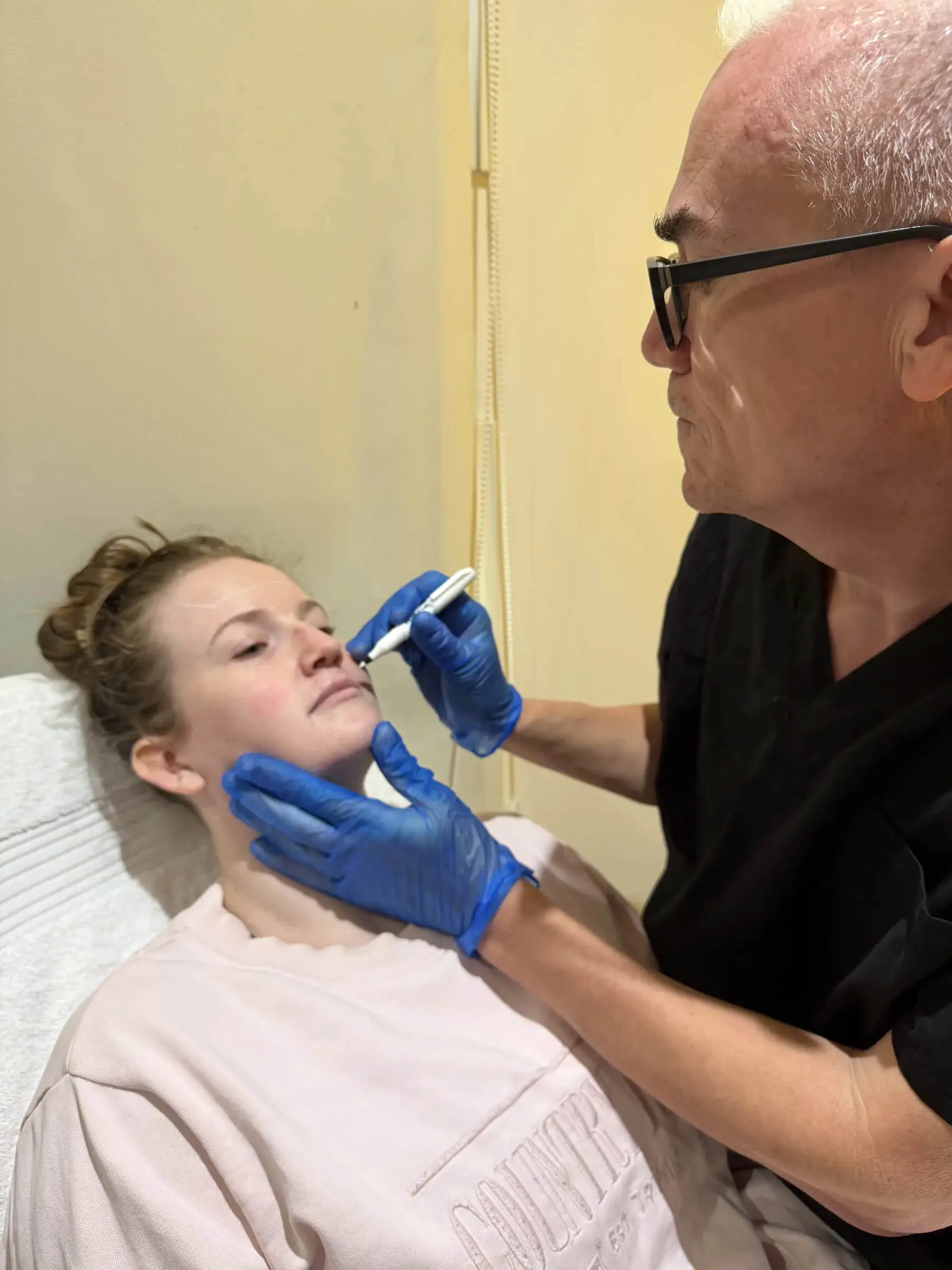
The consultation appointment, before any treatment is agreed upon, is the most informative indicator of how a practitioner will work with you. In a high quality consultation, the practitioner will ask about your health history and current medications, examine the area of concern in detail, explain what is and is not achievable, and give you time to ask questions without feeling rushed towards a booking. They will not pressure you towards a specific product or volume, and they will clearly explain any relevant risks. If a consultation feels transactional, brief, focused primarily on selling a package, or dismissive of your questions, that is worth noting. The consultation is also the moment to discuss what happens if something is not right after treatment. A practitioner who has a clear process for review appointments and can explain how concerns are managed demonstrates that they are thinking about the full treatment episode, not just the initial booking. At Core Aesthetics, every new patient consultation is conducted by the treating practitioner and covers all of these areas before any commitment is made.

Practical Steps for Choosing Well

Verify AHPRA registration directly at the public register rather than accepting a claim on a website. Search the practitioner’s name and clinic for independent mentions, professional publications, healthcare directories, and practitioner profiles that have been independently maintained are more informative than curated social media. Look for transparency about the consultation process and about how concerns are managed post treatment. Be cautious of clinics that lead heavily with pricing, promotions, or urgency language. Ask direct questions during the consultation: how many times have you performed this treatment? What would you do if the result was not what I expected? What are the circumstances under which you would decline to treat someone? The answers, and the manner in which they are given, will tell you a great deal about how the practitioner approaches their work.

A Note on Online Research

Online reviews and social media provide some information about a practitioner but have real limitations. Review platforms can be gamed; social media primarily shows selected outcomes rather than a representative picture of a practice. The consultation itself remains the most reliable basis for a judgement. Arriving at the consultation with specific questions prepared, about qualifications, experience with a particular treatment, how complications are managed, and what the process looks like if something needs to be adjusted, may provide more useful information than an afternoon of online research.

About This Information

The information on this page is provided for general educational purposes. It is not a substitute for clinical advice and does not constitute a recommendation that you proceed with any particular treatment. Aesthetic treatments are prescription medical procedures. They carry risks that vary between individuals and that must be assessed and discussed in a clinical context before any treatment decision is made.

At Core Aesthetics, Corey Anderson assesses every patient individually. The consultation is the point at which your specific anatomy, medical history, and goals are evaluated together. No treatment is offered at a first appointment, and no treatment is appropriate for everyone. This page is a starting point, a way to understand what is involved before you decide whether a consultation is the right next step for you.

If you have questions about anything on this page or about whether treatment might be appropriate for your situation, you are welcome to call the clinic or book a consultation at no obligation.

This page provides clinical information about How to Choose an Injectable Practitioner. It is intended for adults aged 18 and over who are considering aesthetic treatment and want to understand the clinical process, suitability factors, and what to expect from a consultation based practice. All treatment decisions at Core Aesthetics follow individual assessment, no treatment is offered at a first appointment without a separate consultation. Results vary between individuals and are reviewed at follow up.

Clinical accountability and how this page is reviewed

The clinical content in “How to Choose an Injectable Practitioner” is written and reviewed by Corey Anderson, AHPRA registered nurse (NMW0001047575). Core Aesthetics operates as a one practitioner, consultation based, low volume clinic in Oakleigh, Melbourne, which means every recommendation on this page reflects the same clinical perspective rather than a copywriter’s interpretation of it. Results vary between individuals, and any guidance written for the general reader has to acknowledge that variance, what the published evidence supports for the average patient may not be what the assessment supports for a specific patient.

Specific to how to choose an injectable practitioner: this page describes the typical clinical picture for a healthy adult patient at the time of writing. Individual circumstances, medical history, current medications, prior cosmetic treatment, skin type, age, hormonal state, lifestyle, can shift any of the timelines and recommendations described here. The information is provided to help patients arrive at consultation already familiar with the underlying clinical reasoning, not to replace the consultation itself. Results vary between individuals; this page describes the centre of the distribution, not the edges. The jaw muscle treatment Melbourne page covers an adjacent topic in more depth.

Patients reading this page who want to verify Corey Anderson’s AHPRA registration can do so directly on the AHPRA public register at ahpra.gov.au using registration number NMW0001047575. The Core Aesthetics clinic operates from 12A Atherton Road, Oakleigh VIC 3166, Tuesday to Saturday, by consultation appointment. All new patient treatment at Core Aesthetics follows a structured clinical consultation, consistent with the September 2025 AHPRA cosmetic procedures guidelines. Treatment may be scheduled for the same day as consultation or at a subsequent appointment, depending on clinical assessment and individual circumstances. Patients with questions about the content on this page can raise them at consultation; the practitioner is happy to walk through any clinical reasoning that the written content does not fully capture. Results vary between individuals, and the consultation is the appropriate place to discuss what those individual variations mean for a specific person’s treatment plan.

Is this for you?

Consider booking a consultation if

  • You want to understand aesthetic consultation before deciding whether treatment is appropriate
  • You are 18 or older and want an individual clinical assessment
  • You value a consultation-first approach with risk and suitability discussed before planning
  • You are open to waiting or not proceeding if that is the safer recommendation

This may not be for you if

  • You are seeking a not guaranteed outcome or a same-day decision without assessment
  • You are under 18 years of age
  • You are pregnant, trying to conceive or breastfeeding and are seeking elective aesthetic treatment
  • You have an active infection, unhealed skin or an unresolved medical concern in the area to be assessed

Suitability is confirmed at consultation. This list is general guidance, not a substitute for clinical assessment.

Frequently asked questions

How does How to Choose Aesthetic Treatment Practitioner explain how to verify practitioner AHPRA registration?

AHPRA registration can be verified through the AHPRA public register at ahpra.gov.au. Searching the practitioner’s name confirms their registration status, registration type and any conditions. Corey Anderson RN (AHPRA NMW0001047575) is a Registered Nurse with registration in place since January 1996. Specific considerations for How to choose aesthetic treatment practitioner patients are discussed at the individual consultation.

What does How to Choose Aesthetic Treatment Practitioner say about AHPRA registration and patient safety in cosmetic care?

AHPRA registration means the practitioner is accountable to a professional regulatory body, is subject to mandatory continuing professional development, must comply with practice standards and can have registration suspended or cancelled for misconduct. It provides a framework of accountability that is not available with unregistered practitioners. Specific considerations for How to choose aesthetic treatment practitioner patients are discussed at the individual consultation.

What does How to Choose Aesthetic Treatment Practitioner say about red flags in cosmetic injectable practice?

Red flags include pressure to decide at the appointment, no consultation-treatment gap, no individual assessment, promotional pricing that expires, before and after imagery used to demonstrate outcomes and product or brand names discussed in a marketing rather than clinical context. Core Aesthetics avoids all of these practices. Specific considerations for How to choose aesthetic treatment practitioner patients are discussed at the individual consultation.

When does How to Choose Aesthetic Treatment Practitioner explain that Core Aesthetics recommends not proceeding with treatment?

Core Aesthetics recommends not proceeding when anatomy does not support a natural result, when expectations cannot be met, when medical factors affect safety, or when the assessment does not support the intervention. This is an honest outcome of the individual assessment model and is explained to patients without pressure. Specific considerations for How to choose aesthetic treatment practitioner patients are discussed at the individual consultation.

What does How to Choose Aesthetic Treatment Practitioner cover about the September 2025 AHPRA guidelines for cosmetic procedures?

The September 2025 AHPRA guidelines require registered health practitioners to maintain a minimum 72-hour gap between consultation and any non-surgical cosmetic procedure, to conduct thorough individual assessments, to avoid inducements and to provide honest information about risks and outcomes. Core Aesthetics operates under these guidelines. Specific considerations for How to choose aesthetic treatment practitioner patients are discussed at the individual consultation.

How does How to Choose Aesthetic Treatment Practitioner describe the value of a consultation-first model for patient trust?

The consultation-first model means that assessment is separated from treatment. Patients receive an honest clinical opinion before any decision is made. This structure reduces the risk of patients agreeing to treatment under immediate pressure and ensures the recommendation is based on assessment rather than appointment economics. Specific considerations for How to choose aesthetic treatment practitioner patients are discussed at the individual consultation.

What does How to Choose Aesthetic Treatment Practitioner explain about why Core Aesthetics does not use before and after imagery?

AHPRA guidelines and the TGA Therapeutic Goods Advertising Code restrict the use of before and after imagery in a way that could create unrealistic expectations or imply a predictable outcome. Core Aesthetics does not use patient images in advertising or on its website to comply with these requirements and to avoid misrepresentation. Specific considerations for How to choose aesthetic treatment practitioner patients are discussed at the individual consultation.

How does How to Choose Aesthetic Treatment Practitioner describe the single-practitioner care model at Core Aesthetics?

The single-practitioner model means that Corey Anderson RN conducts every consultation and every treatment. Continuity of care is maintained, assessment is consistent and no patient is transferred between practitioners. This model supports a higher standard of individual clinical accountability than high-volume multi-practitioner settings. Specific considerations for How to choose aesthetic treatment practitioner patients are discussed at the individual consultation.

Written and reviewed by Corey Anderson RN, AHPRA NMW0001047575 · Reviewed 2026-04-26 · TGA & AHPRA compliant

Begin With A Conversation

Book your consultation.

No commitment, no pressure. A considered first step toward understanding what is and isn’t right for you.

Book Consultation

Elegance, Perfected.