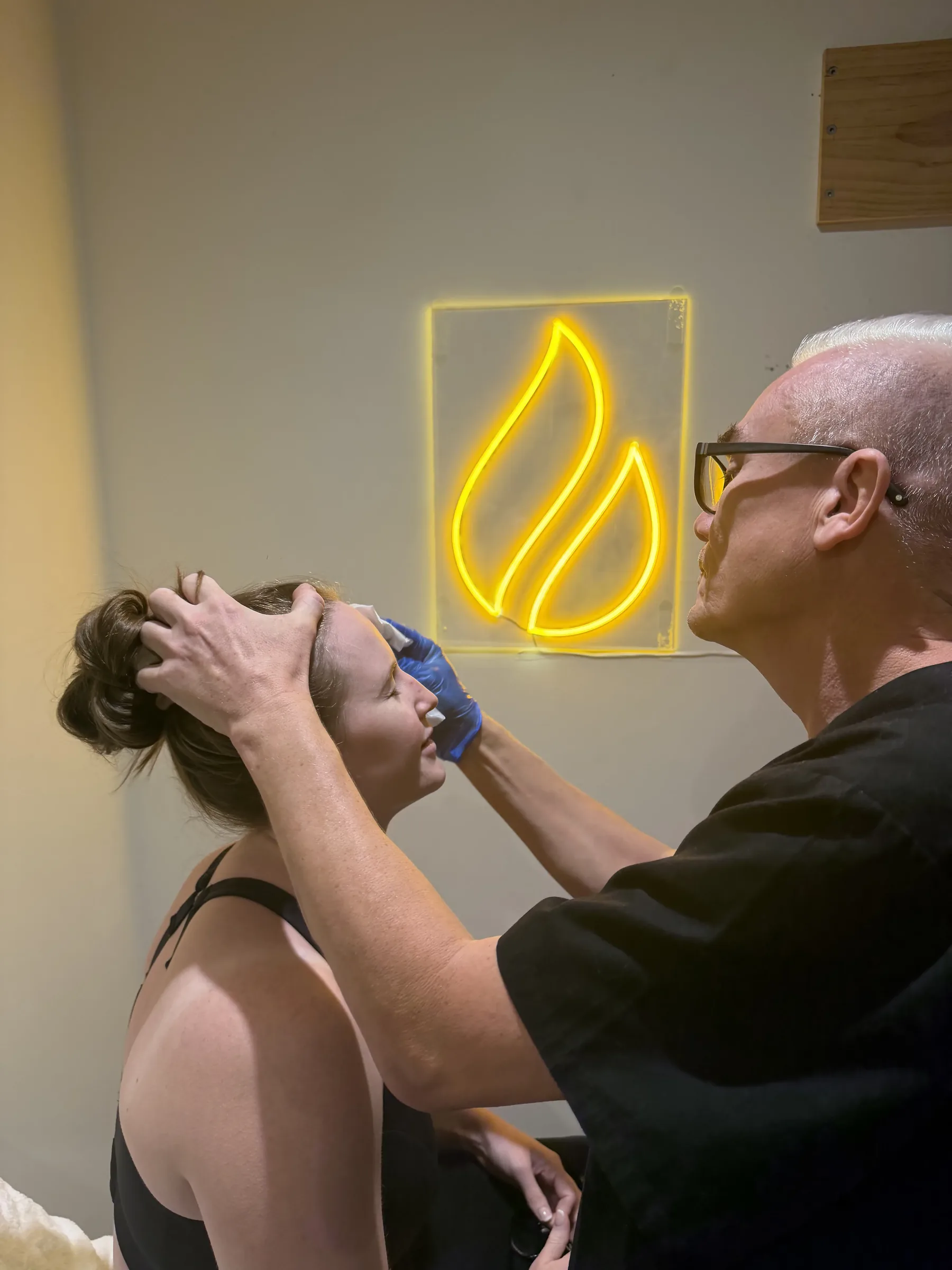
Assessment for outer eye lines at Core Aesthetics starts with consultation rather than a preselected treatment. Corey Anderson RN reviews smile movement, squinting, eyelid context, cheek support and skin quality, skin quality, medical history, previous treatment, expectations, risks and consent before discussing whether treatment planning, waiting, referral or no treatment is appropriate.
What This Page Helps You Understand
Outer eye line planning should respect smile movement. Corey checks whether lines are expression led, skin quality related, resting creases or part of a wider eye area pattern.
The page explains assessment, suitability, risks, consent, review and when waiting or another pathway may be more responsible.
What Should Be Assessed Before Any Plan?
Assessment should separate the visible concern from the movement, skin and safety factors underneath.
| Assessment area | Why it matters | Possible next step |
|---|---|---|
| Smile and squint movement | Outer eye lines often appear with genuine smiling or squinting. | A plan should not ignore natural expression. |
| Resting lines and skin quality | Some lines remain visible when the face is relaxed. | Skin quality, texture and sun exposure may affect expectations. |
| Eye area context | Eyelid skin, cheek support, asymmetry and previous treatment can change suitability. | Corey may recommend a conservative plan, waiting or another pathway. |
| Consent and review | The eye area needs careful risk discussion and follow-up where treatment is appropriate. | Same day treatment is not automatic. |

Why The Eye Area Needs Extra Caution
The outer eye area is expressive, delicate and closely related to brow position, cheek movement and eyelid comfort. A plan that is too strong, poorly timed or poorly matched to the person’s anatomy can affect expression or feel out of balance.
Corey assesses how the eyes move during a natural smile and how much of the concern remains when the face is relaxed. He also considers whether the issue is mainly fine skin texture, resting creases, hollowing, puffiness or shadowing rather than movement alone.
A cautious consultation should make those distinctions clear before treatment is discussed.
Movement Lines, Resting Lines And Skin Quality
Movement lines appear or deepen when the outer eye muscles contract during expression. Resting lines remain visible when the face is relaxed. Skin quality, cumulative sun exposure, dryness, sleep, allergies and general facial ageing can all influence what a person notices around the eyes.
Treatment planning is more straightforward when the concern is mainly movement led. If resting creases, texture, eyelid concerns or under eye shadows are the main issue, Corey may recommend a different discussion or a more cautious expectation.
The consultation is where the difference is assessed. A webpage can define the terms. It cannot diagnose the face.
Smile Expression Matters
Crow’s feet often bother people because they can make the eye area look more lined in photos or under bright light. At the same time, the eye area is part of a genuine smile. Flattening that movement too aggressively can look less human, even if the lines are softer.
Corey reviews smile movement, asymmetry, brow position and how the outer eye area works with the cheek and forehead. The planning goal is restrained and individual, not a frozen or identical expression across every patient.
If preserving expression is your main concern, say so clearly at consultation. It should shape the discussion.
What Corey Needs To Know
Relevant history may include previous treatment near the eyes, dry eye symptoms, eyelid or eye surgery history, contact lens use, eye irritation, allergies, medicines or supplements, pregnancy or breastfeeding considerations, recent procedures and any symptoms around the area being assessed.
This information helps Corey decide whether treatment planning is appropriate, whether timing should change, whether a more conservative approach is required or whether another health professional should review an issue first.
The question is not simply whether the lines can be treated. It is whether they should be treated for this person, at this time, with the information available.

When Treatment May Not Be The Right First Step
Treatment may not be recommended if the concern is mainly skin texture, under eye hollowing, swelling, irritation, unresolved eye symptoms, recent treatment that is still settling, unrealistic expectations or an event date that makes timing unsuitable.
Corey may also recommend waiting if previous treatment records are unclear or if the concern needs more observation before a responsible plan can be made.
A recommendation to wait is not a brush off. It is often the decision that protects the patient from a rushed or poorly matched plan.
Same Day Treatment May Be Discussed
Core Aesthetics is consultation led, not treatment avoidant. Some adults may be suitable for treatment on the same day as their consultation, but only after Corey has assessed the concern, explained relevant risks and limitations, confirmed informed consent and decided that proceeding is clinically appropriate.
Other patients may be advised to wait, seek review for an eye area concern, bring previous records, consider another pathway or take time before deciding.
The consultation comes first because outer eye treatment decisions should be made with context.
Risks, Limits And Consent
All aesthetic treatment carries risk. For outer eye concerns, discussion may include redness, tenderness, bruising, asymmetry, a change in smile or brow balance, eyelid or eye comfort concerns, dissatisfaction, the need for review and the possibility that treatment is not recommended.
Consent means understanding what is being discussed, what the limits are, what alternatives exist, what aftercare involves and how to contact the clinic if something feels unusual or concerning.
A careful consultation should leave room for questions. If the answer needs to be slower, it should be slower.
Aftercare And Review
If treatment proceeds, Corey provides aftercare instructions relevant to the plan and the patient. Online aftercare can be useful background, but the advice given at the appointment takes priority.
Review may be recommended to assess movement, comfort, symmetry, expression and whether the original plan still makes sense. Review is not automatically an adjustment appointment. It is a clinical checkpoint.
If a concern arises sooner, the patient should contact the clinic rather than trying to interpret the change alone.
How This Page Fits The Wrinkle Cluster
This page focuses on crow’s feet treatment as an outer eye concern. The Melbourne crow’s feet assessment page covers the broader service pathway, while the crow’s feet consultation page is useful for patients who want consultation specific preparation.
If you are comparing facial areas, read the guide to wrinkle treatment areas. If you are worried about expression, read the facial expression guide. If you are still deciding whether any aesthetic treatment is appropriate, start with suitability and patient safety pages.
This page should not be used as a self selection tool. It is a preparation tool for a more useful consultation.
What Should You Verify Before Booking?
Before using this page to choose a next step, check that the practitioner, clinic and review pathway are clear.
- Core Aesthetics consults from 12A Atherton Road, Oakleigh VIC 3166.
- Consultations are led by Corey Anderson RN, Registered Nurse.
- Corey can be checked on the Ahpra public register using registration number NMW0001047575.
- This page was reviewed on 8 June 2026 for consultation-first wording, suitability language, risk framing and consent language.
- Same day treatment is not automatic and should only be discussed when assessment and informed consent support proceeding.
Use Verify Corey Anderson RN to confirm practitioner and clinic details.
When Should You Book Or Wait?
Book a consultation when you want an individual assessment rather than a self selected treatment. Waiting may be better if the concern is changing quickly, medically unusual, linked with skin irritation, affected by recent treatment, or if timing and expectations need more discussion.
For next steps, use book a consultation, contact the clinic, treatment suitability assessment and why no treatment may be recommended.
Next Step
Book a consultation with Corey to discuss whether your crow’s feet concern is suitable for assessment and what risks, limitations and alternatives may apply.
If treatment is suitable and appropriate on the day, this can be discussed during your appointment. If it is not the right step, the consultation should still clarify why.
Is this for you?
Consider booking a consultation if
- You are an adult considering assessment for crow’s feet or outer eye lines
- You want smile movement, skin quality, eye history and suitability assessed before deciding
- You value restrained consultation led care without pressure to proceed
- You are open to waiting, medical review or not proceeding if that is the safer recommendation
This may not be for you if
- You want certainty or a treatment decision without clinical assessment
- You are seeking elective aesthetic treatment while pregnant, trying to conceive or breastfeeding
- You have active eye symptoms, active infection, unhealed skin or an unresolved medical concern in the area to be assessed
- You want the eye area treated without discussion of expression, risks, consent and review
Suitability is confirmed at consultation. This list is general guidance, not a substitute for clinical assessment.
Frequently asked questions
What causes crow’s feet?
Crow’s feet can be influenced by repeated outer eye movement, smiling, squinting, sun exposure, skin quality, dryness, allergies and general facial ageing. Consultation helps identify whether the concern is mainly movement led or whether another factor is more relevant.
Can I book a crow’s feet consultation in Melbourne?
Yes. Melbourne patients can book a consultation at Core Aesthetics in Oakleigh. Corey assesses outer eye movement, smile expression, skin quality, eye history, prior treatment, suitability, risks and consent before any treatment planning is discussed.
Is crow’s feet treatment suitable for everyone?
No. Suitability depends on movement pattern, skin quality, eye history, medical history, previous treatment, expectations, timing and risk factors. Some patients may be more appropriate to waiting, another pathway or no treatment.
Could treatment around the eyes affect my smile?
It can influence expression because the outer eye area contributes to smiling. Corey assesses smile movement, brow position and facial balance before deciding whether treatment planning is appropriate.
What should I mention at consultation?
Mention previous treatment near the eyes, dry eye symptoms, eyelid or eye surgery history, contact lens use, allergies, medicines or supplements, pregnancy or breastfeeding considerations, recent procedures and any symptoms around the area being assessed.
Can treatment happen on the same day as consultation?
Sometimes, but it is not assumed. Same day treatment is only discussed when Corey has assessed suitability, explained risks and limitations, confirmed informed consent and decided that proceeding is clinically appropriate.
What if my concern is under eye texture or hollowing?
Under eye texture, hollowing, puffiness or shadowing may not be the same issue as crow’s feet. Corey can assess the concern and explain whether a wrinkle treatment discussion is appropriate or whether another pathway should be considered.
How is this different from a general wrinkle treatment consultation?
A general wrinkle consultation considers several possible areas. A crow’s feet consultation focuses on the outer eye area, including smile movement, eye history, skin quality, brow interaction and area specific risks.
Do I need to know what treatment I want before booking?
No. You only need to know the concern you want assessed. Corey is responsible for explaining whether treatment planning is appropriate, what risks and limitations apply, and whether waiting or another pathway is more suitable.