A wrinkle consultation should help you understand what the assessment found and which decisions remain yours. Corey Anderson RN reviews movement, lines at rest, skin, health history and timing before discussing suitable options. Ask how the findings relate to your concern, what an option cannot change, which risks matter to you and what happens if you decide to wait.
Why Does The Appointment Start With Assessment?
Lines and wrinkles are not one single concern. Some appear only with expression, some sit at rest, some relate to skin quality or sun history, and some reflect normal anatomy that should be left alone. Assessment separates these so the conversation is about your face rather than a generic treatment menu.
Corey Anderson RN leads every consultation personally. There is no handover between a salesperson and a practitioner, and no assumption that attending means proceeding.
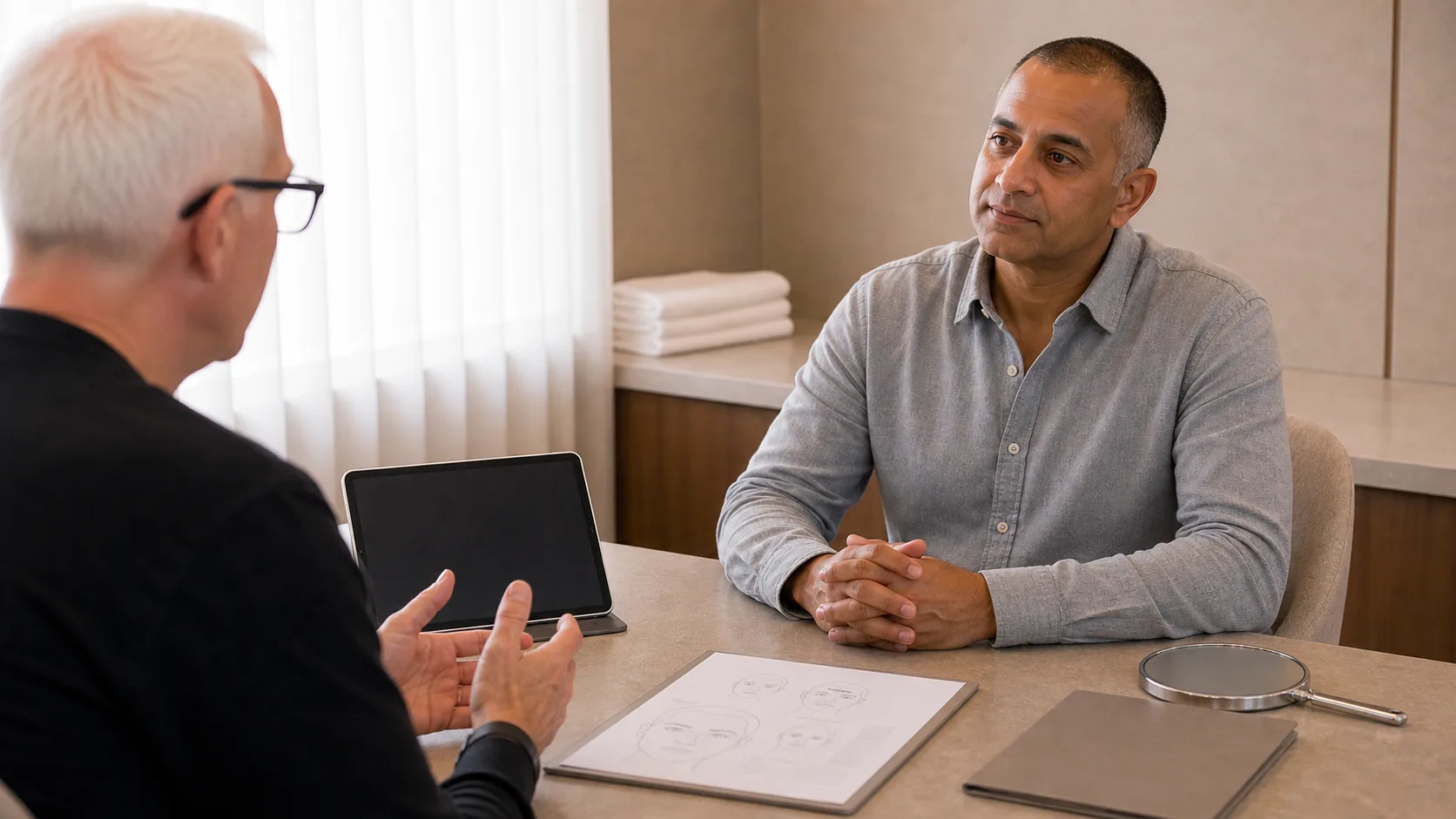
What Can You Ask When The Explanation Is Still Unclear?
You can pause at any point and ask Corey to explain a finding or decision in plain language. These examples show how to make a question specific without choosing a treatment yourself.
| If you are unsure about | A question you could ask | What the discussion should clarify |
|---|---|---|
| A line seen during a smile | What changes when my face is relaxed, and how does that affect the explanation? | The difference between movement and resting features, alongside skin and facial context. |
| Keeping familiar expression | What could change, what may stay the same, and which limits should I understand? | The intended purpose and realistic limits of any suitable option, without an appearance promise. |
| A risk list | Which risks relate to the option we are discussing, and does my history change them? | Material risks, individual factors, warning signs, alternatives and access to advice. |
| Missing previous care details | I do not know the date or details. What information would help before deciding? | Which records matter and whether gathering them changes the next step. |
| An event or travel date | How would possible recovery and review fit this commitment? | Whether the calendar leaves room for informed decisions, aftercare and review. |
| Deciding today | What happens if I wait or choose no treatment? | The reason for any recommendation and the next step without an obligation to proceed. |
Before leaving, put the explanation back into your own words: what was found, what remains uncertain and what you have agreed to do next. Ask for clarification if those three points do not match your understanding.

What Questions Will You Be Asked?
Expect questions about when you first noticed the lines, whether they bother you at rest or only in photographs, your medical history, medicines, allergies, previous cosmetic treatment, skin habits and what you hope a treatment could change.
Honest answers matter because suitability depends on them. Pregnancy or breastfeeding, certain medical conditions, some medicines and unrealistic expectations can each change the recommendation.
How Is Consent Handled?
Consent is a conversation, not a form. To guide an informed decision, Corey explains what assessment found, which options exist including doing nothing, the relevant risks, expected recovery, aftercare and review timing, and the costs involved.
You can take time to think, ask more questions or decline entirely. Consent given under time pressure is not informed consent, and the clinic does not work that way.

What Does The Movement Assessment Clarify?
Corey compares lines that appear during expression with those visible at rest. Brow position, eye area movement and skin condition help place the concern in context. These observations guide the questions to discuss rather than determining a treatment by themselves.
Health history, previous care, expectations, risks, timing and informed consent still shape suitability. The next step may be a suitable option, more information, a later review or another clinical pathway.
What About Aftercare And Review?
If treatment proceeds, aftercare guidance covers what is normal, what to monitor, and when to make contact. Bruising, swelling and tenderness can occur and usually settle, but you should know exactly how to reach the clinic if something feels wrong.
Review timing is planned rather than left to chance, which is one practical advantage of a local single-practitioner clinic.
When Could Waiting Or No Treatment Be Appropriate?
Assessment sometimes shows that lines are subtle, that movement is normal and expressive, or that the concern would not be helped by the treatment imagined. In those cases the honest recommendation is to wait or not treat.
A consultation that ends without treatment is not a wasted appointment. It is the system working as it should, and it is documented just as carefully.
What Should You Read Before Your Appointment?
For the service pathway, read wrinkle treatment Melbourne, wrinkle treatments Oakleigh, wrinkle consultation Melbourne or the wrinkle treatment areas guide.
For decision support, read treatment suitability assessment, how informed consent works, when to wait, why we sometimes say no, pricing, verify, contact or book.
Wrinkle Consultation Questions
What happens first at a wrinkle treatment appointment?
The appointment starts with conversation and assessment. Corey asks what you have noticed, when lines appear and how they behave with expression. Facial movement, skin condition, medical history, medicines, previous treatment and timing are reviewed so the discussion of suitable options is grounded in your circumstances.
What will the movement assessment clarify?
Corey compares lines at rest with lines that appear during expression, alongside brow position, eye area movement and skin condition. This helps clarify which factors may contribute and which questions need further assessment. Suitability also depends on health history, expectations, relevant risks and informed consent.
How should I prepare for the consultation?
Bring a list of medicines and supplements, relevant medical history and dates of previous cosmetic treatment if known. Think about which lines concern you and when you notice them. Tell Corey about upcoming events, travel or photography so timing, possible recovery and access to review can be considered before any treatment plan.
What does Corey assess during the appointment?
Corey assesses how your face moves, where lines sit at rest and during expression, skin quality, asymmetry, brow position, eye area behaviour, medical history, medicines, previous treatment, expectations and timing. The aim is to understand whether any treatment pathway is suitable, and which areas should be left alone.
What risks are discussed before any decision?
The risks depend on the option being considered. They may include bruising, swelling, tenderness, headache, temporary heaviness, asymmetry or infection. Where vascular complications are relevant to an option, these also need clear explanation. Corey discusses material risks, warning signs, aftercare and review before informed consent.
Can the consultation end without treatment?
Yes, and that is a normal, well-handled ending. Corey may recommend waiting, reviewing later, referral to another practitioner, or useful information for now if assessment suggests that is safer or more proportionate. You are never expected to proceed because you attended.
Do I need to know which treatment I want?
No. It is better to describe what you see and feel rather than request a specific treatment. Assessment often shows that the concern relates to movement, skin quality, volume change or normal anatomy, and the appropriate pathway may differ from what you expected.
How long does the appointment take?
Allow enough time for an unhurried discussion and your questions. The assessment, history review, risk discussion and consent conversation are not rushed. Booking details are confirmed when you contact the clinic.
What happens after the consultation?
If a treatment plan is appropriate, timing, aftercare and review are organised around your circumstances. If the recommendation is to wait, seek medical review or gather more information, Corey explains the reason and the next step. You should understand the agreed plan and how to contact the clinic.
Is the consultation private and unhurried?
Yes. Consultations take place privately at the Oakleigh clinic, one patient at a time. Corey conducts the assessment and risk discussion, with time for your questions. You can ask for more time before deciding whether to proceed.
How can I verify the clinic and practitioner first?
Corey Anderson is a Registered Nurse with Ahpra registration NMW0001047575. You can check the Verify Core Aesthetics page, the clinic contact details and the Ahpra public register before booking, and you are encouraged to do so.
Is this for you?
Consider booking a consultation if
- Adults who want to understand the wrinkle consultation pathway before booking
- Patients who prefer assessment, risk discussion and consent to guide an informed decision
- People comparing clinics who want verification details and a consultation-first approach
- Patients open to waiting, review later or a movement-focused review where that is safer
This may not be for you if
- People seeking treatment without assessment, consent or risk discussion
- People with urgent medical symptoms, active skin infection or rapidly changing facial symptoms
- People wanting a fixed cosmetic change decided online before movement and skin are assessed
- People seeking advice for someone who cannot provide informed consent for elective cosmetic care
Suitability is confirmed at consultation. This list is general guidance, not a substitute for clinical assessment.