For Melbourne adults, this page helps clarify facial movement, resting lines and expression before an individual plan is discussed. Corey Anderson RN reviews the visible pattern, relevant history, previous care, goals, risks and practical timing at the Oakleigh clinic. The consultation should leave you with suitable options, clear reasoning and a follow-up plan that fits the concern.
Why Use A Four Frame Record?
The Melbourne wrinkle guide explains the broad consultation pathway. This local page has a narrower job: help you arrive at the Oakleigh clinic with a record that shows when the concern appears.
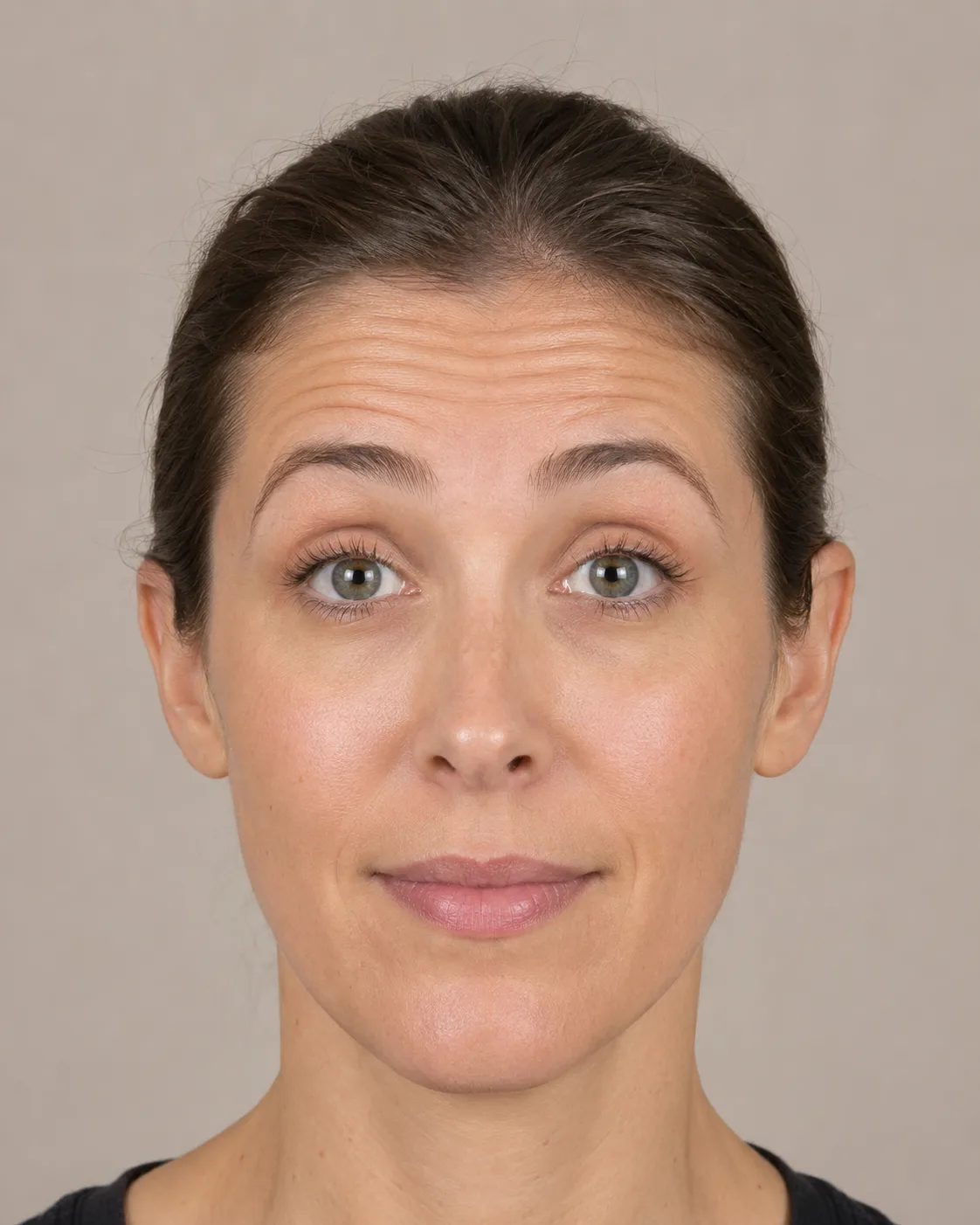
People often bring one close photograph taken in harsh light and ask what should be done. That image may exaggerate texture, hide ordinary movement or capture an expression they rarely make. Four consistent views give Corey a better starting description while leaving the clinical decision open.
What Are The Four Frames?
| Frame | Make the view | Write beside it |
|---|---|---|
| Ordinary rest | Relax the jaw and forehead. Do not lift the brows. | Which lines remain? |
| Comfortable brow raise | Raise the eyebrows as in conversation. | Where do horizontal lines begin? |
| Gentle frown | Bring the brows together once without maximum effort. | Are lines vertical, angled or mixed? |
| Natural full smile | Smile genuinely without moving the camera. | What appears beside the eyes, and what must remain yours? |
These are description frames, not tests. Stop if an expression is uncomfortable, and do not repeat movements to make the concern look stronger.
How Do You Keep The Views Comparable?
Stand or sit in the same place, use the same device and lens, keep the camera near eye level and use soft front light. Frame from the top of the head to below the chin so brow position and surrounding movement remain visible. Turn off beauty filters, portrait retouching and automatic face reshaping.
Use one session for the four frames. Comparing a morning photograph near a window with an evening close view under a ceiling light creates differences that have little to do with the line you are trying to describe.
What Should You Record That A Photograph Cannot Show?
Add five short notes: when you first noticed the change, whether it is present at rest, whether it varies with tiredness or expression, any previous care and the feature you want to preserve. “I want my eyebrows to move normally when I speak” is more useful than “make the forehead smooth.”
Also note if the concern is new, changing quickly, associated with a skin lesion, pain, weakness, altered vision or another symptom. Those details may move the question outside routine cosmetic planning.
How Does Corey Read The Four Frames?
Corey does not score the photographs or match them to a treatment menu. He uses them to ask better questions, then observes the face in ordinary conversation and guided movement. The live view can show whether a line is mainly movement related, remains at rest, sits within a broader brow or eyelid pattern, or is strongly influenced by skin texture and light.
The record may also reveal that the concern is inconsistent, camera dependent or not the feature the person actually discusses once they are in the room.
What Is The Difference Between A Movement Line And A Resting Line?
A movement line appears or becomes clearer when the muscles of expression contract. A resting line remains visible after the face relaxes. Many people have a mixture, and the distinction can vary across the forehead, between the brows and beside the eyes.
The words describe an observation, not a diagnosis. Sun exposure, skin quality, age-related change, facial structure, previous care and ordinary expression all affect what is visible. A movement record cannot tell you which option, if any, is appropriate.
Why Are The Forehead, Brows, Eyelids And Eye Area Read Together?
The upper face works as a connected expression system. Some people naturally recruit the forehead to support brow position or make the eyes feel more open. A frown pattern may be symmetrical or may be stronger on one side. Smiling involves the eye area, cheeks and individual expression habits.
Looking only at the deepest line can miss what that movement is doing for the person. Whole-area observation does not mean more care. It can be the reason to narrow a plan, protect movement, wait or recommend a movement-focused review.
Use A Line Location Sheet, Not A Treatment Shopping List
| What you notice | Useful words | Question to keep open |
|---|---|---|
| Forehead lines | With raised brows, or also at rest | How do brow and eyelid context affect assessment? |
| Between the brows | Vertical, angled, uneven or present at rest | What movement pattern is visible? |
| Beside the eyes | With a natural smile, squinting or at rest | What smile expression should remain? |
| Fine surface creasing | Changes with light, hydration or skin condition | Is skin quality the leading question? |
| Several areas | Which one matters in ordinary life? | What will the movement assessment clarify? |
Which Changes Should Pause A Routine Wrinkle Discussion?
A new or changing skin lesion, sudden facial weakness, altered vision, a severe or unusual headache, injury, infection, marked swelling or another acute symptom should not be reduced to a wrinkle question. Seek an appropriate health assessment, with urgent care where symptoms are sudden or severe.
Core Aesthetics does not diagnose neurological, eye, dermatological or acute medical conditions. An elective consultation can wait while the health question is assessed.
What Health And Previous Care Details Belong With The Record?
Bring current medicines, allergies, diagnosed conditions, pregnancy or breastfeeding information where relevant, active skin concerns, recent illness, dental or surgical care and any history that could affect healing or consent. For previous cosmetic care, bring the date, clinic, practitioner, area, documented product or medicine if known, quantity, early response, settled response, reviews and any adverse event.
Write “unknown” where a record is missing. Guessing is less useful than asking the earlier clinic for documentation.
What Should You Say About The Result You Do Not Want?
Name the expression or relationship you do not want to lose. You might want to keep an animated brow, a strong smile, an asymmetry that feels like part of your face or the ability to look alert without effort. Also describe tradeoffs you would not accept, such as unwanted heaviness, reduced expression or a result that requires a review schedule you cannot attend.
This preservation note is part of informed decision making. It gives Corey a reason to explain limits, recommend less, defer the discussion or stop at education.
What Happens In The First Ten Minutes?
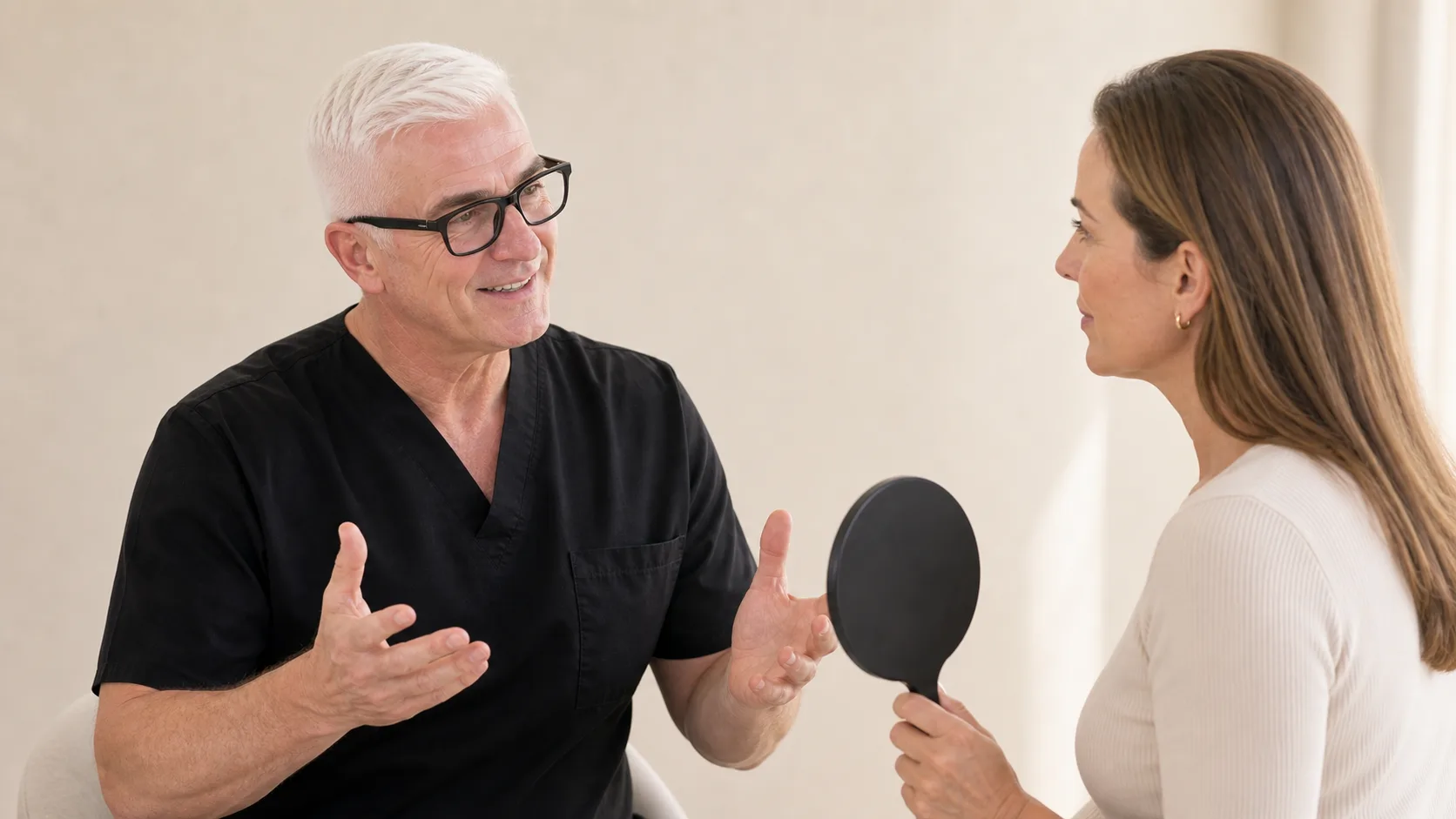
Corey first checks what you noticed and why you are asking now. He reviews the four frames as a timeline aid, not as proof. Health history and previous care come next. Live observation then compares resting appearance, comfortable brow raise, frown and smile with the photographs.
If the question remains within cosmetic nursing scope, the discussion can move to suitability, realistic limits, alternatives, material risks, timing, cost and review access. It may instead finish with more records requested, skin care education, timing or another clinically appropriate pathway.
Can A Consultation Be Useful Without A Procedure?
Yes. The appointment may clarify that the line is normal movement, that the photograph made it look more important than it feels in-person, that skin quality is the leading question or that preserving expression matters more than changing the line.
A useful consultation can produce a better description, the right clinical input, time to think and confidence in a considered plan. Booking reserves time for an individual assessment, useful options and a clear next-step plan.
What Risks And Limits Need A Personal Discussion?
Risk depends on the area, anatomy, health history and previous treatment and any option considered. Discussion may include pain, bruising, swelling, tenderness, headache, asymmetry, altered expression, brow or eyelid heaviness, dissatisfaction, delayed concerns and rare serious complications requiring prompt assessment.
A public page cannot provide individual consent. Corey must explain material risks, expected course, uncertainty, alternatives, aftercare, review access, costs and the option of a movement-focused review before a decision.
Why Does Review Access Matter For A Local Appointment?
A wrinkle consultation is not a single transaction. Before deciding, know how to contact the clinic, what changes require prompt advice and whether you can return to Oakleigh if review is needed. Travel, work, caring duties and upcoming events can make an otherwise elective plan poorly timed.
Local access is useful only when it supports responsible review. Living nearby does not make someone suitable, and care on the consultation day is not assumed.
How Do You Verify The Clinic Before Attending?
Core Aesthetics is at 12A Atherton Road, Oakleigh VIC 3166. Corey Anderson is a Registered Nurse with Ahpra registration NMW0001047575. Compare the clinic verification page with the independent Ahpra public register and confirm current access details on the contact page.
A map listing or social profile can help you find a business. It is not proof of practitioner registration, clinical scope or individual suitability.
Which Page Should Answer The Next Question?
| Your remaining question | Best next page |
|---|---|
| I need the broad Melbourne wrinkle pathway rather than the local worksheet | Wrinkle treatment Melbourne consultation guide |
| My main question is horizontal forehead movement | Forehead wrinkle consultation |
| My concern is specifically between the brows | Frown line assessment |
| My concern appears mainly with smiling beside the eyes | Outer eye line consultation |
| I need to check general health and timing first | Treatment suitability assessment |
| I am ready to arrange an Oakleigh appointment | Booking information |
What Should You Bring Through The Door?
- the four unfiltered frames from one consistent session
- one sentence describing when the concern appears
- the expression or feature you want to preserve
- current medicines, allergies and relevant health history
- previous care records and comparable older photographs if available
- important dates, work demands and realistic access to review
- questions about uncertainty, alternatives, risks and leaving the area unchanged
Questions About The Four Frame Oakleigh Wrinkle Record
Why use four photographs instead of one close-up?
Four consistently framed views show whether the concern appears at rest, with a comfortable brow raise, during a gentle frown or with a natural smile. One close-up may exaggerate texture or capture an unusual expression. The views improve description but do not diagnose a cause or establish suitability.
Should I use a filter or portrait mode?
No. Turn off beauty filters, skin smoothing, face reshaping and portrait retouching. Keep the same device, lens, distance, camera height and soft front light for all four frames.
Can the photographs tell Corey which treatment I need?
Corey explains the material risks, likely limits, alternatives, aftercare and review access that apply to facial movement, resting lines and expression. Consent remains voluntary, with time to ask questions and decide at your own pace.
What if a line is present when my face is relaxed?
Write that beside the resting frame and note when you first noticed it. A resting line may have several influences, including movement history, skin quality, sun exposure, facial structure and previous care. It still requires individual assessment.
Why should I write what I want to preserve?
A preservation note makes the goal more specific. It may identify natural brow movement, an animated smile or another feature that matters more than reducing a line. It also gives Corey a clear basis for discussing limits and unacceptable tradeoffs.
Which symptoms should not wait for a cosmetic consultation?
Sudden facial weakness, altered vision, severe or unusual headache, significant swelling, infection, injury or another acute change requires an appropriate health assessment. Sudden or severe symptoms may need urgent medical care.
Can I attend just to understand the pattern?
Yes. A consultation can be used for questions and assessment only. The consultation connects facial movement, resting lines and expression with suitable options, practical timing and a clear follow-up plan.
Can cosmetic care happen on the consultation day?
Care on the consultation day is not assumed. It depends on assessment, complete information, informed consent, patient readiness, individual risk, clinical time, timing and access to review. You can choose to think about the information and return later.
Where is the Oakleigh consultation held?
The consultation is held at the Core Aesthetics clinic on Atherton Road in Oakleigh. Confirm the complete current address, directions and appointment communication through the clinic contact page before travelling. A map listing can help with navigation, but it does not verify practitioner identity, registration or individual suitability.
How can I verify Corey Anderson?
Corey Anderson is a Registered Nurse with Ahpra registration NMW0001047575. Compare the Core Aesthetics verification page with the independent Ahpra public register before booking or sharing health information.
Is this for you?
Consider booking a consultation if
- Adults who want to describe when upper-face lines appear before an Oakleigh consultation
- People willing to use consistent unfiltered photographs as a communication aid only
- Readers who want to preserve recognisable expression and discuss tradeoffs
- People open to education, timing or another clinically appropriate pathway
This may not be for you if
- Anyone seeking diagnosis from photographs
- People with sudden facial weakness, altered vision, severe headache or another acute symptom
- Anyone expecting a page or image to select a procedure
- People unwilling to disclose relevant health or previous care information
Suitability is confirmed at consultation. This list is general guidance, not a substitute for clinical assessment.
More related pages
Clinical references
- Ahpra: Guidelines for registered health practitioners who perform non-surgical cosmetic procedures
- Ahpra: Guidelines for advertising higher risk non-surgical cosmetic procedures
- Ahpra: Public register of practitioners
- TGA: Advertising health services that involve therapeutic goods
- NMBA: Registered nurse standards for practice