A cheek volume consultation should first determine what has actually changed: upper cheek projection, the eyelid to cheek junction, a middle cheek groove, a fold beside the mouth, lower face balance, skin quality or a shadow affected by the camera and light. Use three comparable views and one older neutral photograph if available. Corey Anderson RN assesses the whole pattern, health history, previous treatment, timing and realistic limits before explaining suitable cheek-focused options and any useful clinical input.
Name The Change Without Naming The Solution
Try: “The upper cheek looks flatter in side light, but the darkness beneath my eye almost disappears in front light.” Or: “The groove through the middle of my cheek has become more noticeable, while the fold beside my mouth changes when I smile.” Those sentences contain observations. “I need cheek volume” is already a proposed answer.
Cheek appearance reflects bone, retaining structures, superficial and deep fat compartments, skin, movement, weight change, dental or skeletal context, previous care and lighting. Imaging studies of midface fat, including a repeat CT study of 262 patients, found different changes in different fat compartments over time. These findings do not establish how every facial structure ages or identify the cause of a change in your own cheeks.
If the main question is why the midface appears shadowed or less full, read why cheeks can look hollow before assuming that volume is the cause or that treatment is needed.
Map Five Landmarks
| Landmark | Record | Do not assume |
|---|---|---|
| Upper cheek | Projection beneath the outer eye in front and angled views. | That flatter appearance means one compartment is deficient. |
| Eyelid to cheek junction | Whether a step, hollow or shadow changes with light and angle. | That the cheek alone causes an under eye concern. |
| Middle cheek | A groove, hollow or transition visible at rest and during a relaxed smile. | That filling a line is the appropriate goal. |
| Fold beside the mouth | Depth at rest, change with expression and relationship to the cheek. | That a cheek pathway will remove the fold. |
| Lower face balance | Fullness, heaviness, jawline change and how the upper and lower face relate. | That adding support higher in the face will improve every lower face concern. |
The five landmarks form one map. They are not five treatment sites.

Capture Three Comparable Views
Use a neutral front view, a view about 45 degrees to one side and a relaxed smile. Keep camera distance, head height and soft front lighting consistent. Turn off portrait blur, beauty filters, automatic reshaping and strong overhead light.
If available, add one older neutral photograph taken at a similar distance. It can help establish when a change became noticeable, but it does not prove cause. Avoid selecting only the most flattering old image and the least flattering current image.
Run The Light And Movement Check
Repeat the front view in soft side light, then compare neutral rest with an ordinary smile. A shadow that moves substantially with the light is not the same observation as a contour that remains across both settings. A fold that changes with expression also carries different information from a fixed groove.
This check does not tell you whether any procedure is suitable. It prevents a single frozen photograph from becoming the entire clinical story.
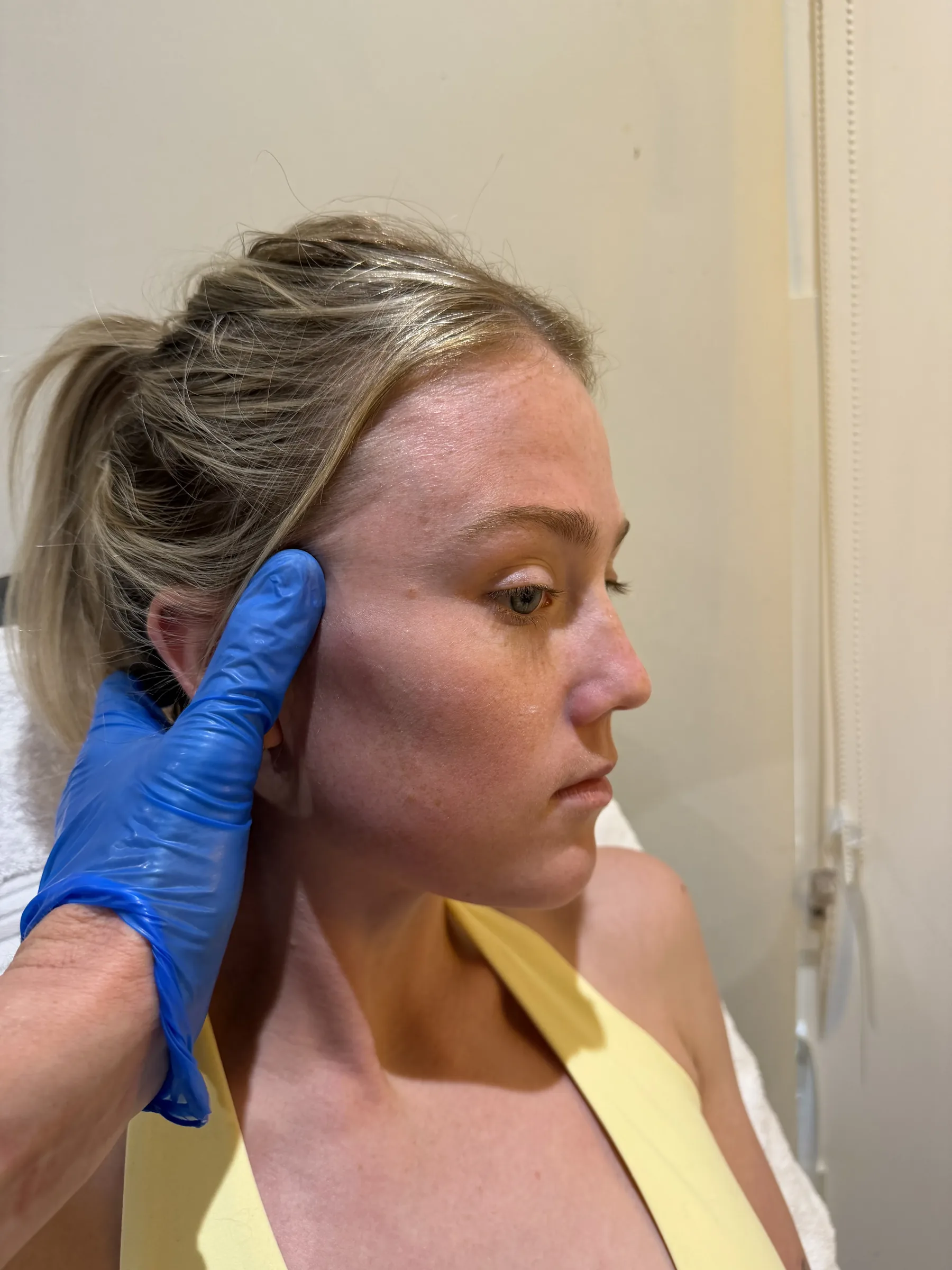
Why Does Whole Pattern Assessment Matter?
Computed tomography and anatomical studies describe the midface as multiple fat compartments separated and supported by retaining structures. Changes with age can include redistribution, dimensional change and volume change. The published findings are not a universal sequence for every person.
The practical point is simpler: one area can look flatter while another looks fuller, a junction can cast a shadow without a simple loss of tissue, and skin or skeletal features can change the impression. Assessment should test competing explanations rather than confirm the treatment term brought into the room.
Sort The Dominant Question
Choose the row closest to what you actually see. It is a routing aid, not a treatment selector.
| What dominates? | What the consultation should clarify | Possible route |
|---|---|---|
| Upper cheek flattening across comparable views | Structure, soft tissue distribution, skin, weight history and previous care. | Cheek and midface assessment, with suitable options and practical timing explained after review. |
| Under eye darkness that changes with light | Shadow, eyelid to cheek anatomy, pigmentation, skin quality, swelling and symptoms. | Under-eye, skin or eye assessment, with the reason for the recommended route explained. |
| Middle cheek groove or fold concern | Rest, movement, neighbouring structures and realistic limits. | Focused assessment without predicting that the line will disappear. |
| Heaviness or fullness | Existing volume, lower face balance, previous care and whether more volume conflicts with the concern. | Records review, focused assessment and a plan that reflects the existing volume pattern. |
| Recent or unexplained change with symptoms | Onset, pain, swelling, dental or medical symptoms and whether this is outside cosmetic scope. | Appropriate GP, dental, eye or urgent health assessment first. |
Know When Another Kind Of Review May Help
Most people can begin with a calm conversation. Three situations simply benefit from some extra context.
- New symptoms. Sudden one-sided swelling, pain, redness, fever, dental symptoms, visual change, weakness or another acute change needs an appropriate health assessment.
- Recent or unsettled care. Bring dates, records and current symptoms so Corey can understand what has happened and whether review with the original clinic would help.
- A single photograph target. A filtered reference image or one dramatic lighting condition cannot define a transferable plan, so comparable views are more useful.
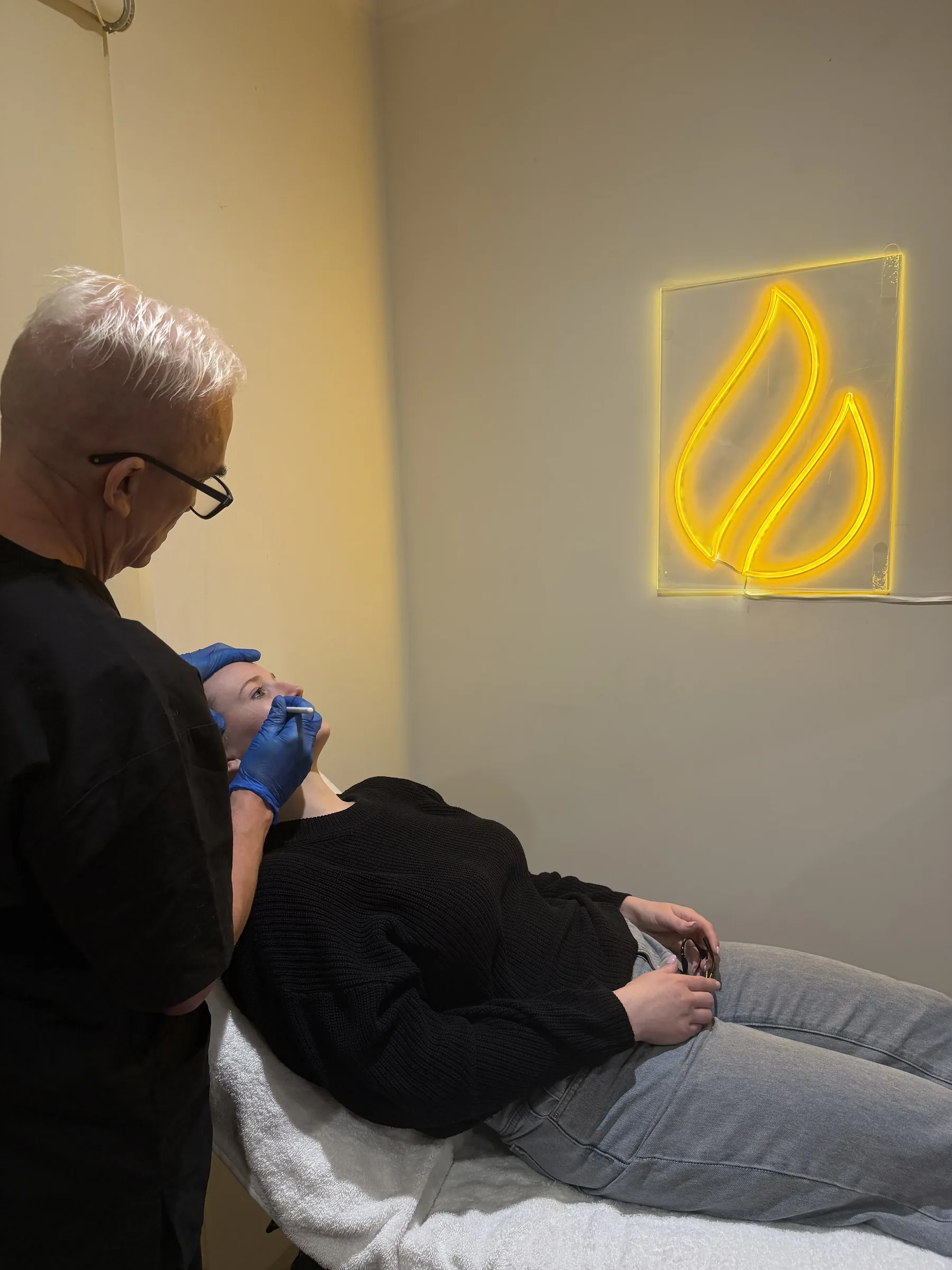
What Does Corey Assess In Oakleigh?
Corey asks what the person noticed first and when it changed. The five landmarks are compared at rest, at an ordinary smile and from front, angled and profile views. Health history, medicines, allergies, weight stability, dental context, skin changes, previous care, event timing and access to review are considered.
The outcome is not preselected. Corey brings facial structure, skin quality and proportion, your history and goals together before explaining suitable options and review needs.
Bring A Five Line Cheek Record
- Change: the first feature you noticed in plain language
- Timing: gradual, sudden, stable or still changing
- View: which of the three comparable views shows it most clearly
- Context: weight change, dental work, illness, skin symptoms or previous care
- Question: what you want Corey to clarify, not what you expect him to perform
A useful question is: “Which of the five landmarks is actually driving what I notice, and what evidence would make you advise against a cheek procedure?”
How Is This Different From The Broader Volume Page?
This page owns a region specific task: map the five cheek and midface landmarks across three comparable views. The Melbourne facial volume page starts broader and separates skin, soft tissue, structural or dental support, movement and previous care across the face.
Use the crepey under eye guide when surface texture, variable puffiness or eye symptoms dominate. Use the under eye correction guide when a concern followed previous care and needs a chronology and records.
What Should A Useful Consultation Give You?
A useful consultation gives you a documented assessment, clear explanations, material-risk discussion, alternatives, aftercare planning and a practical next step. If a cheek-focused option is suitable, Corey explains why it fits the five-landmark pattern, what it can and cannot reasonably address and how review would work.
Sometimes another clinical review may be useful, such as skin, under-eye, dental, GP or original-clinic input. Better photographs, records or more time for an unsettled change to become clear may also strengthen the plan. Corey should explain that route and how it connects back to your concern, so caution does not leave you without a plan.
This public page does not name a prescription product, provide a dose or price, recommend a procedure or predict an appearance. The appointment begins with assessment, followed by suitable choices, timing and an agreed plan.
Evidence Used For This Guide
- Midface anatomy, ageing and aesthetic analysis, reviewing bony landmarks, innervation, blood supply, muscle layers and fat compartments.
- Computed tomographic study of ageing changes in midfacial fat compartments, showing redistribution specific to different compartments rather than one uniform change.
- Longitudinal CT evaluation of superficial midface fat compartments, reporting different dimensional changes between compartments.
- Review of facial retaining ligaments, describing their relationship with facial spaces and fat compartments.
- Ahpra guidelines for registered health practitioners who perform non-surgical cosmetic procedures.
- Ahpra cosmetic procedure advertising guidance and public practitioner register.
Sources were checked on 26 August 2026. They support whole pattern assessment and uncertainty; they do not establish personal suitability from photographs or prescribe a cosmetic plan.
Verify The Clinic Before Booking
Core Aesthetics is at 12A Atherton Road, Oakleigh VIC 3166. Corey Anderson is listed as a Registered Nurse with Ahpra registration NMW0001047575. Use the clinic verification page and Ahpra public register before booking.
This page is general information for adults. It is not a diagnosis, personal medical advice, urgent care or a recommendation to have a cosmetic procedure.
Cheek Volume Assessment Questions
What are the five cheek and midface landmarks?
Record the upper cheek, eyelid to cheek junction, middle cheek, fold beside the mouth and lower face balance. Together they describe the pattern; they are not five proposed treatment sites.
Which three views should I bring?
Use a neutral front view, an angled view at about 45 degrees and a relaxed smile with similar lighting, camera distance and head position. Turn off filters, portrait blur and automatic reshaping.
Why can cheek and under eye concerns be confused?
The upper cheek and lower eyelid form a three dimensional junction. Contour, skin, pigmentation, swelling and lighting can all affect the appearance. A shadow beneath the eye does not by itself identify a cheek volume problem.
Will cheek treatment remove a fold beside the mouth?
That cannot be promised. Folds reflect anatomy, movement, skin and neighbouring structures. A responsible assessment explains what may remain and whether the expected benefit justifies the risk.
What if my face feels heavy or overfilled?
Bring your previous care records and timing so Corey can understand what feels different. He can explain whether review with the original clinic, a different assessment route or another clinically appropriate pathway is likely to be most useful.
Can an old photograph prove volume loss?
No. A comparable older neutral photograph can help establish timing, but differences in lens, light, angle, expression and body weight can mislead. It is one part of the record, not a diagnosis.
When should a sudden cheek change be assessed medically?
Sudden swelling on one side, pain, redness, fever, dental symptoms, visual change, weakness or other acute symptoms need an appropriate health assessment rather than elective cosmetic planning.
How is this different from the facial volume Melbourne page?
This page maps five landmarks within the cheek and midface. The broader page separates possible sources of visible change across the face, including skin, soft tissue, structural or dental support, movement and previous care.
What might Corey recommend after assessment?
The consultation can clarify cheek support, under-eye or skin context, suitable options, records to review and any useful clinical input. Assessment clarifies the options worth exploring and the next practical step.
Can care occur on the consultation day?
It may be possible to discuss suitable care after Corey has completed the assessment and informed-consent process, provided proceeding is clinically appropriate and you feel comfortable. You can also take more time, bring back records or use the appointment to understand the five-landmark pattern before deciding. You remain free to decide after the discussion.
Is this for you?
Consider booking a consultation if
- Adults who can describe a cheek or midface change without preselecting a procedure
- People willing to compare five landmarks across consistent views
- Patients prepared to share health, dental, weight and previous care context
- People who value clear options, appropriate timing and coordinated clinical input when useful
This may not be for you if
- Anyone with sudden swelling, pain, redness, fever, dental symptoms, visual change, weakness or another acute concern needing health assessment
- People seeking a predetermined change or complete removal of a fold
- Anyone relying on a filtered image as a transferable treatment target
- Anyone seeking care without the assessment and informed-consent process needed for an individual plan
Suitability is confirmed at consultation. This list is general guidance, not a substitute for clinical assessment.
More related pages
- Cheek Volume Consultation For Hawthorn Patients
- Anti Ageing Aesthetic Treatments
- What Does Prejuvenation Mean?
- Lip Consultation From Oakleigh South | Core Aesthetics
- Facial Volume Consultation Caulfield North
- Lip Consultation Notting Hill: Questions Raised by the Camera
- Facial Volume Consultation Burwood East
- Cheek Volume Consultation Dingley Village
Clinical references
- Midface anatomy, ageing, and aesthetic analysis
- Ageing changes of the midfacial fat compartments: a computed tomographic study
- Evaluation of ageing changes of the superficial fat compartments of the midface over time
- Retaining ligaments of the face: review of anatomy and clinical applications
- Ahpra cosmetic procedure advertising guidelines
- Ahpra public register of practitioners
- Guidelines for registered health practitioners who perform non-surgical cosmetic procedures