Lower face consultation

What Happens In A Jawline Consultation?

Jawline assessment starts with the whole lower face: jaw border, chin, jowls, jaw muscle, skin quality and the transition into the neck.

Quick summary

You might take a photo, glance at it sideways, and notice the jawline does not look quite as defined as it used to. Maybe a little softness has appeared along the lower face, or the area where your jaw meets your neck has changed, or you simply feel the lower third of your face has lost some of its crispness. The instinct is to wonder whether there is a single treatment that will sharpen it all up.

A jawline consultation looks at the whole lower face

It is tempting to think of the jawline as a single line that can be drawn more sharply. In reality, the lower face is a system in which several structures work together, and a change in one often shows up as a concern somewhere else.

Softness along the jaw might be coming from the skin, from shifting fat, from the underlying bone, from the muscle, or from a combination of all of them. Looking at the jaw border in isolation, without considering the chin behind it or the neck beneath it, simply does not give an accurate picture.

This is why the consultation begins with assessment rather than a plan. Understanding what is actually driving your concern is the only way to know what, if anything, is appropriate, and it protects you from a decision aimed at the wrong target.

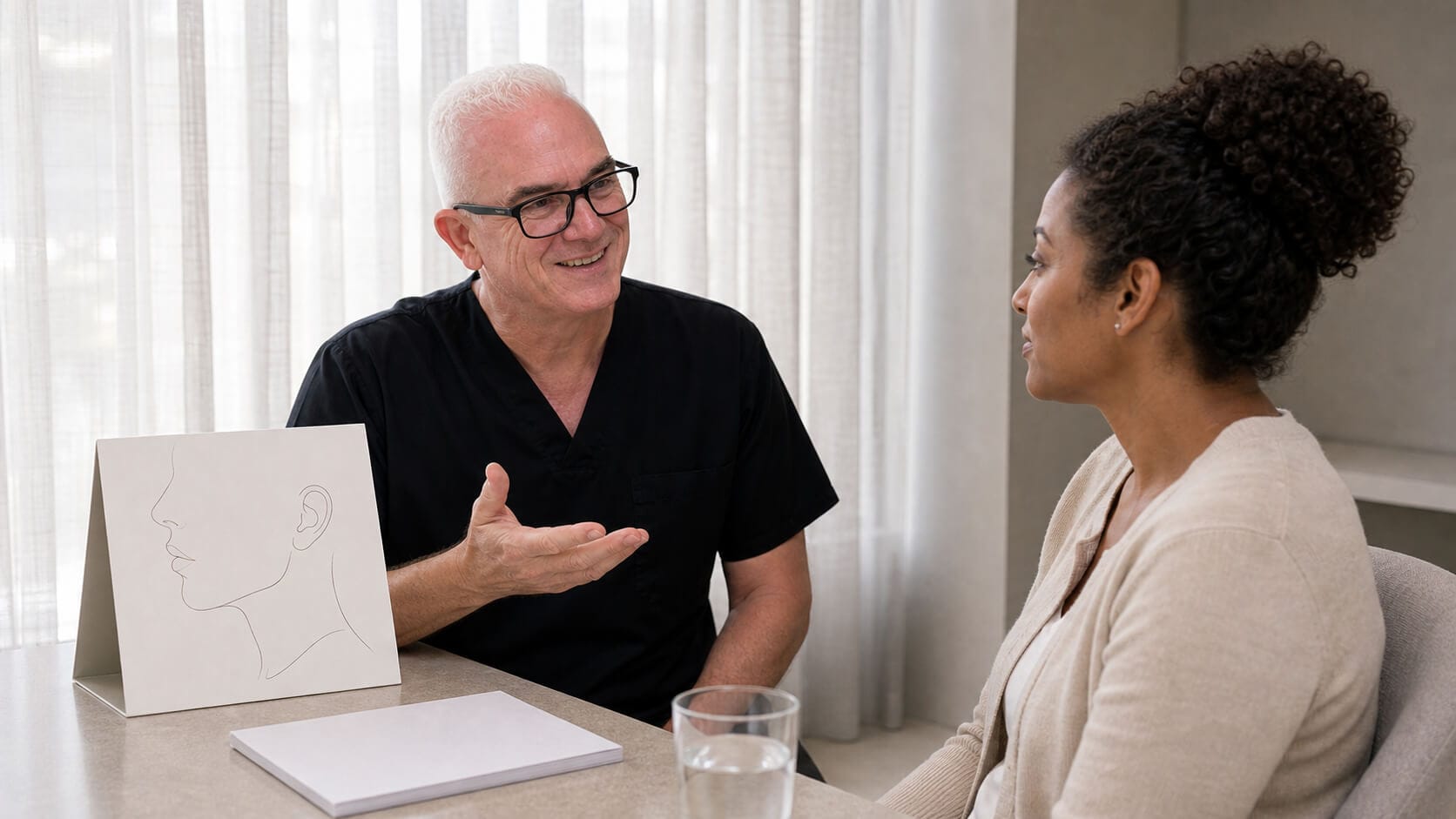
Chin and jawline consultation assessment for consultation planning at Core Aesthetics in Oakleigh
Chin and jawline consultation assessment for consultation planning at Core Aesthetics in Oakleigh. Illustrative consultation or assessment image only. Individual anatomy, suitability and treatment response vary. Not a treatment result or before-and-after image.

The anatomy behind your jawline

A little anatomy helps explain why the lower face behaves the way it does. The jawline is built on the mandible, or lower jawbone, which is the largest and strongest bone of the face and the only movable bone of the skull.

Its curved body and the two rising rami give the lower face its underlying shape, and the chin is formed at the front of that body. Because the mandible provides the scaffolding, changes to it have a noticeable effect on how defined the jawline appears.

Sitting along that bone is the masseter, the muscle that powers chewing by lifting the lower jaw to close the mouth. It is a remarkably powerful muscle, often described as one of the strongest in the body for its size, and its bulk and activity can influence the width and shape of the lower face.

Over the bone and muscle lie the fat compartments and the skin, and just below, the platysma muscle of the neck contributes to the transition between the jaw and the throat. Seen this way, the jawline is clearly a structure made of several layers, which is exactly why a thorough assessment considers all of them.

How the lower face changes over time

Ageing in the lower face is not a single process but several happening at once, across bone, fat, muscle and skin. Understanding them makes it much easier to see why two people with a similar looking concern may need very different advice.

  • Bone. The facial skeleton gradually remodels with age, and the mandible is one of the areas that can lose volume, particularly in the region just in front of the jowl. As this happens, the angle of the jaw can widen and the crisp definition of the jaw border can soften.
  • Fat. The face is organised into distinct fat compartments. With time, the more superficial pads can descend and gather along the jaw to form jowls, while deeper fat can diminish, leaving the area less supported. A face with stronger upper facial support often reads as a triangle with its base at the top, and ageing can gradually invert that shape.
  • Skin. From the mid twenties onward, skin collagen declines by roughly one to one and a half percent each year, which steadily reduces firmness and elasticity over the decades. Less collagen means skin that supports the jawline less tightly than it once did.
  • Neck. The transition between the jaw and the neck, known as the cervicomental angle, can change as soft tissue shifts, which affects how clean the jawline looks in profile.

Because so many factors are involved, there is rarely a single explanation and rarely a single answer. This is precisely why the consultation matters so much.

What Corey assesses in a jawline consultation

During your appointment, Corey works methodically across the whole lower face rather than focusing on one spot. Typically he will consider the following.

  • The jaw border itself, and how defined the mandible appears.
  • The chin, including its projection and how it balances with the rest of the face.
  • The jowls and the soft tissue sitting along the jawline.
  • The jaw muscle, and whether muscle bulk or activity is contributing to the shape of the lower face.
  • Skin quality and laxity, since firmer and looser skin behave very differently.
  • The neck transition, including the angle where the jaw meets the neck.
  • Your medical history, medications, any previous cosmetic treatment, the timing of recent treatment or events, your expectations and your readiness to give informed consent.
  • How the lower face balances with your features as a whole.

Only once this picture is complete does any conversation about options make sense.

Why the whole picture changes the answer

The reason Corey looks at everything is that the same outward concern can have very different causes. Softness along the jaw might be largely skin laxity, or descended fat, or a change in the underlying bone, or a mix of all three. Each of those points toward a different and appropriate response, and some of them are not well suited to a single approach at all. A concern that looks identical in two people can call for two entirely different conversations.

This is why no responsible plan begins before the assessment is done. Identifying the actual contributors is what allows the discussion that follows to be honest, realistic and tailored to you, rather than a guess aimed at a feature in isolation.

Chin and jawline consultation assessment for consultation planning at Core Aesthetics in Oakleigh
Chin and jawline consultation assessment for consultation planning at Core Aesthetics in Oakleigh. Illustrative consultation or assessment image only. Individual anatomy, suitability and treatment response vary. Not a treatment result or before-and-after image.

What Next Steps Can Follow The Consultation?

A jawline consultation can lead in several directions, and each is a legitimate outcome.

  • A discussion of treatment options, where this is clinically appropriate and suitable for you following the assessment.
  • Waiting and reviewing, particularly if something is still settling or there is no need to act now.
  • A referral to your GP or another practitioner, where a concern such as significant skin laxity or a neck issue is better addressed elsewhere.
  • No treatment at all, which is a entirely valid conclusion.
  • Support for skin health through general measures such as sun protection.

Whatever the path, Corey will be straight with you about what is realistic. No honest practitioner offers certain results, and the aim is the most clinically appropriate next step for you specifically.

Chin and jawline consultation assessment for consultation planning at Core Aesthetics in Oakleigh
Chin and jawline consultation assessment for consultation planning at Core Aesthetics in Oakleigh. Illustrative consultation or assessment image only. Individual anatomy, suitability and treatment response vary. Not a treatment result or before-and-after image.

How Does Corey Anderson Approach This Consultation?

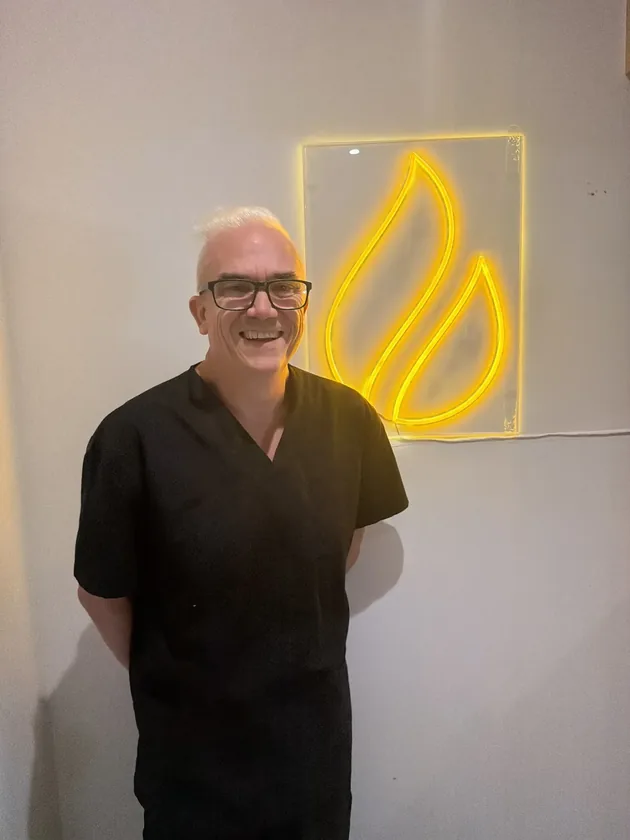
Corey Anderson is a Registered Nurse who has been registered with AHPRA since 1996, so the person assessing your lower face brings decades of clinical experience to the conversation. His manner is calm, kind and unhurried. He listens before he assesses, explains the anatomy and his reasoning in plain language, and never makes you feel hurried. You see the same practitioner from your first consultation through to any future reviews, with no rotating roster and no being passed between strangers.

How Do Natural Looking Goals Stay Grounded?

A very common worry with the lower face is the fear of an overdone, heavy or unnatural result. It is a reasonable concern, and it is one Corey shares. His philosophy is conservative and individual, with the aim of helping you look like yourself rather than applying a single template template. A careful, whole face assessment is the opposite of a hurried approach, and it is what keeps any discussion of options grounded in what genuinely suits your features.

What a jawline consultation is not

  • It is not a commitment to any treatment. Coming in obliges you to nothing.
  • It is not a certain result of a particular result.
  • It is not a single template approach applied to every jawline.
  • It is not a sales appointment, and you will not be pressured.
  • It is not the right step if something feels physically wrong. If you ever have severe or worsening pain, any change to your vision, skin that turns pale or dusky, spreading redness, swelling or a fever after any treatment, treat it as urgent and contact your treating practitioner, seek urgent medical care, or call 000.

When Might Treatment Not Be Appropriate?

There are circumstances in which treatment would not be recommended. Some health conditions, certain medications, and situations such as pregnancy or breastfeeding may mean treatment is not appropriate, and this is always assessed individually.

Treatment may also not be the right answer where a concern such as significant skin laxity is better addressed in another way, where a concern is likely to settle on its own, or where the result someone is hoping for is not realistic. Being told that treatment is not appropriate is a sign of responsible care.

A typical jawline consultation

To give a realistic sense of how it unfolds, imagine someone in their late forties who has noticed their jawline softening and a little early jowling, and who has come in wondering about a clinic based approach they read about. In the consultation, Corey would assess the whole lower face and might find the concern is a combination of some skin laxity, a degree of fat descent and natural bone change.

He would explain each contributor in plain terms, talk honestly about what is and is not well suited to a clinic based approach, and might suggest a combination of measures, a period of watching and reviewing, a referral for the skin component, or simply supporting skin health for now.

He would make no claims about a specific result. The person leaves understanding their own lower face clearly, which is the real value of the visit.

How Should You Prepare For The Consultation?

  • Jot down the concerns on your mind and any questions you would like answered.
  • Note your medical history, current medications and any previous cosmetic treatments.
  • Bring any records from earlier treatment, including what was used and when, if you have them.
  • Come exactly as you are. There is no need to research treatments beforehand.
  • Bring a trusted friend or family member if that helps you feel comfortable.

Book a jawline consultation in Oakleigh

Core Aesthetics is a consultation led clinic in Oakleigh, serving people across the south east of Melbourne including Chadstone, Carnegie, Murrumbeena and Glen Waverley. Every consultation, assessment and review is carried out by Corey Anderson, Registered Nurse, so you are always cared for by the same experienced practitioner.

If you would like to understand your lower face calmly and without pressure, you are welcome to learn more about our approach to cosmetic consultation pathways and previous volume treatments, see what to expect at your first consultation, or book a consultation when the time feels right.

Sources And Further Reading

The anatomy, skin quality or clinical background on this page is general education, not a diagnosis or treatment recommendation.

Clinic Details And Verification

Core Aesthetics is a consultation led clinic at 12A Atherton Road, Oakleigh VIC 3166. Every jawline consultation is carried out by Corey Anderson, Registered Nurse (AHPRA NMW0001047575). You can <a href="/verify/">verify Corey and the clinic</a>, read the <a href="/jawline-treatment-melbourne/">main jawline treatment page</a>, compare <a href="/jawline-vs-chin-treatment/">jawline versus chin planning</a>, or use the <a href="/contact/">contact page</a> if you are unsure what to book.

Regulatory Context

This page is general information for adults. The page language is consultation led and reviewed against Australian guidance for regulated health services and higher risk non surgical cosmetic procedure advertising.

General Information Only

This page is general information for adults and does not replace consultation with a qualified health practitioner. Suitability, risks, timing and treatment options vary by individual. Any medical or prescription treatment options can only be discussed where clinically appropriate after individual assessment.

Is this for you?

Consider booking a consultation if

  • You are an adult patient seeking assessment of jawline border or lower-face definition
  • You want a realistic discussion before any treatment decision
  • You are open to a chin, jowl or jaw muscle pathway if assessment suggests it
  • You value conservative planning and review

This may not be for you if

  • You want treatment claimed before assessment
  • You are not an adult patient seeking elective cosmetic care
  • You need urgent medical, dental or surgical review
  • You want a cosmetic consultation to replace a necessary health assessment

Suitability is confirmed at consultation. This list is general guidance, not a substitute for clinical assessment.

Frequently asked questions

What does a jawline consultation involve?

It is an assessment of your whole lower face, including the jaw border, chin, jowls, jaw muscle, skin quality and the transition into your neck, together with your medical history and goals. It is a conversation and an examination, and it does not commit you to any treatment.

Why look at the whole lower face and not just the jaw?

Because the jawline is the meeting point of bone, muscle, fat and skin. Softness along the jaw can come from any of these, or a combination, and each points to a different appropriate response. Assessing only the jaw border in isolation cannot give an accurate picture.

Is the jawline about bone, muscle, fat or skin?

All four. The mandible provides the underlying shape, the jaw muscle influences width, the fat compartments and skin sit over the top, and the neck contributes to the transition. Ageing affects each of them, which is why the lower face changes in more than one way over time.

What is the masseter and does it affect the jawline?

The masseter is the main chewing muscle, running along the side of the jaw, and it is one of the strongest muscles in the body for its size. Its bulk and activity can influence the width and shape of the lower face. Whether the muscle is contributing to your concern is something assessed during the consultation, and any treatment pathway is only ever discussed where clinically appropriate following that assessment.

Why does the jawline lose definition with age?

Several changes happen together. The mandible can lose a little volume, the angle of the jaw can widen, superficial fat can descend to form jowls, and skin collagen declines by roughly one to one and a half percent each year from the mid twenties, reducing firmness. The combination softens the jaw border over time.

Will I need treatment?

Not necessarily. A consultation may conclude that treatment is appropriate to discuss, that waiting is wiser, that a referral is the right path, or that nothing is needed. The aim is the most appropriate next step for you, whatever that turns out to be.

I have had jaw or chin treatment elsewhere. Can I book?

Yes. You are welcome to book even if you were treated elsewhere. Bringing any records of your previous treatment, including what was used and when, helps make the assessment more accurate. The consultation can also cover suitability, risks, timing, alternatives and whether waiting or no treatment is the more appropriate next step.

Are there times treatment is not appropriate?

Yes. Certain health conditions, some medications, and circumstances such as pregnancy or breastfeeding may mean treatment is not appropriate, and some concerns are better addressed in other ways. This is always assessed individually. The consultation can also cover suitability, risks, timing, alternatives and whether waiting or no treatment is the more appropriate next step.

Do you see people from outside Oakleigh?

Yes. The clinic is based in Oakleigh and sees people from across south east Melbourne, including Chadstone, Carnegie, Murrumbeena, Hughesdale and Glen Waverley. The consultation can also cover suitability, risks, timing, alternatives and whether waiting or no treatment is the more appropriate next step.

What happens at a jawline consultation?

Corey assesses the jaw border, chin, jowls, jaw muscle, skin quality, neck transition, movement, medical history, previous treatment, expectations, risks and consent readiness before discussing any suitable pathway. The appointment may lead to treatment planning, waiting, referral or no treatment.

Why does Corey assess the whole lower face?

Because the jawline is not one isolated line. Chin support, lower cheek tissue, skin quality, jaw muscle activity, the mandible and the neck transition can all influence how defined the lower face appears. The consultation can also cover suitability, risks, timing, alternatives and whether waiting or no treatment is the more appropriate next step.

Is jawline appearance about bone, muscle, fat or skin?

It can involve all of them. The mandible provides the framework, the masseter can influence lower face width, fat compartments and skin sit over the structure, and the neck affects the profile transition. Consultation checks which factors appear relevant.

What is the masseter and can it affect the jawline?

The masseter is a chewing muscle along the side of the jaw. In some people, its size or activity can influence lower face width. Corey may ask about clenching, dental history or jaw symptoms before deciding whether this matters to your consultation.

Why can the jawline lose definition with age?

Lower face change can involve several layers at once, including skeletal support, facial fat compartments, skin quality and neck transition. Medical literature describes facial ageing as layered rather than a single skin-only process. The consultation can also cover suitability, risks, timing, alternatives and whether waiting or no treatment is the more appropriate next step.

Clinical references

  1. TGA: Advertising health services that involve therapeutic goods
  2. Ahpra: Guidelines for advertising higher risk non-surgical cosmetic procedures
  3. Ahpra: Guidelines for registered health practitioners who perform non-surgical cosmetic procedures
  4. Wikipedia: Mandible
  5. Wikipedia: Masseter muscle
  6. Wikipedia: Platysma muscle
  7. The Facial Ageing Process From the Inside Out
  8. Insight into age-related changes of the human facial skeleton
  9. Changes in the Facial Skeleton With Ageing
  10. Decreased Collagen Production in Chronologically Aged Skin
  11. Molecular mechanisms of changes in homeostasis of the dermal extracellular matrix

Written and reviewed by Corey Anderson RN, AHPRA NMW0001047575 · Reviewed 2026-06-21 · Consultation required · TGA and AHPRA guidance is regularly reviewed in preparing this website.

Begin With A Conversation

Book your consultation.

A consultation is a considered first step toward understanding what may or may not be appropriate for you. Booking creates time for assessment, questions, risk discussion and informed consent. It does not promise treatment, a particular outcome or same day care.

Book Consultation

Consultation first. Decisions with context.