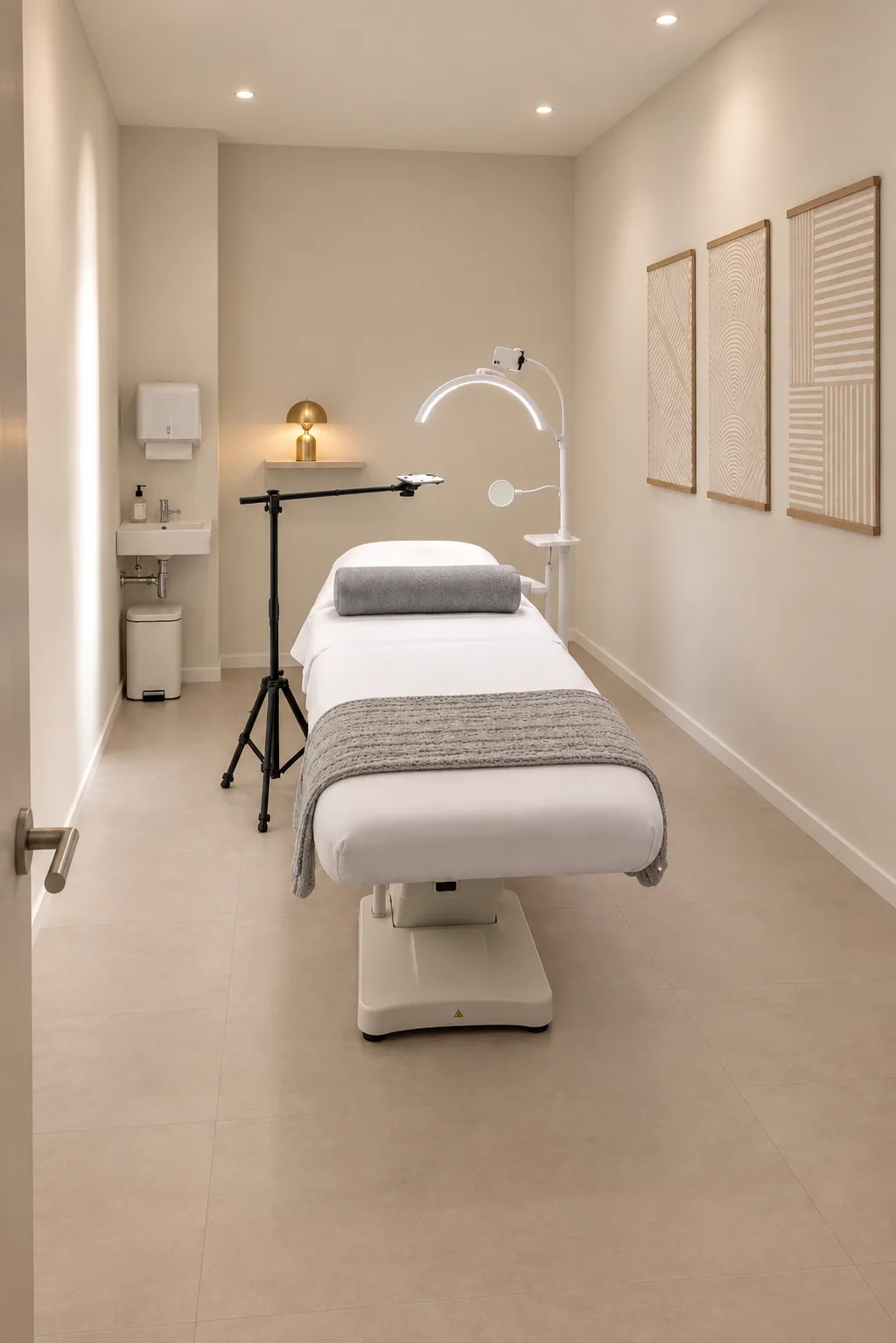
Core Aesthetics is a one practitioner aesthetic treatments clinic at 12A Atherton Road, Oakleigh, run by Corey Anderson, Registered Nurse (AHPRA NMW0001047575).
Oakleigh is a suburb in Melbourne’s south east, 15 kilometres from the central business district, within the City of Monash local government area. The suburb centres on Eaton Mall, a pedestrianised shopping strip off Portman Street, and the broader Oakleigh activity centre. Oakleigh recorded a population of 10,822 at the 2021 census. The suburb is served by Oakleigh Station on the Pakenham and Cranbourne lines, and is accessible via the Princes Highway, Warrigal Road and North Road.
Core Aesthetics is located at 12A Atherton Road, Oakleigh, within the suburb itself. The clinic is a short walk from Oakleigh Station and a short drive from the Monash Freeway interchange at Warrigal Road.
Where the clinic is
Core Aesthetics is at 12A Atherton Road, Oakleigh, Victoria 3166. The location sits in the south east corridor of metropolitan Melbourne, easily reached from the surrounding Hughesdale, Huntingdale, Chadstone, Clayton, Mount Waverley, Glen Waverley, Wheelers Hill and Carnegie suburbs. Oakleigh railway station is a short walk from the clinic. There is off street parking available for patients arriving by car, and the practice rooms are on the ground floor.
Patients also travel from the bayside strip (Bentleigh, McKinnon, Cheltenham, Highett, Moorabbin, Brighton), the inner east (Malvern, Malvern East, Glen Iris) and selected eastern suburbs. The location was chosen for accessibility from the south east rather than for the marketing value of a higher profile address. Oakleigh has the practical advantages of being central to a substantial catchment, well served by transport, and possessed of the kind of unhurried street life that suits a low volume clinic.
Single practitioner, low volume
The clinic is run entirely by Corey Anderson. There is no rotating panel of injectors. Patients see the same clinician at every appointment. Treatment notes, photography and assessment carry forward in continuous detail across years. This is structurally different from most aesthetic treatment clinics in Australia and is the most important single thing to understand about the model.
The choice is deliberate. Continuity of clinician is not a marketing claim that gets tested at the first staff change. It is a clinical method that supports the slow accumulation of small, well considered adjustments over time. For patients who plan to be involved in injectable treatment across multiple years, the value of one practitioner continuity is difficult to overstate. For patients whose preference is to see whichever injector is available on the day, the model is not a fit.
What we provide
The clinical scope is aesthetic treatment: wrinkle (neuromodulator) treatment in the upper face and selected lower face indications, facial volume treatment in defined regions for shape and proportion, lip shaping with conservative facial volume treatment, and the medical use of neuromodulator for primary focal axillary hyperhidrosis. Each treatment is preceded by an in person consultation, and the consultation is treated as a clinical assessment in its own right rather than an obligatory step before treatment.
What the clinic does not provide is also worth naming. We do not offer skin treatments, energy based devices, microneedling, peels, dermaplaning, or topical product retailing. We do not offer surgical procedures or referrals into surgery as part of any package. Where another modality would serve a patient better than aesthetic treatments, we say so, and we do not try to retrofit the goal to what we can offer.
What consultation based actually means in practice
The phrase consultation based is used by many clinics. The version that operates here has specific structural features. The first appointment for any new patient is a consultation, not a treatment. The consultation includes history, motivation, anatomical assessment and standardised photography. Where treatment is appropriate, the planning happens in the same session and the patient leaves with a written plan. The treatment itself is then scheduled at a time the patient chooses, which may be the same day or any time after.
Some patients book a consultation and leave without a treatment plan. That outcome is not a sales failure but a clinical decision. Patients who are not certain about proceeding, who would benefit from waiting, who are presenting with concerns better addressed by a different modality, or who do not have a clear clinical indication today are encouraged to defer. Returning in a few months to think it through is not unusual and is not discouraged.
The C.O.R.E. Method as the underlying framework
The clinic operates on a structured method described as the C.O.R.E. Method: Consult, Organise, Refine, Evaluate. The four step structure is not a marketing acronym. It describes the actual workflow. Consult is the conversation and assessment. Organise is the planning of which regions to address, in what order, over what timeline. Refine is the conservative treatment in stages. Evaluate is the structured review at the next appointment, where the plan adjusts against actual response.
The method is conservative by design. Doses are smaller than the maximum that would be considered correct for a region. Treatment is staged across more than one session where appropriate. The pace of change is gradual. The aim is a result that ages well and that the patient is satisfied with at every interim stage, not a single transformation that the patient has to wait out.
The practitioner
Corey Anderson is a Registered Nurse, registered with the Nursing and Midwifery Board of Australia (AHPRA NMW0001047575) since January 1996. The registration is publicly verifiable through the AHPRA website. Corey practice has been concentrated in aesthetic treatments for the relevant period, with continuing professional development in the area as required by AHPRA registration. The one practitioner model means that every patient at the clinic sees the same clinician at every visit.
The relevance of nurse delivered cosmetic practice in Australia is sometimes raised by patients, particularly with regard to prescribing scope and supervision. Registered nurses operating in aesthetic treatments work within a structured framework that involves prescriber relationships and the relevant Drugs and Poisons regulation in Victoria, alongside AHPRA practice standards. The framework is not unique to this clinic but is the structural basis on which most nurse delivered cosmetic practice operates in Australia.
AHPRA September 2025 and what changed
The AHPRA guidelines for nonsurgical cosmetic procedures that came into force on 2 September 2025 introduced specific requirements that shape current practice across the sector. Registered nurses must have at least one year of full time general nursing experience before performing cosmetic procedures and complete specialised training. Prescribers must conduct an in person or video consultation each time a aesthetic treatment is prescribed; asynchronous prescribing by text or online is no longer acceptable. Suitability assessment must explicitly explore patient motivations.
For patients under 18, a mandatory seven day cooling off period now applies between consent and treatment, and payment cannot be accepted before that period elapses. Continuing professional development specific to cosmetic procedures is mandatory for all practitioners performing them. The clinic has operated within these standards as a matter of clinical practice; the September 2025 guidelines codified them as a sector wide requirement.
What we will not do
Several practices that are common across the aesthetic treatments sector are deliberately absent here. We do not run promotional pricing campaigns, time limited offers, multi session bundles or the inducement style pricing that the AHPRA guidelines explicitly caution against. We do not run loyalty programmes that reward higher treatment volumes. We do not provide before and after gallery imagery of identifiable patients, because the use of patient images for cosmetic treatment promotion sits in tension with section 133 of the Health Practitioner Regulation National Law and with the AHPRA endorsement provisions. We do not name brands, abbreviate brand names or otherwise identify Schedule 4 prescription products to the public, because the Therapeutic Goods Advertising Code prohibits it.
Some of these restrictions are explicit regulatory requirements. Others are clinical and ethical choices. Together they distinguish a consultation based practice from a sales led one. The distinction is sometimes difficult to see from outside, which is part of why this page exists.
How patients typically experience the model
The first appointment runs longer than most patients expect. Conversation, not procedure, takes up the bulk of the time. Patients sometimes arrive prepared to be sold something and find themselves having a slower, more nuanced conversation than they had anticipated. The treatment, when appropriate, is conservative; first time patients who arrive having had aggressive treatment elsewhere sometimes describe the dosing as cautious by comparison. The two week review gives the opportunity to add dose where the response has been insufficient, and that is the moment where the conservative starting dose makes sense to the patient.
Across years of treatment, the model produces results that look settled and unconspicuous in motion as well as in repose. Patients who are looking for visibly modified faces tend to find themselves at clinics with a different model. Patients who are looking for refined, anatomically led, conservative treatment that ages naturally tend to stay with this one.
Cost framing
Pricing is straightforward. Each treatment is priced on the basis of the actual product and time involved, quoted in writing as part of the consultation. There is no surge pricing, no introductory pricing, no time limited promotional pricing and no loyalty price reductions. Patients receive a written treatment plan at the consultation that includes the realistic anticipated cost across the first twelve months of treatment, and there is no commitment to proceed in the same session.
For specific clinical indications (such as severe primary focal axillary hyperhidrosis meeting the Medicare Benefits Schedule criteria with appropriate referral and documentation), partial Medicare claimability may apply. The current eligibility framework is discussed at consultation rather than claimed in advance.
Who this clinic is, and is not, the right fit for
This is a fit for patients who want to take time over a decision, who are interested in the underlying clinical reasoning, who prefer to see the same clinician across years, and who are willing to defer treatment when assessment indicates deferral is the right course. It is also a fit for patients with primary focal axillary hyperhidrosis seeking a structured, conservative treatment relationship.
It is not a fit for patients who want same day walk in service, who have a strong preference for product brand selection, who prefer evening or weekend availability that is more readily found at higher throughput practices, or who are motivated primarily by promotional pricing. None of those preferences are wrong; they simply describe a different clinical model. Naming the difference clearly serves the patient better than trying to be all clinics to all patients.
How to book
Consultations are booked directly through the website, by email, or by phone. The first available appointment is generally within a week or two depending on the time of year. Cancellations and reschedules can be arranged with reasonable notice. Patients receive a written confirmation, an intake form to complete in advance, and any specific pre consultation guidance relevant to the indication being discussed.
Core Aesthetics operates from 12A Atherton Road, Oakleigh, Victoria 3166. The clinic is reached on 0491 706 705 or by email at support@coreaesthetics.com.au. Results vary between individuals. The consultation is the appropriate venue for a clinical conversation about whether this clinic and this model are the right fit for what the patient is hoping to achieve.
A note on how this page is written
The tone of this page is deliberately less promotional than much of the cosmetic clinic content found online. That is not because the clinic is shy about its work; it is because the regulatory environment for advertising health services involving prescription medicines is strict, and because the clinical identity of the practice is most accurately represented in plain rather than persuasive language. Patients who want to evaluate the model can do so on the basis of how it is described here. The substantive evaluation happens in the consultation.
A note on neighbourhood and accessibility
Patients sometimes ask why a cosmetic clinic chose Oakleigh rather than the higher profile addresses in the inner east or the inner south. The honest answer is that high profile addresses do not produce better clinical outcomes. They produce higher commercial overheads that have to be funded somehow, often by higher patient throughput. The model that operates here, slow appointments and low daily volumes, is more naturally hosted in a neighbourhood with reasonable rents and pedestrian scale character. Oakleigh fits.
For patients arriving from further afield, the practical advantages are accessibility by both car and train, the availability of nearby cafes and shops to spend time in either side of an appointment, and the absence of the parking and traffic friction that complicates inner city visits. None of these are clinical considerations. They contribute to whether returning for repeated visits across years feels sustainable.
Returning patients and the rhythm that develops
For patients who become regulars at the clinic, a particular rhythm tends to develop. The first year involves more conversation and adjustment as the conservative dosing is calibrated to the individual response. The second year is usually settled, with the schedule organised around the patient life rather than around an arbitrary clinic interval. By the third year and beyond, the relationship is one of unhurried maintenance, with the practitioner already knowing the patient anatomy, response patterns and preferences in detail.
This is not a rhythm that can be marketed in a single appointment. It is a description of what tends to happen when the model is allowed to operate as designed. Patients who stay tend to stay for years.
A note on patient privacy
The clinic does not maintain a public gallery of patient images. There are several reasons. The TGA Therapeutic Goods Advertising Code restricts the use of imagery that implies the outcome of treatment with prescription medicines. Section 133 of the Health Practitioner Regulation National Law restricts the use of patient endorsements about regulated health services. AHPRA practice guidance on the use of patient images and personal information adds further requirements. Beyond the regulatory framework, the clinic clinical position is that patient privacy in cosmetic medicine matters in its own right and that the absence of a gallery is not a marketing weakness but a clinical principle.
On the broader Oakleigh context
Oakleigh has a long established commercial and community life centred around Eaton Mall and the streets immediately surrounding it. The neighbourhood is well served by public transport, has a substantial Greek community presence reflected in the local cafes and shops, and offers the kind of pedestrian scale environment that suits a small specialist clinic. For patients travelling from further afield, the area is straightforward to spend an hour or two in either side of an appointment.
Is this for you?
Consider booking a consultation if
- You want a one practitioner clinic with continuity of clinician across years of treatment
- You prefer slow, consultation based planning over same day walk in service
- You are interested in the clinical reasoning behind treatment decisions, not just the result
- You are willing to defer treatment when assessment indicates that deferral is the right course
This may not be for you if
- You are looking for same day walk in cosmetic treatment without a prior consultation
- Your preference is for a clinic with a rotating panel of injectors and extended evening or weekend availability
- You are motivated primarily by promotional pricing or loyalty pricing
- You are looking for a clinic that offers skin treatments, energy devices or surgical procedures alongside injectables
Suitability is confirmed at consultation. This list is general guidance, not a substitute for clinical assessment.
Frequently asked questions
Where is Core Aesthetics located?
At 12A Atherton Road, Oakleigh, Victoria 3166, in Melbourne south east. The clinic is a short walk from Oakleigh railway station, with off street parking available. The location is convenient to Hughesdale, Huntingdale, Chadstone, Clayton, Mount Waverley, Glen Waverley, Wheelers Hill, Carnegie and the broader south east corridor.
Who is the practitioner?
Corey Anderson, Registered Nurse, AHPRA registration NMW0001047575, registered with the Nursing and Midwifery Board of Australia since January 1996. Corey is the only practitioner at the clinic and sees every patient at every appointment. The registration is publicly verifiable through the AHPRA website.
What treatments are offered?
Aesthetic treatments only: wrinkle (neuromodulator) treatment, facial volume treatment, lip shaping with facial volume treatment, and treatment of primary focal axillary hyperhidrosis. The clinic does not provide skin treatments, energy devices, microneedling, peels, surgical procedures or topical product retailing. Where a different modality would better serve the patient, we say so and refer.
Can I have treatment on my first visit?
In most cases the first visit is a consultation rather than a treatment. The consultation includes assessment, planning and a written treatment plan. Treatment can be scheduled for the same day where appropriate, or at any time after. There is no obligation to proceed in the same session, and patients are encouraged to take time on the decision.
How is the C.O.R.E. Method different from how other clinics work?
It describes a structured workflow: Consult, Organise, Refine, Evaluate. In practice it means smaller doses than the maximum, treatment staged across more than one session where appropriate, structured review at the next appointment, and adjustment of the plan against actual response rather than against a fixed initial plan. It is slower than single session full dose treatment and produces results that age more naturally.
Why doesn’t the clinic offer promotional pricing or loyalty programmes?
AHPRA guidelines explicitly caution against inducement style pricing for cosmetic procedures, and the broader aesthetic treatments regulatory environment treats inducement driven decision making as a clinical and ethical concern. The pricing here is straightforward: actual product and time, quoted in writing as part of the consultation, with no surge pricing, time limited offers or loyalty price reductions.
Is the clinic AHPRA-compliant under the September 2025 guidelines?
Yes. The clinic operates within the September 2025 AHPRA guidelines for nonsurgical cosmetic procedures, which require in person or video consultation with the prescribing practitioner each time, structured suitability assessment, the seven day cooling off period for any patient under 18, and continuing professional development specific to cosmetic procedures. The clinic was operating to these standards prior to the guidelines being formalised.
Do you treat patients under 18?
Aesthetic treatment for cosmetic indications is not provided to patients under 18 at this clinic. Where treatment for a recognised medical condition (such as severe primary focal axillary hyperhidrosis) is being considered for a younger patient, the AHPRA seven day cooling off period would apply, payment cannot be accepted before that period elapses, and additional clinical thresholds apply.