
Understanding lip shape
Why can men’s lips look thin, small or narrow?
Men’s lips can look thin because of their natural shape, age related changes or how the upper lip moves when smiling. “Thin”, “small” and “narrow” do not mean the same thing: you may be noticing the height of the pink lip, the width of the mouth or how far the lips project. Thin lips are a normal facial variation, not a condition that needs correcting.
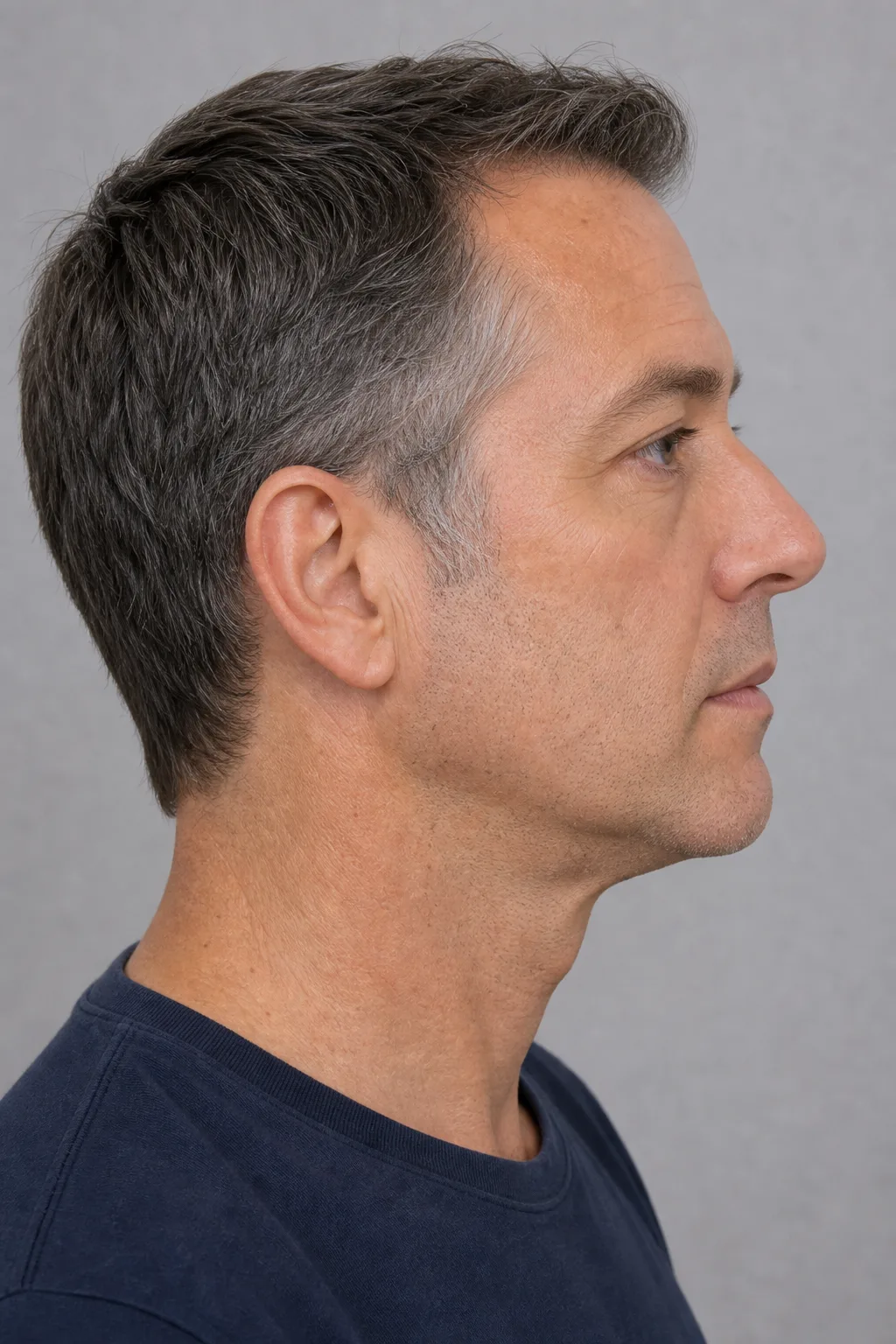
Which part of your lip shape are you noticing?
Start with a description, not a treatment name. A mouth can be wide with a thin upper lip, or narrow with quite full lips. A side profile may raise a different question from a front facing photograph.
| What you notice | What it describes | Useful question |
|---|---|---|
| Little pink lip is visible | Lip height, particularly the upper lip. | Is it thin at rest, only when smiling, or both? |
| The mouth looks narrow | Width from one corner to the other. | Am I concerned about width rather than fullness? |
| The lips sit further back in profile | Projection in relation to the nose, teeth and chin. | Could dental support or lower face structure be relevant? |
Research measuring lip and mouth shape treats these as separate dimensions. One photograph cannot establish which is responsible for your concern.
Are thin lips normal in men?
Yes. Lip size and shape vary naturally between people, including men of the same age. Thin lips do not tell you anything reliable about someone’s personality or masculinity. There is no single male lip ratio that you need to match. If you like your lips as they are, there is no clinical reason to change them simply because another shape is fashionable.
Do men’s lips get thinner with age?
They can. Age related changes may reduce the visible height of the pink lip and alter the skin above it, although the pattern differs between people. A study comparing adult age groups found differences in lip height and width, not a uniform loss of projection. It does not predict how your own lips will change. Comparing older photographs in similar lighting can help distinguish a gradual change from your usual shape.
Why does my upper lip disappear when I smile?
The upper lip moves upward when you smile, changing how much pink lip is visible. A 3D study measured upper lip elevation during smiling. Compare your relaxed expression with movement, not one photo. See our thin upper lip guide.
Do photos and facial hair change how lips look?
They can change how easily you see the lip border and how you judge proportion. A moustache may cover part of the upper lip, while camera distance, lighting and expression can make photographs difficult to compare. Bring a photograph that shows what you mean, but avoid using a close selfie or edited image as a measurement of your face. The assessment should include how your lips look and move in person.
Can lip balm, hydration or exercises make lips bigger?
Emollient lip balm may soothe dryness, but does not change a naturally thin lip’s shape. Drinking extra water is not established as a way to enlarge lips. A small facial-exercise study could not establish effectiveness and did not test lip enlargement; exercises are not an evidence-established way to enlarge lips. Avoid irritating “plumping” tricks: temporary swelling is not lasting change.
If cracking, soreness or a new change persists, ask a pharmacist, dentist or GP for advice.
What can an assessment help you decide?
A useful assessment separates the feature you notice from the change you actually want. You might want to understand a less visible upper lip, a difference between the two sides or how your lips relate to your chin. You may decide that reassurance and no change are enough.
At Core Aesthetics, the consultation considers your health, previous treatment, lip movement and what you want to preserve. If a cosmetic option is appropriate to discuss, you should understand what it could and could not change, the alternatives, recovery and full cost before deciding. A dental concern may need dental advice; changing lip appearance does not correct a bite problem.
You can read about lip proportions or go straight to the men’s lip consultation page if you want an individual assessment.
What does a subtle change mean?
“Subtle” describes your preference, not a predictable outcome. Any proposed option needs an individual assessment of suitability and a discussion of its limits, risks, possible asymmetry and recovery. Explain which features you want to keep, including your usual expression and the balance between your upper and lower lip. You can pause if the likely change does not match your priorities.
What should I know before agreeing to a cosmetic procedure?
The risks depend on the procedure. These may include discomfort, swelling, bruising, infection, asymmetry or a result you do not like. Some procedures also carry uncommon but serious risks; a short website list cannot replace an individual explanation.
Ask why the option is being recommended, what will remain unchanged, how complications are managed and who to contact afterwards. Read our four questions before agreeing to treatment. You can choose more time, another opinion or no treatment.
What happens at a lip consultation in Oakleigh?
Allow around 30 minutes for your initial consultation, which is at no charge. Bring details of previous lip treatment, relevant health conditions, medicines and the particular change you have noticed. You do not need to choose a treatment in advance. Same day treatment may be discussed only if assessment, informed consent and the required clinical arrangements support it; booking does not guarantee treatment.
Reviews are usually offered two weeks after treatment and are free to attend. Fees apply if additional treatment is required. See consultation and cost information before booking.
When does a lip change need medical advice?
A longstanding lip shape is different from a new lump, persistent ulcer, unexplained numbness or a sudden change. Ask a dentist or GP to assess a new or persistent concern. Sudden facial weakness or difficulty speaking needs emergency assessment: call 000. Do not book a cosmetic appointment as a substitute for urgent care.
Visit Core Aesthetics in Oakleigh
12A Atherton Road, Oakleigh VIC 3166, within BeautyTHEQUE. Enter directly from Atherton Road; there is one step at the entrance. Street parking is available out the front, with a car park across the road, subject to availability.
Appointments are preferred, but not mandatory. Check live availability before travelling, or call 0491 706 705 if you need help planning your visit.