Your whole-face assessment

What happens at a facial volume consultation?

If a hollow, flatter-looking area or change in facial balance is difficult to place, you can bring that uncertainty with you. Corey will look at how the areas relate, listen to what you notice and help you understand a calm next step.

Several areas, one considered conversation

  • Consultation-led assessment
  • Corey Anderson RN
  • Oakleigh, Victoria
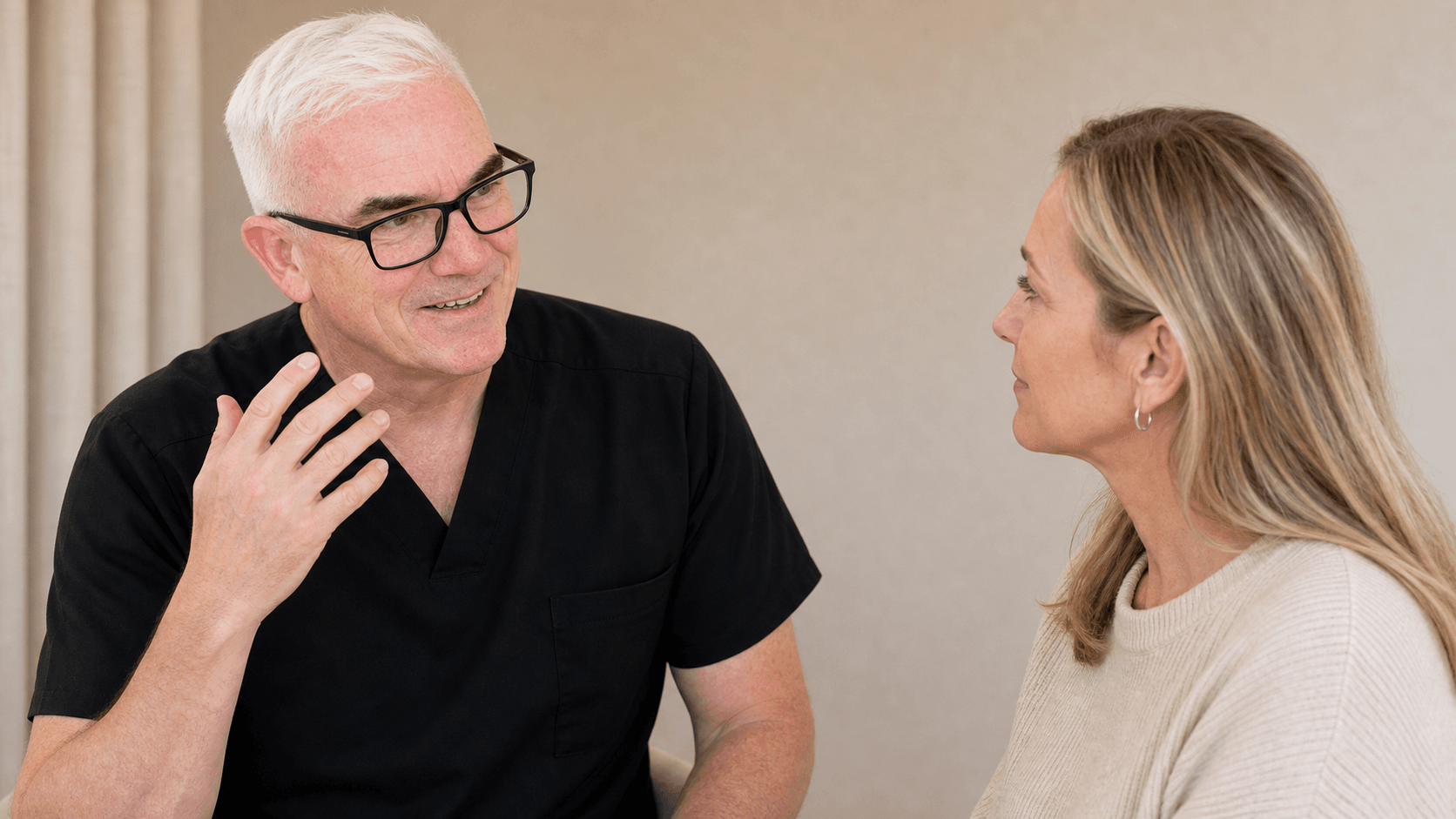
Corey Anderson RN listening to an adult patient during a whole-face consultation
A whole-face consultation begins with the change the patient has noticed and wants to understand.
Quick summary

A facial volume consultation is a whole-face conversation and assessment for adults who notice hollowing, flattening or a change in balance across one or several areas. Corey Anderson RN considers facial relationships, skin, movement, relevant health history and previous cosmetic care before explaining whether a focused option, more time, another care pathway or no cosmetic treatment is the most useful next step.

Start with the change you have noticed

You may see a flatter cheek, a deeper-looking shadow, hollowing at the temples or a change that seems to cross several parts of the face. You do not need to decide what caused it or choose an area from a treatment menu before you arrive.

Corey begins with your view, then considers the face as a connected whole. The appointment can give you clearer language for the concern and a practical next step without assuming that cosmetic treatment is needed.

Is this the right consultation for your question?

Several areas

The change feels connected

Stay here when cheek, temple, under-eye or lower-face changes seem related or are difficult to separate.

One clear area

The cheek is the main concern

The cheek volume consultation owns that focused appointment and midface assessment.

Possible causes

You want to map the source first

The facial change assessment compares skin, support, movement, light and previous care.

Broader starting point

You are unsure which concern leads

Begin with the general aesthetic consultation when your question is wider than facial support or volume.

Corey Anderson RN discussing connected facial areas with an adult patient
Looking at the face as a whole can help separate the feature you notice from the factors that may be contributing.

Several areas can belong to one question

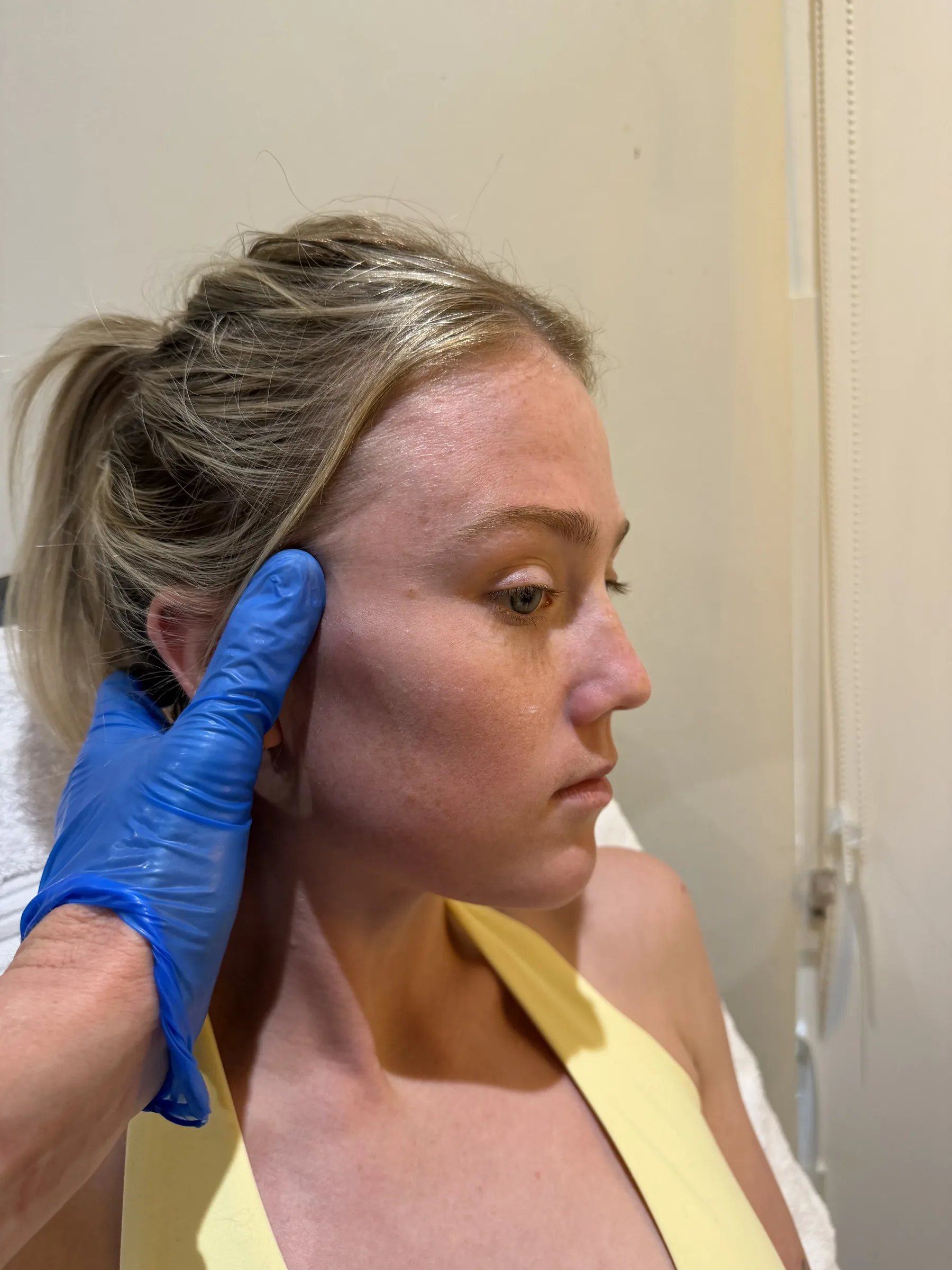
A visible hollow or shadow does not identify its own source. Cheek support can affect how the nearby under-eye area reads; temples frame the upper face; skin and movement can change how light falls; and previous cosmetic care can alter what needs review.

Corey observes the face at rest and in expression, from ordinary conversational angles. He combines that view with what you have noticed, relevant health information and any useful previous-care records.

Whole-face assessment does not mean whole-face treatment. It means any recommendation is made with enough context to stay personal and proportionate.

What will the appointment help clarify?

The pattern

What appears connected?

Corey explains which observations may belong together and what cannot be decided from appearance alone.

The choices

Which pathways are reasonable?

You may discuss a focused option, skin or health care elsewhere, more time, review or no cosmetic treatment.

The decision

What happens next?

If an option is suitable to consider, its limits, material risks, alternatives, timing and costs are discussed before you choose.

Bring the change, not a treatment plan

A useful starting sentence is: ‘I notice this most when … and I would like to understand …’ You can point to more than one area, describe a change in photographs or say that you are not sure where it begins.

If previous cosmetic care may still be relevant, bring dates, areas and records if available. You do not need perfect information for Corey to listen and help you decide what should be checked next.

Corey Anderson RN and an adult patient reviewing a whole-face assessment together
The recommendation follows your observations, examination and history rather than a preset list of areas.

From observation to a personal next step

Corey talks you through what appears relevant and where uncertainty remains. If one area deserves a closer assessment, he can narrow the conversation. If skin, dental or medical care should come first, he can explain why that pathway is more useful.

When a cosmetic option is suitable to discuss, planning can be focused or staged rather than trying to address every observation at once. You can ask questions, hear the recommendation and take time to decide. Same-day care is never assumed; it may only be discussed when assessment, informed consent and practical circumstances support it.

What to bring for a useful conversation

Bring thisWhat helpsWhy it matters
Your observationWhere and when you notice the change, in your own words.It keeps the assessment centred on your real question.
Your health detailsCurrent medicines, allergies, relevant conditions and recent changes.Accurate context supports a safe suitability discussion.
Previous careKnown dates, areas, records or photographs if available.Corey can understand what may still be relevant without guesswork.
Your prioritiesWhat you want clarified and what would feel like too much.Your pace and preferences belong in any shared decision.

When another pathway or more time comes first

Corey may recommend waiting when previous care is still settling, the skin is irritated, important health information is missing or you would simply prefer more time. Pregnancy or breastfeeding, active infection, an unresolved medical concern or a question outside the clinic’s scope also changes the appropriate pathway.

A sudden, painful, one-sided or otherwise unexplained facial change needs timely medical assessment rather than a routine cosmetic consultation. For the fuller decision framework, read the treatment suitability assessment and patient safety guide.

Corey Anderson RN welcoming an adult patient for a private consultation in Oakleigh
You meet directly with Corey to talk through what you notice and what you want the appointment to clarify.

What to expect at your visit

You will meet directly with Corey for a calm, private conversation about the facial change you have noticed and what you would like to understand.

Bring with youYour observation and historyMedicines, allergies, previous-care details and any useful photographs or records.
Your practitionerCorey Anderson RN12A Atherton Road, Oakleigh · Ahpra NMW0001047575

Corey assesses the concern in context, answers your questions and explains the reasonable next steps. Current costs are discussed before you decide, and you are welcome to use the visit for information only.

Consultation first

Come in with a change you want to understand

Meet Corey to place the areas you notice in context and leave with a clearer, personal next step.

Book consultation

Is this for you?

Consider booking a consultation if

  • You are an adult seeking assessment of facial hollowing, flattening, support or proportion concerns
  • You want a whole-face volume assessment before deciding whether treatment is appropriate
  • You value conservative planning, risk discussion and realistic expectation setting
  • You are open to waiting, correction review, referral or no treatment if that is safer

This may not be for you if

  • You want a pre-decided result or a treatment decision without assessment
  • You are not an adult patient
  • You are pregnant, trying to conceive or breastfeeding and are seeking elective aesthetic treatment
  • You have an active infection, unhealed skin or an unresolved medical concern in the area to be assessed

Suitability is confirmed at consultation. This list is general guidance, not a substitute for clinical assessment.

Frequently asked questions

What if I searched for facial volume restoration consultation or volume loss treatments Melbourne?

Those searches can describe the concern, but they do not decide the plan. Corey assesses support, proportion, hollowing, flattening, skin quality, previous treatment, medical history, suitability and risk before discussing whether any treatment pathway is appropriate.

What happens during a facial volume consultation?

Corey assesses facial structure, hollowing, flattening, support, skin quality, previous treatment, medical history, expectations, risks and suitability before discussing whether any treatment pathway is appropriate.

Is facial volume consultation different from cheek consultation?

Yes. Cheek consultation focuses on the cheeks and midface. Facial volume consultation is broader and may include temples, midface, folds, lips, lower face support and the relationship between these areas.

Can I choose the area I want treated?

You can explain the area that bothers you, but Corey still needs to assess whether that area is the main driver of the concern. A visible concern may be influenced by nearby structures.

Can treatment happen on the same day?

Some adult patients may be suitable for same day treatment, but this is not automatic. Corey first assesses the concern, medical history, suitability, risks, alternatives, expectations and consent. If proceeding is not appropriate, he may recommend waiting, review, referral or no treatment.

What if previous treatment is still present?

Previous treatment can change anatomy and suitability. Corey may recommend review, waiting, correction discussion, referral or a conservative plan depending on what is found during assessment.

Can Corey recommend no facial volume treatment?

Yes. No treatment may be recommended if the concern is not volume related, risk is not justified, expectations are unrealistic, timing is poor or another pathway is more suitable.

What risks are discussed?

Relevant risks may include swelling, bruising, asymmetry, tenderness, lumps, infection, dissatisfaction, delayed settling and rare serious complications related to vascular anatomy. Corey also discusses limits, alternatives, aftercare, review access and reasons to wait or not proceed.

How should I prepare?

Bring your medical history, current medicines, previous treatment details and older photos if they show how your face has changed. Clear context helps Corey make the consultation more useful.

Why does consultation matter before treatment planning?

Consultation matters because treatment planning should follow individual assessment, not a fixed menu. It gives time for questions to ask, informed consent, risk discussion and decision making without pressure.

Is facial volume consultation different from a general aesthetic consultation?

Yes. A general aesthetic consultation can cover many concerns. A facial volume consultation is focused on support, proportion, ageing, anatomy, previous treatment, suitability, risks and whether a volume pathway is appropriate.

How can I verify the practitioner before booking?

Corey Anderson is a registered nurse. Patients can check Ahpra registration NMW0001047575 and clinic details through the Core Aesthetics verification page before booking. Verification is separate from suitability, which still needs an individual consultation.

Clinical references

  1. TGA: Advertising health services involving therapeutic goods
  2. Ahpra: Cosmetic procedure guidelines
  3. Ahpra: Guidelines for advertising cosmetic procedures

Clinically reviewed by Corey Anderson RN, AHPRA NMW0001047575 · Reviewed 12 July 2026 · Consultation required · TGA and AHPRA guidance is regularly reviewed in preparing this website.