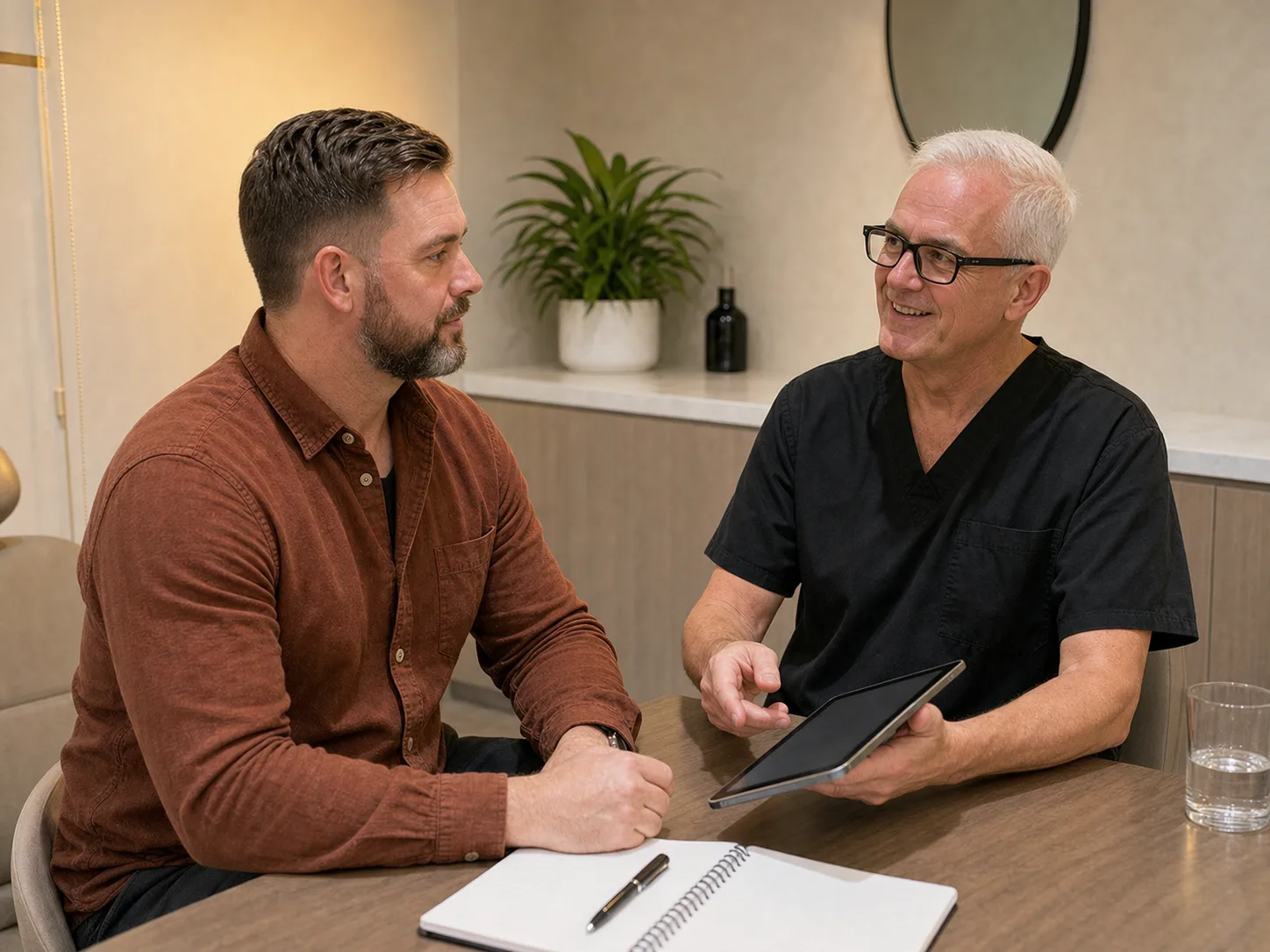
Aesthetic consultation for men at Core Aesthetics is a private clinical assessment with Corey Anderson RN. It reviews the concern, medical history, facial structure, expression, skin quality, previous treatment, expectations, timing, privacy needs, risks, alternatives and which options may be suitable, whether timing needs adjusting and what next step fits best. You do not need to know which treatment you want before booking. The consultation is designed to turn a broad concern into a safer decision pathway.
Why Men Often Need A Different Consultation Conversation
Men often describe concerns differently. Some say they look tired, stern, older than they feel, less rested, less balanced, more sweaty than expected or unsure whether a previous treatment was right. Others are not seeking visible change; they want to understand whether anything should be done at all.
That is why this guide starts with assessment rather than a treatment list. The useful question is not whether a treatment exists. The useful question is whether your concern, health history, anatomy, timing and expectations make any treatment discussion appropriate.
Before You Book
You do not need to know a treatment name before booking. A useful starting point is knowing what you have noticed, how long it has been present, whether it is changing, whether symptoms are involved and what would make the appointment worthwhile even if treatment is not recommended.
It is also useful to know what you want to avoid. Many men are more concerned about looking overdone, looking unlike themselves, having poor timing before work or sport, or feeling pressured into a decision than they are about a single treatment area.
What To Bring
Bring a list of medications, allergies, relevant health conditions, previous treatment dates where known, recent skin or medical concerns, and any current symptoms in the area to be assessed. If you have had cosmetic treatment elsewhere, say so early, even if you do not remember every detail.
You can bring notes or photos that explain what you have noticed. Photos are most useful when they show timing or change over time. They should not replace clinical assessment, because lighting, expression, angle and camera distance can distort what a person thinks they are seeing.
What The Consultation Checks
The consultation should make the decision structure visible. Corey is not only looking at the area you mention. He is checking whether the concern is suitable for clinic assessment, whether another factor is contributing and which options may be suitable, whether timing needs adjusting and what next step fits best.
| Consultation area | What Corey considers | Why it matters |
|---|---|---|
| Medical history | Medicines, allergies, health conditions, skin status and previous treatment | Suitability and risk cannot be judged from appearance alone |
| Facial movement | Expression, resting lines, brow position and muscle patterns | Movement changes what may be suitable or unsuitable to discuss |
| Facial structure | Jawline, chin, cheeks, temples, under-eye support and balance | A single concern may be influenced by nearby anatomy |
| Timing | Work, sport, events, travel, review and aftercare practicalities | Poor timing can make waiting the safer answer |
| Expectations | What you want to preserve, avoid and understand before deciding | Consent is stronger when limits are clear |
Common Consultation Starting Points For Men
Men commonly ask about upper face expression lines, under eye tiredness, jawline or chin balance, facial structure, lip proportion, sweating concerns, previous treatment, correction concerns, or whether a change they have noticed should be left alone. These are starting points, not a predetermined pathway pathways.
For example, a tired appearance may involve sleep, skin quality, under eye anatomy, midface support, health context or simply harsh lighting. A jawline concern may involve chin projection, lower face support, posture, weight change or expectations shaped by photos. Corey uses consultation to separate what can be assessed from what should not be treated.
Privacy, Work, Sport And Timing
Men often want to plan around work, meetings, sport, gym training, travel, family commitments or social events. Those questions belong in the appointment. Timing is not a small detail when aftercare, swelling, bruising risk, review or delayed decision-making may matter.
If the timing is poor, waiting can be the better decision. The consultation should let you ask what to avoid after treatment, when review may be needed, what warning signs require advice and whether it is sensible to attend only for assessment first.
If You Do Not Want The Change To Look Obvious
Say that directly. A restrained plan starts with language like: I want to understand the concern, I do not want to look overdone, I want to preserve expression, I want to avoid a change that looks unlike me, or I am not sure treatment is right.
Those statements are clinically useful because they help Corey test whether expectations and available options align. They also make it easier to recommend waiting, declining treatment or choosing a slower review pathway if that is safer.
How assessment shapes the next step
The next step follows an individual assessment of the concern, risks, alternatives and timing. That decision depends on assessment, suitability, informed consent, risk discussion, timing, patient readiness and whether proceeding is clinically appropriate.
You can also attend for assessment only. There is value in leaving with clearer information, a better understanding of risk, or a decision to wait. A consultation is not wasted because treatment did not happen.
When Timing or another clinically appropriate pathway May Be Better
Timing or another clinically appropriate pathway may be recommended if there are active skin issues, eye symptoms, infection signs, unresolved medical concerns, unclear previous treatment history, unrealistic expectations, pressure from someone else, poor timing, or a concern outside clinic scope.
This is part of responsible care. A page for men should not imply that every concern becomes a treatment plan. It should make it easier to recognise when the safer next step is assessment, medical review, time or an agreed consultation plan.

Verification And Local Clinic Details
Core Aesthetics is located at 12A Atherton Road, Oakleigh VIC 3166. The clinic is led by Corey Anderson RN, and patients can check registration through the Core Aesthetics verification page and the Ahpra public register using NMW0001047575.
For practical next steps, see book a consultation, contact, pricing, team and cosmetic clinic Oakleigh.
Which Men’s Consultation Guide Fits Your Next Question?
If you want the broader men hub, read men’s aesthetics Melbourne. If your question is whether men book a consultations at all, read do men get aesthetic consultation?. If your concern is specific, read men’s wrinkle consultation, lip consultation for men or will lip treatment look obvious for men?.
If your main question is safety or decision making, read treatment suitability assessment, what to ask before consultation, patient safety and why an agreed consultation plan may be recommended.
Book A Men’s Aesthetic Consultation
Book a consultation if you want Corey to assess your concern, explain suitability, discuss risks, clarify privacy and timing, and decide which options may be suitable, whether timing needs adjusting and what next step fits best.
Book a consultation to start with assessment rather than choosing from a treatment menu.
Is this for you?
Consider booking a consultation if
- You are an adult man considering private aesthetic consultation
- You want assessment before choosing a treatment pathway
- You want to discuss privacy, work timing, sport, risks, consent and what to avoid
- You are open to timing or another clinically appropriate pathway where appropriate
This may not be for you if
- You want a promised appearance change before assessment
- You want treatment without medical history review, suitability discussion or informed consent
- You have urgent, painful, infected, one-sided, eye-related or unexplained symptoms that need medical review first
- You are seeking treatment because of pressure from another person or an urgent event
Suitability is confirmed at consultation. This list is general guidance, not a substitute for clinical assessment.
Frequently asked questions
What happens at an aesthetic consultation for men?
Corey reviews what you have noticed, your medical history, medicines, allergies, previous treatment, timing, expectations and risk factors. He then assesses facial movement, structure, skin quality and suitability before discussing whether any treatment pathway is appropriate. The appointment may also lead to timing or another clinically appropriate pathway.
Do I need to know which treatment I want?
No. Many men arrive with ordinary language rather than a treatment name: tired-looking features, stronger lines, facial imbalance, sweating, lip proportion, jawline change or uncertainty about where to start. Corey can help decide whether the concern belongs in clinic scope and which information matters before any decision.
What should I bring to the appointment?
Bring your medical history, medicines, allergies, relevant health conditions, previous cosmetic treatment details where known and any timing pressures around work, sport, travel or events. Notes can help if you feel awkward explaining the concern. Photos may help describe timing, but assessment still needs to happen in person.
Can I ask Corey what not to do?
Yes. That is often one of the most useful questions. You can ask what may look too obvious, what may be unnecessary, what risks matter for your face, what should be left alone and when waiting is the better choice. Good consultation should make boundaries clearer, not just add options.
How are suitable options and timing discussed?
The consultation focuses on assessment, suitable options, relevant risks, timing and an agreed next step. Corey first needs to assess suitability, discuss risks and alternatives, confirm informed consent, consider timing and decide whether proceeding is appropriate. You can also use the appointment for assessment only and decide later.
Can a men’s private consultation change the timing or recommended plan?
Yes. An agreed consultation plan can be the responsible outcome when the concern is outside scope, expectations are not realistic, timing is poor, symptoms need medical review, previous treatment history is unclear or the safest answer is to wait. A careful refusal protects the patient and the quality of the decision.
Is the consultation private?
The consultation is a private clinical appointment, not a public treatment menu. You can discuss work visibility, social timing, sport, travel, aftercare and whether you want a restrained plan. Privacy also means the public page cannot replace personal advice because individual assessment is needed.
What if I have had treatment elsewhere?
Tell Corey early and bring dates, practitioner details, aftercare notes or records if you have them. Incomplete information does not automatically prevent assessment, but it can change how cautious the plan needs to be. Sometimes waiting, requesting records or referral is safer than adding more treatment discussion.
How do I check Corey’s registration?
Corey Anderson is a Registered Nurse. You can use the Core Aesthetics verification page and the Ahpra public register to check registration number NMW0001047575 before booking. Verification is especially useful if you are comparing clinics or want to understand who is responsible for assessment.