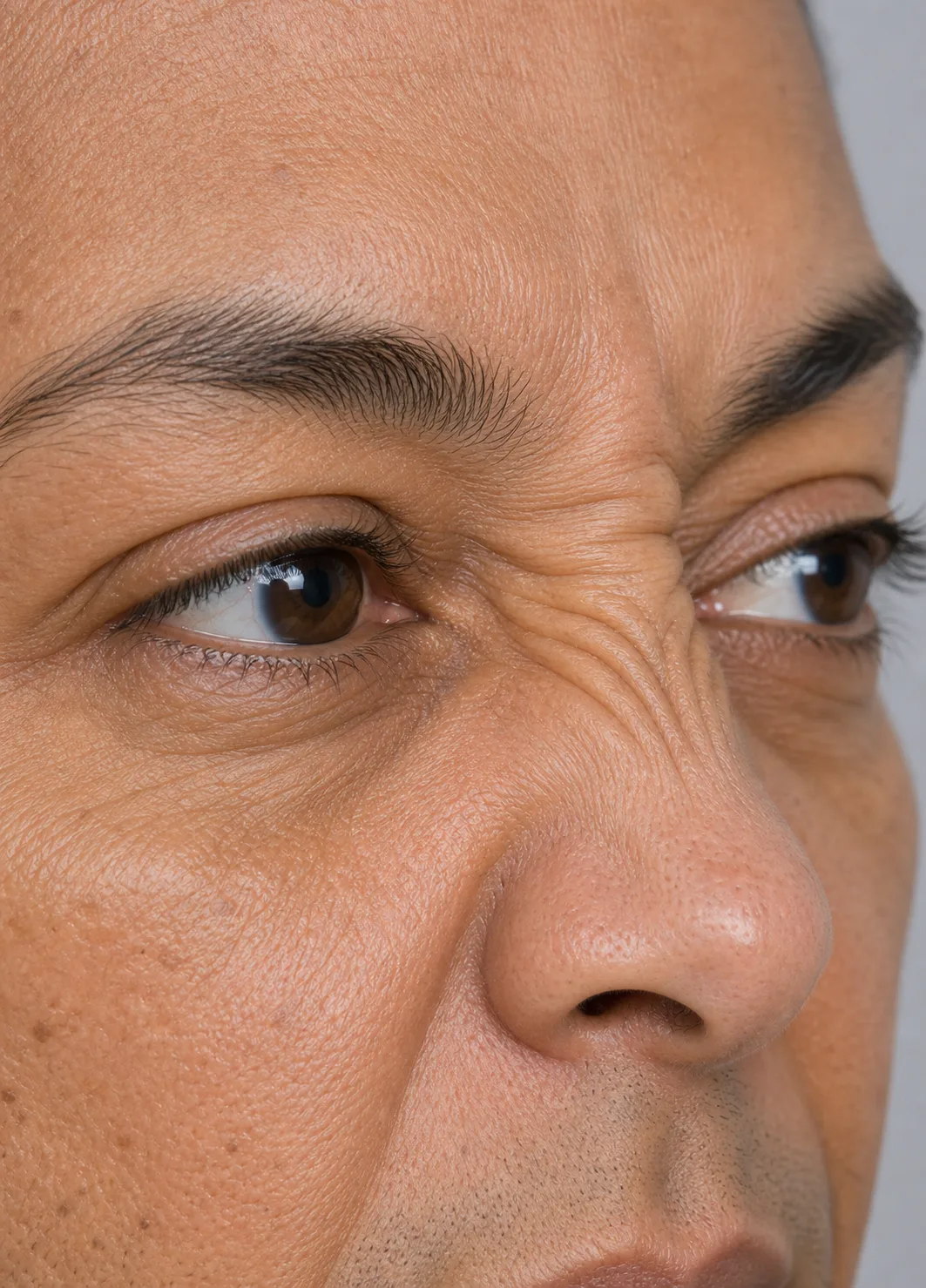
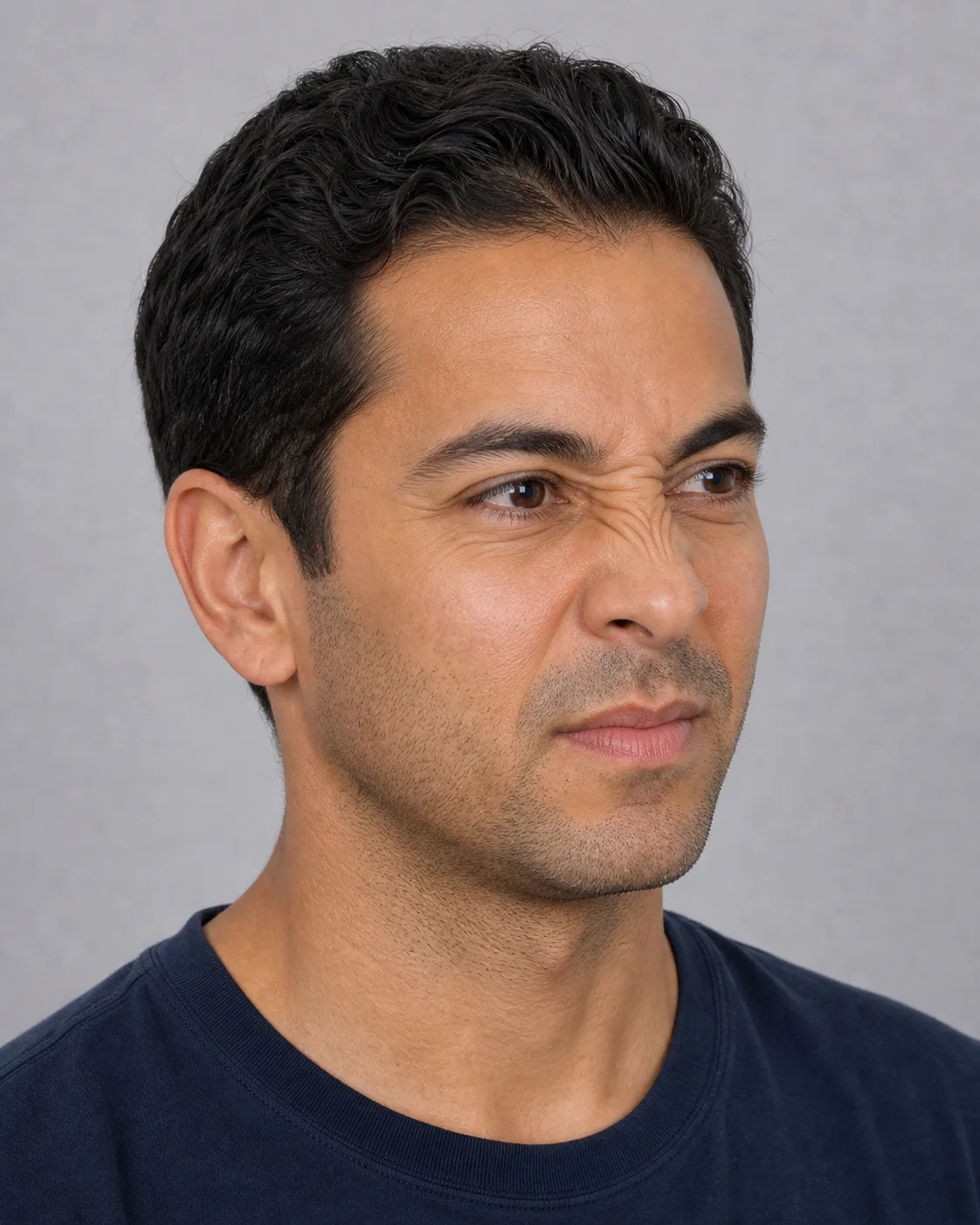
Bunny lines are small creases beside the upper nose that can appear when the nose scrunches during smile or other expression. They may reflect movement, a resting skin crease or a broader upper face pattern. Corey Anderson RN assesses the nose, frown, eye area and smile together before explaining suitable options, skin-care context, timing and any other clinical input.
Why Does The Whole Expression Pattern Matter?
Bunny lines sit in a small but connected part of the face. The movement that creates them can overlap with frowning, squinting and smiling. A line beside the nose may also remain visible at rest because of skin quality rather than movement alone.
This page explains those differences so you can understand whether movement, a resting crease, skin quality or nearby expression deserves the closest attention.
Which Movements Create Lines Beside The Nose?
The pattern matters more than the informal name.
| What Corey observes | Why it matters | Possible direction |
|---|---|---|
| Nose scrunch during expression | Shows whether the upper nose movement is the main driver | Discuss suitability only after the connected smile pattern is checked |
| Frown and eye area movement | Nearby muscles can change how the upper nose works | Assess the whole upper face rather than one crease in isolation |
| A line that remains at rest | Skin quality may contribute more than movement | Set realistic expectations and compare movement-focused and skin-care pathways |
| Previous upper-face care | Changed movement elsewhere may make the nose more noticeable | Review settling and the broader pattern before choosing the next step |

Who May Find This Page Useful?
This page is for adults who notice upper-nose lines during scrunching, smiling or strong expression and want to understand what may contribute. It is also useful when previous upper-face care appears to have changed nearby movement.
A consultation helps separate movement from resting skin texture and identifies health, pregnancy, breastfeeding, active skin or timing factors that need to shape the plan. Corey explains the most useful pathway without expecting you to diagnose the line first.
What Happens In Consultation
Corey reviews nose scrunch movement, smiling, frown and forehead movement, eye area expression, smile balance, resting lines, skin quality, medical history, medicines, allergies, previous cosmetic treatment, timing and expectations.
Because a small area can still influence expression balance, Corey explains how conservative, staged or adjusted timing may affect the plan and what follow-up would be useful.
Movement Lines Versus Skin Creases
Some upper nose lines appear only during expression. Others remain visible when the face relaxes. Some are more related to skin quality, texture, sun exposure history or surface change than to movement alone.
This distinction affects suitability and expectations. A movement related concern may be assessed differently from a resting crease or skin quality concern.
Upper Face Balance Matters
Bunny lines are often discussed alongside frown, forehead or eye area concerns because the upper face works as a connected system. If one area is treated or restricted elsewhere, another movement pattern may become more obvious.
Seeing the broader expression pattern helps Corey explain which feature is most relevant and whether a movement-focused option, skin-care discussion or another next step best fits what you notice.
Smile Balance And Small Area Risk
The upper nose is a small area close to smile related movement, so planning needs to preserve natural expression and remain proportionate to the original concern.
Corey explains the relevant risks, limits and alternatives before any decision, then clarifies suitable options, practical timing and whether a different approach would better protect movement.
What Corey Reviews Before Any Plan
A bunny line consultation may include assessment of nose scrunch movement, frown movement, forehead movement, eye area expression, smile balance, resting creases, skin quality, previous cosmetic treatment, medicines or supplements, health history, allergies, timing, expectations and informed consent.
Corey also explains treatment limitations. Individual response varies, and treatment planning cannot assure a specific appearance, degree of change, duration or maintenance interval.
Suitable Options, Timing And Follow-Up
Care may be possible after Corey has assessed the movement pattern, explained the relevant risks and limits, answered your questions and confirmed informed consent and suitable timing.
Your consultation should leave you clear about the options that fit, what each can and cannot address, aftercare, review and the agreed next step. You can proceed when clinically appropriate or choose more time if you prefer.
When Does Another Approach Fit Better?
A skin-care discussion may fit better when the line remains mainly at rest. Adjusted timing or another clinical pathway may be more useful when nearby movement, health history, medicines, pregnancy, breastfeeding, irritated skin or an important event changes the risk discussion.
Corey explains why that pathway fits and what a practical next step looks like, so the consultation still gives you a clear answer.
Risks, Limits And Consent
Risks that may need to be discussed include bruising, swelling, tenderness, headache, asymmetry, an expression change that feels noticeable, an effect that is too subtle, or a response that differs from what was expected.
Risk depends on anatomy, previous care, medicines, health factors, timing and individual response. Consent is only meaningful when the limitations, suitable choices, aftercare and review arrangements are clear.
Aftercare And Review
If treatment proceeds, Corey explains aftercare and review expectations before you leave. Review helps assess comfort, expression, symmetry and how the area has settled in the broader upper face pattern.
This is especially relevant when the concern is small, because small area changes need to be judged in motion rather than in a single still photo.
How Can You Check The Practitioner And Clinic?
Core Aesthetics consults from 12A Atherton Road, Oakleigh VIC 3166. Consultations are led by Corey Anderson RN, Ahpra registration NMW0001047575 Assessment and consent guide a clear discussion of suitable options, timing and follow-up.
Use Verify Core Aesthetics and the Ahpra public register to confirm the practitioner. This page was reviewed on 5 September 2026 for upper nose movement accuracy, risk language, image relevance and consultation pathways.
Is Now A Sensible Time To Book?
Book when you want the movement assessed and the suitable choices explained. If the area has changed recently, nearby care is still settling, the skin is irritated or an important event is close, Corey can help you choose timing that makes consultation, aftercare and review more comfortable.
You can use a consultation for questions only. Start with booking, contacting the clinic or reading the suitability guide.
Connected Reading
The main wrinkle treatment page and the bunny line consultation pathway explain the appointment flow. The treatment areas guide, expression guide, photo expectations guide, suitability page, safety consultation page, aftercare guide and two week review guide provide broader context.
What Determines The Cost Discussion?
Cost becomes relevant after Corey has identified whether the concern is mainly movement-related, skin-related or influenced by previous care. Your individual plan confirms the suitable option, relevant fee and review arrangements.
The pricing guide provides general clinic context. Individual cost, review timing and which suitable options are worth discussing are discussed privately after assessment.
Next Step
If upper nose lines are bothering you, book a consultation with Corey to assess movement, skin quality, smile balance, suitability, risks and which options may be suitable after assessment.
The consultation gives a small concern the careful assessment it deserves.
Is this for you?
Consider booking a consultation if
- Adults who want upper nose lines assessed to clarify which options are worth discussing
- People who notice nose scrunch lines during expression and want suitability assessed in-person
- People who value conservative small area assessment and realistic expectation setting
- People who want suitable choices, timing, functional tradeoffs and follow-up explained clearly
This may not be for you if
- People seeking a promised outcome or preselected plan without movement assessment and informed consent
- People who are not adults seeking elective cosmetic care
- People who are pregnant or trying to conceive and seeking elective cosmetic treatment
- People with active infection, irritated skin, unhealed skin or unresolved medical concerns in the area to be assessed
Suitability is confirmed at consultation. This list is general guidance, not a substitute for clinical assessment.
Frequently asked questions
What are bunny lines?
Bunny lines are the informal name for small creases that can appear beside the upper nose during nose scrunching, smiling or other expressions. Corey assesses whether they are mainly movement related, skin quality related or part of a broader upper face pattern.
Is bunny line treatment suitable for everyone?
Suitability depends on the movement pattern, whether lines remain at rest, skin quality, smile balance, health history, previous care, medicines, expectations and risk factors. Corey explains whether a movement-focused option, skin-care discussion, adjusted timing or another useful next step best fits.
Can bunny lines appear after treatment in nearby areas?
Some people notice upper nose movement more when other upper face movement has changed. That does not mean the area should automatically be treated. Corey assesses the whole expression pattern before discussing options.
Could treating bunny lines affect my smile?
It can if treatment is not planned carefully or if nearby movement is not assessed. The upper nose sits close to smile related movement, so Corey reviews expression and discusses risks before any plan is considered.
Are resting creases treated the same as movement lines?
No. Movement lines appear during expression, while resting creases remain when the face is relaxed. Resting creases can be assessed, but expectations need to be more careful because skin quality and crease depth may limit the degree of change.
How does the consultation lead to a clear plan?
Assessment and consent guide a clear discussion of suitable options, timing and follow-up. Care may be possible after Corey confirms it is clinically appropriate, explains the risks and limits, answers your questions and completes informed consent; you can also choose a later appointment.
Why does Core Aesthetics not name prescription products on this page?
Australian advertising rules restrict public advertising of prescription medicines. Core Aesthetics discusses assessment, suitability, risks and treatment planning without using product names or promotional product language.
What should I bring to a bunny line consultation?
Bring details of previous cosmetic treatments, current medicines or supplements, relevant health history and a clear description of when the lines appear. Photos can help explain the concern, but suitability is assessed in-person.
Which page is the main bunny line treatment Melbourne page?
This page is the main Core Aesthetics page for bunny line treatment assessment in Melbourne. The bunny line consultation page supports it by explaining appointment flow and preparation.
What happens in a bunny line consultation?
Corey assesses nose scrunch movement, smile balance, neighbouring upper face movement, skin quality, medical history, prior treatment, expectations, risks and consent before deciding whether treatment planning is suitable.
What if I searched what are bunny lines or nasalis line?
Those searches usually refer to small upper-nose creases that appear during scrunching or smiling. Corey explains the movement pattern in plain language and assesses whether the concern is mainly movement-related, skin-related or influenced by nearby upper-face care.
How does Corey explain what bunny line consultation means?
Corey first explains what may reflect skin, movement, structure, ageing or previous care. The discussion then turns to suitability, risks, limits, timing and which options are worth considering.