Wrinkle treatment results typically last between 10 and 20 weeks, though this range reflects genuine biological variation rather than treatment inconsistency. The primary variables are neuromuscular recovery rate, muscle mass, metabolic activity and the. Core Aesthetics — consultation-first.
What ‘Duration’ Actually Measures
When practitioners and patients talk about how long wrinkle treatment lasts, they are describing the interval between treatment and the point at which muscle movement returns to its pretreatment baseline. That interval is not a single moment, it is a gradual process that unfolds across several weeks.
The meaningful clinical endpoints are: when movement begins to return (partial recovery), when the patient notices the treatment has ‘worn off’, and when full muscle function is restored. These three moments do not coincide. Partial recovery typically precedes the patient’s subjective awareness of change by several weeks, which is why many patients are surprised to learn that physiological recovery has been underway for some time before they consciously register it.
For practical treatment planning, ‘duration’ most commonly refers to the point at which a patient notices adequate movement returning to consider rebooking. This is the clinically relevant window. From the practitioner’s perspective, the more precise measurement is time to full neuromuscular restoration, which determines the interval before the next treatment can achieve a comparable outcome from baseline.
Neither endpoint is fixed across the population. Both are shaped by individual biology, treatment area and dosing history, factors that vary substantially between patients and, for the same patient, between different facial regions.
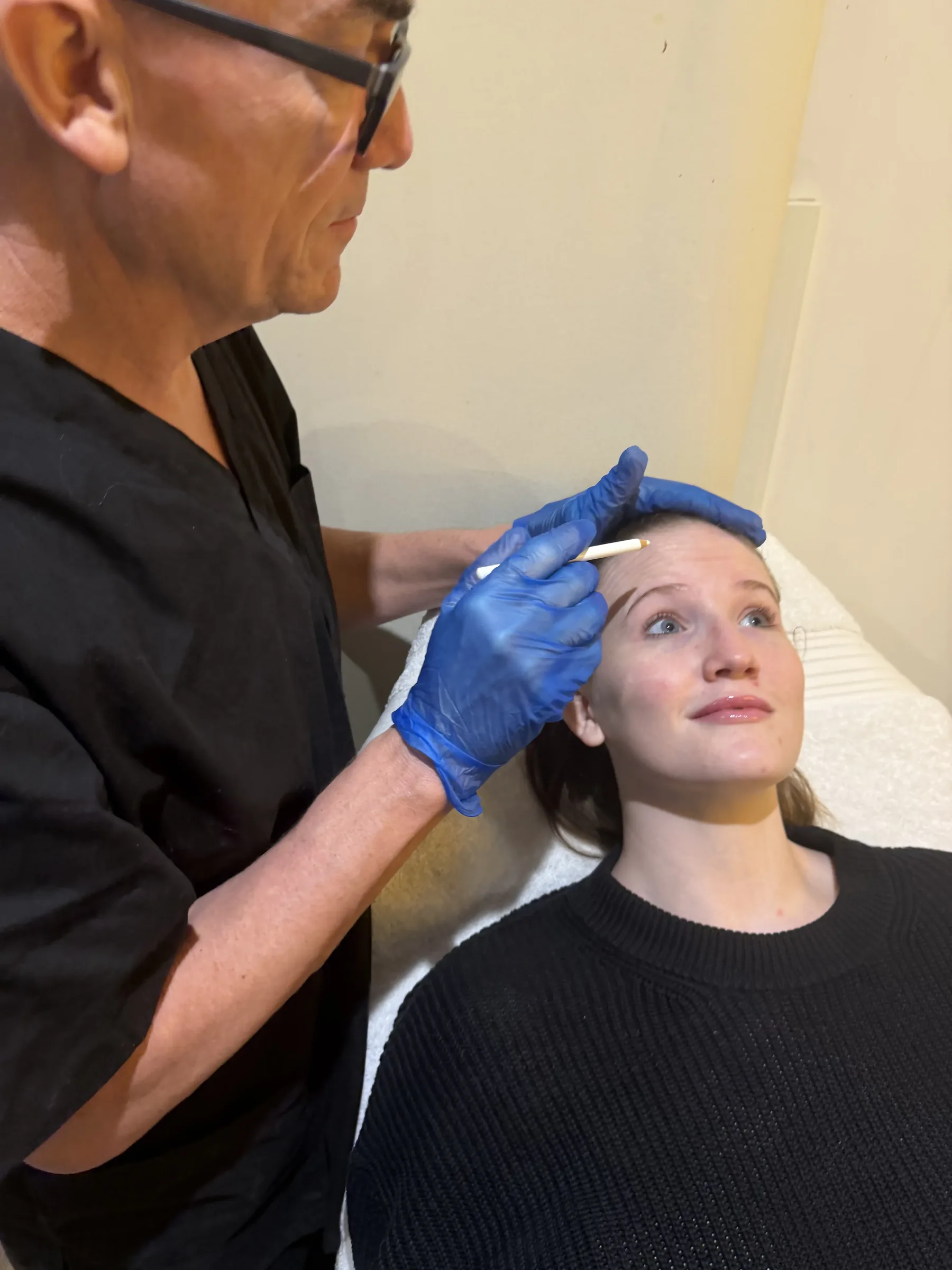
The Neuromuscular Mechanism
Wrinkle injections work by interfering with the chemical signalling process that triggers muscle contraction. Under normal circumstances, a nerve impulse reaching the neuromuscular junction causes the release of acetylcholine, a neurotransmitter that crosses the synaptic cleft and binds to receptors on the muscle fibre, initiating contraction.
The mechanism of action disrupts a specific step in this process: the SNARE protein complex that manages acetylcholine release. SNAP-25, one of the proteins in this complex, is cleaved, its structural integrity compromised, so it can no longer facilitate vesicle fusion and neurotransmitter release. With acetylcholine unable to reach the muscle, the nerve impulse does not translate into contraction.
This is not a permanent change. The nerve terminal is not destroyed; the synapse is not eliminated. Over time, the affected SNAP-25 protein is replaced through normal cellular turnover, and, critically, axonal sprouting creates new nerve terminal branches capable of forming new synaptic connections. The muscle gradually recovers its ability to respond to nerve signals.
Duration is therefore a function of how quickly this recovery process unfolds. The speed of that process is determined by the density of neuromuscular junctions in the treated muscle, the rate of SNAP-25 protein synthesis and turnover, the degree of axonal sprouting, and the overall metabolic environment. These variables differ between individuals.
The Four Phases of Treatment Duration
Understanding duration as a four phase process, rather than a binary ‘working / not working’ state, helps clarify why patients experience results differently and why onset timing varies.
**Phase 1: Onset (Days 3-14).** The treatment does not take effect immediately. Full onset typically occurs between three and fourteen days post treatment, reflecting the time required for SNAP-25 cleavage to compromise acetylcholine release at the treated junctions. Patients with higher metabolic rates or greater neuromuscular junction density in the treated area may notice slower or faster onset.
**Phase 2: Peak Effect (Weeks 2-8).** Once onset is complete, the treatment reaches its most consistent effect, the period during which the reduction in muscle activity is most complete and most stable. For patients undergoing treatment for the first time, peak phase may be shorter than for those with maintained treatment history, as there is no prior reduction in muscle bulk to sustain the effect.
**Phase 3: Gradual Recovery (Weeks 8-16).** This is the phase patients often describe as the treatment ‘wearing off’. In practice, recovery is incremental rather than sudden. Axonal sprouting creates new terminal branches; SNAP-25 protein is resynthesised; partial muscle activity gradually returns. Patients may notice subtle movement returning in one area before another, reflecting anatomical variation in recovery rate.
**Phase 4: Full Restoration (Weeks 14-20+).** Complete neuromuscular function is restored. The timeline for this phase is the most variable, extending considerably in patients with reduced muscle mass from long term treatment history, and occurring earlier in patients with high muscle activity or first time treatment.
Muscle Mass and Bulk as a Primary Variable
Of all the biological variables that influence duration, muscle mass is among the most clinically significant, and among the most overlooked in patient facing discussions of treatment duration.
A larger, denser muscle contains more neuromuscular junctions. Achieving consistent reduction in activity across that muscle requires more complete coverage of those junctions. The same dose that produces a predictable effect in a moderate mass muscle may produce a shorter duration result in a high mass muscle if coverage is not proportional.
This is particularly relevant in areas like the masseter (jaw muscle used in teeth clenching) and the frontalis (the broad forehead muscle). Both can vary substantially in size between individuals. The masseter, in particular, may be significantly enlarged in patients with habitual bruxism or clenching, creating a different pharmacological challenge compared to the same area in a patient without that history.
Muscle mass also changes over the course of a treatment history. With consistent wrinkle treatment over time, muscles that are repeatedly limited in their activity tend to reduce in bulk, a phenomenon known as muscle atrophy from disuse. As bulk decreases, the same dose achieves broader coverage of the reduced neuromuscular junction density, often extending effective duration. Patients who have maintained regular treatment for several years frequently report longer lasting results than they experienced in their first or second year of treatment. This is a predictable biological outcome of consistent muscle activity reduction, not a change in the treatment itself.
Why Treatment Area Anatomy Affects Duration
Different facial muscles have different physiological characteristics that influence how long treatment lasts in each location. Treating duration as a uniform expectation across all areas leads to frustration, because the same patient, in the same session, may experience meaningfully different durations in different zones.
The glabellar complex (the corrugator and procerus muscles responsible for frown lines) involves relatively small, high activity muscles. Results here tend to be among the most consistent in duration because the muscle bulk is modest and the neuromuscular junction density is high relative to volume.
The frontalis (forehead) is a broad, sheet like muscle with a wide surface area. Its activity pattern is continuous, it elevates the brow throughout waking hours, which means it receives persistent neural input. For patients with strong habitual forehead activity, recovery may occur faster than in lower activity areas.
The orbicularis oculi (crow’s feet area) contains fine, superficially positioned muscles. The crow’s feet zone tends to respond well and with reasonable duration consistency because the muscle bulk is limited and the neural input, while frequent, involves smaller volumes of muscle tissue.
The platysma (neck bands) and masseter represent the opposite end of the spectrum, large muscles with considerable mass and high functional demand. Treatment duration in these areas is typically the most variable and, in high mass cases, may be shorter than forehead or glabellar results from the same session.
When a patient asks ‘how long will my treatment last’, the accurate answer must account for which area they are asking about. A single duration figure is an oversimplification.
The Role of Axonal Sprouting in Recovery
Axonal sprouting is the physiological process by which affected nerve terminals regenerate and form new synaptic connections with muscle fibres, and it is the primary driver of wrinkle treatment wearing off over time.
When acetylcholine release is blocked at a neuromuscular junction, the motor nerve does not simply wait for SNAP-25 to be resynthesised. It responds to the absence of functional synaptic transmission by sprouting new terminal branches from nearby, unaffected axon nodes. These new branches seek out muscle fibre end plates and form new junctions, ones that were not present during the original treatment.
Over weeks to months, this sprouting process creates new transmission pathways that gradually restore muscle activity. As the density of new functional junctions increases, the degree of muscle activity reduction decreases, which is what patients experience as the treatment wearing off.
Axonal sprouting does not occur at a uniform rate. It is influenced by nerve health, systemic factors including nutritional status and oxygen delivery, and the local neurotrophic environment. Patients with conditions affecting nerve health may experience different sprouting timescales. age related changes in neuroplasticity can also affect the pace of sprouting, which is one reason why older patients sometimes report different duration characteristics than younger patients treated in the same area.
An important clinical implication: the new junctions formed through sprouting are initially immature and produce less consistent acetylcholine release than established junctions. This contributes to the uneven, patchy quality of recovery that many patients notice during Phase 3, movement returning in some areas before others.
Metabolic Rate and Systemic Factors
Metabolic rate influences wrinkle treatment duration through its effects on protein synthesis, cellular turnover and systemic clearance processes. Patients with higher resting metabolic rates, whether due to body composition, thyroid function, activity levels or other factors, may experience faster SNAP-25 resynthesis and potentially faster recovery of neuromuscular function.
This is a frequently discussed variable in clinical settings, though the evidence base for precise metabolic correlations remains observational rather than controlled. What is consistently noted is that patients who are highly physically active, particularly those engaged in high intensity training several days per week, tend to report shorter duration than less active patients with similar anatomy treated in the same area.
The proposed mechanism relates to multiple factors: increased blood flow to muscle tissue accelerating cellular turnover; higher levels of growth factors and neurotrophins supporting nerve sprouting; and greater baseline muscle activity meaning the treated muscles receive more persistent neural input driving recovery.
Thyroid function is another variable practitioners may consider. Hyperthyroid states are associated with increased cellular metabolic activity and protein turnover, which could theoretically accelerate SNAP-25 resynthesis. Hypothyroid states may have the opposite effect. These are not absolute correlations, and thyroid status does not disqualify anyone from treatment, but it is a relevant factor when duration is shorter than expected.
Systemic illness, fever, or periods of high physiological stress can also affect duration unpredictably. These are not contraindications but are variables worth noting in treatment histories when patients report unusually short lasting results.
First-Time Patients Versus Maintained Treatment History
Patients undergoing wrinkle treatment for the first time often report different duration characteristics from those who have maintained regular treatment over months or years, and this difference is physiologically explicable rather than anecdotal.
A first time patient presents with fully developed muscle bulk, established neuromuscular junction density, and no prior reduction in activity. The treatment achieves its onset and peak effect against a baseline of full muscle function. Recovery proceeds at the natural rate determined by that patient’s biology and anatomy.
A patient with a long treatment history presents differently. Over time, consistent reduction in muscle activity leads to gradual muscle atrophy, a reduction in muscle bulk that mirrors the reduced demand placed on those muscles. Fewer active muscle fibres means fewer neuromuscular junctions requiring coverage. For the same anatomical area, the neuromuscular junction density has decreased relative to the first treatment baseline.
The practical outcome: the same or similar dose achieves more complete coverage in a muscle that has atrophied through consistent treatment, and recovery proceeds more slowly because there is less muscle mass driving recovery. Patients who have maintained treatment for two or more years often report that their results now last considerably longer than when they first began, sometimes by several weeks, without any change in treatment protocol.
This is a clinically meaningful dynamic for practitioners to communicate at consultation. First time patients should not benchmark their duration against someone with three years of consistent treatment history. Their own duration will likely extend over time if they maintain a consistent treatment schedule.
Biological Differences Between Male and Female Patients
Male patients consistently present with greater frontalis and glabellar muscle mass compared to female patients, a pattern driven by testosterone’s anabolic effects on muscle tissue. This anatomical difference has direct implications for wrinkle treatment duration in the upper face.
Greater muscle bulk means more neuromuscular junctions per area, and a higher absolute number of junctions competing for coverage. For a given dose and injection pattern, male patients may have proportionally less complete junction coverage, leading to faster recovery of partial movement, which patients and practitioners perceive as shorter duration.
This is not a universal principle across all areas. In lower face areas, the mentalis, depressor anguli oris, and orbicularis oris, sex based differences in muscle mass are less pronounced, and duration differences between male and female patients in these regions tend to be less consistent.
Masseter treatment is another example where sex differences interact with individual variation. While male patients on average present with greater masseter bulk, there is substantial within sex variation driven by clenching habits, diet and bruxism history. A female patient with severe bruxism may present with greater masseter mass than a male patient without that history.
Clinically, the relevant variable is muscle mass itself, not sex as a proxy. Duration prediction requires assessing the actual anatomy rather than applying demographic generalisations. Sex is a useful population level predictor of likely muscle characteristics; it is not a reliable substitute for individual assessment.
Age, Skin and Tissue Changes Over Time
The relationship between age and wrinkle treatment duration is not straightforward. Common assumptions, that older patients experience shorter duration, or that age uniformly changes treatment outcomes, are not consistently supported by clinical observation.
What changes with age is not primarily treatment duration but the relationship between muscle activity and visible expression lines. Younger patients may have deep dynamic lines (lines present only with movement) and no static lines (lines present at rest). wrinkle treatment directly addresses dynamic lines by reducing the muscle activity that creates them. In this context, duration is the interval over which that movement is reduced.
In older patients, the dermis has lost collagen density, elastic fibres have degraded, and static lines have developed, lines that are not driven by active muscle contraction and are not directly addressed by wrinkle treatment. A treatment that produces identical neuromuscular effects in a 30-year old and a 60-year old may produce visibly different facial outcomes because the underlying tissue quality differs. This is about efficacy, not duration.
age related changes in skin laxity, subcutaneous fat distribution and bony support structure also affect how much an wrinkle treatment changes visible appearance. These tissue changes require assessment at consultation, wrinkle treatment alone may not be the appropriate primary intervention if structural volume loss or skin quality is the driving concern.
Neuroplasticity does change with age, potentially affecting axonal sprouting rates. Whether this translates to meaningful differences in clinical duration is an area of ongoing clinical observation rather than settled evidence.
What ‘Wearing Off’ Actually Looks and Feels Like
The subjective experience of an wrinkle treatment wearing off is more gradual and nuanced than many patients expect, particularly if their exposure to discussion of treatments has emphasised dramatic before and after language.
Phase 3 recovery, the wearing off phase, typically begins with partial return of movement in areas where muscle activity is highest relative to dose coverage. For the frontalis, a patient might first notice the ability to raise their brow slightly at the outer edges before regaining central movement. For the glabella, one corrugator muscle may show movement before the other, creating a slight asymmetry that can be disconcerting if not anticipated.
Many patients describe wearing off as a ‘tingling’ or ‘itching’ sensation in the treated area before visible movement returns. This likely reflects reinnervation activity, new axonal sprouting establishing connections, and is a normal part of the recovery process.
The rate of wearing off is not constant. Clinical observations suggest that the first signs of recovery emerge at a similar rate across patients within a given anatomy, but the speed at which recovery then progresses from partial to full varies considerably. A patient might notice initial movement return at week 10 and reach full function by week 14, while another patient notices movement at week 10 but reaches full function by week 20.
Patients should not interpret the first signs of movement returning as an indication that treatment has ‘failed’ or that immediate rebooking is necessary. The appearance of partial movement is expected and normal. The decision about when to rebook is best made at a review consultation that assesses both the degree of recovery and the patient’s treatment goals, not on the basis of any specific elapsed timeframe.
Lifestyle Factors That Can Influence Duration
Several modifiable lifestyle factors are associated with shorter wrinkle treatment duration in clinical observation. While the evidence is largely observational and the mechanisms are not always precisely established, practitioners commonly note these patterns and they are worth communicating to patients who want to optimise their results.
**High intensity exercise:** Patients engaged in vigorous exercise, particularly daily high intensity training, competitive endurance sport or heavy resistance work, frequently report shorter duration than less active patients with similar anatomy. Proposed mechanisms include increased metabolic clearance, elevated neurotrophic factor levels supporting sprouting, and greater muscle blood flow accelerating cellular recovery.
**Significant UV exposure:** Chronic sun exposure is associated with accelerated skin ageing and tissue breakdown, which can affect how visible wrinkle results are even if the underlying neuromuscular effect is unchanged. Consistent sun protection supports overall skin quality and is relevant to treatment planning regardless of its direct effect on duration.
**Sustained physiological stress:** Periods of significant physical or psychological stress, illness, high cortisol states, nutritional depletion, can affect protein synthesis and cellular repair rates. These are not controllable by treatment protocol but are worth factoring into duration expectations when they coincide with a treatment period.
**Zinc status:** Some clinical practitioners note that zinc supplementation is associated with improved treatment duration in patients who report consistently short results. The proposed mechanism involves zinc’s role in the intracellular binding process. While this is not standardised clinical guidance, it is an area worth discussing with a practitioner in cases of unexpectedly short duration.
None of these factors are contraindications to treatment. They are contextual variables that a practitioner should be aware of when planning treatment intervals and discussing realistic expectations.
Setting Realistic Duration Expectations at Consultation
The consultation is the appropriate setting for establishing personalised duration expectations, not social media, not other patients’ reported outcomes, not generalised information about ‘typical’ results. Because duration is genuinely variable, a practitioner who knows your anatomy, treatment history, muscle characteristics and lifestyle context can provide a more meaningful estimate than any population level figure.
At consultation, a practitioner should assess muscle mass and activity, treatment history (first time versus maintained), relevant medical history, and the specific areas of concern. Based on this assessment, they can offer a realistic range, not a absolute claim, of expected duration for each area to be treated, and explain what factors in your specific case might move that range shorter or longer.
For first time patients, the consultation should include explicit discussion of the fact that duration in the first treatment is often shorter than in subsequent treatments, and that maintaining a consistent schedule, rather than waiting for complete wearing off between sessions, tends to produce better long term duration outcomes. This is because consistent treatment prevents full muscle recovery to pretreatment bulk, supporting progressive muscle atrophy and, over time, extended effect duration.
The consultation should also establish a review plan, a scheduled follow up, typically at two to four weeks post treatment, at which the practitioner can assess the degree of effect, identify any areas of asymmetry, and document baseline findings for comparison at future appointments. Duration tracking across multiple appointments is how practitioners identify patterns unique to each patient and adjust protocols accordingly.
Clinical accountability and how Wrinkle dosing is decided
The wrinkle treatment guidance in “How Long wrinkle Treatment Lasts: The Science Behind Duration” is informed by how Corey Anderson, AHPRA registered nurse (NMW0001047575), approaches neuromodulator dosing at Core Aesthetics: low to moderate units, conservative on first time treatments, and reviewed at two weeks before any top up. wrinkle treatment is a neuromuscular intervention, and the same units can read very differently on two patients depending on muscle mass, baseline expression patterns, metabolism, and prior treatment history. Results vary between individuals, which is why the two week review appointment exists and why dosing decisions evolve across the first three or four treatments rather than being set once.
Specific to how long wrinkle lasts: wrinkle dosing decisions at Core Aesthetics start conservatively, low to moderate units for first time patients, with a two week review built into the protocol so any top up is informed by how the patient actually responded rather than by a generic dosing chart. Some patients are highly sensitive responders and need less than the typical starting dose; some are slower responders and benefit from a top up at the two week mark. The body of literature on neuromodulator dosing supports the two week review as a clinical reference point, not a marketing concept. The wrinkle treatment Melbourne page covers a related wrinkle decision in more depth.
Patients reading this page who want to verify Corey Anderson’s AHPRA registration can do so directly on the AHPRA public register at ahpra.gov.au using registration number NMW0001047575. The Core Aesthetics clinic operates from 12A Atherton Road, Oakleigh VIC 3166, Tuesday to Saturday, by consultation appointment. All new patient treatment at Core Aesthetics follows a structured clinical consultation, consistent with the September 2025 AHPRA cosmetic procedures guidelines. Treatment may be scheduled for the same day as consultation or at a subsequent appointment, depending on clinical assessment and individual circumstances. Patients with questions about the content on this page can raise them at consultation; the practitioner is happy to walk through any clinical reasoning that the written content does not fully capture. Results vary between individuals, and the consultation is the appropriate place to discuss what those individual variations mean for a specific person’s treatment plan.
How Long Does Wrinkle Last?
Most patients asking how long does wrinkle last are looking for a practical planning answer. The honest answer is that duration varies. Many patients notice the strongest effect after onset has completed, then a gradual return of movement over the following months. The exact timeline depends on treatment area, dose, muscle strength, metabolism, treatment history, and individual response.
Rather than promising a fixed duration, Core Aesthetics plans review and rebooking around the patient's actual response. The first cycle is especially useful because it shows how that person's muscles recover, whether movement returns evenly, and whether future dosing or timing should be adjusted.
What Wearing Off Usually Means
Wearing off does not usually happen overnight. Patients often notice small movement returning before lines look the way they did before treatment. The frown may begin to move slightly, the forehead may regain lift, or crow's feet may become more active during smiling. This stage does not always mean immediate retreatment is needed.
The useful question is whether the returning movement is acceptable, whether the patient is approaching their preferred maintenance point, and whether the area has recovered enough to assess the next cycle properly. A review based approach avoids chasing every small change too early.
When To Rebook Wrinkle Treatment
Rebooking should be based on individual response rather than a universal calendar. Some patients prefer to return when movement is partially back but before the original pattern fully returns. Others prefer a longer interval. Patients with stronger muscles, high activity levels, or certain treatment areas may experience shorter duration.
At Core Aesthetics, timing is discussed in the context of the C.O.R.E. method: consult, organise, refine, evaluate. The aim is to learn the patient's response pattern over time and build a maintenance rhythm that avoids both over treatment and unnecessary appointments.
Is this for you?
Consider booking a consultation if
- You are 18 or older and want to understand what affects wrinkle treatment duration
- You have had wrinkle treatment before and want to plan your next appointment more accurately
- You are considering wrinkle treatment and want a realistic picture of how long results last
- You prefer to make informed, evidence based decisions about any treatment you undertake
This may not be for you if
- Anyone under 18 years of age
- Patients who are pregnant or breastfeeding
- Patients with neuromuscular conditions such as myasthenia gravis or Eaton-Lambert syndrome without specialist clearance
- Patients seeking predetermined outcome timelines, duration is a range, not a fixed figure
- Patients expecting same day treatment without a prior consultation and individual assessment
Suitability is confirmed at consultation. This list is general guidance, not a substitute for clinical assessment.
Frequently asked questions
Why do some people’s wrinkle results only last 8 to 10 weeks?
A duration of 8-10 weeks is at the shorter end of the clinical range and is typically associated with one or more of the following: first time treatment (muscle has not yet reduced in bulk from consistent activity limitation), high muscle mass relative to dose, very high metabolic activity, or vigorous daily exercise. It does not indicate a treatment failure. For first time patients especially, shorter initial duration often extends with consistent treatment over time as muscle bulk progressively reduces. A review consultation is the appropriate setting to assess contributing factors and adjust the treatment plan.
Does intense exercise make wrinkle results wear off faster?
Clinical observation consistently notes that patients engaged in daily high intensity exercise, particularly endurance sport or heavy resistance training, tend to report shorter treatment duration. The proposed mechanisms include elevated metabolic rate, higher levels of neurotrophic factors supporting nerve sprouting, and increased muscle blood flow. While this is based largely on observational patterns rather than controlled studies, it is a clinically relevant consideration for treatment planning. Patients with high exercise levels should factor this into their rebooking intervals and discuss it at consultation.
Is it true that male patients’ results don’t last as long as female patients’ results?
On average, male patients tend to have greater facial muscle bulk, particularly in the frontalis and glabellar complex, due to testosterone’s anabolic effects. Greater muscle bulk means more neuromuscular junctions and a higher absolute coverage requirement for a given dose. This can translate to shorter duration in the upper face for some male patients. However, this is a population level tendency, not a universal rule. Individual anatomy, not sex, is the primary determinant. Female patients with significant masseter hypertrophy from bruxism may experience shorter jaw treatment duration than male patients without that history. Assessment is always individual.
What is axonal sprouting and why does it matter for treatment duration?
Axonal sprouting is the process by which motor nerve terminals form new branches when their normal synaptic transmission is disrupted. When wrinkle treatment blocks acetylcholine release at treated neuromuscular junctions, nearby nerve nodes generate new terminal branches that seek out muscle end plates and establish new connections. These new junctions progressively restore the nerve’s ability to trigger muscle contraction, which is what patients experience as the treatment wearing off. The rate of sprouting varies between individuals and is influenced by nerve health, neuroplastic capacity, metabolic rate and neurotrophic factor levels. It is the primary biological mechanism underlying treatment recovery.
Why do results in my forehead wear off faster than in my frown lines?
The frontalis muscle (forehead) and the glabellar complex (frown lines) have different anatomical characteristics that affect treatment duration. The frontalis is a broad, continuously active muscle involved in brow elevation throughout the day, it receives persistent neural input and has a wide surface area. The corrugator and procerus muscles of the glabella are more compact, with relatively limited bulk and somewhat lower baseline activity in many patients. Duration differences between these areas in the same session are expected and reflect genuine anatomical variation, not treatment inconsistency.
Can the same patient experience different durations in different facial areas?
Yes, and this is expected. Duration varies by treatment area based on muscle mass, neuromuscular junction density, baseline activity level and the proximity of the treated junctions to adjacent untreated muscle. A patient might consistently find that glabellar results last 16 weeks while frontalis results last 12 weeks, or that crow’s feet results align closely with glabellar duration while forehead differs. Understanding this zone specific variation allows for more precise treatment planning, for example, scheduling crow’s feet treatment with forehead treatment while spacing glabellar treatment differently if duration patterns consistently diverge.
Why do patients who have been having treatment for years seem to get longer lasting results?
Consistent wrinkle treatment over time leads to progressive reduction in muscle bulk through disuse atrophy, the same biological process that causes any muscle to reduce in size when its activity is consistently limited. With reduced bulk comes reduced neuromuscular junction density. For the same treatment area, the same dose achieves proportionally more complete coverage of fewer junctions, and recovery proceeds from a lower baseline of muscle mass. The cumulative effect over two to four years of consistent treatment is that many patients experience noticeably longer duration than they did in their first year, without any change in treatment protocol.
How does a practitioner estimate how long my results will last before treating me?
An experienced practitioner estimates duration based on assessment of your muscle mass and activity in the areas of concern, your treatment history, any relevant medical or lifestyle factors, and the specific clinical findings on examination. This produces a personalised range estimate, not a absolute claim, that reflects your individual anatomy rather than population averages. First time patients will typically be given a conservative estimate acknowledging that initial duration is often shorter, with the expectation of extension as treatment history develops. Review appointments at two to four weeks post treatment allow practitioners to refine their understanding of your individual response over time.
Who decides wrinkle dosing at Core Aesthetics?
Wrinkle dosing decisions are made by Corey Anderson, AHPRA registered nurse (NMW0001047575), under nurse prescribing scope. Core Aesthetics starts conservatively for first time patients with low to moderate units, then reviews response at two weeks before any top up. Some patients are highly sensitive responders; others need a slightly higher dose to reach the same observable effect. Results vary between individuals, and the two week review is built into the protocol for that reason.
How long does wrinkle treatment usually last?
Duration varies between individuals and treatment areas. Many patients notice a gradual return of movement over several months, but review planning should be based on individual response.
Should I rebook as soon as movement returns?
Not always. Some early movement can return before the original line pattern fully returns. Rebooking should be discussed according to response, goals, and the treatment area.
Is it safe to have wrinkle treatment while taking blood-thinning medications or supplements?
Certain medications and supplements, including aspirin, ibuprofen, fish oil, vitamin E and some herbal supplements, can increase bruising risk after any injectable treatment. You will be asked about these at your consultation. In most cases, treatment can proceed, though timing and approach may be adjusted. Always disclose your full medication and supplement list before any injectable appointment.