Wrinkle treatment typically lasts between three and six months, but the right interval between appointments varies considerably between individuals and is influenced by muscle mass and activity, the area treated, the dose used, lifestyle factors, and your. Core Aesthetics — consultation-first.
Why There Is No Single Answer to ‘How Long Does It Last’
Wrinkle treatment works by temporarily reducing the activity of the specific muscles responsible for dynamic lines. The compound is metabolised over time, and muscle activity gradually returns to its baseline. The rate at which this happens varies between individuals for several reasons.
Muscle mass and activity level influence how quickly the compound is processed. Patients with stronger or more habitually active muscles in the treated area tend to metabolise treatment faster than those with lower muscle mass or less active movement patterns. This is one reason why the same dose and placement can produce noticeably different durations in two patients with otherwise similar presentations.
Metabolism more broadly also plays a role. Patients who are highly physically active, particularly those who exercise intensively, often report shorter durations than less active patients at the same dose. This is not universal, but it is a clinically relevant variable worth noting at the consultation.
The area treated matters too. Some areas have denser muscle mass and are subject to more constant activity than others. The masseter muscle, for example, is subject to near continuous low level activity throughout the day from jaw function and teeth clenching, and treatment in this area may have a different duration profile than treatment in the forehead, which is active primarily during facial expression.
Dose influences duration within a range. Appropriately dosed treatment tends to last longer than underdosed treatment, which may wear off faster as insufficient reduction of muscle activity was achieved. Overdosing does not proportionally extend the duration; it extends the degree of relaxation rather than the timeframe, and can produce a different aesthetic outcome than intended.
Finally, each individual’s lived experience of the treatment’s progress provides the most reliable data for calibrating future appointments. What you observe between appointments is more useful than any generalised timeline.
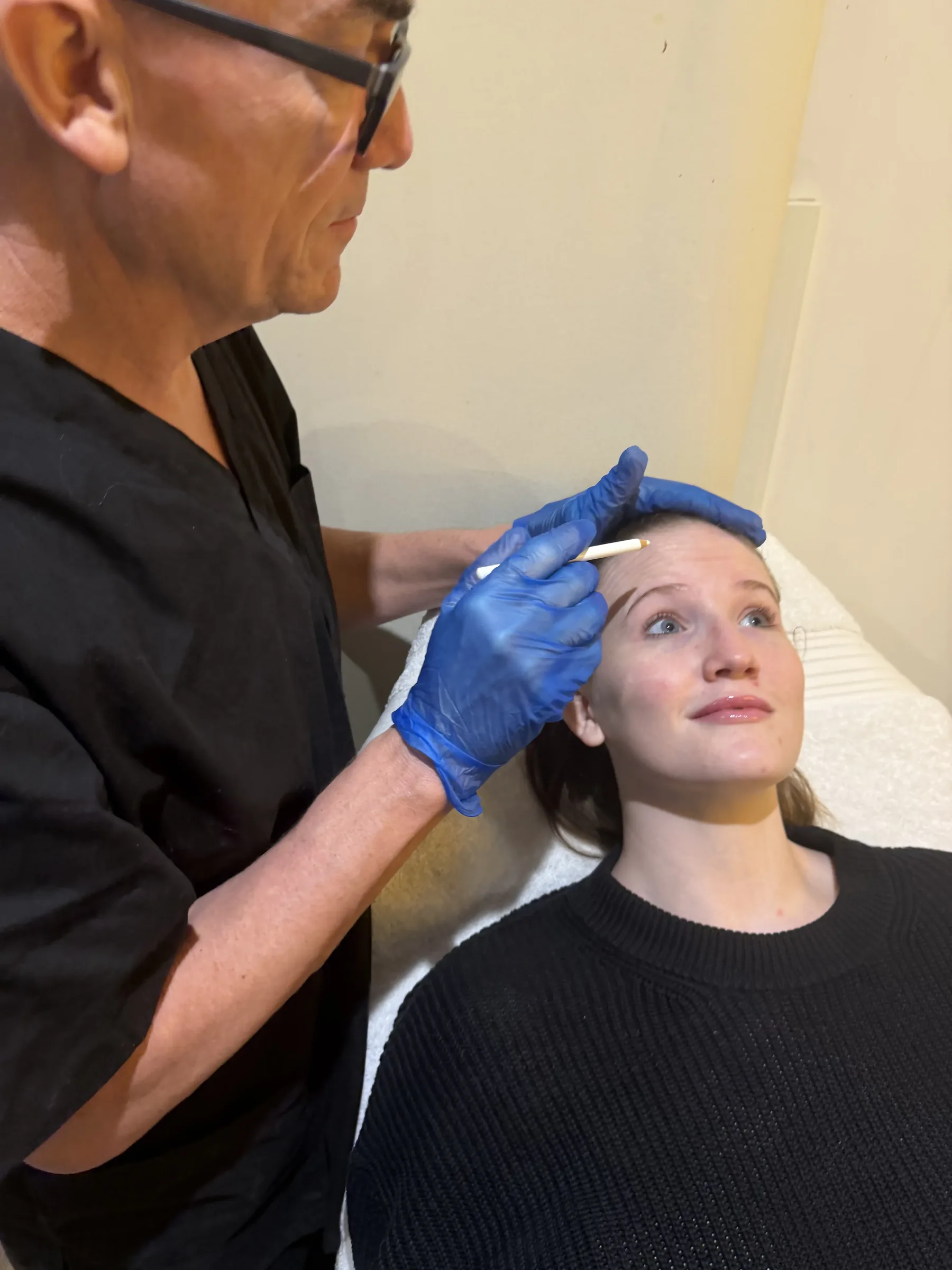
Reading Your Own Signals: What to Observe Between Appointments
The most useful tool for understanding your optimal interval is observation. After a treatment, the way the effect progresses over the following months tells you more about your individual physiology than any general guideline can.
When does movement begin to return? Note when you first become aware that muscle activity is returning to the treated area. This is not the moment to rebook, it is a data point. Movement returning at the two month mark versus the four month mark tells your practitioner something important about your metabolism and the dose required to achieve your goals.
When do lines begin to reappear? There is a distinction between movement returning and lines becoming visible at rest again. For most patients, there is a period of partial return where movement is present but the treated area still looks different from pretreatment. Noting how long this window lasts is clinically useful.
How did the first two weeks feel? The onset and peak of effect in the first one to two weeks after treatment gives information about how your muscles responded to the dose. If the effect felt very strong early and softened quickly, that is different information from an effect that built gradually and held steadily for months.
What does the end of the interval look like? Arriving at a follow up appointment having observed the full arc of the treatment’s progress, onset, peak, gradual return, gives the practitioner the best information for adjusting the plan. Rebooking before this arc has fully completed means less data for calibration.
Sharing these observations at your appointment is more valuable than following a standard rebooking interval. It is how treatment planning becomes more precise over time.
The First Treatment: Why the Initial Interval Is Especially Important
For patients having wrinkle treatment for the first time, the interval before the first rebook deserves particular attention. The initial treatment is as much a diagnostic appointment as a treatment appointment, it reveals how your specific muscles respond to the compound at the starting dose.
First treatments at Core Aesthetics are typically approached conservatively. A dose that achieves meaningful softening while preserving natural movement is the starting point, with the expectation that subsequent appointments will adjust based on what you and the practitioner observed. This means the first interval may involve a return of movement earlier than you might expect, because the conservative starting approach is designed to allow observation before committing to a higher dose.
A review appointment after the first treatment, ideally at two to four weeks to assess onset, and again at three to four months to discuss the progression, provides the foundation for a more individualised plan going forward. Patients who skip the review appointment may find that subsequent treatments are less well calibrated, because the practitioner lacks the observation data from the first cycle.
The first treatment cycle is also the period when patients develop a more accurate sense of what they are trying to achieve. Some patients find that what they wanted was a softer softening than they anticipated. Others find that they would have preferred more effect in a particular area. Both are useful findings that the plan can incorporate going forward. Under AHPRA’s September 2025 guidelines, first time patients are required to attend a consultation before any treatment proceeds, with a mandatory cooling off period between the two. This structure is designed to create exactly this kind of considered, unhurried entry into treatment.
Seasonal and Lifestyle Scheduling Considerations
Beyond physiology, practical life factors are worth considering when thinking about treatment timing. While these are secondary to clinical calibration, they are not irrelevant.
Social and professional commitments. wrinkle treatment has minimal visible recovery, but there is typically a one to two week period of onset before the effect is fully established, and occasionally minor temporary bruising at injection sites. Patients who plan appointments with significant events in mind often allow two to four weeks of lead time rather than booking immediately before a major occasion.
Seasonal patterns. Some patients notice that their treatment duration varies slightly across seasons. This may be related to differences in physical activity, metabolic rate, or other seasonal factors. If you notice a consistent seasonal pattern in how your treatment progresses, this is worth mentioning at your appointment as it can inform scheduling.
Extended gaps. Life, travel, illness, or changed priorities can mean that an appointment interval extends longer than planned. An extended gap is not a clinical problem, muscle activity simply returns to its baseline, and there is no evidence that stopping and resuming treatment causes any rebound effect or accelerated change. Patients who have had an extended gap can return to assessment at any point, and the approach will begin with a fresh assessment of the current presentation.
Planning around predictable life changes. Patients who know they will have a period of high physical activity, significant life stress, or other factors that might influence treatment duration can factor this into their scheduling conversation with the practitioner.
What Happens If You Rebook Too Soon or Too Late
There is a range within which rebooking makes clinical sense, and the edges of that range are worth understanding.
Rebooking before full return of movement is generally not recommended as a standard practice, because the treatment from the previous appointment is still active. Adding to treatment that is still producing an effect can result in cumulative over treatment, with greater muscle suppression than intended. There are specific clinical circumstances where early review is appropriate, for example, if asymmetry has developed or if the initial result was not as expected, but these are assessment driven decisions, not scheduling habits.
Rebooking well after full return is clinically uncomplicated. It simply means the face has returned to its pretreatment baseline for some period before the next treatment. There is no clinical disadvantage to this. Some patients choose to maintain a longer interval deliberately, either because they prefer a lighter treatment rhythm or because the period without active effect suits their goals. This is a valid approach and does not compromise future treatment outcomes.
Extended gaps followed by resumption are also generally tolerated. The muscle returns to its pretreatment activity over the weeks and months after the effect has worn off, and retreatment is approached with the same fresh assessment as any other appointment. There is no penalty for a gap, and patients should not feel pressure to maintain a treatment schedule that does not suit their life.
Long-Term Rhythms: How Intervals May Change Over Years of Treatment
Patients who have been having wrinkle treatment consistently over several years sometimes notice that their treatment duration gradually extends. This is not universal, but it is a pattern observed in clinical practice and supported by the mechanism of the treatment.
Repeated cycles of muscle relaxation over years can lead to a reduction in the habitual activity level of the treated muscles, with some patients describing a lower grade expression habit developing over time. If the muscles are consistently and partially relaxed over years, the dynamic lines they were creating may become less deeply etched, meaning the treatment is working against a lower baseline of expression driven change.
This can mean that over time, some patients find that a lower dose maintains the result they are looking for, or that the interval between treatments extends naturally. This is not assured, and it does not apply uniformly. It is, however, one reason why long term treatment planning at a conservative, calibrated dose is generally a better strategy than maximising dosing from the outset.
Long term patients also develop a clearer sense of their own response through accumulated observation. Over years of treatment, both the patient and the practitioner accumulate data about how a specific face responds, what dose works well, what duration to expect, what seasonal patterns exist. This accumulated knowledge is one of the underappreciated advantages of an ongoing clinical relationship with a consistent practitioner.
How the Consultation Shapes Your Interval
The most important input into any treatment interval discussion is the conversation with your practitioner. A practitioner who asks about what you observed between appointments, when movement returned, what lines looked like at different stages, how you felt about the result overall, is using your experience to refine the plan. A practitioner who simply repeats the same dose on a fixed calendar schedule is not using the information available to them.
At Core Aesthetics, every appointment begins with a discussion of what you have observed since the last treatment. This observation data, combined with a current assessment of the face, informs adjustments to dose, timing, or both. Over multiple appointments, the plan should become more precisely calibrated to your individual physiology and goals, not remain at the same generic starting point.
Patients who arrive uncertain about whether it is the right time to rebook can expect an honest answer. If the assessment finds that the treatment is still active and rebooking is not yet clinically appropriate, that will be communicated clearly. If the face has returned to baseline and rebooking is appropriate, that will be discussed along with any proposed adjustments to the approach. The appointment exists to serve the patient’s actual situation, not a scheduling preference.
For patients interested in thinking about treatment more broadly across time, beyond individual appointments, the Core Longevity Plan describes the multi year planning framework used at the clinic. The guide to how long wrinkle lasts covers the duration question in more detail, including the factors that influence individual variation.
About This Information
The information on this page is provided for general educational purposes. It is not a substitute for clinical advice. wrinkle treatment duration varies considerably between individuals. The guidance here reflects general clinical observation and is intended as a framework for thinking about treatment intervals, not as a prescriptive schedule. Individual assessment at a consultation is required to determine the appropriate approach for your specific situation.
At Core Aesthetics, Corey Anderson, Registered Nurse, conducts all assessments personally. Results vary between individuals, and any interval recommendations made here are generalised; a consultation will provide advice specific to your situation.
Clinical accountability and how this page is reviewed
The clinical content on this page is written and reviewed by Corey Anderson, AHPRA registered nurse (NMW0001047575). Core Aesthetics operates as a one practitioner, consultation based clinic in Oakleigh, Melbourne. The treatment interval guidance here reflects clinical observation and standard practice. Individual responses to wrinkle treatment vary, and the interval that works best for each patient is determined through observation and consultation rather than a fixed calendar.
Patients who want to verify Corey Anderson’s AHPRA registration can do so at ahpra.gov.au using registration number NMW0001047575. The clinic operates from 12A Atherton Road, Oakleigh VIC 3166 by consultation appointment. No treatment is offered to new patients without a prior consultation and the mandatory cooling off period required under AHPRA’s September 2025 cosmetic procedures guidelines.
Is this for you?
Consider booking a consultation if
- Existing patients wanting to understand how to think about their treatment interval
- Patients considering wrinkle treatment for the first time who want to understand what ongoing treatment looks like
- Patients who have had treatment elsewhere and want to understand how to optimise their timing
This may not be for you if
- This is a general information page and does not replace a clinical consultation
- Patients under 18, aesthetic treatment assessment is not available
- Patients who are pregnant or breastfeeding
Suitability is confirmed at consultation. This list is general guidance, not a substitute for clinical assessment.
Frequently asked questions
How long does wrinkle treatment typically last?
Most patients experience an effect lasting between three and six months, with many patients falling in the three to four month range for their first treatment. The actual duration depends on individual muscle mass and activity, the area treated, the dose used, and lifestyle factors such as exercise intensity. Over multiple treatments, patients often develop a clearer sense of their individual duration. Results vary between individuals.
When is the right time to rebook?
The right time to rebook is when movement has returned to a degree where you are noticing the lines or expression pattern you were treating, and where the assessment supports rebooking. This is typically in the three to five month range for most patients, but individual variation is significant. Observing when movement returns and when lines become visible again provides the most useful data for calibrating your timing. Rebooking while the previous treatment is still fully active is generally not recommended as a routine practice.
Is it a problem if I wait longer than usual between appointments?
No. An extended gap between appointments simply means the face returns to its pretreatment baseline for a period before the next treatment. There is no clinical disadvantage to this, no rebound effect, and no evidence of accelerated change as a result of stopping. Patients should not feel pressure to maintain a strict schedule. Treatment can be resumed at any time, and the approach will begin with a fresh assessment of the current presentation.
Why does my treatment seem to wear off faster than other people’s?
Several factors can contribute to a shorter duration: higher muscle mass or stronger habitual muscle activity in the treated area; high levels of physical exercise; individual metabolic variation; or a conservative starting dose that achieved meaningful but partial relaxation rather than full suppression. Discussing your observed duration at your appointment gives the practitioner the information needed to adjust the approach, whether through dose, placement, or timing.
Does treatment last longer after multiple years of use?
Some patients notice that duration extends gradually over years of consistent treatment, which may be related to a reduction in habitual muscle activity patterns over time. This is not universal, and it does not apply to all patients or all treatment areas. It is, however, one reason why consistent, calibrated treatment over time tends to work more efficiently than sporadic high dose treatment.
How is suitability determined?
Suitability is determined through individual consultation with Corey Anderson, Registered Nurse. The consultation reviews your facial anatomy, movement patterns, treatment history, and goals before any recommendation is made. No treatment is offered at a first appointment.
Should I have wrinkle treatment if I want to prevent lines rather than treat existing ones?
Preventative treatment may be considered when muscle activity is consistently creating early dynamic lines, but whether it is appropriate depends on individual anatomy, age, skin quality and treatment goals. A clinical assessment is required to determine whether treatment makes sense at this point, and what dose and timing would be appropriate for your situation.
Is it safe to have wrinkle treatment while taking blood-thinning medications or supplements?
Certain medications and supplements, including aspirin, ibuprofen, fish oil, vitamin E and some herbal supplements, can increase bruising risk after any injectable treatment. You will be asked about these at your consultation. In most cases, treatment can proceed, though timing and approach may be adjusted. Always disclose your full medication and supplement list before any injectable appointment.