There is no single gummy smile treatment that fits every person. Visible upper gum can relate to upper lip movement, lip length, tooth eruption or position, gum level or health, bite, upper jaw proportions, or several factors together. Assessment compares the face and smile at rest and in movement, identifies what remains uncertain, and clarifies how cosmetic, dental or specialist input should shape the plan.
Why Can The Same Smile Photograph Lead To Different Advice?
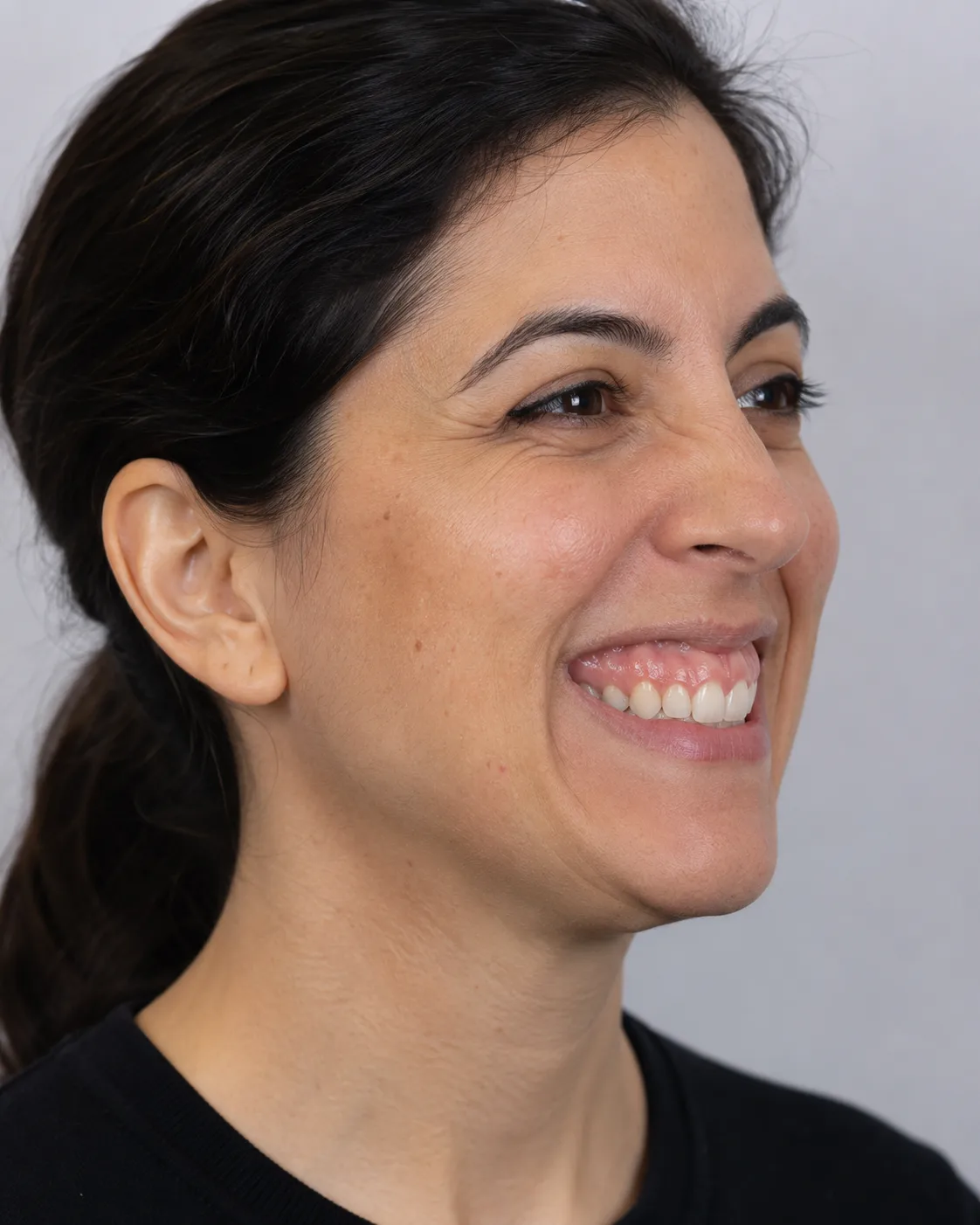
A photograph freezes the most visible moment and removes the clues around it. It does not show how far the lip travelled, what the teeth look like at rest, whether the smile was forced, how the bite relates or whether the gum tissue is healthy.
Two people can show a similar band of gum and need different first appointments. One may have a question about movement. Another may need dental or periodontal assessment. A third may have mixed factors where no single pathway explains the whole smile.
Use Four Views, Not One Selfie
| View | What to notice | What it cannot prove |
|---|---|---|
| Lips at rest | Lip length, lip seal and how much upper tooth is already visible | The cause of gum display during smiling |
| Conversational smile | The smile that appears naturally while speaking or reacting | How the face behaves at its widest movement |
| Full unforced smile | Upper lip travel, gum display, symmetry and tooth show | Whether the main cause is muscular, dental, periodontal or skeletal |
| Side and angled view | The relationship between lip, teeth, nose, chin and jaw pattern | A diagnosis from appearance alone |
If the story changes between views, that difference is useful clinical information. Bring the ordinary smile, not only the pose you use for photographs.
Why Is A Millimetre Threshold Not A Treatment Plan?
Clinical sources use different measurements when describing excessive gingival display. A number can help describe what is visible, but it does not establish distress, cause, health status or the right professional pathway.
A ruler also cannot decide whether the smile feels like a problem to you. Preference deserves a calm conversation, not an automatic diagnosis. The purpose of measuring is to make the assessment clearer, not to turn a normal variation into an obligation to act.
Which Cause Changes The Next Appointment?
| Assessment clue | Question it raises | Possible first pathway |
|---|---|---|
| The upper lip travels markedly during a full smile | Is movement the dominant contributor after the rest of the smile is assessed? | Cosmetic consultation may be relevant |
| Teeth look short, partly covered or uneven at the gum line | Are eruption, tooth form or gum levels involved? | Dentist or periodontal review may come first |
| Bite, orthodontic history or upper jaw proportions are prominent | Is the concern structural rather than mainly lip movement? | Dental, orthodontic or maxillofacial assessment may be more useful |
| Several clues appear together | Would treating one element leave the main concern unchanged? | Staged or interdisciplinary assessment |

When Should Dental Review Come Before Core Aesthetics?
A dental professional is often the most useful starting point when the concern includes gum swelling or bleeding, uncertainty about gum health, recent dental or orthodontic work, a bite change, tooth wear, questions about tooth position, apparently short teeth or a jaw relationship you want assessed.
That sequence keeps the door open to an informed cosmetic conversation later. Healthy tissues and a clearer understanding of the cause make each next step more useful.
When Does A Changed Smile Need Medical Care?
A new facial movement change or weakness needs prompt medical assessment rather than cosmetic planning. A sudden facial droop or facial paralysis needs emergency help: call triple zero (000) immediately. Do not wait for a cosmetic appointment or routine clinic reply.
Healthdirect’s facial droop guidance and facial paralysis guidance explain why medical assessment comes first. These symptoms can have different causes and cannot be diagnosed from a smile photograph.
What Can A Cosmetic Consultation Responsibly Answer?
Corey can compare the smile at rest and in movement, discuss whether upper-lip movement appears relevant, and explain suitable choices, realistic limits, material risks, alternatives, aftercare and review access within the clinic’s scope. You can ask questions, consider the information and decide at your own pace.
When dental, periodontal, orthodontic, jaw or surgical questions are more important, the consultation can still provide a constructive next step and help identify which professional input would strengthen the plan.
Why Do Online Option Lists Mislead?
Published clinical reviews describe several management approaches because gummy smile is an appearance with several possible causes. A list without diagnosis makes unlike pathways look interchangeable.
Individual options are discussed privately after the relevant cause, professional scope and suitability questions have been addressed. The assessment needs to explain why an option fits the person and which alternatives or limits matter.
What Trade Offs Matter Around A Familiar Smile?
The upper lip is part of speech, expression and the smile people recognise as their own. A plan should discuss the possibility of asymmetry, a change that feels too strong or too subtle, altered movement, an unfamiliar smile, short term effects, review needs and the chance that the main concern will remain because another factor is dominant.
Those trade offs are easier to understand when the goal is specific. “Show less gum” is less useful than explaining which situations bother you, how much change would still feel like you and what you would prefer to leave alone.
Bring Ordinary Evidence, Not A Perfect Photo Set
Bring a short phone video of an ordinary conversation and another of a natural full smile if you already have them. Note whether the pattern is longstanding or has changed. Add the date and type of recent dental or orthodontic work, any concerns about gum health, relevant medicines and previous cosmetic care.
You do not need to manufacture a clinical photo series at home. The point is to show how the concern appears in real life and to flag information that could change the professional pathway.
If photographs are taken for the clinical record, ask about their purpose and how they are handled. Clinical-record consent is separate from advertising or public-use consent. The clinic privacy policy explains that distinction.
How Are Timing And Cost Discussed?
Cost follows the pathway; it does not choose it. Once the likely cause and professional pathway are clearer, the consultation can explain relevant fees, review requirements and practical timing before you decide.
Suitable care may be discussed at the same appointment after Corey has completed the assessment and informed-consent process, provided proceeding is clinically appropriate and you feel comfortable. You can also take more time, arrange dental input or return with records before deciding.
Use This One Minute Check Before Booking
- Can I describe when the gum show bothers me without diagnosing the cause?
- Have I noted recent dental work, gum symptoms, bite questions or orthodontic history?
- Am I open to dental review, timing or another clinically appropriate pathway?
- Do I know who will assess me and how to verify their registration?
- Can I access review if something feels unusual after any future care?
If you want a discussion that starts with the cause, use the booking page. If a dental clue is central, arrange that review first and bring the information to any later cosmetic consultation.
How Can You Verify This Clinic?
Core Aesthetics consults at 12A Atherton Road, Oakleigh VIC 3166. Consultations are led by Corey Anderson RN, Ahpra registration NMW0001047575. Match those details against the independent Ahpra register and the Core Aesthetics verification page before sharing health information.
Questions About Gummy Smile Assessment
Is there one standard gummy smile treatment?
No. Visible upper gum can arise from lip movement, lip length, tooth or gum relationships, bite, jaw proportions or mixed factors. The appropriate professional and pathway depend on the cause and individual assessment.
Can I work out the cause from a selfie?
No. A selfie can show the concern but not establish its cause. Assessment compares rest, natural conversation, full smile and wider facial views, then considers dental context, health history and examination findings.
How much gum display counts as a gummy smile?
Clinical sources use different measurement thresholds. A measurement describes what is visible; it does not determine whether the variation needs treatment or identify the cause.
When should I see a dentist first?
Dental review may come first when gum health, tooth position or form, bite, recent dental work, orthodontic history or jaw relationships appear central. Symptoms such as gum swelling or bleeding also belong with a dental professional.
What should I bring to a gummy smile assessment?
Bring relevant health and medicine information, previous cosmetic and dental history, details of recent orthodontic or dental work, and ordinary smile videos if you already have them. A staged home photo shoot is not required.
Why does Corey assess the smile at rest and in movement?
The difference between rest, conversation and a full smile helps show how the upper lip travels and how tooth and gum display changes. Those views still need to be interpreted with dental and facial context.
Can suitable care be discussed at the same appointment?
It may be possible after Corey has completed the assessment and informed-consent process, provided proceeding is clinically appropriate and you feel comfortable. You can also take more time, arrange dental input or return with records before deciding.
Can Core Aesthetics assess dental or jaw causes?
Corey can identify when dental, periodontal, orthodontic or structural questions may be relevant, but the clinic does not replace diagnosis or care from the appropriate dental or maxillofacial professional.
How is gummy smile pricing discussed?
Cost is discussed after the likely pathway is clearer. The sensible next step may be cosmetic discussion, dental review, timing or another clinically appropriate pathway, so a public procedure price should not decide the clinical pathway.
Will I leave knowing what happens next?
Yes. Corey will summarise the leading cause questions, what remains uncertain and the most useful next step. That may be a suitable cosmetic discussion, dental or specialist input, coordinated care, review after more information, or simply time to consider the choices.
Sources And Clinical References
- Guidelines for registered health practitioners who perform non-surgical cosmetic procedures
- Guidelines for advertising higher risk non-surgical cosmetic procedures
- Advertising health services that involve therapeutic goods
- Excessive Gingival Display
- Diagnosis and Treatment Approaches to a Gummy Smile
- Contemporary treatment techniques for excessive gingival display caused by altered passive eruption or lip hypermobility
- Healthdirect: Gum disease
- Healthdirect: Facial droop
- Healthdirect: Bell’s palsy and facial paralysis
Is this for you?
Consider booking a consultation if
- Adults concerned about upper gum display during smiling
- People unsure whether the question concerns movement or dental factors
- People who want a coordinated next step when dental, timing or cosmetic questions overlap
- People seeking a Melbourne consultation that starts with the cause
This may not be for you if
- Diagnosing yourself from a photograph
- Dental, periodontal, orthodontic or surgical care
- A promised amount of change
- Urgent assessment of new oral or facial symptoms
Suitability is confirmed at consultation. This list is general guidance, not a substitute for clinical assessment.