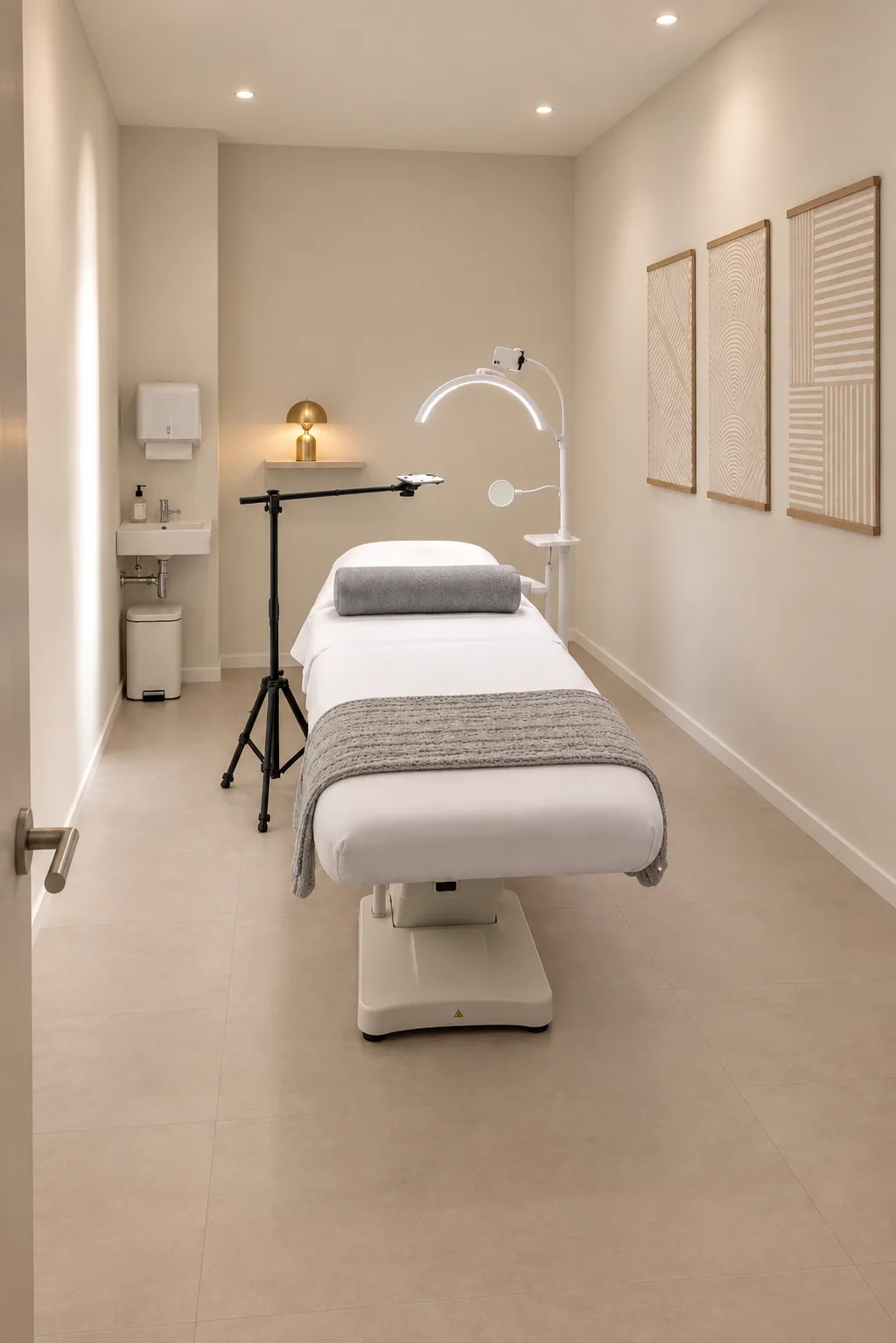
Wrinkle treatment consultation in Melbourne at Core Aesthetics starts with assessment, not a fixed treatment promise. Corey Anderson RN reviews movement lines, resting lines, skin quality, facial expression, health history, prior treatment, expectations, risks, alternatives, consent and timing before deciding whether treatment discussion, waiting, referral or no treatment is appropriate.
What Does Wrinkle Treatment Consultation Include?
Wrinkle treatment consultation in Melbourne at Core Aesthetics starts with assessment, not a fixed treatment promise. Corey Anderson RN reviews movement lines, resting lines, skin quality, facial expression, health history, prior treatment, expectations, risks, alternatives, consent and timing before deciding whether treatment discussion, waiting, referral or no treatment is appropriate.
Patients often arrive with one visible concern, such as forehead lines, frown lines or lines around the eyes. The consultation slows that concern down. Corey looks at how the line behaves with movement, whether it is present at rest, what skin quality is contributing and whether the concern sits within safe cosmetic scope.
The appointment also gives patients space to explain what they do not want. Some people want to keep strong expression, some want to understand early movement lines and some are mainly trying to work out whether treatment language applies to their concern at all. That conversation is part of suitability assessment.


Which Wrinkle Concern Are You Trying To Understand?
This table helps patients understand where a wrinkle concern may start. It is not a treatment selector and does not replace consultation.
| Common starting concern | What Corey may assess | Why it matters |
|---|---|---|
| Forehead lines | Eyebrow position, forehead movement, eyelid heaviness, skin quality and expression pattern. | The forehead cannot be assessed safely without considering eye area support and natural expression. |
| Frown lines | Muscle movement, resting crease depth, headache history, prior treatment and expression goals. | A visible crease may involve both movement and skin quality, so treatment discussion may be limited or staged. |
| Outer eye lines | Smile pattern, under eye support, cheek movement, skin texture and eye area sensitivity. | The area is expressive and delicate, so restraint, suitability and realistic limits matter. |
| Resting lines | Whether lines remain when the face is relaxed, plus skin condition, age related change and prior treatment. | Resting lines may not respond in the same way as movement lines and may need a different conversation. |
| Unsure where to begin | The concern history, what changes in expression, what stays at rest and what the patient wants clarified. | The first useful step may be assessment, education, a staged plan, waiting, referral or no treatment. |
How Are Movement Lines Different From Resting Lines?
Movement lines appear or become stronger when facial muscles contract. Resting lines remain visible when the face is relaxed. This distinction matters because a movement related concern and a resting crease may need different discussion, different limits or a decision not to treat.
Skin quality, sun exposure, age related change, hydration, sleep, smoking history, previous treatment and facial anatomy can all influence what is visible. A public page can explain the pattern, but it cannot decide whether treatment is suitable for a specific person.
Why Does Whole Face Context Matter?
Wrinkle concerns rarely sit alone. Forehead movement relates to brow position and the upper eyelids. Frown activity relates to natural expression and resting creases. Eye area lines relate to smile pattern, cheek support and skin texture. Looking at one line in isolation can lead to an over simplified plan.
A whole face assessment does not mean treating more areas. It means Corey considers surrounding anatomy and movement before deciding whether any treatment discussion is reasonable. Sometimes the safer answer is to do less, wait or focus on skin and general care instead.
What Does Corey Review Before Planning?
Corey reviews medical history, medicines, allergies, pregnancy or breastfeeding status where relevant, prior cosmetic treatment, current skin condition, timing, expectations and what the patient wants clarified. He also checks whether the concern is changing, stable, event driven or better managed outside a routine cosmetic appointment.
Planning should be easy to explain. If Corey cannot clearly connect the concern, assessment findings, risks, consent and next steps, the consultation may pause rather than move toward treatment discussion.
For first time patients, this can include explaining the difference between what is visible in a mirror, what appears in photos and what changes with animation. For returning patients, it may include reviewing previous timing and whether the current concern is new, recurring, settling or unrelated to prior treatment.


Can Treatment Happen On The Same Day?
Some adults may be suitable for treatment discussion on the same day as consultation. This is not automatic. Corey first needs to assess suitability, explain relevant risks and alternatives, confirm informed consent and decide whether proceeding is clinically appropriate for the concern and timing.
Same day treatment may not be suitable if medical history is incomplete, previous treatment details are unclear, the skin is irritated, a major event is close, expectations are uncertain, the plan needs more time or the safest decision is to wait.
When Might Waiting Or No Treatment Be Safer?
Waiting may be safer when the concern is recent, the timing is poor, an event is close, previous treatment elsewhere may still be settling, records are missing or the patient wants more time to decide. No treatment may be safer when expected benefit is limited, risk is not justified or the concern sits outside cosmetic scope.
A consultation that recommends waiting or no treatment is not a failed appointment. It can be the most responsible outcome when treatment would not match the concern, the risk profile or the patient’s longer term facial expression.
What Risks And Limits Are Discussed?
Risks vary by person, area, anatomy, previous treatment and aftercare. Relevant risks may include swelling, bruising, tenderness, headache, eyelid or brow heaviness, asymmetry, uneven effect, dry eye symptoms in susceptible patients and rare but serious complications. Corey discusses risks that are relevant to the assessment rather than treating them as generic fine print.
Limits matter too. Wrinkle treatment discussion should not promise a fixed appearance, symmetry, age change, expression change or duration. Facial movement continues, skin changes over time and a cautious plan may involve doing less than the patient first expected.
The consent conversation should also cover what uncertainty remains. If the concern is subtle, if an event is close, if photos do not match what is seen in person or if previous treatment details are missing, the safer decision may be to wait rather than force a plan.
How Are Cost, Timing And Review Discussed?
Cost should be discussed privately after assessment if treatment planning is appropriate. It should not be used as the first reason to proceed. Timing depends on the concern, health history, previous treatment, upcoming events, aftercare needs and whether same day treatment is suitable.
Review timing can also be discussed during consultation. The point is not to chase constant intervention. It is to understand what was assessed, what was decided, what needs aftercare and when review or waiting would be sensible.
If cost, timing or uncertainty changes the decision, that should be part of the consultation. A patient should be able to leave with a clear explanation of the options discussed, the reasons Corey did or did not support treatment discussion and what to read or book next.
What If You Have Had Treatment Elsewhere?
Bring as much information as possible, including timing, areas treated and any concerns that followed. Corey can assess what is visible, explain what can and cannot be determined from examination, and discuss whether waiting, records from the previous provider, referral or no treatment is appropriate.
Previous treatment can make wrinkle planning more complex. A careful consultation may need to understand what has settled, what is still changing and whether further treatment discussion would help or add risk.
How Can You Verify The Clinic And Practitioner?
Core Aesthetics is located at 12A Atherton Road, Oakleigh VIC 3166. The clinic phone number is 0491 706 705. Wrinkle consultations are led by Corey Anderson RN, Ahpra registration NMW0001047575.
Patients can check clinic and practitioner details on the verification page before booking. This page was reviewed on 7 June 2026 for consultation-first wording, clinic facts, suitability, risk and consent framing.
Which Page Should You Read Next?
For a narrower concern, read forehead wrinkle consultation, forehead lines treatment Melbourne, frown lines treatment Melbourne, crow’s feet treatment Melbourne, first time wrinkle treatment Melbourne or preventative wrinkle treatment Melbourne.
For safety and decision making, read wrinkle consultation Melbourne, treatment suitability assessment, patient safety in aesthetic consultation, how informed consent works, why we sometimes say no, pricing, book or contact.


General Information Only
This page provides general information for adults considering a wrinkle consultation in Melbourne. It is not personal medical advice, a diagnosis or a recommendation that treatment is suitable. Suitability, risks, alternatives, timing and treatment decisions depend on assessment with an appropriately qualified health practitioner.
If you have sudden symptoms, pain, infection signs, vision symptoms, facial weakness or another medical concern, seek appropriate medical care rather than relying on a routine cosmetic consultation page.
Is this for you?
Consider booking a consultation if
- Adults considering wrinkle consultation in Melbourne
- Patients who want assessment before deciding whether treatment discussion is appropriate
- Patients with movement lines, resting lines or uncertainty about where to begin
- Patients comfortable with waiting, referral or no treatment if that is safer
This may not be for you if
- People seeking an assured visible change before assessment
- People seeking treatment for someone who is not an adult
- People seeking product names, unit pricing or prescription product advice from a public page
- People with urgent symptoms or medical concerns that need appropriate medical care
Suitability is confirmed at consultation. This list is general guidance, not a substitute for clinical assessment.
Frequently asked questions
What happens at a wrinkle treatment consultation?
Corey Anderson RN reviews the concern, facial movement, resting lines, skin context, health history, prior treatment, timing, expectations and risk factors. The consultation is used to decide whether treatment discussion, waiting, referral or no treatment is appropriate. It does not mean treatment will proceed.
Are movement lines and resting lines assessed differently?
Yes. Movement lines appear or increase when facial muscles contract. Resting lines remain visible when the face is relaxed and may involve skin quality or longer term crease formation. This distinction helps Corey explain realistic limits, risks and whether treatment discussion is suitable for the concern.
Can I have treatment on the same day as my consultation?
Some adults may be suitable for same day treatment discussion, but it is not automatic. Corey first needs to assess suitability, explain relevant risks and alternatives, confirm informed consent and decide whether proceeding is clinically appropriate. Waiting may be safer if timing, records, expectations or skin condition are unclear.
What wrinkle areas can be discussed?
Consultation may discuss forehead lines, frown lines, lines around the eyes, resting creases and the way expression affects the upper face. Corey may also consider brow position, eyelid heaviness, cheek movement and skin quality because a visible line is often connected to surrounding anatomy.
Will consultation tell me if I should avoid treatment?
Yes. A responsible consultation can recommend waiting, referral, a different pathway or no treatment. That may happen when expected benefit is limited, risk is not justified, timing is poor, the concern is outside cosmetic scope or the plan does not feel clear enough to support informed consent.
How are risks discussed before wrinkle treatment?
Risks are discussed in relation to the person, area, anatomy, prior treatment and aftercare needs. Corey may discuss swelling, bruising, tenderness, headache, eyelid or brow heaviness, asymmetry, uneven effect and rare but serious complications where relevant. The aim is informed consent, not pressure to proceed.
Do I need to know exactly what I want before booking?
No. Many patients book because they are unsure whether a concern is movement related, skin related, age related or something to leave alone. Bringing photos, dates of previous treatment and questions can help, but the consultation itself is designed to clarify the concern and safer next steps.
How should I prepare for a wrinkle consultation?
Bring your medical history, medicines, allergies, previous cosmetic treatment details and any upcoming event dates. It can help to think about what bothers you at rest and what appears only with expression. Avoid arriving with a fixed outcome demand, because suitability and risk still need assessment.
How do I verify Corey Anderson RN and the clinic?
You can use the Core Aesthetics verification page to check the clinic details, Corey Anderson RN, Ahpra registration NMW0001047575 and the Oakleigh location. Verification is useful before booking because it separates clinic identity and practitioner accountability from social media or third party listing information.
Is this page personal medical advice?
No. This page is general information for adults considering wrinkle consultation in Melbourne. It cannot diagnose, assess suitability or recommend a treatment plan for you. Personal advice requires consultation with an appropriately qualified health practitioner who can review your health history, anatomy, goals, risks and consent.