For a broad wrinkle consultation near Burwood, observe how expression transfers across the upper face. Notice whether forehead lift, inward frown pull, smiling and outer eye movement occur separately or recruit nearby areas, then note which line remains after the expression settles. Corey Anderson RN combines this map with skin, brow and eyelid context, natural asymmetry, health, medicines and previous care. Suitable care can be planned when individual assessment and informed consent support it.
What Is Expression Transfer?
Expression transfer describes how movement in one area is accompanied by movement nearby. Raising the brows may change the central forehead, while smiling may lift the cheeks and narrow the outer eye area.
These connections are normal. Mapping them helps Corey understand the leading concern without isolating one line from the rest of your expression.
Which Movement Connection Do You Notice First?
| Starting movement | Nearby area to observe | Question after settling |
|---|---|---|
| Forehead lift | Central brow and eyelid context | Does a line remain at rest? |
| Inward frown | Lower forehead and brow position | Does tension release evenly? |
| Natural smile | Cheeks and outer eye area | Which movement feels familiar? |
| Bright light narrowing | Outer eye and brow activity | Does the concern persist indoors? |

Why Can One Line Have More Than One Movement Source?
A visible line may be influenced by repeated movement from the area beneath it, movement transferred from a nearby area, skin texture or a combination of factors.
Corey observes ordinary conversation, requested expression and the return to rest before explaining which findings appear relevant.
How Does Forehead Lift Connect With Brow Position?
The forehead lifts the brows, so horizontal movement cannot be assessed separately from brow and eyelid context. Some people recruit this movement during expression or comfortable viewing.
The Burwood forehead focus guide is the better next page when phone, laptop or distance viewing is the main question.

What Does Inward Frown Movement Add?
The central brow can draw inward and down during concentration, concern or requested frowning. Corey compares this with forehead lift and natural asymmetry rather than assuming the central line acts alone.
A new or involuntary movement pattern belongs in the appropriate clinical assessment, not a routine cosmetic interpretation.
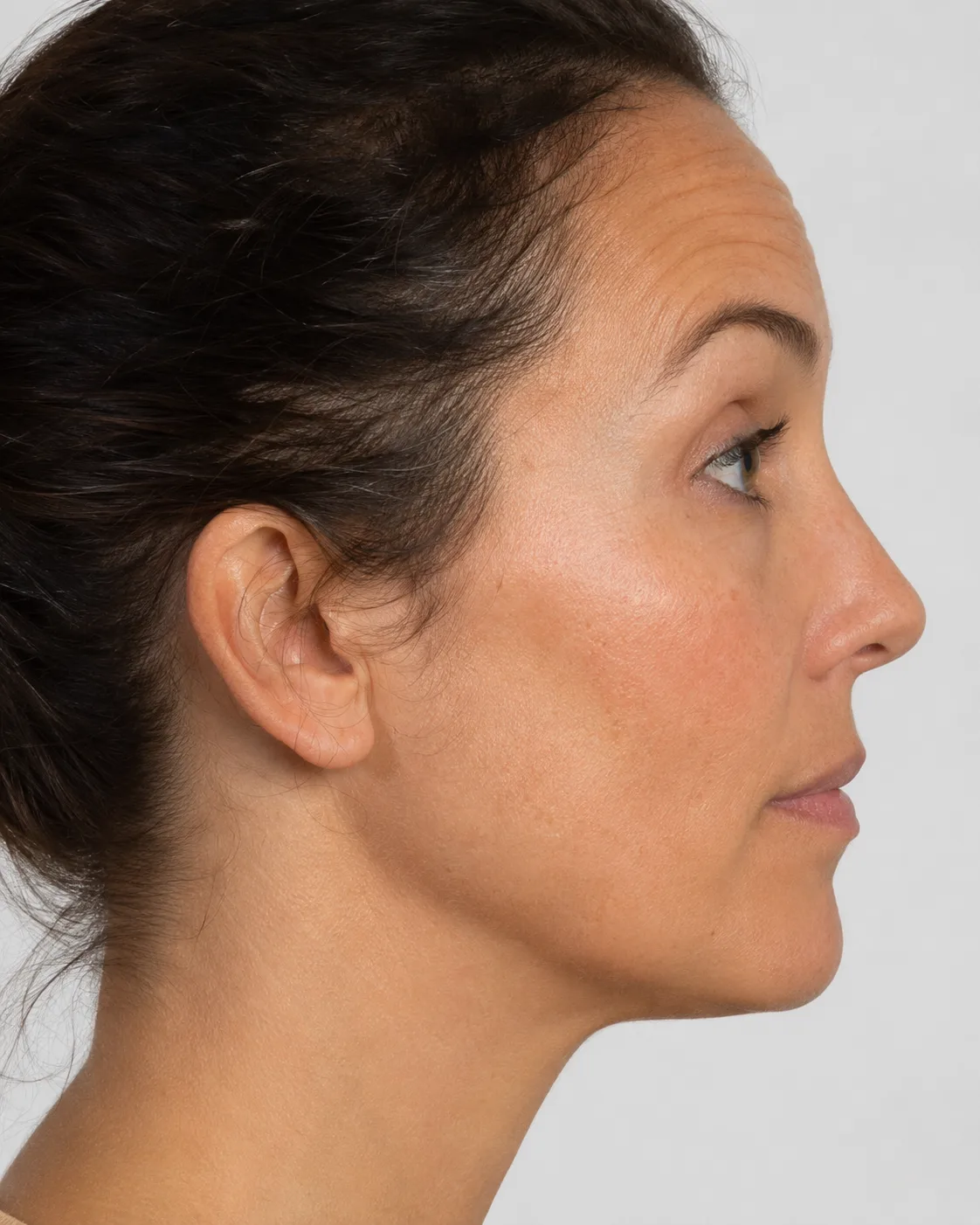
How Do Smile And Outer Eye Movement Work Together?
A natural smile usually involves the cheeks and outer eye area together. Corey observes which movement feels recognisable and whether the concern appears only with smiling or remains after the face settles.
The assessment does not treat a genuine smile as a flaw. Preserving expression is part of the planning discussion.
When Is The Broad Transfer Map More Useful Than One Area?
Use this page when you are unsure whether the leading concern is forehead, frown or outer eye movement, or when several areas seem to join the same expression.
A focused guide is more useful once one area and one practical question clearly leads.
How Can Light And Concentration Change The Pattern?
Bright light may narrow the eyes, while concentration may lift or draw the brows inward. Screen position, glasses, fatigue and setting can also change the moment you notice a line.
These observations provide context but do not diagnose vision, skin or neurological conditions.
What Does Previous Care Change In The Map?
Previous care may alter movement, resting lines, sensation or which nearby area appears to compensate. Bring approximate dates, areas, response, side effects and any records you have.
Corey compares current movement with your remembered baseline and avoids assuming an unfamiliar pattern is your natural expression.
Which Consent Questions Belong After Movement Mapping?
Ask what appears to lead the expression, what movement should remain, what suitable choices exist and which material risks apply to the assessed area.
Also ask about alternatives, uncertainty, likely limits, total cost, aftercare, follow up and what could change the timing or recommendation.
What Risks Depend On The Area And Plan?
Relevant risks may include bruising, swelling, tenderness, headache, asymmetry, altered expression, brow or eyelid heaviness and dissatisfaction. Less common risks are explained where relevant.
The exact discussion depends on your anatomy, health, movement and the suitable option. A general list does not replace individual consent.
When Does Another Clinical Pathway Add Value?
New drooping, weakness, numbness, visual change, severe headache, significant pain or another sudden unexplained facial change needs prompt assessment by an appropriate health professional.
For a stable cosmetic concern, more information, adjusted timing, another clinical review or a different pathway can be incorporated when useful.
What Should You Bring To The Transfer Review?
Bring a short description of which expression begins first, which nearby area joins and whether a line remains after settling. One or two unfiltered photographs can help if they show an ordinary setting.
Also bring relevant health history, medicines, allergies, previous care details and timing constraints. You do not need a treatment map.
Where Is The Burwood Expression Assessment Held?
Core Aesthetics is at 12A Atherton Road, Oakleigh VIC 3166. Phone 0491 706 705. Corey Anderson is a Registered Nurse with Ahpra registration NMW0001047575.
Use the verification guide and independent Ahpra register to confirm practitioner details. Check your trip and keep return access practical.
How Do You Book An Expression Transfer Assessment?
Bring the connected expression, not an isolated line
Corey can map forehead, frown and outer eye movement, then explain which suitable choices deserve discussion.
When clinically appropriate and informed consent is complete, suitable care can be planned. There is room to ask questions and understand the recommendation before deciding.
Official guidelines for registered health practitioners who perform non-surgical cosmetic procedures support individual assessment and consent. These cosmetic procedure guidelines inform the consultation process. TGA advertising guidance explains why prescription products are not promoted here.
What Does General Preparation Information Mean Here?
This page helps you describe connected facial movement. It is not personal medical advice, diagnosis, urgent care or confirmation that a particular option is suitable.
Personal advice requires Corey to assess movement, resting lines, skin, health, previous care, expectations, risks, alternatives and consent needs.
Questions About Connected Expression
What does expression transfer mean?
It describes how movement in one area is accompanied by movement nearby, such as forehead lift with brow change or smiling with cheek and outer eye movement.
Why compare forehead, frown and outer eye movement?
These areas can work together during ordinary expression. Comparing them helps identify the leading concern and the movement you want to preserve without assuming every line needs the same plan.
What if the line appears only during one expression?
That is useful information and does not mean something is wrong. Corey compares the expression with rest, nearby movement, skin and your own priorities before explaining its significance.
What if a line remains after movement settles?
Tell Corey how long it remains and whether skin texture also concerns you. A resting line presents a different planning question from movement alone and still needs individual assessment.
When should I use the Burwood forehead page?
Use it when brow activity changes across phone, laptop, across room or conversation distances. This broader page is better when several expression areas join the same movement.
Should I bring photographs?
One or two unfiltered photographs can help when they show an ordinary expression that is difficult to recreate. They provide context but cannot replace direct movement and resting assessment.
Is Core Aesthetics located in Burwood?
No. Core Aesthetics is in Oakleigh. Check the trip from your actual starting point and make sure returning to the clinic for review would be practical.
Is this for you?
Consider booking a consultation if
- Adults near Burwood wanting wrinkle and facial movement assessment before treatment discussion
- Patients who want a consultation-first explanation of movement lines, resting creases, risk and consent
- People comfortable comparing suitable options, adjusted timing, review needs and other clinical input
- Patients who want to verify Corey Anderson RN and the Oakleigh clinic before booking
This may not be for you if
- People asking for a predetermined plan without assessment, consent or risk discussion
- People with urgent medical symptoms, active infection, acute swelling or rapidly changing skin concerns
- People wanting a fixed cosmetic change before movement, brow support and skin quality are assessed
- People seeking elective cosmetic care for someone who cannot provide informed consent
Suitability is confirmed at consultation. This list is general guidance, not a substitute for clinical assessment.