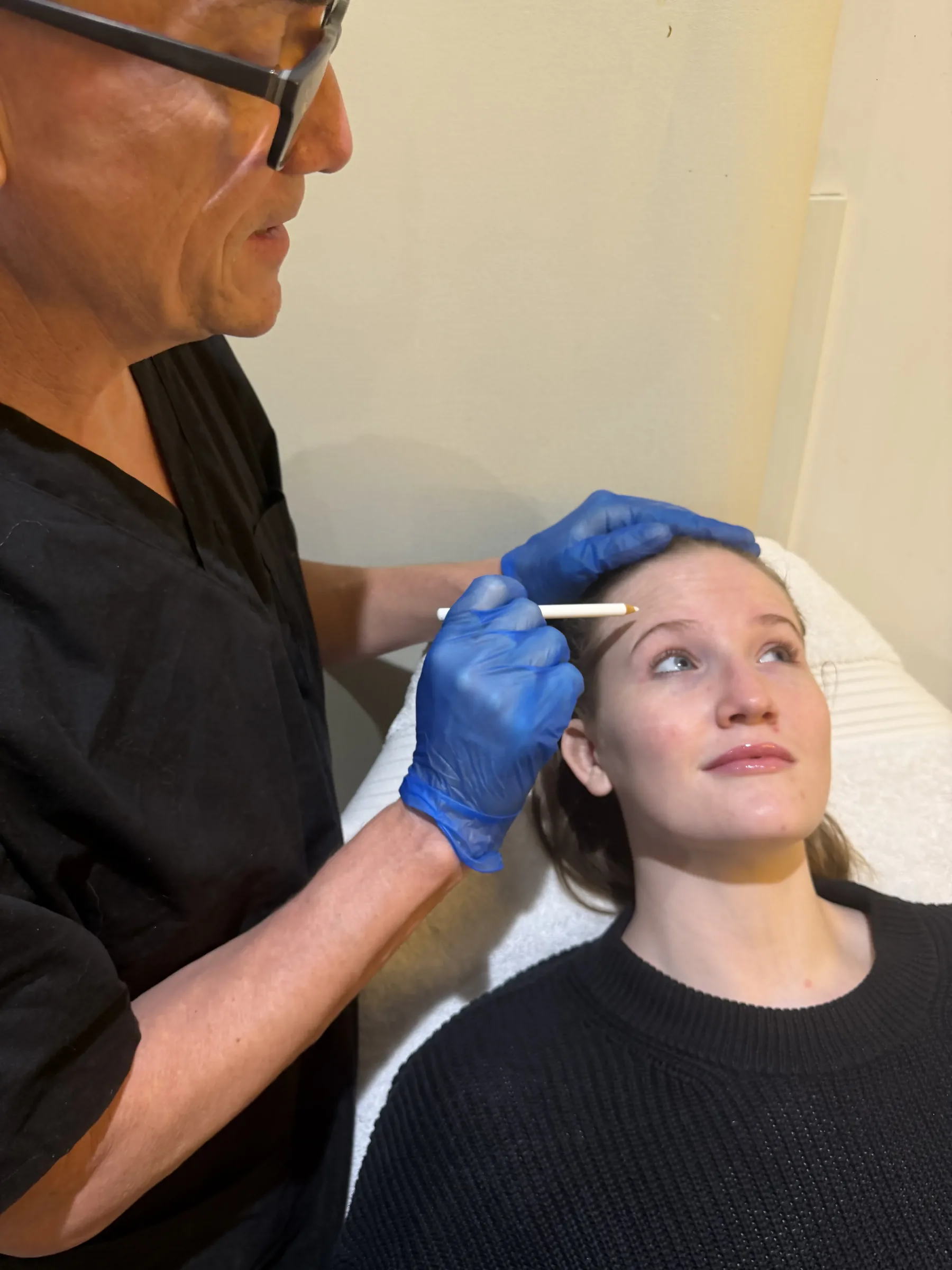
A forehead wrinkle consultation at Core Aesthetics involves assessment of the frontalis muscle activity, brow position and upper face balance before any anti-wrinkle treatment is recommended. Suitability is always determined in an individual consultation, before any treatment is considered.
A forehead wrinkle consultation is specifically focused on the horizontal creases across the forehead and the clinical considerations that determine whether and how anti-wrinkle treatment is appropriate for your individual upper face anatomy. Forehead treatment is one of the most commonly requested anti-wrinkle areas and also one of the most nuanced to plan well, because the frontalis muscle that creates forehead lines is the same muscle that lifts the brows.
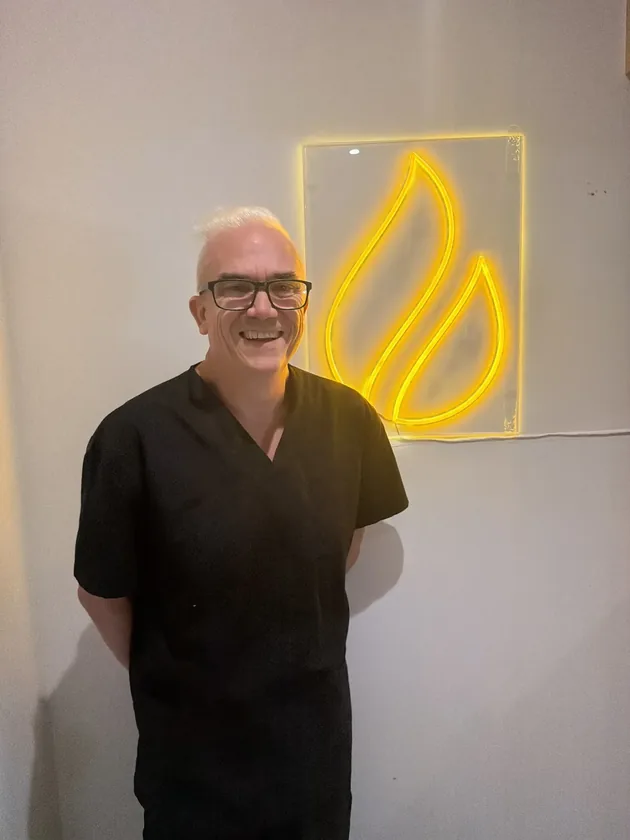
All consultations at Core Aesthetics are conducted by Corey Anderson, AHPRA registered nurse, the sole treating practitioner at the clinic. You can read more about what to expect in our article on what happens at an injectables consultation.
“There is no obligation to proceed. The consultation is where the honest conversation happens.”
Treating Practitioner
| Name | Corey Anderson |
| Profession | Registered Nurse |
| AHPRA | |
| Registered since | January 1996 |
What Causes This Concern
Forehead lines are created by the frontalis muscle with repeated brow raising. Over time they progress from dynamic lines, visible only in expression, to static lines visible at rest. The rate of progression depends on individual muscle strength, skin elasticity and sun exposure history. Because the frontalis also lifts the brows, assessing brow position and its relationship to frown line muscle activity is an essential part of any forehead consultation.
What the Consultation Covers
Corey will assess your frontalis muscle strength and movement, your natural brow position at rest and in expression, how your forehead lines relate to the frown area, and what a conservative and balanced treatment approach looks like for your specific upper face anatomy. You will leave with a clear understanding of whether treatment is appropriate, what dosing approach is recommended and what realistic results look like. Read more on our forehead lines treatment page.
Related Treatment Areas
Because the upper face functions as a coordinated system, a forehead wrinkle consultation typically involves discussion of frown line treatment and in many cases crows feet. For a full overview of anti-wrinkle treatment areas at Core Aesthetics see our anti-wrinkle treatments hub.
About the Treatment
All anti-wrinkle treatment at Core Aesthetics uses prescription injectable product assessed and administered individually. You can read more about how the treatment works and what to expect on our dedicated forehead wrinkle treatment page and in our full overview of anti-wrinkle treatments at Core Aesthetics.
Located in Oakleigh, Serving Melbourne’s South East
Core Aesthetics is at 12A Atherton Road, Oakleigh VIC 3166. Accessible from Carnegie, Chadstone, Murrumbeena, Huntingdale, Bentleigh and Clayton. Open Tuesday to Saturday by appointment.
Ready to take the first step?
Book your consultation at Core Aesthetics, Oakleigh.
Book online at any time.
Safety, Suitability and Clinical Assessment
All cosmetic injectable procedures carry risk. The suitability assessment at consultation identifies any contraindications or relative risk factors specific to your circumstances, including medical history, current medications, previous procedures, and anatomical features that may affect the risk profile for a given treatment area. This information is reviewed before any treatment is planned.
For certain conditions and medications, injectable treatments are not appropriate, or require modification of technique or timing. For others, the treating practitioner may recommend that you consult with your primary healthcare provider before proceeding. These are clinical judgements that can only be made with accurate, complete medical history information, which is why the consultation history taking process is thorough.
Complication recognition and initial management are part of the clinical competency required of practitioners performing injectable treatments under AHPRA’s September 2025 guidelines for nonsurgical cosmetic procedures. The practitioner at Core Aesthetics holds current training in this area and maintains the relevant management supplies on site. Understanding that risk exists and is actively managed is more useful than assuming risk does not exist.
Review Appointments and Ongoing Care
A review appointment at four to six weeks is a standard part of every treatment cycle at Core Aesthetics. The review is not contingent on whether you have concerns, it is a clinical standard that applies to every patient. At review, the practitioner assesses the result across all treated areas, compares the outcome to the pretreatment clinical photographs, identifies any asymmetry or variation in response between sides, and determines whether any adjustment is appropriate within the same treatment cycle.
The review is also where longitudinal data about how your specific anatomy responds to treatment is recorded. Over multiple treatment cycles, this accumulated data allows the practitioner to refine the dosing and approach to better match your individual response pattern, which is one of the most significant advantages of maintaining a consistent treating practitioner rather than moving between clinics.
If you have any concerns in the period between your treatment and your review appointment, contact the clinic directly. The practitioner who treated you has the clinical context to respond accurately to any post treatment question, which is preferable to relying on general online information that may not reflect your specific situation.
What the Assessment Covers
The assessment at the consultation appointment is a face wide evaluation, not a focused review of only the area you have identified as a concern. This full face approach is deliberate: anatomical features interact with each other, and addressing one area in isolation, without understanding the broader facial context, can produce results that look disproportionate even when the individual area was technically treated well.
The practitioner evaluates facial symmetry, bone structure, soft tissue distribution, skin quality, and the dynamic movement patterns associated with each treatment area. The history taking covers your current medications, any previous injectable or surgical procedures, relevant health conditions, and any prior reactions or complications. From this assessment, the practitioner develops a treatment plan that reflects your specific anatomy and circumstances.
Results vary between individuals. What the assessment finds in one patient may be different from what it finds in another patient with a similar presenting concern, which is why templated treatment protocols are not used here. All treatments at Core Aesthetics are consultation based and individually assessed.
The long term Approach
Most patients who pursue cosmetic injectable treatment are thinking about the long term, even when they are not sure how to articulate that. The question is not just “what can I have done today” but “how do I age well over the next decade”. Those are different questions, and they require different conversations.
At Core Aesthetics, the planning conversation is oriented towards the long term. What does gradual maintenance look like over several years? Which areas are the highest priority given current changes? When should treatment begin, and when is it appropriate to wait? What is the realistic trajectory if treatment is maintained consistently versus started later?
These questions are best answered in the context of an individual assessment, because the answers depend on anatomy, rate of change, starting point, and personal goals, all of which vary. The consultation is where that conversation happens. Results vary between individuals, and a long term plan reflects that variability rather than applying a standard approach.
About This Information
The information on this page is provided for general educational purposes. It is not a substitute for clinical advice and does not constitute a recommendation that you proceed with any particular treatment. Cosmetic injectable treatments are prescription medical procedures. They carry risks that vary between individuals and that must be assessed and discussed in a clinical context before any treatment decision is made.
At Core Aesthetics, Corey Anderson assesses every patient individually. The consultation is the point at which your specific anatomy, medical history, and goals are evaluated together. No treatment is offered at a first appointment, and no treatment is appropriate for everyone. This page is a starting point, a way to understand what is involved before you decide whether a consultation is the right next step for you.
If you have questions about anything on this page or about whether treatment might be appropriate for your situation, you are welcome to call the clinic or book a consultation at no obligation.
This page provides clinical information about Forehead Wrinkle Consultation Melbourne, Oakleigh. It is intended for adults aged 18 and over who are considering cosmetic injectable treatment and want to understand the clinical process, suitability factors, and what to expect from a consultation based practice. All treatment decisions at Core Aesthetics follow individual assessment, no treatment is offered at a first appointment without a separate consultation. Results vary between individuals and are reviewed at follow up.
Clinical accountability and consultation framework
The consultation framework in “Forehead Wrinkle Consultation Melbourne, Oakleigh” is the same one Corey Anderson, AHPRA registered nurse (NMW0001047575), uses with every new patient at Core Aesthetics. The September 2025 AHPRA cosmetic procedures guidelines require a separate consultation appointment before any cosmetic injectable treatment for new clients. That requirement isn’t a paperwork formality, it changes what the consultation is for. It becomes the appointment where assessment, planning, and informed consent happen properly, separate from any treatment pressure. Results vary between individuals, but consultation quality is the single largest variable Core Aesthetics can control. The pages on this site try to describe what a consultation should actually feel like.
Specific to forehead wrinkle consultation: a Core Aesthetics consultation is a paid clinical appointment, not a sales conversation. The consultation fee covers the practitioner’s time and the medical assessment; it does not commit the patient to any treatment, and there is no pressure to book one on the day. Some consultations end with a recommendation to defer treatment, to start with a different intervention, or to do nothing at all, that is a normal outcome, not a failed consultation. The Anti-wrinkle treatment Melbourne page covers what happens on the day in more detail.
Patients reading this page who want to verify Corey Anderson’s AHPRA registration can do so directly on the AHPRA public register at ahpra.gov.au using registration number NMW0001047575. The Core Aesthetics clinic operates from 12A Atherton Road, Oakleigh VIC 3166, Tuesday to Saturday, by consultation appointment. All new patient treatment at Core Aesthetics follows a structured clinical consultation, consistent with the September 2025 AHPRA cosmetic procedures guidelines. Treatment may be scheduled for the same day as consultation or at a subsequent appointment, depending on clinical assessment and individual circumstances. Patients with questions about the content on this page can raise them at consultation; the practitioner is happy to walk through any clinical reasoning that the written content does not fully capture. Results vary between individuals, and the consultation is the appropriate place to discuss what those individual variations mean for a specific person’s treatment plan.
One additional consultation note: patients are welcome to call the clinic on 0491 706 705 with questions before booking. Some patients prefer to clarify a few things by phone before committing to the consultation appointment, and the clinic supports that approach. The phone conversation does not constitute clinical advice and cannot substitute for the consultation, but it can help the patient assess fit before scheduling. Patients researching this topic in more depth may find the consultation guide melbourne page and the patient safety cosmetic injectables page useful as further reading; both reflect the same clinical accountability framework as this page.
Is this for you?
Consider booking a consultation if
- You are researching anti-wrinkle treatment and want to understand whether it suits your goals and anatomy
- You are 18 or older and in general good health
- You want a conservative, consultation based approach, not a treatment plan written before you walk in
- You understand that anti-wrinkle injections are a prescription medical procedure with potential side effects, which will be reviewed in consultation
This may not be for you if
- You are pregnant, trying to conceive, or breastfeeding
- You have a neuromuscular condition (such as myasthenia gravis or Lambert-Eaton syndrome)
- You have a history of allergic reaction to the active ingredient in anti-wrinkle injections
- You have an active infection or unhealed skin in a potential treatment area
- You are taking aminoglycoside antibiotics or certain other medications without prior medical clearance
- You are under 18 years of age
Suitability is confirmed at consultation. This list is general guidance, not a substitute for clinical assessment.
Frequently asked questions
What does the forehead consultation specifically look at?
Frontalis muscle activity, brow position, the relationship between the brow elevators (frontalis) and depressors (corrugators, procerus), resting versus animated lines, and the realistic outcome from muscle activity reduction in this area. Results vary between individuals.
Why is brow position so important in this consultation?
The frontalis lifts the brow; the corrugators and procerus pull it down. Treating the lifters in isolation can drop the brow position. The assessment maps the muscle dynamic before any specific area dose is recommended.
Is the consultation suitable for someone with low resting brow position?
Yes, and it’s particularly important. Clients with low resting brow position need careful dose calibration to avoid further drop. Some consultations recommend smaller doses, different placement, or treating the brow depressors instead of the frontalis.
How does the consultation discuss static lines that don’t soften fully?
Honestly. Static lines etched into the skin from years of repeated movement may soften only partially even with successful treatment. The consultation distinguishes between dynamic lines (likely to respond) and static etching (often only partially). Results vary between individuals.
Will treatment take place at the consultation visit?
Generally no. The consultation and treatment are separate appointments. The assessment, the recommendation, and the discussion all happen at the consultation; treatment is booked separately and confirmed at that appointment.
What if the recommendation is to start with a smaller area first?
Common for first time clients. Starting with one area allows the individual response to be observed before adding more. The next decision is made at the review appointment based on what the first dose delivered. Results vary between individuals.
Who conducts consultations at Core Aesthetics?
All consultations at Core Aesthetics are conducted by Corey Anderson, an AHPRA registered nurse (NMW0001047575) operating under nurse prescribing scope of practice. The consultation is a paid clinical appointment that includes facial assessment, treatment planning, informed consent, and a written record of recommendations. The September 2025 AHPRA cosmetic procedures guidelines require a separate consultation before any cosmetic injectable treatment for new patients; Core Aesthetics observes that requirement strictly.
How is the consultation booked?
Consultations at Core Aesthetics are booked online through the Square booking system or by calling 0491 706 705. New patients book a consultation appointment first; treatment is scheduled separately on a different day under the September 2025 AHPRA cosmetic procedures guidelines. The consultation appointment is paid time that covers the clinical assessment regardless of whether treatment is recommended.