A frown line assessment should compare three views: the face at ordinary rest, a gentle frown and a comfortable brow raise. The pattern may show whether a crease is visible only with expression, remains at rest, pulls inward or downward, or sits within a wider brow and forehead pattern. Photographs cannot establish suitability or select care. Corey Anderson RN also reviews health history, medicines, previous cosmetic care, skin status, expectations, material risks and the expression a person wants to preserve before discussing a plan, timing or another clinically appropriate pathway.
Why Use Three Views Instead Of One Photograph?
A relaxed photograph can show a crease but not the movement that formed it. A strong posed frown can exaggerate a concern but not show how the face usually communicates. A brow raise adds information about forehead effort and brow position.
The three views are a conversation tool. Corey repeats movement live, checks whether the effort is comfortable and observes the whole upper face. A photograph does not establish anatomy, suitability or likely response.
Complete The Three View Frown Map
| View | Record only what you see | Question for consultation |
|---|---|---|
| Ordinary rest | Is a line visible without posing? Is one side different? | Is this a movement line, resting crease, skin fold or mixed concern? |
| Gentle frown | Does the area draw inward, downward or both? | Which movement pattern is being assessed and what expression matters to preserve? |
| Comfortable brow raise | How much forehead effort appears and where do the brows sit? | Does the wider upper face change the risk or suitability discussion? |
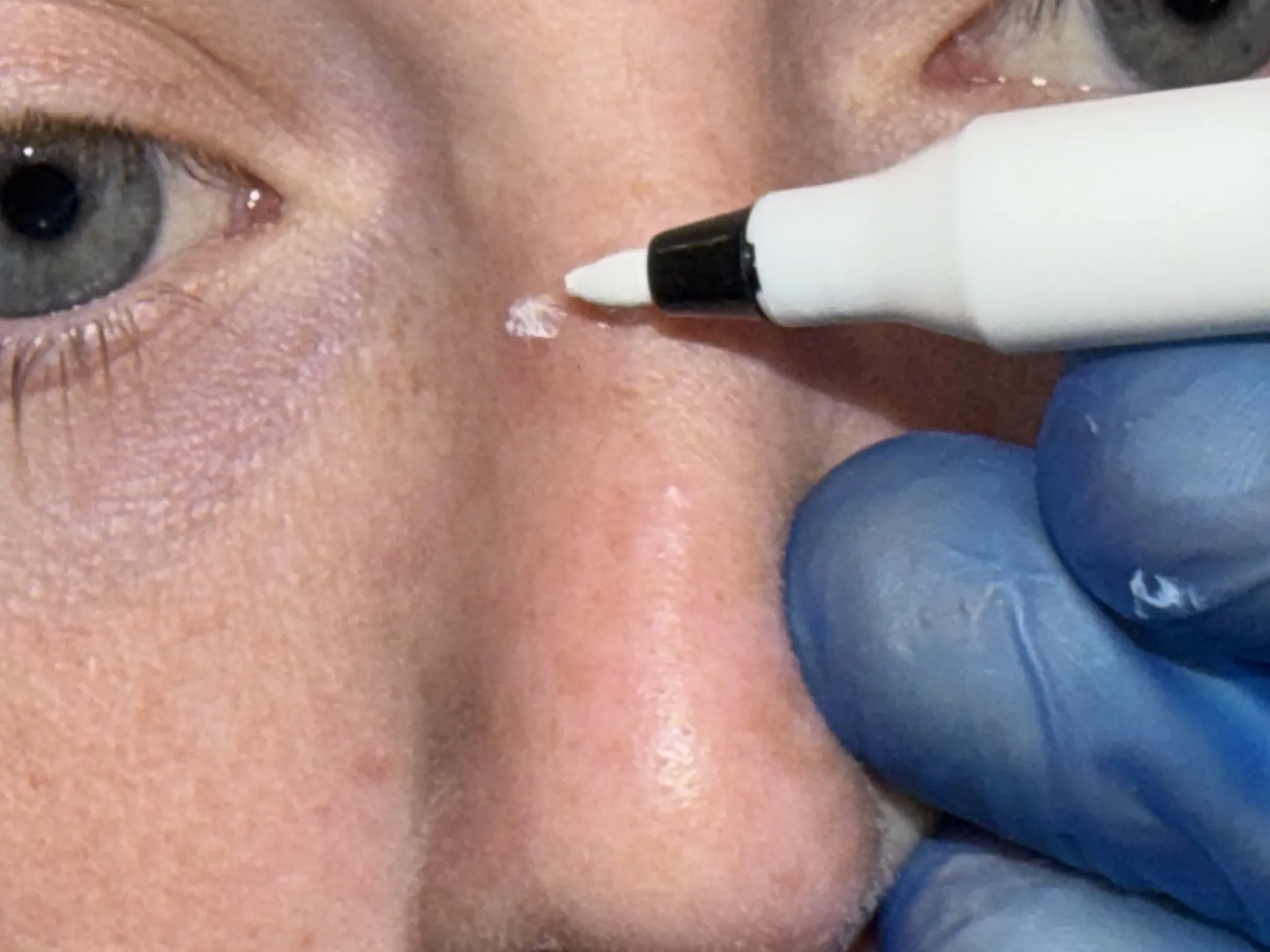
Add A Release Note, Not A Desired Result
After each view, relax the face and note what returns to baseline. Then write one sentence about function: the expression you use when concentrating, reading, reacting or speaking that you want to remain recognisably yours.
This is more useful than asking for a frozen or perfectly smooth appearance. It tells Corey what trade off would be unacceptable before any clinical option is considered.
What Can A Central Brow Line Represent?
The common description is a frown line or an eleven line between the brows. The visible mark may be expression led, present at rest, influenced by skin quality, shaped by brow position, or affected by previous care. A scar, skin lesion, new asymmetry or other changing feature needs a different assessment rather than being assumed to be a cosmetic movement line.
Use plain descriptions such as vertical crease, central fold, stronger on the left or visible only when concentrating. Avoid naming a muscle or diagnosing the cause yourself.
Inward And Downward Are Different Observations
Some people notice the brows drawing towards each other. Others notice a central downward pull, and some show both. The direction, strength and symmetry can change across repeated expressions and may not match a still image.
Corey observes these movements rather than treating the search term as a clinical finding. The aim of the map is to make the consultation more precise, not to produce a remote assessment.
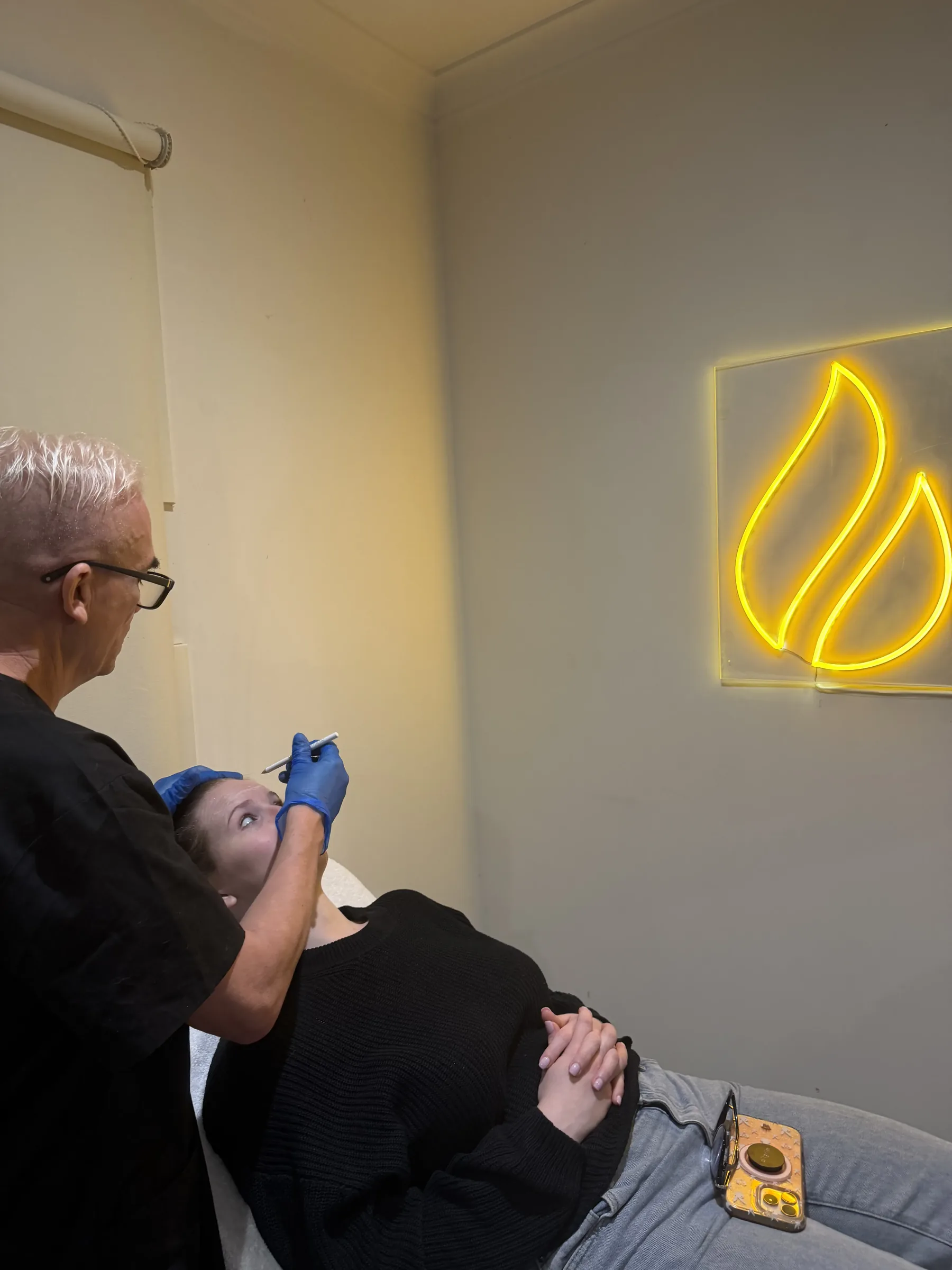
Why Do The Forehead, Brows And Eyelids Enter The Discussion?
The central brow does not work alone. Forehead recruitment can help hold the brows in a familiar position. Brow height and eyelid context can affect how heaviness, asymmetry or expression change would be experienced.
That is why Corey looks beyond the named crease. If the wider pattern makes a cosmetic plan less suitable, the conversation may end with timing or another clinically appropriate pathway.
Movement Line Or Resting Crease?
A movement line appears or deepens with expression. A resting crease remains visible when the face is relaxed. Many concerns contain both elements, and the balance can vary with lighting, hydration, skin condition and how strongly someone poses.
The distinction matters for expectations. A discussion about movement does not promise that a resting mark will disappear, and a surface crease should not be treated as proof of one cause.
Use Comparable Images Without Turning Them Into Evidence Of Suitability
- use the same camera, distance and neutral lighting
- keep the head level and remove beauty filters
- capture ordinary rest before deliberately moving
- use a gentle repeatable expression rather than maximum force
- label the date and whether previous care was still active
Images can help explain timing and change. They do not replace live movement, palpation where clinically appropriate, health history or consent.
What Previous Care Information Changes The Assessment?
Bring the date, clinic, practitioner, area discussed, records available, how movement changed, when it settled and anything that felt heavy, uneven or unfamiliar. If the product or other detail is unknown, request the record rather than guessing.
Corey may recommend waiting until the earlier effect can be assessed more reliably. Repeating care because a date is approaching is not a clinical reason to proceed.
Separate The Concern From The Deadline
A wedding, work presentation, reunion or photography booking can explain why the line feels prominent now. It cannot make uncertain timing safer or suitability clearer.
Write the event date and the reason it matters, then allow the clinical decision to remain independent. If there is not enough time for assessment, consent, expected settling and access to review, postponing cosmetic care can be the sensible outcome.
Which Health Details Belong In The Consultation?
Bring current medicines, allergies, pregnancy or breastfeeding status where relevant, neurological or muscular conditions, eye or eyelid history, recent illness, skin inflammation, previous reactions and any planned medical or dental care. Mention a new headache, vision symptom, weakness, rapidly changing asymmetry or other health concern rather than labelling it as a frown line.
This page cannot determine whether a symptom is urgent. Use an appropriate health service for a new or concerning symptom.
What Does A Responsible Decision Table Look Like?
| Finding or circumstance | What remains open | Possible route |
|---|---|---|
| Expression only line with stable health history | Suitability, material risks and preservation preference | Further clinical planning may be discussed |
| Resting crease or mixed concern | Cause, limits and realistic expectation | Broader skin or structural discussion, timing or another clinically appropriate pathway |
| Recent care with incomplete records | What was done and whether its effect is still changing | Retrieve records and wait |
| New symptom or changing asymmetry | Whether medical assessment is required | Appropriate health review rather than cosmetic planning |
| Pressure from an event or another person | Whether consent is voluntary and timing is sound | More time or another appropriate care pathway |
Which Risks And Limits Need A Personal Discussion?
Potential issues can include bruising, tenderness, headache, asymmetry, heaviness, an unfamiliar expression, an uneven response or the need for review. The relevance and likelihood of a risk depend on the individual assessment and proposed pathway.
Consent should cover expected benefits, material risks, alternatives, costs, aftercare and review access, with space to decide at your own pace. A general website list is not personal consent.
Turn The Three Views Into A Personal Decision
Corey compares what changes at rest, with a gentle frown and during a brow raise. He then explains which part of the pattern is movement led, which observations may relate to the skin or a resting crease, and which upper face trade offs matter for you.
If the assessment and consent discussion support proceeding, suitable care on the day can be discussed. Other sensible next steps can include retrieving earlier records, adjusting timing, gathering more information or arranging another clinical review. You remain free to decide after the options, risks, costs, aftercare and review plan are clear.
What I Learn From Three Upper Face Expressions
I Compare Three Ordinary Expressions
Corey Anderson RN: Relaxed rest. A gentle frown. A comfortable brow raise. Those three views tell me whether the line only appears with movement, stays visible at rest, or belongs to a wider brow and forehead pattern. I don’t ask anyone to strain, because straining creates a feature that isn’t representative of ordinary expression. If the three views don’t tell a consistent story, I explain that uncertainty before we discuss whether any cosmetic plan is appropriate.
The Forehead May Be Supporting The Brows
Corey Anderson RN: Some people quietly recruit the forehead to help hold their brows in a comfortable position. That’s why I assess the eyelids, brow height and forehead movement when the concern sits between the brows. Look only at the central lines and you can miss a support pattern that matters to expression, or to how heavy your eyes feel. I ask what brow position feels familiar to you, and whether you’ve had any eyelid symptoms. If changing that movement could compromise comfortable brow position or familiar expression, I may advise against cosmetic treatment or recommend another review.
Tell Me What Expression Must Stay Familiar
Corey Anderson RN: Before we discuss a frown line concern, I ask which expressions matter to you in conversation, in photographs and at work. I don’t promise a resting crease will disappear, or that both sides will behave identically. I also try to separate genuine decision time from pressure created by an upcoming event. Sudden facial weakness or asymmetry, particularly with arm weakness or speech difficulty, can indicate a medical emergency and should prompt a call to 000. Other new headaches, visual changes or neurological symptoms should be medically assessed before cosmetic planning.
How Are Costs Discussed Without Preselecting Care?
The relevant cost depends on the assessment outcome, the pathway considered and whether cosmetic care is appropriate. Use the clinic pricing guide for general context, then ask what is included in review and aftercare.
Do not use a price menu to infer which option fits a crease. The decision belongs after the movement map, health review and consent discussion.

Where Does This Guide Sit In The Frown Line Pathway?
Use the consultation preparation page for appointment questions and documents. Use the planning guide when comparing decision stages after assessment.
Bring your three view map and the questions it raises. Corey will compare the photographs with live movement and your health history before discussing which next step fits.
Verify Who Will Read Your Three View Map
The person assessing the map should have a verifiable identity, professional role and current registration. Corey Anderson is a Registered Nurse with Ahpra registration NMW0001047575. Compare that entry with the clinic verification page before sending health information.
The consultation occurs at Core Aesthetics, 12A Atherton Road, Oakleigh VIC 3166. If an appointment message names another practitioner or place, confirm it through the published clinic channel.
Bring This One Page Note
- one observation from each of the three views
- the expression or function you want to preserve
- when the concern became noticeable
- previous care dates and available records
- current medicines and relevant health history
- an event date without treating it as a deadline to proceed
- questions about risks, alternatives, review and another appropriate care pathway
Questions About Frown Line Assessment
What are the three views in a frown line map?
Use ordinary rest, a gentle frown and a comfortable brow raise. Record what changes and what stays visible. Corey repeats movement live and places it within health history, brow position, forehead effort, skin status and consent.
Why is one photograph not enough to assess a frown line?
A still photograph cannot show when movement starts, whether the pose is typical, how the forehead and brows interact or what returns to rest. It also cannot determine health suitability, material risks or personal preferences.
Are eleven lines always caused by the same movement?
No. The label describes a visible pattern rather than a complete clinical finding. A central crease may be expression led, visible at rest, influenced by skin quality or brow position, mixed, or unrelated to ordinary frown movement.
Why does Corey look at the forehead and eyelids?
The central brow is part of a connected upper face. Forehead effort, brow position and eyelid context can affect expression and the relevance of heaviness or asymmetry in a personal risk discussion.
What should I write about the expression I want to keep?
Describe a familiar function rather than requesting a fixed look. Examples include concentrating, reading, reacting naturally or keeping enough brow movement to feel recognisably yourself.
What should I bring if I had previous frown line care?
Bring the date, clinic, practitioner, available record, area discussed, how movement changed, when it settled and any heaviness, asymmetry or unfamiliar expression. Mark unknown details honestly and request records where possible.
Does an event date decide suitability for frown line care?
No. An event date does not establish suitability. Corey uses the assessment to explain useful options, relevant limits, timing and follow-up. Assessment, consent, expected settling and access to review each need adequate space in the calendar, so postponing cosmetic care may be appropriate.
Can a resting crease be assessed in the same way as an expression line?
It can be observed in the same three views, but expectations may differ. A resting crease can have mixed influences, and a movement discussion does not promise that a surface mark will disappear.
When should a central brow change receive medical review?
A new symptom, rapidly changing asymmetry, vision change, weakness, severe headache, skin lesion or other health concern should not be assumed to be cosmetic. Use an appropriate health service for assessment.
Can a different next step better fit a frown line concern?
Yes. Incomplete records, unsuitable timing, uncertain cause, health concerns, unacceptable trade offs, pressure or a preference to keep current expression can support timing or another clinically appropriate pathway.
Is this for you?
Consider booking a consultation if
- Adults preparing a three view map of a between brow concern
- People who want to preserve familiar expression
- Anyone bringing previous care records for assessment
- Readers open to timing or another clinically appropriate pathway
This may not be for you if
- Diagnosis from photographs
- A new or concerning neurological, visual, skin or pain symptom
- People seeking a predetermined option or fixed outcome online
- Anyone using an event date to bypass assessment or consent
Suitability is confirmed at consultation. This list is general guidance, not a substitute for clinical assessment.
Clinical references
- Ahpra: Guidelines for registered health practitioners who perform non-surgical cosmetic procedures
- Ahpra: Guidelines for advertising higher risk non-surgical cosmetic procedures
- TGA: Advertising health services that involve therapeutic goods
- NMBA: Registered nurse standards for practice
- Ahpra: Register of practitioners