For a jaw muscle consultation near Malvern before an event, bring four details: the exact event date, what the event involves, which appearance and functions you want to keep familiar, and how much flexibility you have for contact or review. A wedding with photographs, a speaking engagement, travel and a sporting event create different practical questions. Corey Anderson RN combines the brief with lower face proportions, jaw movement, chewing muscle, dental and medical history, medicines, previous care, symptoms and individual risk. Suitable care can be planned when assessment and informed consent support it, with timing and instructions explained personally.
Why Use A Four Detail Event Brief?
A date alone does not explain what matters. Photographs, speaking, eating, travel, exercise and limited availability can create different priorities around the same calendar day.
A short brief lets Corey give relevant timing guidance without turning the event into pressure for a predetermined decision.
What Are The Four Event Details?
| Detail | What to record | Why it matters |
|---|---|---|
| Exact date | Day and any travel dates | Anchors the calendar |
| Event demands | Photos, speech, meals, exercise or travel | Identifies practical priorities |
| Preserve | Chewing, expression and familiar lower face | Protects what matters |
| Review flexibility | Availability and return access | Supports follow up planning |
Why Is The Exact Date Important?
Give the actual date rather than saying the event is soon. Include departure and return dates when travel surrounds it, because clinic contact and review access may differ while away.
The date informs discussion; it does not override anatomy, health or suitability.
What Does The Event Require You To Do?
Say whether you will be photographed, speaking for long periods, sharing meals, exercising, performing, working or travelling. These details connect timing advice to ordinary function and social context.
Corey can explain option-specific variability without assuming the same priorities for every event.
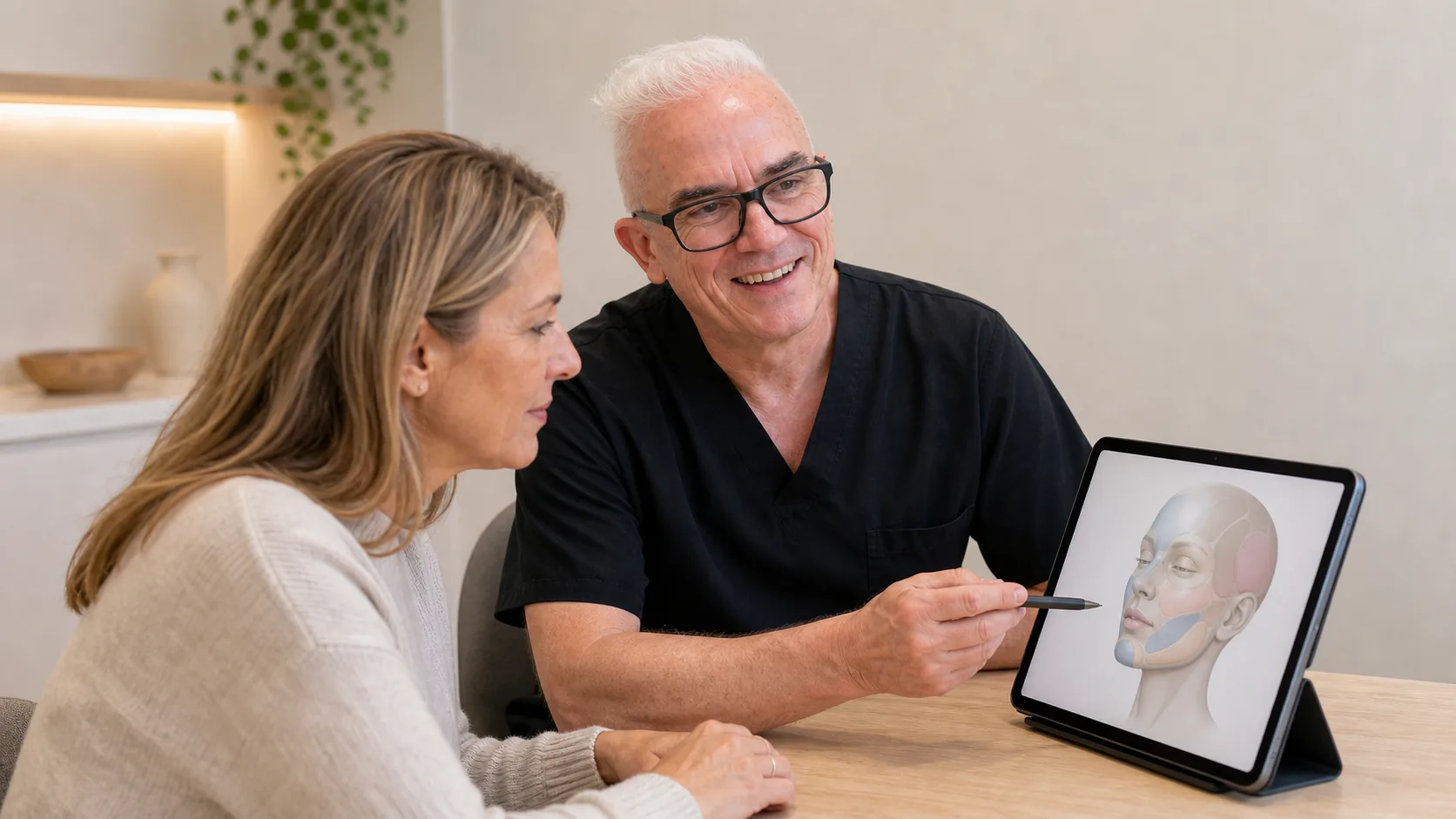
What Must Remain Familiar For The Event?
Record comfortable chewing, speech, smile, side difference, jaw width or another familiar characteristic you value. The aim is not merely to name what you want changed.
Preservation priorities belong in assessment, risk discussion and informed consent.
How Flexible Is Contact And Review?
Explain when you can return to Oakleigh, whether you will be interstate or overseas and how reachable you will be. Corey can build realistic contact and review arrangements into any suitable plan.
Review access is normal care planning and does not imply that a problem is expected.

What Does Jaw Muscle Assessment Add?
Corey examines lower face width, chewing muscle activity, jawline and chin relationships, comfortable movement and natural side difference. He also considers symptoms and dental context without treating cosmetic consultation as dental diagnosis.
The event brief is then interpreted through the findings, not used as a shortcut around them.
Which Health Details Should Come With The Calendar?
Bring current medicines and supplements, allergies, relevant health and dental history, mouthguard information and previous cosmetic care with approximate dates. Mention pain, locking, clicking, bite change, tooth wear, headache or recent dental care where relevant.
Available records can improve context, while direct assessment remains essential.

Malvern Jaw Muscle Event Questions
What are the four details in an event brief?
Bring the exact date, what the event requires, which appearance and functions must remain familiar and how flexible you are for contact or review. These details make timing advice personal and practical.
Why is an exact date better than saying soon?
An actual date anchors the calendar and reveals any surrounding travel. It helps Corey discuss timing and review access clearly, while anatomy, health, risk and suitability still guide the clinical decision.
Which event demands should I mention?
Mention photographs, prolonged speaking, shared meals, exercise, performance, work and travel. Different activities can make appearance, comfort, expression or review access more relevant to the conversation.
What can I ask to preserve for the event?
Name comfortable chewing, speech, smile, natural side difference, jaw width and familiar lower face character. Preservation priorities belong in assessment and consent, not only the desired change.
Why does review flexibility matter?
Corey needs to understand when you can return to Oakleigh, whether you will travel and how reachable you will be. Clear contact and review arrangements are a normal part of responsible planning.
Does an event date determine suitability?
No. The date informs practical discussion but cannot override anatomy, health, dental context, previous care, individual risk or informed consent. Corey interprets the calendar through direct assessment.
Is Core Aesthetics located in Malvern?
No. Core Aesthetics is in Oakleigh. Check the journey from your actual starting point and whether returning for planned review is practical. This page does not imply the clinic operates in Malvern.
Which Guide Should You Read Before The Event?
Read the Melbourne jaw muscle guide for the broad service question, masseter muscle explained for anatomy, the Malvern jawline guide when the border is central, and the visit planning guide for clinic logistics.
This page provides general education and does not diagnose a jaw concern, replace dental or medical care, confirm suitability or provide urgent advice. These cosmetic procedure guidelines inform the consultation process. See the Ahpra guidelines for registered health practitioners who perform non-surgical cosmetic procedures and the TGA guidance for advertising health services involving therapeutic goods.
Is this for you?
Consider booking a consultation if
- Adults who want jaw muscle, lower face, jawline, chin and dental context assessed before treatment discussion
- Patients with clenching or grinding history who understand dental boundaries may matter
- Patients with previous treatment who may need records review, waiting or original clinic review
- People comfortable discussing suitable options, practical timing, review needs and any other clinical input
This may not be for you if
- People asking for a predetermined plan without assessment, consent or risk discussion
- People seeking a fixed lower face change before consultation
- People wanting public prescription product advice or product led recommendations
- People with urgent dental, medical, infection, pain or jaw symptoms who need appropriate medical or dental care
Suitability is confirmed at consultation. This list is general guidance, not a substitute for clinical assessment.