Education

How Informed Consent Works Aesthetic Consultation

How Informed Consent Works Aesthetic Consultation explains how concerns are assessed at Core Aesthetics in Oakleigh, including suitability, medical history, risk, timing and when treatment may not be appropriate.

Quick summary

Patient Safety and Risk Discussion helps patients check who is responsible for assessment, consent, risk discussion and follow-up. At Core Aesthetics, Corey Anderson RN conducts consultation personally and patients can verify registration details before deciding. The goal is informed decision-making, not pressure to proceed.

Why Consent Is a Conversation, Not a Form

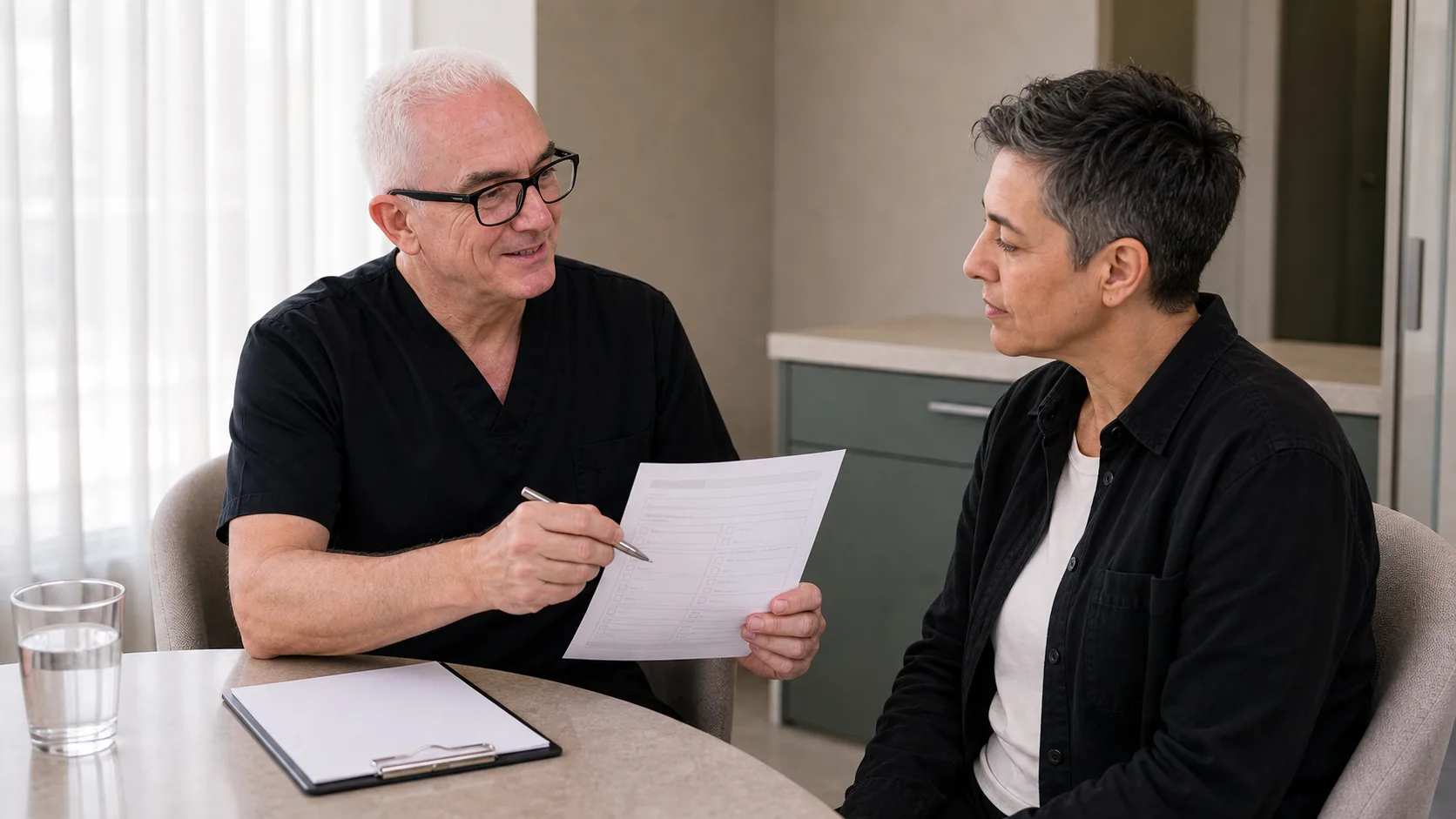
Consent for a Schedule 4 medicine procedure cannot be reduced to a signature on a form. The legal and clinical requirement is that the patient demonstrates understanding of what is being proposed, the realistic outcomes, the known risks, and the alternatives, including the alternative of no treatment.

Understanding cannot be inferred from a signature. It can only be established through conversation, with the patient given the opportunity to ask questions, to consider, and to decline. The form documents that the conversation occurred. The conversation itself is the consent.

This distinction matters because it changes how patients should expect the consultation to feel. A practitioner who hands you a form to sign without discussing what is on it has not obtained valid informed consent. A practitioner who walks you through the procedure, the alternatives, the risks, and the review structure, with time for your questions, is operating within the regulatory standard.

What the Conversation Covers

The informed consent conversation typically covers several specific dimensions:

The specific product being administered. This includes the class (wrinkle, facial volume treatment, hyaluronidase) and brand specific information including the product name, the dose, and the relevant safety profile.

The anatomical area being treated. This includes the depth of placement, the technique, and the relationship to surrounding structures (vasculature, nerves, other muscles or volumes).

The expected outcome. This includes the timeline of effect, the typical settling pattern, the realistic appearance, and what ‘good’ looks like for the specific area.

The known risks. This includes general risks (bruising, swelling, mild asymmetry), product specific risks (allergic reactions to particular products, granuloma risk, vascular events), and patient specific risks (medications affecting bleeding, recent illness, anatomical variants).

The alternatives. This includes other injectable approaches, non injectable approaches, and the alternative of no treatment.

The cost and review structure. This includes the fee for the treatment, included reviews, and any subsequent costs.

The consent record documents that each of these has been discussed.

Why Consent is Renewed at Each Appointment

Consent is specific to the planned intervention. A patient who has consented to wrinkle treatment of the forehead at a previous appointment has not, by virtue of that, consented to wrinkle treatment of the jaw muscle at a future appointment. They have not consented to facial volume treatment. They have not even consented to a different dose of forehead wrinkle treatment.

This is why consent is renewed at each treatment appointment. The consent conversation discusses the specific treatment planned for that visit. New factors that have emerged since the previous appointment (medication changes, recent illness, pregnancy possibility) are surfaced and integrated into the consent.

For patients, this means the consent conversation may take longer than they expect, even at follow up visits. The depth supports the autonomy. A patient who feels rushed through consent has not had the conversation; they have had the form.

What Counts as ‘Informed’

The legal and clinical standard for ‘informed’ consent is that the information disclosed is what a reasonable patient in the same circumstances would want to know to make a decision. This is not a fixed list. It varies with the patient’s specific situation, the procedure, and the relevant clinical context.

For aesthetic treatment, the disclosure typically includes the items listed above (product, area, outcome, risks, alternatives, cost). The disclosure also responds to the patient’s specific questions, concerns, and information needs. A patient who asks about a specific risk receives the practitioner’s information on that risk; a patient who does not ask about a specific risk still receives the standard disclosure.

What counts as ‘informed’ also depends on the patient’s capacity to understand. Where a patient has cognitive limitations, language barriers, or other factors affecting understanding, the consent process must accommodate. This may involve translation, additional time, or in some cases the involvement of a substitute decision maker.

The Cooling-Off Period and Why It Matters for Consent

AHPRA September 2025 guidance for nonsurgical cosmetic procedures introduced a mandatory cooling off period between consultation and treatment for new patients. The cooling off period is a consent mechanism.

The purpose is to separate the consultation conversation (where information is provided and the treatment plan is discussed) from the treatment itself (where the planned intervention is delivered). The separation protects against the implicit pressure that exists when the patient is already in the treatment chair and the next step is the procedure.

During the cooling off period, the patient has the opportunity to: reflect on the conversation, raise additional questions, consider alternatives, seek a second opinion if they wish, and decide whether to proceed without immediate social pressure to do so.

For patients, this means the first appointment with a new practitioner is not the treatment appointment. It is the consultation. The treatment is scheduled at a subsequent visit. This is regulatory requirement, not preference.

When Consent Cannot Be Given

Some patients cannot give valid consent for aesthetic treatment, regardless of their stated preference. Categories include:

Under-18 patients. AHPRA September 2025 guidelines specifically prohibit elective aesthetic treatment for under-18 patients. This is a regulatory hard rule, not a clinical judgement to be weighed.

Pregnant or breastfeeding patients. Elective aesthetic treatment is contraindicated during pregnancy and breastfeeding due to insufficient safety data. Consent cannot proceed regardless of the patient’s preference.

Patients without capacity to consent. This includes severe cognitive impairment, intoxication at the time of consultation, or other factors that prevent the patient from understanding what is being proposed.

Patients whose consent appears to be coerced. Where the consent appears to be driven by a third party rather than the patient’s own decision, the practitioner cannot proceed.

In each of these cases, the appropriate response is to defer or decline treatment, explain the reasoning, and document the decision.

Withdrawing Consent

A patient who has consented to a treatment can withdraw that consent at any time before the treatment is delivered. This includes during the appointment itself, mid procedure if the patient changes their mind, or after the appointment is booked but before it occurs.

Withdrawal of consent is documented in the clinical record. There is no obligation on the patient to continue once consent is withdrawn. Where the withdrawal occurs mid procedure, the practitioner stops, addresses any immediate clinical concerns (such as managing partially placed product), and documents the withdrawal.

Withdrawal is not a failure of the consultation. It is part of how autonomy is preserved. A patient who withdraws consent is exercising the right that the consent framework exists to protect.

Consent and Photography

Clinical photography is part of the standard treatment record. Photographs are taken before treatment for documentation and for comparison at the review appointment.

Consent for clinical photography is part of the broader consent process. Patients should be informed: that photographs will be taken, where the photographs will be stored, who will have access to them, and how the photographs will and will not be used.

Photographs are stored in the clinical record. They are used for clinical purposes only. They are not used in marketing because TGA Therapeutic Goods Advertising Code prohibits before and after imagery of identifiable patients in aesthetic treatment advertising.

A patient who does not consent to clinical photography can decline. The treatment can still proceed. The clinical record will be less complete, which has implications for continuity at subsequent appointments, but the patient’s preference is respected.

Consent and Costs

The cost discussion is part of informed consent. The patient should understand: the fee for the planned treatment, what is and is not included in the fee (such as included reviews), the fee for any subsequent treatment, and the overall cost trajectory if the planned treatment is part of a multi session plan.

Costs are discussed transparently before treatment is delivered. There is no obligation on the patient to commit to a multi session plan; consent is for the specific treatment being delivered at that appointment, not for future appointments.

For patients, this means the cost conversation should happen before any treatment is administered. A treatment that proceeds without explicit cost agreement is non compliant with the consent standard.

Documentation Requirements

The consent process produces specific documentation in the clinical record:

A written consent record signed by the patient at each treatment, indicating that the conversation occurred and the specific treatment was agreed.

A clinical note from the practitioner summarising the consent conversation, including any specific questions raised and how they were addressed.

The specific product information, dose, technique, and area for the planned treatment.

Any photographs taken with the patient’s consent.

This documentation supports continuity of care across appointments and provides the audit trail required by AHPRA. It also supports the patient’s own records if they need to refer back to a previous treatment for any reason.

How Patients Can Engage With the Consent Process

Useful patient engagement with consent includes: arriving at the consultation having thought about the specific concerns and goals, asking questions when something is not clear, raising any factors (medications, conditions, life events) that might affect treatment, requesting time to consider before committing if the decision feels rushed, and being willing to defer treatment if the consultation reveals concerns.

The consent conversation works best when the patient is an active participant. A patient who only listens, signs, and proceeds is not getting the value of the consent framework. A patient who engages, asks, considers, and sometimes declines is using the framework as it is intended.

For patients new to aesthetic treatment, the consent process can feel longer or more involved than they expected. This is intentional. The conservative practice approach treats consent as a clinical tool, not an administrative formality.

How This Operates at Core Aesthetics

Informed consent at Core Aesthetics is a structured conversation conducted by Corey Anderson, AHPRA registered nurse, NMW0001047575, at every treatment appointment. The first appointment is a consultation under AHPRA September 2025 guidance, with treatment scheduled at a subsequent appointment after the cooling off period.

The consent conversation at each treatment appointment covers the items listed on this page: product, area, outcome, risks, alternatives, cost. The conversation is documented in the clinical record. Photographs are taken with consent and stored as part of the clinical record.

Where the consent conversation reveals factors that affect the planned treatment (new medications, recent illness, pregnancy possibility, body image concerns, expectations beyond what is realistic), the appropriate response is to defer or modify the treatment. This is part of conservative practice and is the expected outcome of a meaningful consent process, not an exception to it.

Clinical accountability and regulatory framework

The regulatory and patient safety content in “How Informed Consent Works in Aesthetic treatment Practice” reflects current AHPRA and TGA requirements as Corey Anderson, AHPRA registered nurse (NMW0001047575), interprets them in clinical practice at Core Aesthetics. AHPRA and TGA guidance changes, the September 2025 cosmetic procedures guidelines were a substantial revision, and further guidance is expected. Where this page references a specific rule or a specific date, the intent is to describe what the rule actually says rather than what marketing copy sometimes suggests it says. Results vary between individuals on the clinical side; on the regulatory side, the rules are the rules.

Specific to informed consent aesthetic treatments: this page does not constitute legal or regulatory advice. AHPRA practitioners are accountable to AHPRA; TGA-regulated products are regulated by the TGA; patient complaints have specific channels (AHPRA, the Australian Health Practitioner Regulation Agency notification process; HCCC for service level complaints in NSW; HCC for Victoria). Where the content on this page summarises a rule, the original rule on the AHPRA or TGA website is the authoritative source. The cosmetic treatments glossary page covers a related patient safety topic in more detail.

Patients reading this page who want to verify Corey Anderson’s AHPRA registration can do so directly on the AHPRA public register at ahpra.gov.au using registration number NMW0001047575. The Core Aesthetics clinic operates from 12A Atherton Road, Oakleigh VIC 3166, Tuesday to Saturday, by consultation appointment. All new patient treatment at Core Aesthetics follows a structured clinical consultation, consistent with the September 2025 AHPRA cosmetic procedures guidelines. Treatment may be scheduled for the same day as consultation or at a subsequent appointment, depending on clinical assessment and individual circumstances. Patients with questions about the content on this page can raise them at consultation; the practitioner is happy to walk through any clinical reasoning that the written content does not fully capture. Results vary between individuals, and the consultation is the appropriate place to discuss what those individual variations mean for a specific person’s treatment plan.

One additional regulatory note: the AHPRA cosmetic procedures guidelines apply to all registered health practitioners performing cosmetic procedures, regardless of profession. Nurses, doctors, dentists, and other registered practitioners are all held to the same conduct expectations. Patients researching practitioners can apply the same verification approach across professions: check current AHPRA registration status, check for any practice conditions or restrictions, and check the practitioner’s stated scope of practice against the proposed treatment. Patients researching the topic in more depth may find the TGA cosmetic guidelines page and the how to choose cosmetic injector Melbourne page useful as further reading; both are written and reviewed under the same clinical accountability framework as this page.

Is this for you?

Consider booking a consultation if

  • You want to understand patient safety and risk discussion before deciding whether treatment is appropriate
  • You are 18 or older and want an individual clinical assessment
  • You value a consultation-first approach with risk and suitability discussed before planning
  • You are open to waiting or not proceeding if that is the safer recommendation

This may not be for you if

  • You are seeking a not guaranteed outcome or a same-day decision without assessment
  • You are under 18 years of age
  • You are pregnant, trying to conceive or breastfeeding and are seeking elective aesthetic treatment
  • You have an active infection, unhealed skin or an unresolved medical concern in the area to be assessed

Suitability is confirmed at consultation. This list is general guidance, not a substitute for clinical assessment.

Frequently asked questions

How does How Informed Consent Works Aesthetic Consultation explain how to verify practitioner AHPRA registration?

What does How Informed Consent Works Aesthetic Consultation say about AHPRA registration and patient safety in cosmetic care?

What does How Informed Consent Works Aesthetic Consultation say about red flags in cosmetic injectable practice?

When does How Informed Consent Works Aesthetic Consultation explain that Core Aesthetics recommends not proceeding with treatment?

What does How Informed Consent Works Aesthetic Consultation cover about the September 2025 AHPRA guidelines for cosmetic procedures?

How does How Informed Consent Works Aesthetic Consultation describe the value of a consultation-first model for patient trust?

What does How Informed Consent Works Aesthetic Consultation explain about why Core Aesthetics does not use before and after imagery?

How does How Informed Consent Works Aesthetic Consultation describe the single-practitioner care model at Core Aesthetics?

Written and reviewed by Corey Anderson RN, AHPRA NMW0001047575 · TGA & AHPRA compliant

Begin With A Conversation

Book your consultation.

No commitment, no pressure. A considered first step toward understanding what is and isn’t right for you.

Book Consultation

Elegance, Perfected.