An adult starting from Oakleigh South can prepare for a lip consultation with five short lines: what they notice, when it began, what changes during ordinary movement, what they want preserved, and what timing or support matters. The brief helps Corey Anderson RN understand the concern without forcing it into a preset treatment label. During an individual assessment, suitable options, alternatives, risks, consent and a practical follow up plan can be discussed.
Write five lines before choosing the appointment
Living near the clinic can make it easier to choose a calm appointment window and return if review is clinically appropriate. Use that practical advantage to arrive with five short notes that keep the discussion centred on you.
Record what you notice, when it began, what movement changes, what should remain recognisable, and which timing or support arrangements matter. The notes are not a diagnosis or treatment request. They give Corey a clearer starting point for assessment.
What belongs on the five lines?
What I notice
Name the area and observation without deciding the cause or solution.
When it began
Record whether it is longstanding, recent, stable or changing.
What movement changes
Note speech, smile, eating, drinking or another ordinary function.
What I want preserved
Identify features, movement or character that matter to you.
Timing and support
Note events, health context, records, transport or support that could affect planning.
If a detail is unknown, write that clearly. Corey can explain which information is relevant and what can be clarified during the consultation.
Let the mirror locate the question, then put it down
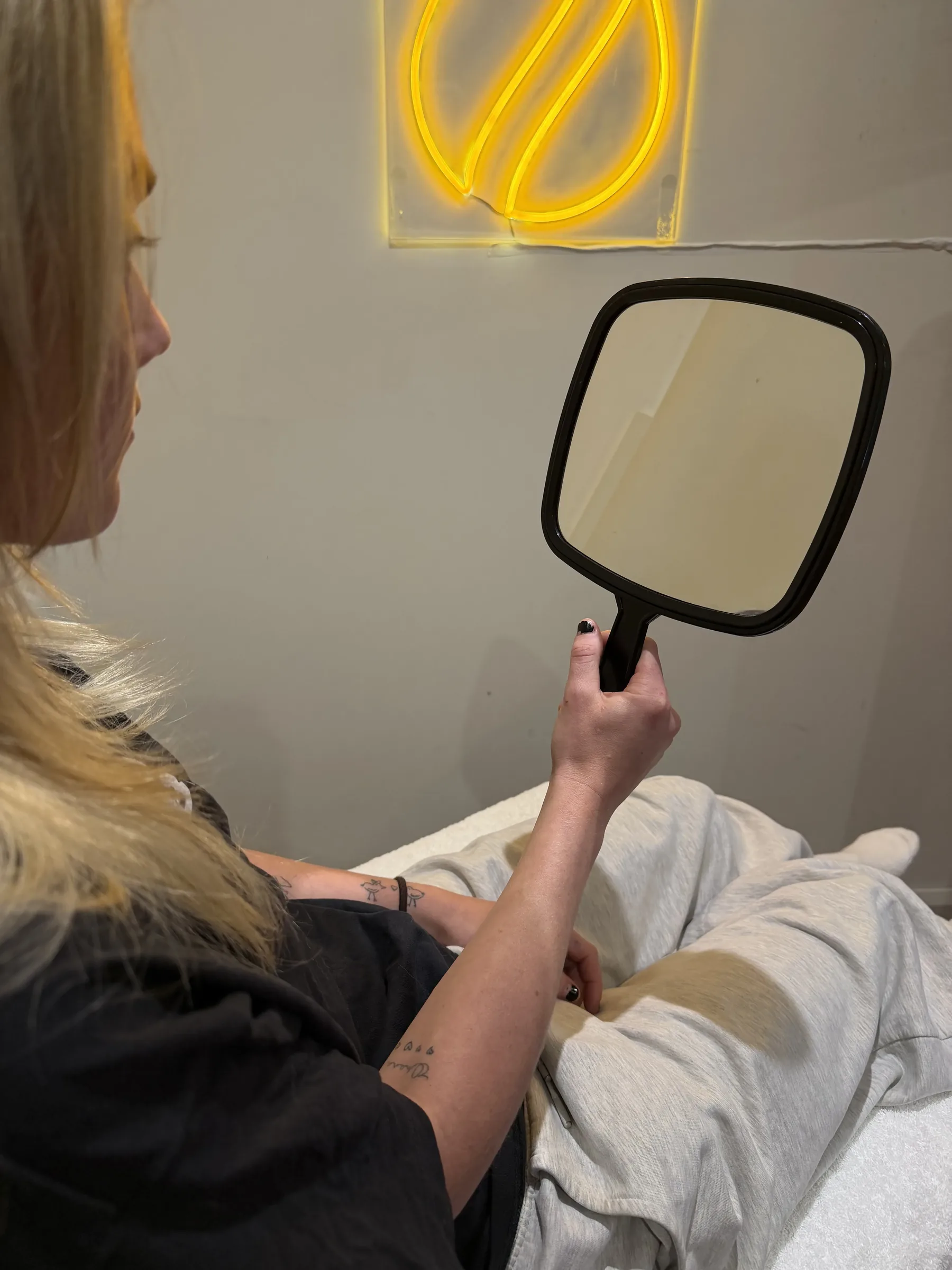
A mirror can show that your eye returns to one side, the border, the corners or the relationship between the upper and lower lip. It cannot show when a change began, whether dental or medical history matters, how tissue behaves over time or how another person should assess it.
Use the reflection for line one only. Write the remaining four from memory, daily function, records and your own boundary. Repeated checking often adds detail without adding meaning.
Turn a vague request into a useful brief
| Instead of | Write | Why it helps |
|---|---|---|
| I need more volume | I notice the upper and lower lip look less balanced to me at rest. | Describes the observation without prescribing an answer. |
| I want this photograph | I like that the shape remains recognisable and movement stays natural. | Identifies a quality and a personal boundary. |
| It suddenly looks different | I first noticed the change on this date; it is stable or changing; these symptoms are present or absent. | Gives Corey the timing and health context. |
| I have an important event | This is the event date and the flexibility I have around planning and review. | Makes timing visible before options are discussed. |
Natural language is enough. The brief should sound like you, not like an advertisement or anatomy exam.
Use the short route to make the conversation more useful
Living nearby can make consultation and follow up easier to coordinate. Bring the brief, ask questions and use the appointment to understand what the assessment shows.
Corey may discuss education, skin or dental context, records, timing, review, a staged plan or a suitable lip option. The goal is a clear next step that fits the concern and the patient’s informed preferences.
What do the local roads tell us?
Monash Council’s Oakleigh structure plan identifies Atherton Road and Warrigal Road among important access routes into the centre. That helps an Oakleigh South reader understand the practical relationship between the starting area and the clinic.
The roads do not shorten the clinical work. They cannot decide what a person wants, whether a recent change belongs with a dentist or doctor, what previous care means or whether cosmetic treatment is suitable. Geography explains access only.
When should a new symptom be assessed promptly?
Contact an appropriate health service for new pain, fever, dental or gum swelling, a bad taste, pus, a persistent mouth sore, rapid swelling, spreading redness, breathing difficulty, numbness or another unexplained change.
Healthdirect advises assessment for persistent, recurrent, very painful or otherwise worrying mouth changes. Tooth or gum pain with swelling, fever or a bad taste can need prompt dental or medical review. This calm safety pathway sits alongside, rather than replacing, consultation for a stable aesthetic concern.
Use line four to explain what matters to you
| Priority | Question for Corey | How it guides planning |
|---|---|---|
| Keep ordinary movement recognisable | What does the assessment show during speech and expression? | Supports a proportionate option discussion. |
| Clarify a recent symptom | Does this information need another clinician’s input? | Keeps health questions in the correct pathway. |
| Understand previous care | Which records would reduce uncertainty? | Improves the quality of later planning. |
| Plan around an event | What timing and review window are realistic? | Allows suitable care to be scheduled without unnecessary pressure. |
A personal boundary helps Corey explain which suitable options respect the features and movement you want to preserve.
Is this for you?
Consider booking a consultation if
- Adults starting from Oakleigh South who want to prepare one clear consultation question without committing to treatment
- People willing to record timing, ordinary movement, previous care and a feature they want preserved
- Readers able to accept health assessment, records, waiting, later review or a staged lip plan as useful outcomes
This may not be for you if
- Anyone with breathing difficulty, rapid swelling or another emergency symptom who needs urgent care
- Anyone with dental or gum pain, fever, bad taste, a persistent mouth sore or another unexplained health change who needs an appropriate clinician first
- Anyone seeking a product, quantity, fixed outcome or treatment recommendation from a public page
Suitability is confirmed at consultation. This list is general guidance, not a substitute for clinical assessment.
Which questions should you bring?
Ahpra advises the public to ask who will consult, whether a full history will be taken, what possible risks apply and what emergency processes are in place. Add questions about alternatives, likely limits, total costs, aftercare, review access and the timing that suits the individual plan.
A useful consultation should create clear answers and room for follow up questions. Corey uses the assessment to explain suitable options, relevant limits, timing and review.
How can the conversation lead to a plan?
After assessment, Corey explains which options may be suitable after reviewing lip shape, movement and proportion, how timing affects the plan and what follow up would involve. The original page label does not dictate the recommendation.
If an option is suitable, Corey discusses material risks, alternatives, uncertainty, likely limits, cost, aftercare, review access and informed consent. Suitable care can then be planned in a way that reflects the patient’s priorities and practical circumstances.
Evidence behind the five line brief
Sources were checked on 26 July 2026. Monash Council supports the access context. Healthdirect supports the separate dental and mouth-health pathways. Ahpra supplies public questions about consultation, history, risk and emergency processes.
- Oakleigh Major Activity Centre Structure Plan
Local evidence identifying Atherton Road and Warrigal Road among important access routes into Oakleigh. Used for route context only.
- Mouth sores and ulcers
Guidance that persistent, recurrent, very painful or otherwise worrying mouth changes need appropriate health assessment.
- Tooth abscess
Dental guidance for tooth or gum pain, swelling, fever, bad taste and prompt dental or medical review.
- Thinking about cosmetic injectables
Public questions about practitioner consultation, medical history, expectations, possible risks, informed consent and emergency processes.
- Guidelines for registered health practitioners who perform non-surgical cosmetic procedures
Patient suitability, motivation, expectations, informed consent, financial consent, records, aftercare and follow up responsibilities.
- Advertising health services that involve therapeutic goods
Product neutral public health service advertising and restrictions on direct or indirect prescription medicine references.
- Ahpra public register of practitioners
Independent verification of practitioner registration.
Ahpra and TGA sources guide assessment, consent, advertising and practitioner verification. They do not endorse Core Aesthetics, this page or an individual plan.
Questions about preparing the five lines
Is Core Aesthetics in Oakleigh South?
No. Core Aesthetics is in Oakleigh. This page is for an adult starting nearby who wants to prepare five useful notes before an individual consultation with Corey Anderson RN.
What are the five lines?
Write what you notice, when you first noticed it, what changes during ordinary movement, what you want preserved, and what timing or support matters. Keep each line brief and factual.
Why include something I want preserved?
A personal boundary makes the conversation more precise. It tells Corey which shape, movement or character matters to you so suitable options can be discussed proportionately.
What belongs on the timing and support line?
Include event dates, work or travel constraints, transport, support people, missing previous care records and relevant health or dental context. These details help make the plan practical.
Does living nearby make suitable care easier to plan?
Nearby access can make consultation, aftercare communication and review easier to coordinate. Suitability still depends on individual anatomy, health history, previous care, assessment, risks and informed consent.
Can I bring a photograph with the brief?
Yes. A photograph may help identify where your attention goes. The five notes add timing, symptoms, movement, previous care and personal priorities so Corey can interpret it properly.
What if my concern is about a recent change?
Write when it began, whether it is stable or changing, and whether there is pain, heat, swelling, dental trouble, a sore, numbness or functional change. Contact an appropriate health service for concerning symptoms.
Can suitable lip care be planned during consultation?
Yes. When Corey’s individual assessment supports an option and you understand the material risks, alternatives, fees, aftercare and review, suitable care can be discussed and planned through informed consent.
What should I ask Corey before deciding?
Ask what the assessment establishes, which options and alternatives are suitable, the material risks and likely limits, total costs, aftercare, review arrangements and how timing fits the plan.
How can I verify Corey Anderson before attending?
Corey Anderson is a Registered Nurse with Ahpra registration NMW0001047575. Use the Core Aesthetics verification guide and search the independent Ahpra public register before attending.
General information only
This page provides general information for adults. It cannot diagnose a medical, dental or skin condition, confirm suitability, prescribe a personal plan, predict an outcome or complete informed consent. Seek appropriate care for urgent, unexplained, persistent or worsening symptoms.