Aesthetic treatments for men should start with a private consultation, not a treatment menu. The useful question is not which option is popular for men, but whether the concern, timing, health history, prior treatment, expectations, privacy needs, risks, alternatives, consent and review access support any treatment discussion at all. Corey Anderson RN may recommend options that fit, revised timing or a practical follow-up plan after individual assessment. Book a consultation if you want that assessment to guide next steps.
Privacy And Pressure Are Part Of Suitability
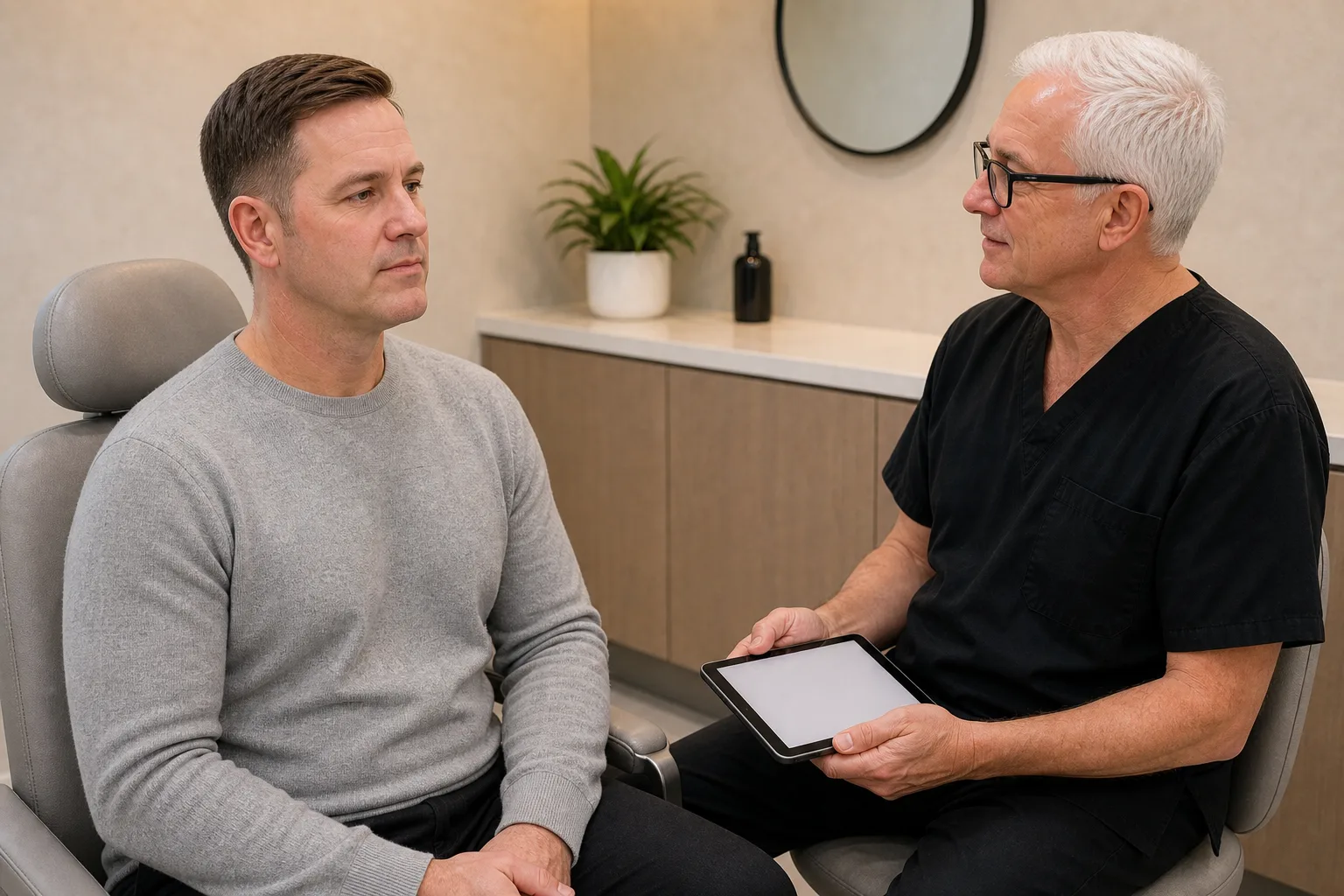
Privacy matters. Some men want to ask questions without friends, partners, colleagues or social media shaping the decision. Others feel pressure from photos, dating apps, work visibility, gym culture, an event or fear of ageing.
Ahpra guidance recognises that cosmetic procedure decisions can be affected by body image pressure, unrealistic expectations and commercial demand. A careful consultation slows that down and keeps the decision voluntary, informed and clinically appropriate.
Men Are Not One Treatment Category
There is no single male aesthetic pathway. Facial structure, movement, skin quality, hair pattern, previous treatment, medical history, comfort with visibility and review access all differ between people.
Corey does not treat masculinity as a fixed look or promise a particular appearance. The consultation is used to understand the concern, explain limits and decide whether a conservative discussion, another pathway or a focused review plan is the better answer.
What Corey Checks In Consultation
The assessment is designed to separate a reasonable question from a rushed treatment decision.
| Check | Why it matters | Possible outcome |
|---|---|---|
| Concern and motivation | Pressure, comparison and event timing can change consent quality. | Education, more time, or a narrower discussion. |
| Health history | Medicines, allergies, conditions, prior reactions and recent procedures can change risk. | Proceeding may be delayed or referral may be advised. |
| Facial context | Movement, structure, skin quality and prior treatment affect what can be discussed. | The consultation may focus on a different concern than the search term. |
| Review access | Aftercare and follow up are part of a responsible pathway. | Treatment discussion should wait if review access is not realistic. |
Subtle Goals Still Need Clear Consent
Wanting a low visibility discussion is common, but it does not remove the need for assessment. Subtle goals still need a clear explanation of limits, uncertainty, alternatives, aftercare, costs and reasons not to proceed.
A consultation should also make it acceptable to pause. If the motivation is unsettled, the timing is poor or the risks outweigh the likely benefit, timing or another clinically appropriate pathway can be the safer answer.
How Are Costs Discussed?
Costs should be discussed after Corey understands the concern, the clinical context and whether any treatment pathway is suitable. A low visibility goal still needs informed consent, aftercare, review planning and a clear reason to proceed or pause.
You can read the general pricing guide before booking, but your own cost discussion depends on assessment, consent and whether proceeding is appropriate.
When More time is the more appropriate Answer
More time or another pathway may be appropriate when an event is too close, health information is incomplete, there are symptoms needing medical review, the concern is changing, expectations are fixed, privacy feels compromised or follow up would be difficult.
Ahpra guidance for non-surgical cosmetic procedures expects practitioners to consider suitability and informed consent. In practical terms, that means the consultation can end with education, review or another clinically appropriate pathway.
Questions To Bring
Bring questions that help Corey assess the decision, not just the treatment name.
| Question | Why it helps |
|---|---|
| What appears to be driving this concern? | It separates anatomy, movement, skin, timing and expectation. |
| What would make treatment unsuitable? | It makes risk boundaries clear before consent. |
| What are the alternatives? | It keeps the discussion wider than one treatment pathway. |
| What happens if I do nothing? | Doing nothing can be a valid option, not a failed appointment. |
| How private are records and images? | It clarifies documentation, image use and review planning. |
How This Guide Differs From Nearby Men Pages
This page is the broad options guide. If you want the local clinic pathway, read men’s aesthetic consultation Melbourne or private consultation before treatment for men. If the concern is movement lines, compare wrinkle concerns for men and men’s wrinkle treatment consultation Melbourne.
For clinic-wide safety checks, read treatment suitability assessment, patient safety before aesthetic decisions and how informed consent works.
Common Questions
What should men ask before aesthetic treatment?
Ask what is driving the concern, whether treatment discussion is appropriate, what risks and limits apply, what alternatives exist, what aftercare would involve and when timing or another clinically appropriate pathway would be safer.
Can I book privately just to discuss options?
Yes. A consultation can be used for questions, privacy, education and planning only. The consultation focuses on assessment, suitable options, relevant risks, timing and an agreed next step.
Will Corey recommend treatment at the first appointment?
Not automatically. Corey Anderson RN first reviews the concern, health history, prior treatment, timing, consent, expectations, scope and review access. The answer may be options that fit, revised timing or a focused review plan.
How does Core Aesthetics handle appearance pressure?
Pressure from photos, partners, peers, work, dating apps, events or ageing concerns can make a decision feel urgent. Corey slows the discussion down, checks motivation and keeps the consultation focused on suitability, risk and consent.
Are men assessed differently from women?
The safety process is the same: assessment, consent, risk, alternatives, aftercare and review planning. The individual discussion may differ because facial structure, skin, hair pattern, movement, prior treatment and personal goals vary.
Can I ask for a subtle or low visibility approach?
Yes, you can explain that you want a low visibility discussion. That still does not confirm suitability or a particular outcome. Corey will explain what is realistic, what is uncertain and what should not be treated.
What information should I bring?
Bring your medical history, medicines and supplements, allergies, previous cosmetic treatment dates, upcoming events, concerns in your own words, any prior advice and questions about privacy, review timing or aftercare.
When might timing or another clinically appropriate pathway be safer?
More time or another pathway may be appropriate when information is incomplete, the timing is poor, expectations are unsettled, symptoms need medical review, follow up would be difficult or the concern sits outside clinic scope.
How are photos and privacy handled?
Clinical images and records should be discussed before they are taken or used. Ask why an image is needed, where it is stored, who can access it, and whether it will ever be used beyond clinical records.
Is this men’s treatment options page personal medical advice?
No. This page is general information for adults considering aesthetic consultation. It cannot diagnose a concern, confirm suitability, provide urgent care advice or replace an individual consultation.
Is this for you?
Consider booking a consultation if
- Adult men who want a private aesthetic consultation before deciding whether treatment discussion is appropriate
- Patients comparing privacy, pressure, subtle goals, suitability, risk, consent and review access
- People preparing questions for Corey Anderson RN before booking at Core Aesthetics Oakleigh
This may not be for you if
- Urgent symptoms, mental health crisis support or emergency care
- Confirming treatment suitability before individual assessment
- Promising a particular appearance, social benefit or treatment outcome
Suitability is confirmed at consultation. This list is general guidance, not a substitute for clinical assessment.