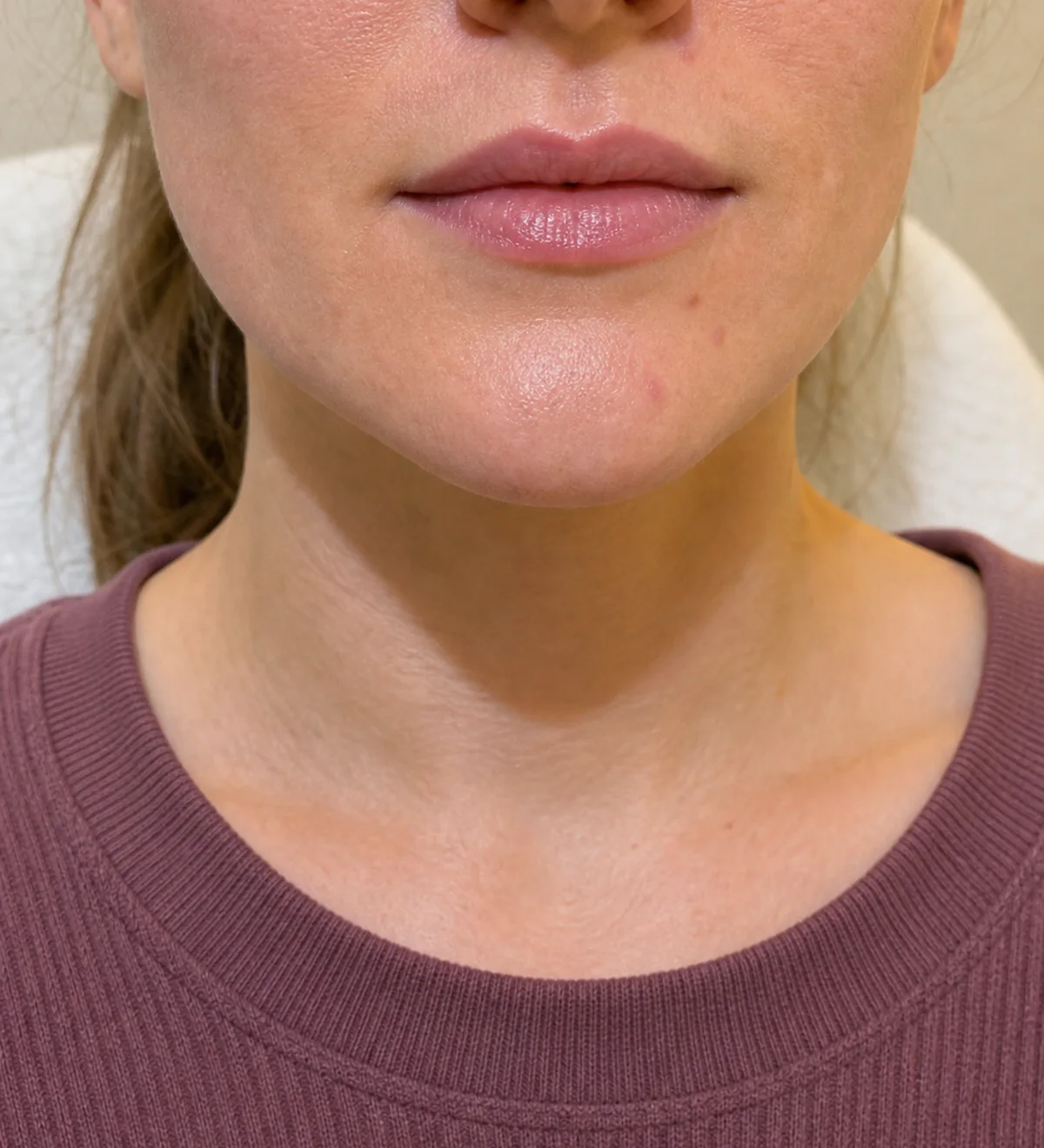
A lip shape consultation should begin by naming the exact visible feature rather than asking for a standard shape. Corey Anderson RN compares the coloured vermilion, border and central upper lip landmarks, upper and lower relationship, mouth corners, closure, symmetry, movement and profile. The observation is then checked against normal variation, oral and dental context, previous care, health history and the person’s own goal. A feature map can organise the question, but it cannot establish need, suitability or a cosmetic plan online.
Why Is Lip Shaping Too Broad A Request?
Two people can use the phrase lip shaping while pointing to entirely different things. One may be noticing that less upper vermilion is visible at rest. Another may mean a border that looks softer in one part, a difference between the two sides, a mouth corner, a change during speech or a profile photograph.
The phrase should open a question, not select an option. Corey needs a description that can be checked in ordinary light, at rest and in movement. If the concern cannot be located without a style word or reference face, more observation may be useful before any cosmetic discussion.
Which Visible Lip Feature Do You Mean?
The NCBI Bookshelf anatomy review distinguishes the cutaneous lip, vermilion, vermilion border, central upper lip landmarks and muscular structures involved in lip function. This page uses plain language for those features so a reader can point to the right place without diagnosing it.
| Feature | Observation in plain language | What it cannot establish |
|---|---|---|
| Visible vermilion | How much coloured upper or lower lip is seen at rest and from the side. | Whether more visible tissue is needed or appropriate. |
| Border and white roll | The transition between the coloured lip and surrounding skin. | That a softer edge is abnormal or requires correction. |
| Cupid's bow and central upper lip | The central curves, notch and nearby philtral landmarks. | That one standard curve belongs on every face. |
| Upper and lower relationship | How the two lips relate in the individual face rather than as an isolated ratio. | A universal numerical target. |
| Mouth corners | The meeting point of the upper and lower lips at each side. | Whether corner position has a single cosmetic cause. |
| Closure at rest | Whether the lips meet comfortably without deliberate effort. | A diagnosis of dental, muscular or airway function. |
| Symmetry and movement | What is present at rest and what changes during speech or expression. | That a normal difference should be removed. |
| Profile | How the lips sit relative to the chin, teeth and lower face from the side. | That one photographed angle defines facial balance. |
Is There An Ideal Lip Ratio?
No single public ratio can decide what is appropriate for an individual. A numerical comparison may describe one photograph, but it cannot account for lip length, teeth, jaw and chin context, ethnicity, age, movement, previous care or the person's priorities.
Current Ahpra advertising guidance prohibits implying that normal appearance should be changed to obtain an acceptable or ideal look. Corey can describe the relationship between features without presenting a ratio as a beauty rule or a reason to proceed.
Why Compare Rest, Speech, Smile And Profile?
Each view answers a different question. Rest shows the baseline position and closure. Speech shows repeated functional movement. A gentle smile may reveal a difference that is not present at rest. Profile shows how the lips relate to the chin, teeth and surrounding lower face.
No single view is the correct face. A concern that exists only in one paused video frame or one lens angle needs different interpretation from a stable feature seen across ordinary conditions.
Is Asymmetry A Shape Problem?
Not automatically. Small differences between sides are common throughout the face. The useful distinction is whether the difference is stable at rest, changes with movement, appeared after previous care, follows dental work or injury, or is new and accompanied by weakness, numbness, pain or swelling.
The consultation should document the difference without implying that both sides can be made identical. If the observation is mainly functional, dental, neurological or inflammatory, another practitioner may be the appropriate first route.
Can A Reference Image Explain The Goal?
A reference image can show whether the reader is noticing a border, central curve, visible vermilion, mouth corner or profile relationship. It cannot measure the reader's anatomy or act as a specification for copying another person.
Lighting, lip colour, makeup, expression, camera distance, editing and image selection change what the lip appears to be. The useful question is “which feature caught your attention?” Once that is answered, the reference image has done its job.
How Do Makeup, Dryness And Surface Change Affect The View?
Lip liner can move the apparent border, colour can change the visible edge, and dryness or flaking can alter surface reflection. These are not reasons to dismiss a concern, but they should be separated from the underlying shape before a clinical conclusion is attempted.
Bring the lips in their usual state where practical and mention persistent cracking, sores, blistering, irritation or skin disease. A surface problem may need skin, pharmacy, dental or medical advice rather than cosmetic planning.
Why Do Teeth And Oral Health Belong In The History?
The lips rest and move over the teeth and gums, so recent dental work, orthodontics, dentures, bite changes, jaw symptoms and oral discomfort can alter what a person notices. Corey can record that context without diagnosing a dental condition.
Healthdirect advises dental or medical review for concerning mouth changes such as a sore that does not heal, difficulty speaking or swallowing, red or white patches, swelling or numbness. Those findings should not be converted into a cosmetic shape question.
When Is A Lip Change An Urgent Health Question?
A sudden facial or mouth droop, new weakness or slurred speech may be a stroke warning. Healthdirect advises calling triple zero (000) immediately for sudden facial droop or other stroke signs, even if symptoms improve.
Rapid swelling with breathing difficulty is also an emergency. New pain, persistent swelling, infection signs, a sore that does not heal or recurrent severe blisters should be assessed by an appropriate medical or dental practitioner before cosmetic care is considered.
How Does Previous Lip Care Change The Map?
Previous care may change the visible border, firmness, movement, symmetry and what can be assessed at a particular time. Bring dates, areas, provider details, photographs from before the change and records if you can obtain them. Do not guess a product or quantity from appearance alone.
Corey may need to wait for a recent change to settle, request further records, direct the person back to the original provider or use the previous lip care assessment pathway. This page does not promise correction or assume that adding another intervention is appropriate.
What Should A Useful Lip Shape Consultation Produce?
You should leave with a feature statement in ordinary language: what you noticed, where it sits, whether it is present at rest, how movement changes it, which surrounding structures matter and what remains uncertain. The statement should also name anything that sits outside cosmetic scope.
That is more useful than being told that lips are too small, uneven or need shaping. It creates a bounded question that can support useful information, another clinician’s input, practical timing or discussion of a suitable option after assessment.
What Will A Lip Shaping Consultation Clarify?
Corey can discuss suitable lip-shaping options after individual assessment, risk explanation and informed consent. A clear feature statement helps focus the discussion, while suitability still depends on your anatomy, health context and goals.
Recent care, active oral or skin symptoms, missing records, copied-image goals, close event timing or limited review access can change the safest timing or next step. Booking reserves time to understand the concern and agree on a clear plan.
What Must Consent Cover?
Consent must match the specific option privately discussed and the individual's health, anatomy and previous care. It may include pain, tenderness, swelling, bruising, infection, asymmetry, altered surface, contour or movement, an outcome different from the plan, review needs and rarer serious complications.
The discussion must also cover reasonable alternatives, limits, expected duration where known, maintenance, total costs, aftercare, escalation and the choice not to proceed. General website language cannot replace personal consent.
When Might Another Next Step Be More Appropriate?
Another next step may be more appropriate when the feature is normal variation, the goal depends on an idealised or copied shape, the expected change is unrealistic, or health, oral or previous care factors need different clinical input.
The consultation should still give the concern an accurate name, explain the boundary and leave you with a useful plan.

Which Lip Page Should You Read Next?
Read Lip Consultation And Suitability Assessment for the complete appointment pathway. Read Lip Proportion And Volume Consultation when the question is specifically about visible volume. Read Upper lip movement consultation when the concern is upper lip movement rather than general shape.
The lip ageing guide is for a change over time, while the lip assessment guide covers broader health, movement and readiness checks. Start by naming the feature you want to discuss, then choose the guide that matches your question.
Where Is The Consultation And Who Reviews The Page?
Corey Anderson RN conducts consultations at Core Aesthetics, 12A Atherton Road, Oakleigh VIC 3166. His Ahpra registration is NMW0001047575. The clinic telephone number is 0491 706 705.
Use the verification page and the Ahpra public register to confirm registration. This page was reviewed on 5 September 2026 by Corey Anderson RN.

What Evidence Sets The Page Boundary?
The visible anatomy terms follow the NCBI Bookshelf review of lip anatomy. Current Ahpra guidance informs the boundaries against ideal appearance, pathologising normal variation, unrealistic expectations and imagery that trivialises higher risk cosmetic procedures.
Current TGA guidance is why this page promotes an individual consultation without naming or indirectly promoting prescription medicines or product classes. Healthdirect sources support the oral health and urgent facial weakness exits. The eight part feature map is a Core Aesthetics communication aid, not a validated diagnostic or aesthetic scoring system.
Questions About Lip Shape And Feature Naming
What does lip shape mean in a consultation?
Lip shape can refer to visible vermilion, the border, Cupid’s bow and central upper lip, upper and lower relationship, mouth corners, closure, symmetry, movement or profile. The consultation should identify which feature you mean before discussing whether it is normal variation, a health or oral question, change after previous care or a cosmetic concern.
Is lip shaping the same as making lips bigger?
No. Size is only one possible observation. A person may be asking about a border, central curve, asymmetry, mouth corner, closure, movement or profile. More visible volume does not automatically answer those questions, and a broad shaping request cannot establish which option, if any, is appropriate.
Is there a correct ratio between the upper and lower lip?
No universal ratio decides what is appropriate for an individual. A number taken from one photograph cannot account for anatomy, teeth, chin and jaw context, ethnicity, age, movement, previous care or personal priorities. Current advertising guidance also prohibits presenting an ideal appearance as something normal variation should be changed to achieve.
Why are my lips assessed at rest and in movement?
Rest shows baseline position and closure, while speech and expression show repeated movement. A difference may be stable, appear only during movement or exist mainly in one paused photograph. Comparing views helps describe the observation, but it does not diagnose the cause or confirm suitability.
Can a reference photograph be used?
Yes, to identify the feature that caught your attention. It cannot measure your face, establish an ideal ratio or act as instructions to copy another person. Lighting, makeup, expression, camera distance and editing can change the apparent lip border, size and symmetry.
When should a lip change be assessed medically?
Seek appropriate medical or dental assessment for persistent sores, infection signs, significant pain, swelling, numbness, oral changes or recurrent severe blisters. Call triple zero (000) for sudden facial or mouth droop, new weakness, slurred speech or rapid swelling with breathing difficulty. Those are not routine cosmetic shape questions.
What should I bring after previous lip care?
Bring dates, treated areas, provider details, photographs from before the change and records if available, plus current medicines, allergies and relevant oral or health history. Do not try to identify an earlier product or quantity from appearance alone. Corey may recommend waiting, records review, another provider or no further care.
Can a lip-shape consultation lead to discussion of suitable options?
Sometimes, after individual assessment, appropriate prescribing steps where relevant, informed consent and confirmation that proceeding is appropriate. A feature map does not prove suitability. Active symptoms, recent previous care, missing records, unrealistic expectations, limited review access or a wish for more time may support waiting.
How is this different from the general lip consultation page?
The general lip consultation page explains the complete appointment and suitability pathway. This page has a narrower job: translating the phrase lip shaping into the exact visible feature, view and movement being discussed. The volume, upper lip movement, ageing and previous care pages then answer their own separate questions.
When might another next step be more appropriate?
Another next step may be more appropriate when the feature is normal variation, the goal depends on copying an idealised image, another clinician should assess the issue, previous care has not settled, or the likely change would not address the concern. Corey explains the reason and what would be useful next, and you can take time to decide.
Is this for you?
Consider booking a consultation if
- Adults who want to identify the exact lip feature they notice before discussing any cosmetic option
- People comparing lip border, visible vermilion, central upper lip, mouth corners, symmetry, closure, movement or profile
- Adults who want oral health, previous care, realistic limits and suitable next steps discussed clearly
- People who can use reference images as communication aids rather than instructions to copy another face
This may not be for you if
- Anyone with sudden facial or mouth droop, weakness or slurred speech, which requires emergency assessment
- People with rapid swelling and breathing difficulty, which requires emergency help
- Anyone seeking a universal ideal ratio, certainty of symmetry or an exact copy of another person
- People with active or unexplained oral, dental, skin or neurological symptoms who have not sought appropriate assessment
Suitability is confirmed at consultation. This list is general guidance, not a substitute for clinical assessment.
Clinical references
- Ahpra: Guidelines for advertising higher risk non-surgical cosmetic procedures
- Ahpra: Guidelines for registered health practitioners who perform non-surgical cosmetic procedures
- TGA: Advertising health services that involve therapeutic goods
- TGA: Complying with restrictions on advertising prescription medicines to the public
- NCBI Bookshelf: Anatomy, Head and Neck, Lips
- Healthdirect: Bleeding gums and dental bleeding
- Healthdirect: Facial droop
- Healthdirect: Cold sores