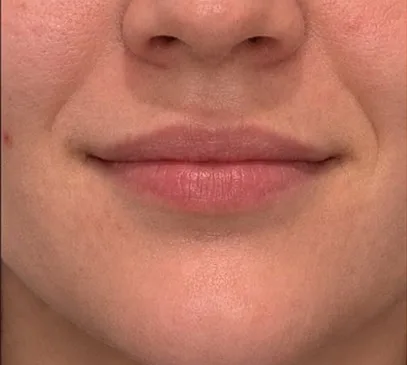
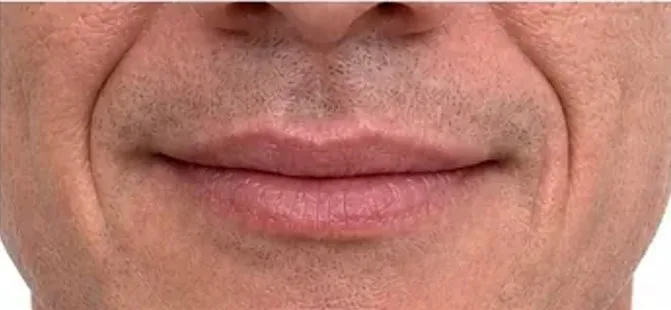
Lip treatment focuses on individual proportion, balance and clinical assessment of suitability. Every treatment is individually assessed at consultation. At Core Aesthetics, clinical decisions follow a consultation-first approach and conservative treatment philosophy.
You know the look you want, not “done”, not overdrawn, not the same mouth you’ve seen on every feed. Just a cleaner outline, a little softness through the body of the lip, and the kind of proportion that makes your face look more rested. That is the real appeal of natural looking lip treatment: it should read as you, only more polished.
In Melbourne, the appetite for refined injectables has shifted. Clients are less interested in dramatic change and more focused on harmony, lips that suit their features, their age, and their day to day life. The considered outcomes are rarely about chasing volume. They’re about shaping, supporting and hydrating in a way that stays believable at conversational distance.
What “natural” actually means in lip treatment
“Natural” is not a single lip shape, and it is not a claim of invisibility. It is a design choice.
A natural looking result typically means the lip sits in balance with the rest of the face, the edges look crisp without being sharp, and the volume looks soft rather than projected. From the side, the lip shouldn’t push forward beyond what suits your nose and chin. From the front, the upper and lower lip look related, not identical, with a gentle, even fullness.
It also means movement matters. You should still recognise your smile. When the volume treatment plan respects the anatomy and uses the right amount in the right place, the lips feel supple and expressive, not heavy.
The biggest misconception: natural equals “very little volume treatment”
Sometimes it does. Often, it doesn’t.
Natural looking lip treatment is about placement and proportion. A small amount in the wrong area can look more obvious than a slightly larger amount used strategically. Conversely, a conservative approach might still be the right choice if your lip tissue is fine, your borders are already strong, or you’re prone to swelling.
This is why a consultation led plan matters. Two people can request the same outcome and require different techniques to get there, one may need subtle structure to the border, another may benefit from hydration through the body of the lip, and another may need asymmetry corrected gently over more than one session.
Who suits natural looking lip treatment best?
Most adults do, provided the goal is enhancement, not transformation.
Natural results are especially suited to:
- First time clients who want a careful, low commitment entry point.
- Professionals who need a discreet finish that doesn’t become a talking point at work.
- Clients noticing age related changes, lip thinning, dryness, fine lines, and a softer cupid’s bow.
- Anyone who likes their lip shape but wants it to look more defined and hydrated.
There are also situations where “natural” requires more planning. If you have very thin lips, strong asymmetry, or a history of overfilling, you may need a staged approach. That still ends in a natural aesthetic, it simply takes time.
How clinicians create a refined, natural finish
A natural looking lip treatment result is built with restraint and structure. It is not just “filling”.
Shape first, then volume
The most elegant outcomes usually start with refining the framework: the vermillion border (the edge of the lip), the cupid’s bow, and the corners. When the outline is supported appropriately, you often need less volume overall to achieve a visible improvement.
Balance the top and bottom lip
A common reason lips look unnatural is imbalance. Many clients request a fuller top lip, but the face may suit a slightly fuller bottom lip with a softly supported top. The goal is not symmetry for its own sake, it’s proportion that looks effortless.
Respect the side profile
From profile view, projection is what reads as “volume treatment” most quickly. A refined plan considers how far the lip sits forward relative to the rest of the face. If you want a natural finish, it often means prioritising gentle height and contour rather than pushing the lip outward.
Work with your age, not against it
In your 20s and 30s, “natural” might mean a hydrated, softly plumped look that still feels youthful. In your 40s, 50s and beyond, it may be more about restoring what has thinned, smoothing fine lines and rebuilding subtle structure. The aesthetic should match your life stage rather than mimic a trend.
What to ask for at your consultation
If you want a natural result, the language you use matters. “I just want them bigger” doesn’t give your clinician much to design with. Instead, focus on how you want the lips to look and feel.
You can ask for:
- A softer, hydrated finish rather than obvious volume.
- More definition through the cupid’s bow without a sharp, overlined edge.
- Gentle correction of asymmetry, with the understanding it may take more than one session.
- A profile that stays balanced, refined from the front, subtle from the side.
Bring a few reference photos if that helps, but choose images that look believable. The most useful references are people with a similar face shape and lip anatomy to yours.
What to avoid if you want natural looking lip treatment
The fastest way to lose refinement is to treat lips like a single area that can be “topped up” repeatedly without a plan.
Overfilling often shows in three places: the upper lip line becomes overly prominent, the area above the lip can look puffy, and the lips may start to look heavy at rest. Another common issue is chasing symmetry too aggressively in one session, swelling can disguise the true result, and it’s easy to add more than you need.
If you’re tempted to request a dramatic change quickly, it’s worth asking yourself whether you want volume or whether you want a different shape. They’re not the same. Shape is often the more natural looking lever.
Longevity, maintenance and the “fresh” look
Lip treatment does not last forever, and that is not a drawback. It allows you to adjust over time.
How long results last varies between individuals and depends on factors such as metabolism, product choice, and the amount used. Some clients hold results longer; others notice softness returning sooner. A refined approach usually favours maintenance before the lips fully “drop back” to baseline, because small adjustments are easier to keep subtle than large corrections.
That said, maintenance should never feel like a treadmill. The considered outcomes come from a long term plan that suits your lifestyle, your budget and your comfort level.
Downtime and social timing
Most clients can return to normal activities quickly, but you should expect some degree of swelling, tenderness or bruising. If you’re planning an event, schedule with breathing room. Even when swelling settles fast, it is not unusual for lips to look slightly fuller in the first days.
If discretion matters, plan your appointment when you can keep the first 48 hours low key. Natural looking lip treatment is partly about the final result, and partly about not being caught in the “in between” stage at an inconvenient time.
Safety, suitability and realistic expectations
A premium result starts with the right candidate and the right plan. Lip treatment is a medical procedure and must be approached conservatively.
Not everyone is suitable for treatment on the day. A clinician may recommend waiting if you are unwell, if you have active cold sores, or if there are other factors that increase risk. They should also set expectations clearly, volume treatment can refine and enhance, but it will not create a completely different lip anatomy.
In Australia, aesthetic treatments are prescription only medicines. This is why your consultation matters: it is the point where your suitability is assessed, your goals are clarified, and your personalised plan is created.
Why subtle lips can make the whole face look better
Lips sit at the centre of your expression. When they’re balanced, the rest of the face appears calmer, even if nothing else has changed.
A refined lip can lift the overall impression of grooming without reading as cosmetic work. The outline looks cleaner, lipstick sits better, and the mouth looks less tired. For many clients, that is the real win: not a dramatic “after”, but a steady, confident improvement that holds up in natural light.
The Consultation Based approach
If you’re considering natural looking lip treatment, choose a clinic that designs results rather than sells volume. The most consistent outcomes come from clinicians who assess your facial proportions, explain trade offs, and are comfortable saying “not yet” or “not necessary”.
At Core Aesthetics, the pathway begins with a consultation so your lip shape, facial balance and preferred finish can be planned with elegance in mind.
A final thought to keep you grounded: if your goal is to look like you’ve had nothing done, you’re not being unrealistic, you’re being specific. Hold that standard, and let the plan be built around it.
Lip treatment at Core Aesthetics for Assessment Patients
Patients from Assessment who attend Core Aesthetics for lip treatment begin with a consultation where the practitioner assesses their existing lip anatomy and develops a treatment plan that is appropriate for their proportions, their goals, and their clinical circumstances. The lip and perioral area is anatomically complex, and the treatment approach must account for the structural characteristics of each patient’s lips, not a generic template applied uniformly.
The assessment at consultation examines the current lip architecture: the height and definition of the philtral columns, the prominence of the Cupid’s bow, the ratio of upper to lower lip volume, the lip border definition, and how the lip behaves in animation. From this assessment, the practitioner determines what treatment approach would produce a proportionate result for this specific patient’s anatomy, including what volume range is appropriate for the first session and where in the lip the treatment would be most beneficial.
Results vary between individuals based on anatomy and how each person responds to treatment. All lip treatments at Core Aesthetics are consultation based, individually assessed, and followed by a review appointment at four to six weeks.
How Facial volume treatment Is Used as a Structural Tool
Facial volume treatment is often described in terms of volume, adding more to make something look bigger. This framing misrepresents how volume treatment functions in skilled clinical practice. Volume treatment is a structural tool. It can restore lost support in areas where facial volume has diminished with age. It can define a contour that was never clearly pronounced. And in some cases it can shift the proportional relationships between facial regions in a way that changes how the face reads overall.
Volume, in the sense of visible fullness, is sometimes a goal. But the mechanism is anatomical. Volume treatment placed in the right tissue plane, at the right depth, with an understanding of the surrounding anatomy, produces a different result than volume treatment placed superficially to fill a surface irregularity. This is why technique, placement, and clinical knowledge matter far more than product selection.
At Core Aesthetics, treatment decisions are based on a full facial assessment. Corey evaluates the face as a whole before deciding whether volume treatment is appropriate, where it would be most effective, and what volume would be consistent with a proportionate outcome. This assessment may lead to a recommendation not to treat, and that outcome is equally valid.
Understanding Facial Volume Loss and Why It Matters
The face changes with age through a combination of processes: bone resorption, fat pad redistribution, muscle changes, ligament laxity, and skin quality decline. These processes do not happen uniformly or at the same rate in different people. Two people of the same age may present very differently because of genetics, lifestyle, sun exposure, and individual anatomical variation.
Volume loss is one of the most clinically significant contributors to an aged appearance. When the structural support provided by subcutaneous fat and bone diminishes, the overlying skin is no longer held in place by the same framework. Features that once appeared well defined become less distinct. The relationship between facial thirds can shift. Hollowing in specific areas, the cheeks, the temples, the under eye region, creates shadows and contours that are often interpreted as tiredness or loss of vitality.
Understanding the underlying anatomy is essential to treating it appropriately. Volume treatment placed to address a surface concern without accounting for the structural deficit beneath it will produce a less effective and less enduring result. The consultation process at Core Aesthetics focuses on identifying the anatomical contributors to the concerns you have raised, not just addressing the surface appearance.
The Assessment Process Before Any Volume treatment
At Core Aesthetics, the consultation for facial volume treatment is a structured clinical appointment, not a sales conversation. Corey assesses the face in three dimensions, at rest, during movement, and from multiple angles. The goal is to understand the structural landscape of your face before deciding where, how much, and whether volume treatment is the right approach.
Key aspects of the volume treatment assessment include evaluating facial symmetry and identifying natural asymmetries that should be preserved or addressed; assessing the depth and distribution of any volume deficit; reviewing skin quality to determine how volume treatment would integrate; and discussing your goals in the context of what is anatomically achievable. For some concerns, volume treatment alone is sufficient. For others, a combination of treatments, or a different approach entirely, may be more appropriate.
You will leave the consultation with a written treatment plan that documents the assessment findings, the proposed approach, and the expected outcomes. Treatment is scheduled at a separate appointment, allowing time to consider the plan, ask further questions, and make an informed decision without any time pressure.
Dissolution, Complications, and Revision
Hyaluronic acid volume treatments are reversible. If a complication arises, if the result is unsatisfactory, or if a patient wishes to return to their baseline, hyaluronidase enzyme can be injected to dissolve the volume treatment. This is an important safety feature that distinguishes hyaluronic acid products from permanent or semi permanent volume treatments, which cannot be dissolved.
Dissolution does not always produce an immediate return to the pretreatment state. The process requires time, and in some cases more than one dissolution treatment. Swelling from the dissolution procedure can temporarily alter appearance. Corey will explain this clearly at consultation so that patients understand what reversal involves before they commit to treatment.
At Core Aesthetics, only hyaluronic acid formulations are used for facial volume treatment, the reversibility of these products is a deliberate clinical choice. Emergency protocols for vascular occlusion, the most serious potential complication of volume treatment, are maintained at the clinic. Patients are briefed on the signs of this complication and given emergency contact instructions as part of every treatment appointment.
Managing Expectations and the Follow-Up Process
One of the most important conversations at a volume treatment consultation is about what the treatment can and cannot do. Volume treatment can address anatomical concerns related to volume, structure, and proportion. It cannot reverse all signs of ageing, change skin quality, alter bone structure, or produce a different face. Approaching treatment with an accurate understanding of its scope produces better outcomes than approaching it with the expectation of transformation.
After volume treatment, a follow up appointment at four to six weeks is standard practice at Core Aesthetics. This allows Corey to assess how the product has settled and integrated, to evaluate the result against the treatment plan, and to determine whether any refinement is appropriate. Minor asymmetries or areas where volume distribution could be adjusted are addressed at this review, not at the initial appointment where swelling and bruising can obscure the final result.
Results are always reviewed. Treatment at Core Aesthetics is not a transactional event, it is the beginning of a clinical relationship aimed at supporting your facial health over time.
Is this for you?
Consider booking a consultation if
- You are 18 or older and in good general health
- You want to understand how facial volume treatment may address a specific anatomical concern, volume, structure, or proportion
- You are prepared to attend a standalone consultation before any treatment decision is made
- You understand that injectable treatment is a medical procedure with individual risks and outcomes
This may not be for you if
- You are pregnant, trying to conceive, or breastfeeding
- You have an active infection, cold sore outbreak, or unhealed skin in a potential treatment area
- You have a documented allergy to hyaluronic acid or to local anaesthetic (lidocaine)
- You are taking anticoagulant medication or have a bleeding disorder, without clearance from your treating doctor
- You have had recent facial surgery, trauma, or dental procedures in the treatment area
- You are under 18 years of age
Suitability is confirmed at consultation. This list is general guidance, not a substitute for clinical assessment.
Frequently asked questions
What does lip treatment address for clients from Assessment?
Lip treatment addresses lip shape, proportion, and structural volume. The clinical approach is the same for clients from Assessment as for any other suburb, individual assessment determines what is appropriate for the client’s specific anatomy and goals. Results vary between individuals.
How long do lip treatment results typically last for Assessment clients?
Lip treatment results typically settle for between six and twelve months in most clients, regardless of suburb. Individual response, dose, and treatment area affect duration. Retreatment intervals are reviewed at follow up rather than scheduled in advance.
What recovery should Assessment clients plan for after lip treatment?
After lip treatment, mild swelling for 24 to 72 hours; bruising is more common in the lip area than most other treatment regions. Most Assessment clients return to normal activities the same day. Detailed aftercare specific to the treated area is provided at the appointment, and any concerns can be raised by phone or email afterward.
How do Assessment clients reach the clinic for lip treatment appointments?
From Assessment, Core Aesthetics at 12A Atherton Road, Oakleigh sits within the broader south east Melbourne catchment, most easily reached by car. Oakleigh railway station is within walking distance of the clinic. Open Tuesday to Saturday by appointment.
How long should Assessment clients allow for a lip treatment appointment journey?
Travel time from Assessment to Oakleigh varies based on origin point and traffic. The clinic is in the south east Melbourne catchment and is most easily reached by car for clients further out. Allow extra time during peak periods.
Does Core Aesthetics regularly see Assessment clients for lip treatment?
Yes, Assessment is within the south east Melbourne catchment Core Aesthetics serves. Every lip treatment consultation and treatment is conducted by Corey Anderson, AHPRA registered nurse. Results vary between individuals.
Should I get facial volume treatment if I am not certain I need it?
Uncertainty about whether treatment is appropriate is a valid reason to book a consultation rather than treatment. A clinical assessment can clarify whether volume loss, structural descent or skin quality change is the primary driver of what you are noticing, and whether injectable volume treatment is the right approach. Treatment is never assumed at assessment.
Is it safe to have facial volume treatment while pregnant or breastfeeding?
Prescription injectable products are not recommended during pregnancy or breastfeeding. There is insufficient safety data on these products in pregnant or lactating individuals, and the precautionary standard is to defer treatment until after this period. If you are pregnant, planning pregnancy, or breastfeeding, please discuss this at your consultation.
Why does facial volume treatment require an individual assessment rather than a standard dose?
Facial anatomy varies significantly between individuals in terms of fat pad position, bone structure, skin thickness and the degree of volume loss in each region. A standard dose applied without individual assessment risks over-correction, under-correction or placement that does not align with the underlying anatomy. Assessment-led dosing is the standard of care.