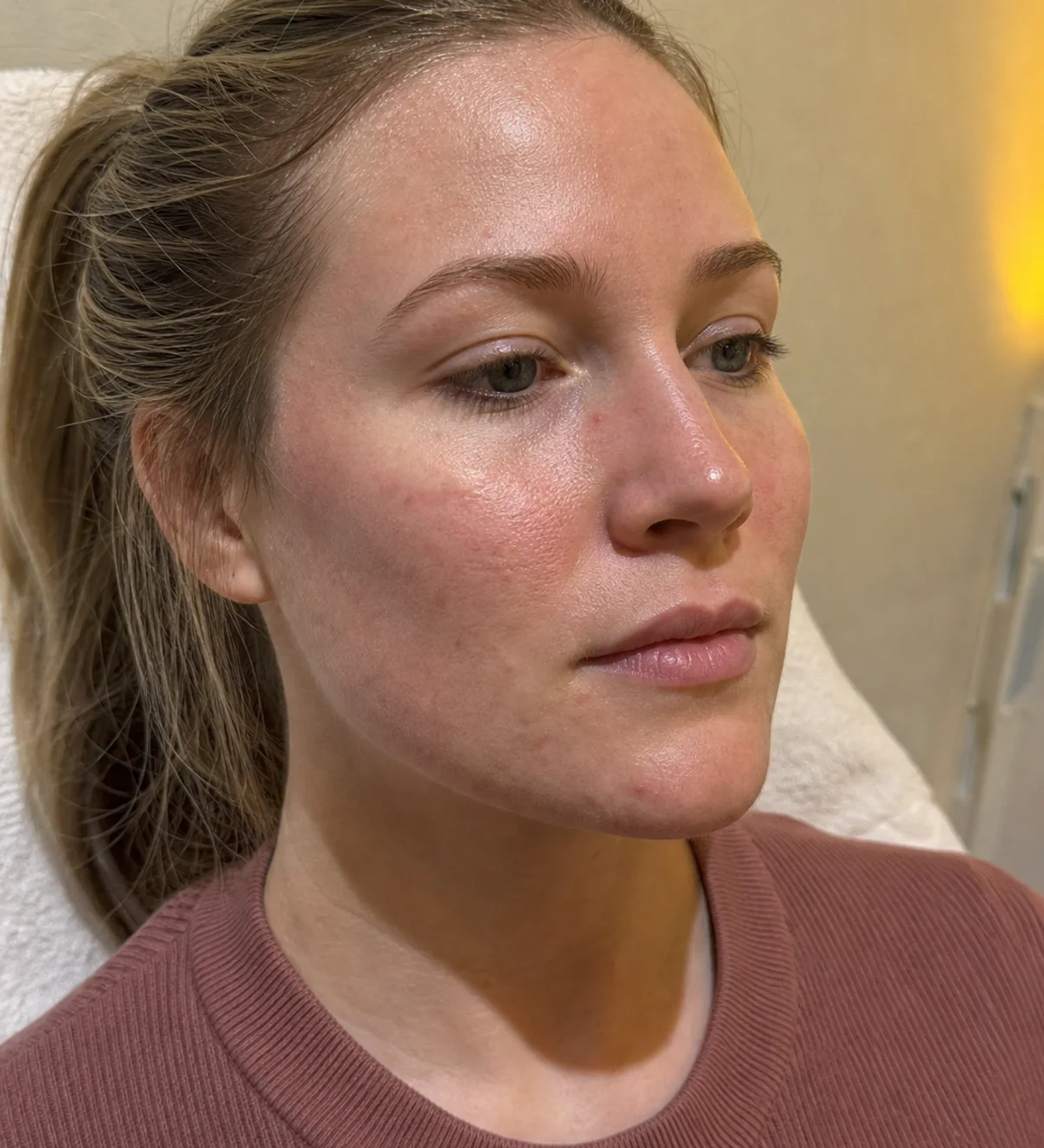
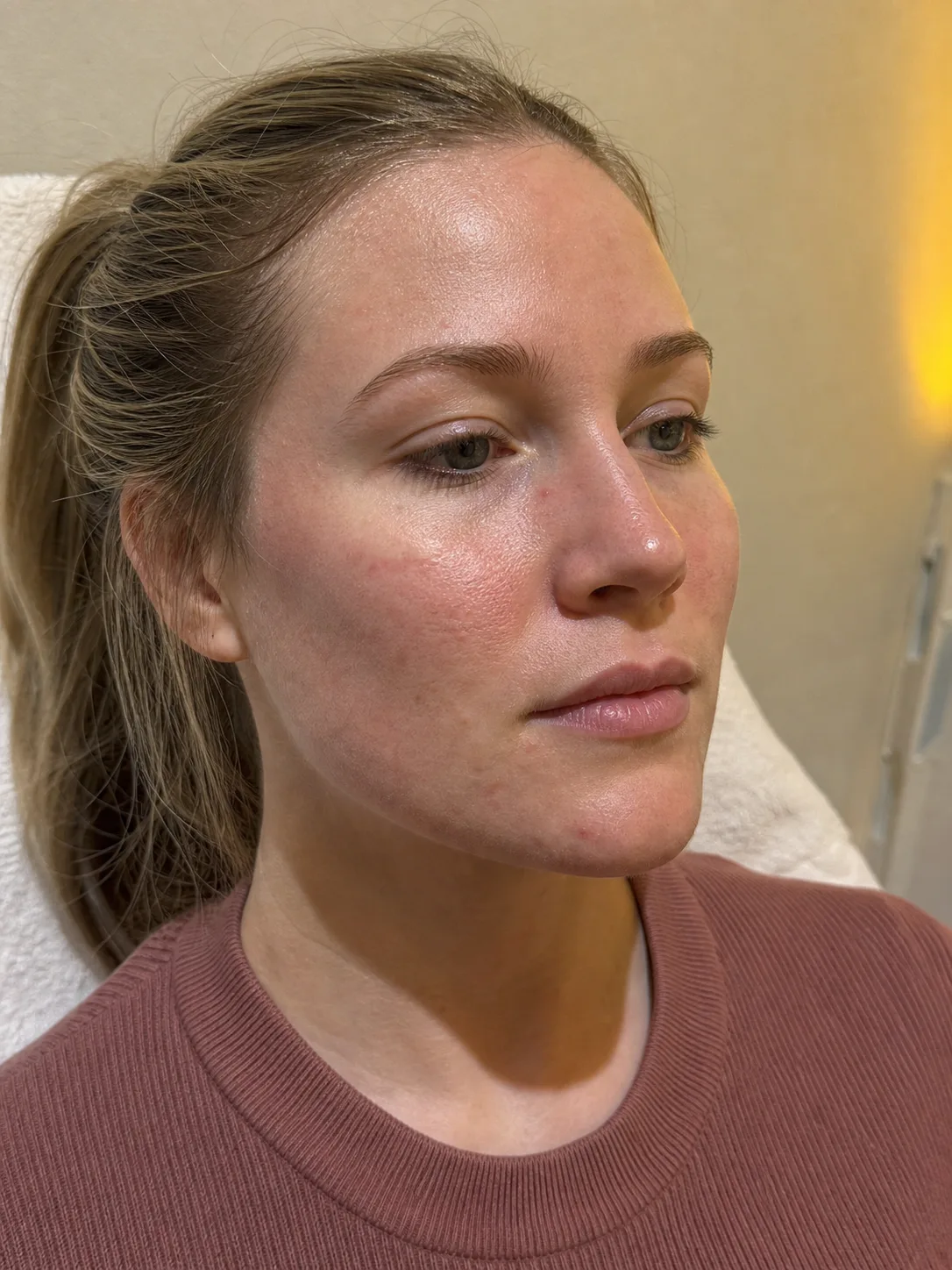
A men’s aesthetic consultation reviews facial structure, goals, medical history, suitability and risk with attention to proportion and restraint. The consultation does not assume a standard plan. Corey Anderson RN assesses whether treatment is appropriate, should wait, or should not proceed.
Aesthetic treatment does not happen in isolation from the skin it is placed in. Skin quality affects how wrinkle treatment settles, how facial volume treatment integrates, how visible the results are and how long the effects are maintained. This is one reason a thorough skin assessment is a meaningful part of a well conducted cosmetic consultation, not a secondary consideration.
At Core Aesthetics in Oakleigh, Corey Anderson, AHPRA registered nurse, assesses skin quality as part of every individual consultation. This article explains what skin quality means in the context of injectable treatment and why it matters.
“Good information changes the quality of the decision.”
What Skin Quality Means Clinically
Skin quality is a clinical term covering several interrelated properties. The structural integrity of the dermis, which is the layer beneath the visible skin surface where collagen and elastin give skin its firmness and resilience. The hydration level of both the deeper and surface layers of the skin. The skin barrier function, which governs how well the skin maintains moisture and resists environmental damage. The degree of photodamage accumulated over time from UV exposure. And the overall thickness and density of the skin, which changes with age and varies between individuals.
What This Means in Practice
Each of these properties is clinically relevant when planning injectable treatment. Skin that is dense, well hydrated and structurally intact behaves differently under injectable treatment than skin that is thin, dehydrated or significantly UV damaged. Understanding this helps practitioners make more accurate recommendations and set more realistic expectations.
Skin Quality and Wrinkle Treatment
Wrinkle injectable treatment works by reducing the activity of targeted facial muscles. The clinical outcome is visible in the overlying skin: expression lines soften because the muscle creating them is contracting less. But the degree of visible improvement depends partly on the condition of that overlying skin.
What This Means in Practice
In skin with good elasticity and resilience, the reduced muscular activity translates readily into a softer, smoother appearance as the skin recovers between expressions. In skin that has lost significant elasticity due to age, UV damage or dehydration, the visible improvement from wrinkle treatment may be more limited, particularly for lines that have become permanently established at rest regardless of muscle activity. This is one reason that the distinction between dynamic and static wrinkles, discussed in our article on wrinkle consultationsmatters so much clinically.
Skin Quality and Facial volume treatment
Facial volume treatment interacts with the tissue environment it is placed in. Healthy, well hydrated dermal tissue provides a more stable medium for volume treatment to integrate with and may support better longevity than compromised tissue. Very thin skin, heavily photodamaged skin or skin with a compromised barrier may require a different approach to volume treatment planning than well conditioned skin of comparable depth.
Skin quality is particularly relevant in the under eye area, where the skin is among the thinnest on the face and the margin for error in under-eye treatment is narrow. It is also relevant at the lips, where skin quality and the integrity of the lip border affect how definition is maintained after lip treatment. You can read more about how these areas are assessed in our pages on tear trough treatment and lip treatment.
What You Can Do Before a Consultation
A consistent, basic skincare routine in the weeks before a cosmetic consultation is genuinely worthwhile. The fundamentals that matter most are daily sun protection with an SPF 30 or higher, which is discussed in more detail in our article on SPF as a foundation of preventative aestheticsadequate hydration through both topical moisturiser and water intake, and if relevant, a gentle retinoid for collagen support if your skin tolerates it. Our article on retinol and injectable treatment covers the relevant timing and considerations in detail.
You do not need to have perfect skin before a cosmetic consultation. The assessment is designed to understand your skin as it is now and plan treatment accordingly. But arriving with skin that has been consistently looked after helps your practitioner form a clearer picture and supports the treatment process.
Skin Assessment at Your Consultation
At Core Aesthetics, skin quality is assessed as part of every consultation. This includes an assessment of skin hydration and texture, the degree of photodamage present, skin thickness and its relevance to the treatment being discussed, and any surface skin concerns that may influence the treatment approach or aftercare plan. You can read more about what a consultation at Core Aesthetics involves in our overview of cosmetic consultations in Oakleigh.
Ready to take the first step?
Book your consultation at Core Aesthetics, Oakleigh.
Book online at any time.
General Information Only. This article is general in nature and does not replace a consultation with a qualified health practitioner. Treatment outcomes, suitability and risks vary by individual. Any medical or prescription treatment options can only be discussed and provided where clinically appropriate following an individual assessment.
Safety, Suitability and Clinical Assessment
All aesthetic treatment procedures carry risk. The suitability assessment at consultation identifies any contraindications or relative risk factors specific to your circumstances, including medical history, current medications, previous procedures, and anatomical features that may affect the risk profile for a given treatment area. This information is reviewed before any treatment is planned.
For certain conditions and medications, injectable treatments are not appropriate, or require modification of technique or timing. For others, the treating practitioner may recommend that you consult with your primary healthcare provider before proceeding. These are clinical judgements that can only be made with accurate, complete medical history information, which is why the consultation history taking process is thorough.
Complication recognition and initial management are part of the clinical competency required of practitioners performing injectable treatments under AHPRA’s September 2025 guidelines for nonsurgical cosmetic procedures. The practitioner at Core Aesthetics holds current training in this area and maintains the relevant management supplies on site. Understanding that risk exists and is actively managed is more useful than assuming risk does not exist.
Review Appointments and Ongoing Care
A review appointment at four to six weeks is a standard part of every treatment cycle at Core Aesthetics. The review is not contingent on whether you have concerns, it is a clinical standard that applies to every patient. At review, the practitioner assesses the result across all treated areas, compares the outcome to the pretreatment clinical photographs, identifies any asymmetry or variation in response between sides, and determines whether any adjustment is appropriate within the same treatment cycle.
The review is also where longitudinal data about how your specific anatomy responds to treatment is recorded. Over multiple treatment cycles, this accumulated data allows the practitioner to refine the dosing and approach to better match your individual response pattern, which is one of the most significant advantages of maintaining a consistent treating practitioner rather than moving between clinics.
If you have any concerns in the period between your treatment and your review appointment, contact the clinic directly. The practitioner who treated you has the clinical context to respond accurately to any post treatment question, which is preferable to relying on general online information that may not reflect your specific situation.
What the Assessment Covers
The assessment at the consultation appointment is a face wide evaluation, not a focused review of only the area you have identified as a concern. This full face approach is deliberate: anatomical features interact with each other, and addressing one area in isolation, without understanding the broader facial context, can produce results that look disproportionate even when the individual area was technically treated well.
The practitioner evaluates facial symmetry, bone structure, soft tissue distribution, skin quality, and the dynamic movement patterns associated with each treatment area. The history taking covers your current medications, any previous injectable or surgical procedures, relevant health conditions, and any prior reactions or complications. From this assessment, the practitioner develops a treatment plan that reflects your specific anatomy and circumstances.
Results vary between individuals. What the assessment finds in one patient may be different from what it finds in another patient with a similar presenting concern, which is why templated treatment protocols are not used here. All treatments at Core Aesthetics are consultation based and individually assessed.
About This Information
The information on this page is provided for general educational purposes. It is not a substitute for clinical advice and does not constitute a recommendation that you proceed with any particular treatment. Aesthetic treatments are prescription medical procedures. They carry risks that vary between individuals and that must be assessed and discussed in a clinical context before any treatment decision is made.
At Core Aesthetics, Corey Anderson assesses every patient individually. The consultation is the point at which your specific anatomy, medical history, and goals are evaluated together. No treatment is offered at a first appointment, and no treatment is appropriate for everyone. This page is a starting point, a way to understand what is involved before you decide whether a consultation is the right next step for you.
If you have questions about anything on this page or about whether treatment might be appropriate for your situation, you are welcome to call the clinic or book a consultation at no obligation.
This page provides clinical information about Why Skin Quality Matters Before Aesthetic treatment. It is intended for adults aged 18 and over who are considering aesthetic treatment and want to understand the clinical process, suitability factors, and what to expect from a consultation based practice. All treatment decisions at Core Aesthetics follow individual assessment, no treatment is offered at a first appointment without a separate consultation. Results vary between individuals and are reviewed at follow up.
What Skin Health Actually Means at the Consultation
The phrase ‘skin quality’ is a clinical shorthand for several distinct attributes: hydration, barrier integrity, elastin and collagen content, surface texture, pigmentation pattern, and the absence of active inflammation or infection. None of these are addressed by injectable treatment. Volume treatment does not improve hydration. wrinkle treatment does not reverse photoageing of the dermis. The two categories of treatment work on different layers and different mechanisms, and they produce their best results when the underlying skin is in reasonable condition.
This is why skin quality assessment is part of the aesthetic treatment consultation rather than a separate concern. A patient considering under-eye treatment with significantly thinned, hyperpigmented periocular skin is in a different clinical position from a patient with thicker, less pigmented skin. The first is at higher risk of visible product, of post inflammatory pigmentation flare, and of disappointing visible improvement because the skin overlying the volume treatment obscures the structural change. The conversation at consultation reflects that. Sometimes the recommendation is to defer injectable treatment until a dermatology led skin care plan has had time to work.
The realistic time frames matter. Hydration improves within weeks of consistent moisturiser use. Barrier integrity improves over weeks to months with appropriate cleanser and topical regime adjustment. Photoageing changes (lentigines, telangiectasia, dyschromia) respond on the order of months to years with appropriate dermatology led intervention. Collagen and elastin remodelling takes years and is incremental at best. None of these are accelerated by injectable treatment. Patients who want skin level improvement before injectable consultation are typically referred to a cosmetic dermatology service for that work, with the option to revisit injectable planning in twelve months.
Skin assessment is performed by Corey Anderson, Registered Nurse, AHPRA NMW0001047575. The clinic does not offer device based skin treatments, prescription topical retinoids, or laser therapy. Where the assessment finds that skin level work is the appropriate next step, the recommendation is to seek that work elsewhere, and the aesthetic treatment conversation is paused or deferred. This referral pattern is not a workaround. It reflects the clinic’s narrow scope in practice: injectables only, performed well, with everything outside that scope referred to the appropriate provider.
Skin Quality Conversations That Actually Improve Outcomes
The skin quality conversation at consultation is more useful when it is specific. Generic advice (use sunscreen, hydrate, sleep well) is correct but rarely changes outcomes because patients have heard it many times and the action it implies is unstructured. The more useful conversation identifies the one or two specific changes that, applied consistently for a defined period, would meaningfully improve the patient’s clinical position before injectable treatment.
Sunscreen use is the single most consequential modifiable factor for visible facial ageing in the Australian context. The cumulative ultraviolet exposure that drives photoageing is substantial in this latitude, and patients who report inconsistent sunscreen use as adults are often unaware of how much of the visible change they want to address is photoageing rather than intrinsic ageing. The conversation here is not lecture; it is a practical recommendation about a specific product class (broad spectrum SPF 50, applied daily as the final step of the morning routine, reapplied if outdoors for extended periods) and an understanding that visible improvement from this change is incremental and accrues over years.
Topical retinoid use, where appropriate and tolerated, is the second most consequential. The patient’s interest in using a prescription retinoid is established, and where they are willing the recommendation is to seek a dermatology prescription rather than over the counter alternatives, because the prescription products are more efficacious and the dermatology consultation includes assessment of skin tolerance and cycle planning.
Hydration and barrier integrity respond on a faster timescale than collagen remodelling and can be addressed in the weeks before injectable treatment if the patient wants to optimise the skin’s appearance for that timing. A simple cleanser and moisturiser regime, applied consistently, is usually sufficient for this purpose.
Skin treatment delivered by device (laser, IPL, microneedling) and by prescription topical agents is outside the scope of Core Aesthetics. Patients whose assessment identifies skin level work as the appropriate next step are referred to a cosmetic dermatology service, and the aesthetic treatment conversation is paused or deferred until that work has had time to take effect. The referral is not transactional; the clinic does not have referral arrangements that would create a financial interest in a particular dermatology destination.
Why Skin Conversations Sometimes Lead To Postponed Treatment
The skin quality assessment occasionally identifies that a patient’s preferred timing for injectable treatment is not the appropriate timing. A patient with active inflammatory skin conditions, recent significant photodamage, or a recently started prescription topical regime may be advised to defer injectable treatment for weeks or months while the skin’s baseline state is established. The deferral is not arbitrary; it reflects the clinical understanding that injectable treatment performs best when the underlying skin is stable, and that treatment delivered into actively inflamed or recently disrupted tissue produces less predictable outcomes. The conversation at consultation outlines the appropriate interval and the planning point at which the conversation will resume.
How The Two-Week Review Captures Skin-Level Findings
The two week review appointment after injectable treatment is also where any skin level findings are documented. Patients sometimes notice changes in their own skin that they had not raised at the original consultation, and the review is a natural point to add those observations to the record. Where the assessment finds that the skin level work would benefit the patient, the recommendation is made and the appropriate referral pathway discussed. The injectable treatment plan continues unchanged unless the skin level finding indicates a structural reason to pause.
Is this for you?
Consider booking a consultation if
- You want to understand men’s aesthetic consultation before deciding whether treatment is appropriate
- You are 18 or older and want an individual clinical assessment
- You value a consultation-first approach with risk and suitability discussed before planning
- You are open to waiting or not proceeding if that is the safer recommendation
This may not be for you if
- You are seeking a not guaranteed outcome or a same-day decision without assessment
- You are under 18 years of age
- You are pregnant, trying to conceive or breastfeeding and are seeking elective aesthetic treatment
- You have an active infection, unhealed skin or an unresolved medical concern in the area to be assessed
Suitability is confirmed at consultation. This list is general guidance, not a substitute for clinical assessment.
Frequently asked questions
What is discussed during a men’s aesthetic consultation consultation?
The consultation reviews the concern, medical history, previous treatment history, goals, timing, risk factors and whether treatment is appropriate. Corey Anderson RN also considers facial balance and whether the concern may need a different pathway. The appointment is designed to support a careful decision, not to make you choose from a preset menu.
Can a men’s aesthetic consultation consultation end with no treatment?
Yes. A consultation can end with education, monitoring, a delayed plan, referral, or a recommendation not to proceed. This may happen when the risk outweighs the likely benefit, timing is poor, expectations are not clinically realistic, or the concern is not suited to the available options.
How is suitability assessed for men’s aesthetic consultation?
Suitability is assessed through the concern itself, medical history, medications, prior treatment, anatomy, timing, expectations and risk tolerance. The assessment also considers whether the requested change would support or reduce facial balance. Suitability is individual, so general information cannot replace a consultation.
What risks are discussed before deciding about men’s aesthetic consultation?
Risk discussion depends on the concern and the area assessed. It may include bruising, swelling, asymmetry, delayed healing, dissatisfaction, medical suitability, rare complications and whether another form of care is more appropriate. The aim is to make sure the decision is informed before any plan is made.
Should I wait if I am unsure about men’s aesthetic consultation?
Waiting can be appropriate when you feel uncertain, pressured, medically unwell, close to an important event, or unclear about what you want changed. A cautious consultation should make waiting a valid option. You do not need to proceed simply because you attended an appointment.
How does Core Aesthetics approach men’s aesthetic consultation?
Core Aesthetics uses a consultation-first model. Corey Anderson RN assesses each person individually, discusses suitability and risk, and explains when a cautious or staged approach may be more appropriate. The clinic is based in Oakleigh and sees patients from Melbourne and surrounding suburbs by appointment.
What should I bring to a men’s aesthetic consultation consultation?
Bring a list of medications, relevant medical history, previous treatment details if applicable, allergies, upcoming events and the questions you want answered. Clear information helps the practitioner assess suitability and timing. Photographs from earlier years can also help explain what has changed over time.
Why do recommendations for men’s aesthetic consultation vary between people?
Recommendations vary because anatomy, skin quality, facial movement, ageing pattern, medical history, previous treatment and expectations all differ. Two people with a similar concern may need different advice, and one may not be suitable for treatment at all. This is why assessment comes before planning.