Natural looking is not a standard clinical endpoint. In consultation, it should be translated into observable preferences: the one concern you want assessed, the features and movement you want to preserve, how noticeable a change may be, which trade offs you would reject and what would make the plan stop. Corey then compares those preferences with anatomy, health history, previous care, risk, timing and review access. The outcome may be a narrower discussion, timing or another clinically appropriate pathway.
Start With The Word That Needs Translating
People often arrive with a sentence such as “I want to look natural” or “I do not want anyone to know.” The sentence matters, but it is not yet precise enough to guide a clinical decision. Natural might mean keeping expression, avoiding a change in profile, preserving family resemblance or simply not repeating an earlier experience.
Corey should not fill in the missing meaning. The first job is to ask what the word describes for this person, today.
Name One Observable Concern Before Naming A Look
Begin with what you can see or feel in ordinary life. It might be a crease that remains when the face is still, a difference that appears during a smile, a change noticed after weight loss or an area that looks unfamiliar in photographs.
“My face looks wrong” is distressing but broad. “This side looks different when I speak, and I first noticed it three months ago” gives the consultation a time, place and movement to assess. It may also reveal when another clinician is needed.
Use A Translation Sheet, Not A Mood Board
The table does not define the right appearance. It shows how an adjective can become a question that another person can understand.
| Word or phrase | Question that makes it usable | What should not be assumed |
|---|---|---|
| Natural | Which features, expressions or proportions must still feel familiar? | That everyone recognises one universal natural look |
| Subtle | How noticeable could a change be to you, in conversation and in photographs? | That no one else will notice |
| Refreshed | What specific observation makes you use that word? | That cosmetic care treats tiredness, stress or health |
| Balanced | Which relationship between features concerns you, and in which view? | That balance requires treating several areas |
| Not overdone | Which visible change are you trying to avoid? | That overdone is a diagnosis or a measurable threshold |
| Still expressive | Which movement matters to your work, identity or communication? | That expression can be predicted from a still image |
| Start small | What information should be reviewed before anything is repeated? | That a smaller first step is automatically suitable |
What Does Not Overdone Tell Corey?
It signals a boundary, not a treatment instruction. Ask what prompted the concern. Was it a close selfie, a friend’s appearance, a previous experience, an edited image or a feature that changed slowly over time?
Then replace the label with the visible feature: loss of familiar movement, a profile change, a contour that dominates in certain light, or a difference that feels out of proportion. That description can be assessed. The label alone cannot.
Look At The Face In More Than One State
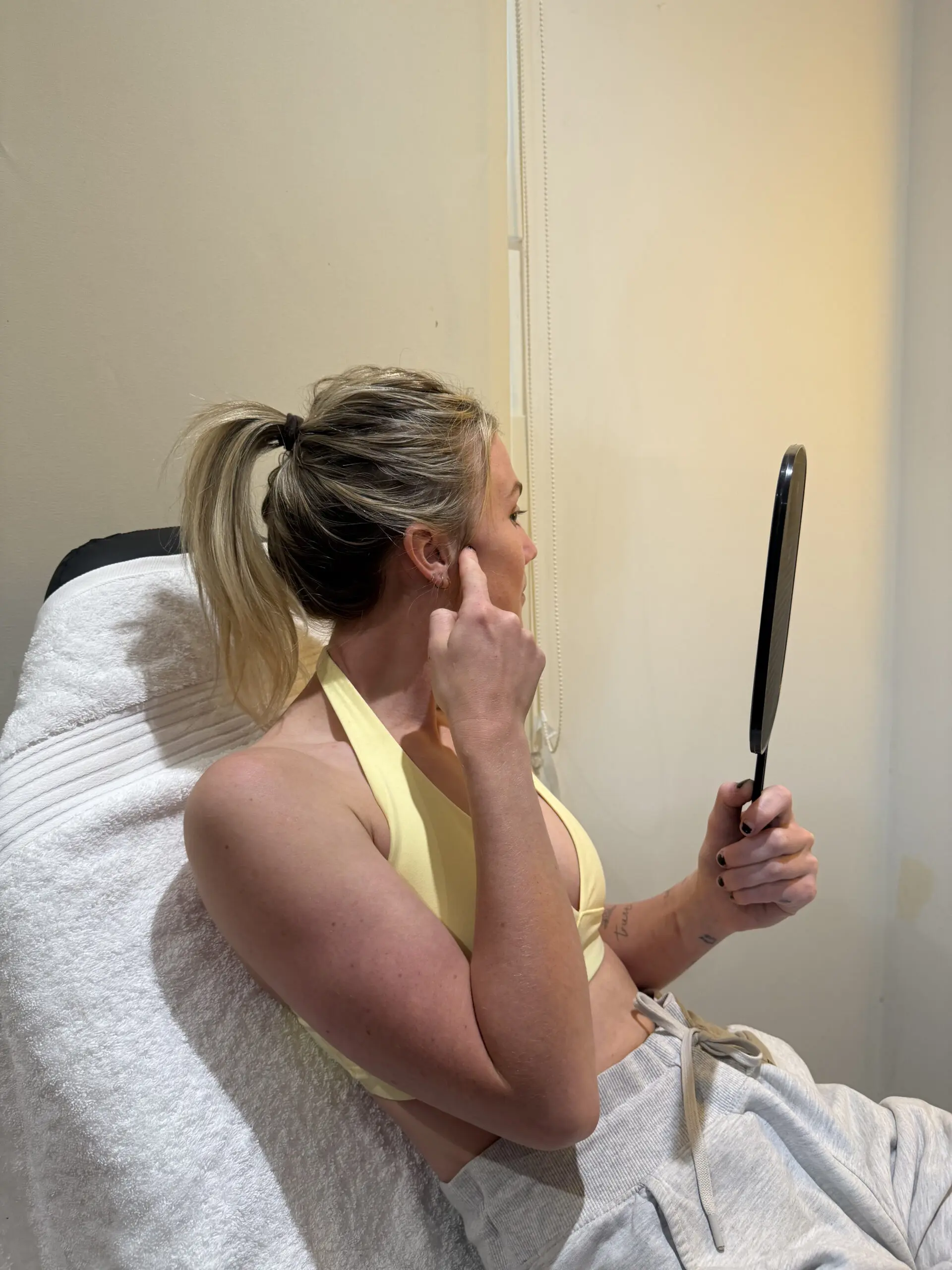
A mirror held at one angle rewards stillness. Daily life does not. Corey may observe the face relaxed, speaking, smiling and from more than one view because a preference about movement cannot be tested in a single posed frame.
This is not a search for perfect symmetry. It is a way to identify what already varies, what the person values and which proposed trade off would conflict with the stated goal.
Reference Photographs Need An Interview
A reference photograph can help when the reader points to one element and explains why it matters. “I like that the smile still moves” is more useful than “make me look like this person.”
Ask whether the image is edited, how close the camera was, whether it shows the same expression and whether the person has similar anatomy. A reference can reveal a preference. It cannot transfer another face, predict an outcome or establish suitability.
Why Can A Selfie Mislead The Discussion?
Short camera distances change the relative size of facial features. Published comparisons of close smartphone photographs with longer distance clinical photographs found measurable changes in apparent nasal length and other facial proportions.
The lesson is modest: do not let one close image become the only baseline. Compare what concerns you in the mirror, ordinary photographs and movement, then let clinical photography support documentation rather than replace assessment.
Edited Images Change More Than Skin Texture
Filters may alter contour, eye size, jaw shape, light, skin texture and the relationship between features. Even an image that feels realistic may contain several changes that the viewer has not consciously separated.
Bring the image if it explains the source of a preference, but also bring an unedited photograph and describe what you want preserved. Corey should not reverse engineer a filtered face into a procedure request.
Identity Is A Preference, Not A Promise
Wanting to remain recognisable to yourself is a valid preference. It should influence how cautiously a discussion proceeds and which changes are unacceptable. It cannot become a promise that an intervention will be invisible or that every observer will react in the same way.
Consent is stronger when the reader can name what familiarity means to them and can accept that anatomy, healing, movement and perception contain uncertainty.
Subtle And Invisible Are Different Claims
Subtle describes a degree or style of change. Invisible asks for certainty about what other people will notice. No clinician can control another person’s attention, the lighting in a photograph or how the patient feels on a particular day.
If privacy matters, say why and identify the practical limit. Upcoming work, travel, photography or a public event may make waiting more sensible than assuming secrecy is certain.
Write A Stop Rule Before Discussing Options
A stop rule is a reason not to expand or repeat a plan. It might be loss of a valued expression, an unclear baseline, unsettled previous care, pressure from another person, inadequate review access or a trade off the patient does not accept.
The stop rule should be clear before enthusiasm narrows attention. It gives both people something concrete to return to when an option sounds appealing.
Does Starting Small Define A Natural Appearance?
No. A smaller or staged discussion may reduce the amount of uncertainty taken on at once, but it does not make every option suitable or make a preferred appearance certain.
Staging is useful when each step has a purpose, a review point and permission not to continue. Repetition because the calendar says it is time is not the same as review.
Whole Face Context Does Not Mean Treating The Whole Face
Corey may look at nearby features, movement and proportion to understand why one area attracts attention. That broader assessment should make a plan more selective, not automatically larger.
Sometimes the requested area is not the main driver. Sometimes the concern is mild, outside scope or better left alone. Looking widely and acting narrowly can be consistent.
Previous Care Changes The Baseline
Bring dates, areas, records and any earlier photographs you control. Describe what changed, what is still changing and what you would not want repeated. Corey should not guess the substance, amount or technique used elsewhere from appearance alone.
If the baseline is unsettled, waiting may produce a clearer and safer discussion. An urgent symptom belongs with the original provider, a suitable medical service or emergency care rather than an appearance planning page.
Motivation Belongs In The Clinical Assessment
Current Ahpra guidance requires the practitioner to discuss internal and external reasons for seeking a cosmetic procedure and to assess whether expectations are realistic. That includes pressure to please someone else, distress linked to appearance and psychological concerns that may make a person unsuitable.
This is not a character test. It protects the freedom to pause, seek support or choose no cosmetic care when the request is carrying a burden that appearance change cannot responsibly promise to solve.
What If The Goal Keeps Moving?
If every photograph creates a new defect, reassurance lasts only briefly or the acceptable endpoint changes during the conversation, more cosmetic planning may not resolve the underlying distress. Corey may recommend waiting, GP review or mental health support.
Urgent support is needed if appearance distress is affecting safety. Cosmetic treatment is not crisis care and should not be framed as a route to confidence, happiness or repaired relationships.
Timing Can Make A Sound Preference Unworkable
A clear goal can still meet the wrong week. A close event, travel, a new medicine, incomplete records, recent care elsewhere or no realistic access to review can justify delay.
Waiting does not invalidate the concern. It protects the ability to make and review a decision without compressing consent around a deadline.
What Should A Useful Consultation Produce?
The output should be more precise than the input. It may record the main observation, what must be preserved, existing asymmetry or movement, unacceptable trade offs, relevant history, uncertainties, the stop rule and the next decision point.
That next point may be further assessment, time to think, records review, referral, a narrower option discussion or no cosmetic care. A booking has value even when nothing is performed.
Verify The Person, Place And Contact Route
Corey Anderson is a Registered Nurse with Ahpra registration NMW0001047575. Core Aesthetics is at 12A Atherton Road, Oakleigh VIC 3166. Phone 0491 706 705.
Use the Core Aesthetics verification page, then check the Ahpra public register independently. Confirm the clinic contact details before sharing health information or paying.
How Is This Page Different From Nearby Guides?
This page owns the translation of natural, subtle and not overdone into observable preferences and stop rules. The planning over time guide owns review intervals and whether a plan should continue. The body image and social media guide owns wider appearance pressure and digital influence.
The conservative practice page explains how restraint changes clinical decisions. None of those pages should repeat this translation sheet.
Which Evidence Supports The Questions?
Ahpra guidance requires holistic suitability assessment, discussion of motivation, realistic expectations, psychological screening, informed consent and responsible follow up. Ahpra advertising guidance also warns against claims that cosmetic care will improve confidence, body image or mental health without acceptable evidence.
In Pressler and colleagues’ study of 30 volunteers, close smartphone selfies showed different facial proportions from clinical photographs taken farther away with a different camera. Camera distance and equipment both differed, so this was not a test of distance alone. The practical takeaway is to avoid judging your face from one close selfie; the study did not test cosmetic outcomes. TGA guidance governs how health services involving therapeutic goods may be advertised publicly.
Questions Worth Bringing To Corey
Ask Corey to repeat your goal back without using the words natural or subtle. Ask what you appear to want preserved, which trade off may conflict with that preference and what uncertainty remains.
Then ask what would make the plan stop, what needs another clinician, how review would work and whether doing nothing is still reasonable. If those questions cannot be answered clearly, the decision is not ready.
Questions About Natural Looking Goals
Is natural looking a clinical definition?
No. People use the phrase for different preferences. In consultation, it should be translated into observable concerns, features or movement to preserve, acceptable visibility, rejected trade offs and a stop rule.
How can I explain that I do not want to look overdone?
Describe the visible change you want to avoid. It may be loss of familiar movement, a profile change, one feature dominating or a previous experience. Overdone is a useful concern label, but it is not a diagnosis or fixed threshold.
Should I bring reference photographs?
They can help if you identify one relevant element and explain why it matters. Also say whether the image is edited or a close selfie. A reference reveals a preference; it cannot transfer another person’s anatomy or predict an outcome.
Can Corey make sure nobody notices?
No practitioner can control what another person notices or promise invisibility. If privacy, work, travel or an event matters, discuss the practical limit. Waiting may be more appropriate than relying on a certainty that cannot be given.
Does starting small define a natural appearance?
No. A staged discussion may limit how much uncertainty is taken on at once, but it does not establish suitability or make a preferred appearance certain. Each stage needs a purpose, review point and permission not to continue.
Why does Corey ask about motivation?
Ahpra guidance requires discussion of internal and external reasons, realistic expectations and psychological factors that may affect suitability. The purpose is to support an informed, unpressured decision, including timing or another clinically appropriate pathway.
Can a filtered selfie be used as the plan?
No. Filters and close camera distance can change several proportions at once. The image can show what influenced a preference, but assessment should include ordinary views, movement, history and clinical photography where appropriate.
What is a stop rule?
It is a reason not to expand, repeat or proceed with a plan. Examples include loss of valued expression, an unclear baseline, unsettled previous care, unacceptable trade offs, external pressure or no realistic access to review.
Can the consultation end without cosmetic care?
Yes. The outcome may be time to think, records review, referral, a narrower discussion, timing or another clinically appropriate pathway. Booking secures an assessment, not a procedure.
Is this for you?
Consider booking a consultation if
- Adults who use words such as natural or subtle and want to make the preference specific
- People bringing reference photographs who want to separate one preference from a copied face
- Adults concerned about looking unfamiliar or losing valued movement
- People willing to define stop rules and accept timing or another clinically appropriate pathway
This may not be for you if
- Anyone seeking certainty that no one will notice
- People wanting a copied face or a plan based only on a filtered image
- Anyone experiencing urgent symptoms after previous care
- People whose appearance distress is affecting safety or needs mental health support
Suitability is confirmed at consultation. This list is general guidance, not a substitute for clinical assessment.
Clinical references
- Ahpra: Guidelines for registered health practitioners who perform non-surgical cosmetic procedures
- Ahpra: Guidelines for advertising higher risk non-surgical cosmetic procedures
- TGA: Advertising health services involving therapeutic goods
- Nasal distortion in short-distance photographs: the selfie effect
- Size and perception of facial features with selfie photographs
- Ahpra: Public register of practitioners