A conservative aesthetic philosophy is a decision framework, not a promise to use the smallest amount or create one preferred look. It means defining the person’s actual concern, checking health and previous care, separating what could be done from what should be done, choosing proportionate scope, making risks and uncertainty visible, and reviewing before repeating or expanding a plan. The outcome may be discussion of an option, a narrower plan, timing or another clinically appropriate pathway.
A Philosophy Should Be Visible In Behaviour
Words such as conservative, natural and subtle can become advertising wallpaper. They are useful only when a person can see what they change. A conservative consultation should leave a trail of decisions: what was observed, which information mattered, what remained uncertain, which options were not pursued and why the next step was proportionate.
Corey’s registration and professional obligations do not make every recommendation automatically correct. They do create accountability for assessment, evidence, scope, consent, records and follow up. The public should be able to verify the practitioner and ask how those duties shaped the plan.
The First Decision Is What The Question Actually Is
“I want to look fresher” is a valid reason to ask for information, but it is not yet a clinical problem or a treatment plan. Corey first asks what the person has noticed, when it became noticeable, where it appears, whether it changes with expression or light, and why it matters now.
This protects the person from having a broad feeling translated into a long list of suggested areas. It also creates a useful stopping point. If the concern cannot be described clearly, the next step may be more discussion or time rather than a wider assessment designed to find something to treat.
A Broad Request Should Become A Narrow Observation
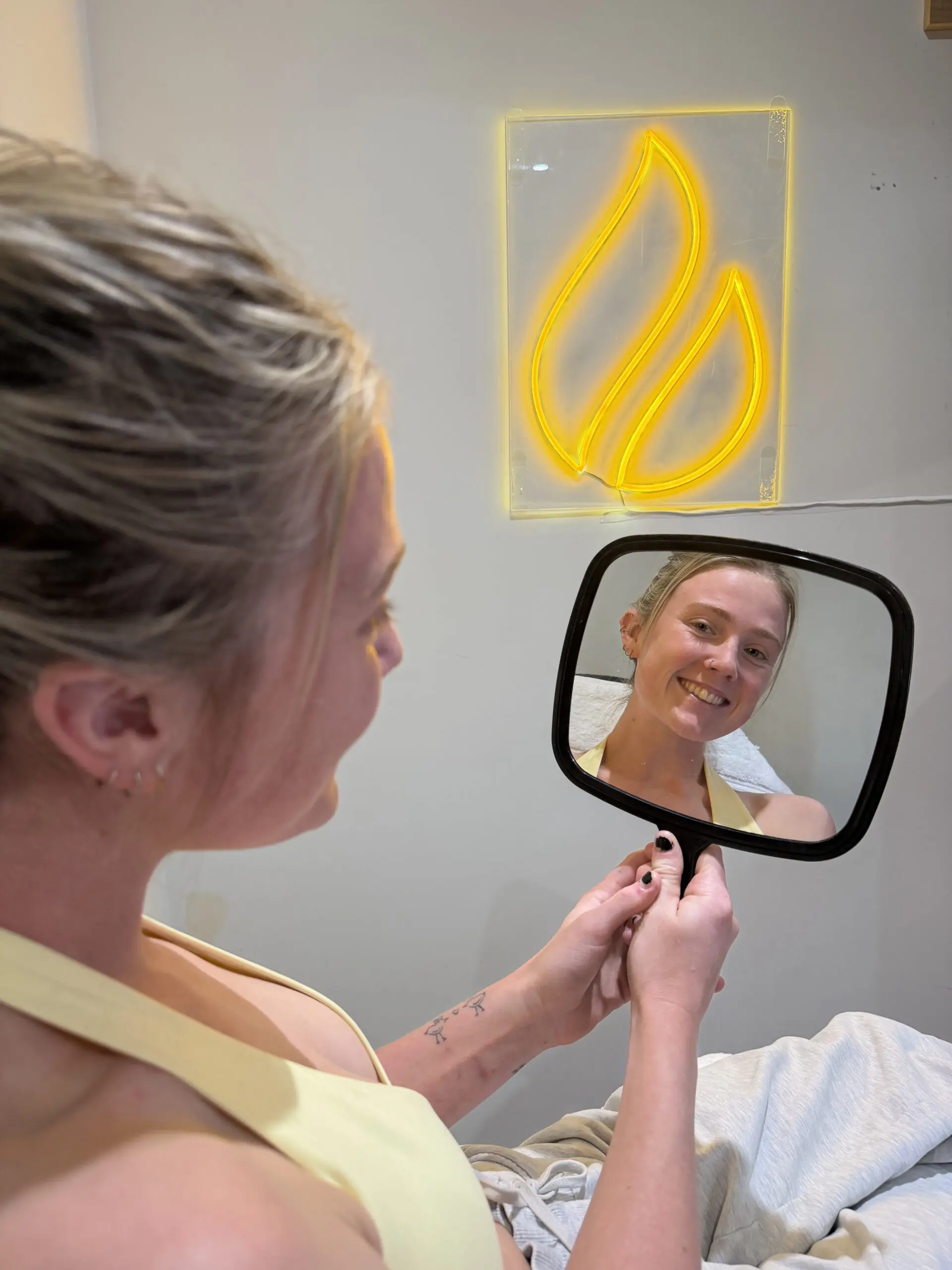
A mirror, an ordinary photograph or a familiar expression can help locate the observation. The aim is not to search the whole face for deviations. It is to agree on the feature being discussed and to distinguish it from neighbouring anatomy, normal asymmetry, camera distortion and changes that exist only in a posed image.
For example, “the lower face” may resolve into one mouth corner in side light, comfortable lip closure, a jaw border seen from an angle or a skin texture question. Each description leads to different history and assessment questions. Treating the broad phrase as one package would remove that useful distinction.
What Information Is Allowed To Change The Plan?
A genuine framework must permit new information to overturn the first idea. Relevant inputs can include the person’s health history, medicines and allergies, pregnancy or breastfeeding status where relevant, previous procedures, dental change, skin condition, infection, symptoms, event timing, travel, review access and the stability of the concern.
Corey should also ask what the person expects to notice and what they would regard as an unacceptable trade off. If the answer reveals a mismatch between the concern and a realistic option, the plan should change before consent, not after an intervention.
Evidence Can Make A Plan Smaller Or Stop It
Evidence informed practice does not mean quoting a paper beside a recommendation. It means combining the best available information with a systematic assessment, professional scope and the individual person’s circumstances. The NMBA Registered nurse standards describe assessment data and best available evidence as foundations for planning, followed by evaluation and revision.
On this page, that principle has a practical consequence: information is not collected to justify the original request. It is collected because it may narrow the scope, create a pause, trigger referral or show that no cosmetic care is appropriate.
Can And Should Are Separate Questions
Technical possibility answers whether an action exists. Clinical judgement asks whether it is appropriate for this person, for this concern, at this time and within the practitioner’s scope. A list of possible areas is only a starting point.
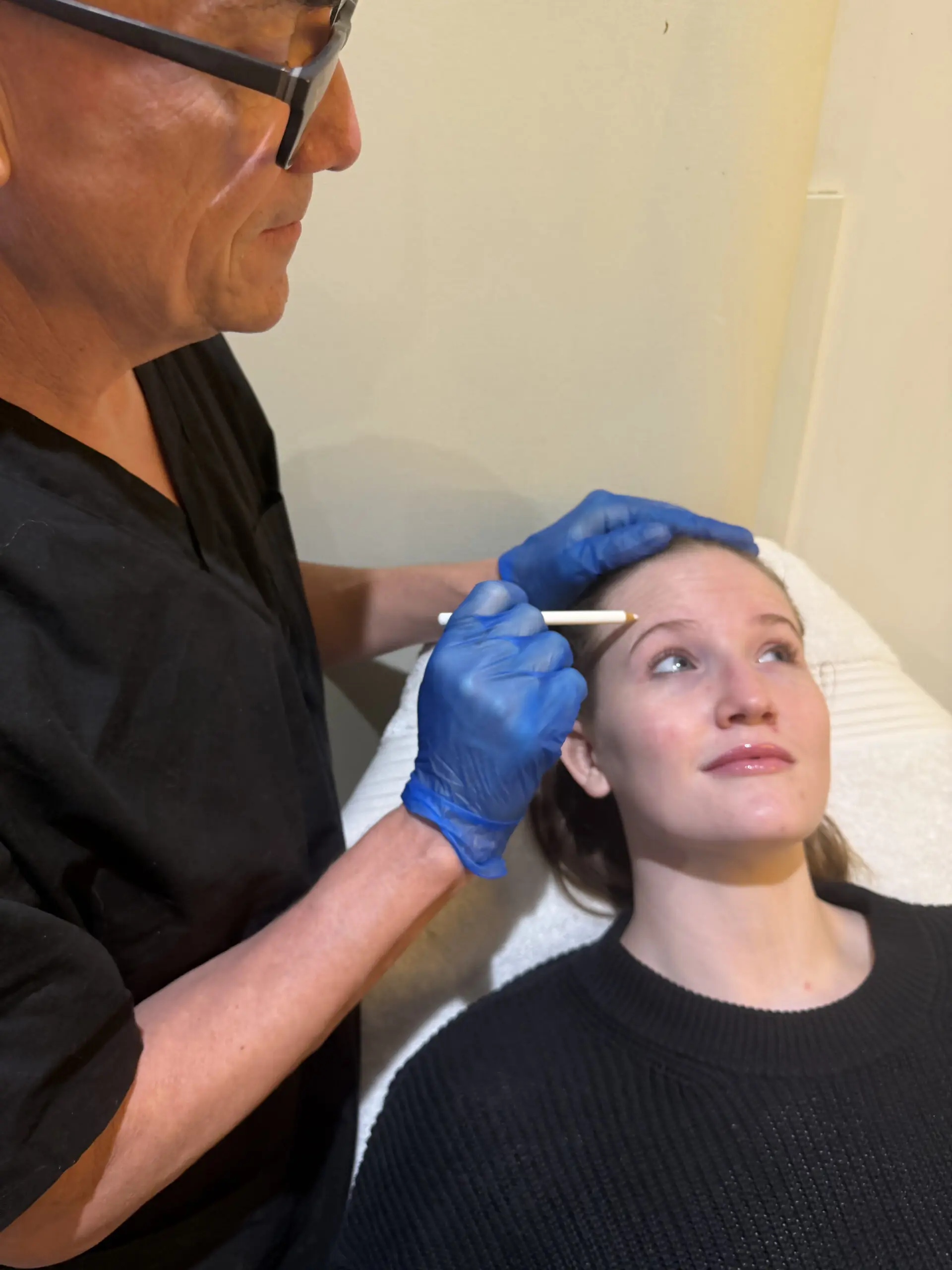
The separation matters when a person arrives with a named option from social media or a previous clinic. Corey can acknowledge the request without treating it as the conclusion. The consultation still needs to establish the observation, relevant history, alternatives, material risks, limitations and whether another pathway would answer the concern more safely.
The Narrowest Useful Scope Comes Before Expansion
Conservative scope does not mean automatically choosing the smallest physical quantity. It means avoiding additional areas that do not answer the agreed question. A plan can be narrow in purpose even when the underlying assessment is broad enough to identify safety, movement and proportional context.
Expansion needs its own reason. “While you are here” is not a clinical reason. Neither is a bundle, trend or symmetry ideal. If a second area would only make sense after the first question is reviewed, it can remain a later decision rather than being added simply to make the plan broader.
Staging Is A Tool, Not A Ritual
Staging can preserve information by allowing one decision to be reviewed before another is made. It may reduce pressure, make attribution clearer and give the person time to decide whether the original concern was addressed. It is not automatically safer or better in every situation, and it should not become a fixed schedule that encourages indefinite continuation.
A staged plan needs a stated review question. What should be assessed before anything else is considered? If there is no clear answer, the stage may be an appointment timetable rather than a clinical strategy.
A Conservative Plan Needs A Stop Rule
A stop rule identifies what would prevent or defer the next step. Examples include an unexplained symptom, active infection, unstable skin, incomplete previous treatment records, poor follow up access, an upcoming event, pressure from another person, unrealistic expectations or a concern outside cosmetic scope.
The rule should be discussed before momentum takes over. It gives waiting and no cosmetic care the same legitimacy as proceeding. It also helps the person distinguish a genuine safety pause from an unexplained delay.
The Decision Record Should Make Sense Later
A useful record should show the concern in the person’s words, relevant assessment findings, health and previous care information, the options and alternatives discussed, material risks, the consent process, the agreed plan and review arrangements. Photographs, when taken, require clear consent and secure handling.
Documentation is not proof that every decision was ideal. It gives the person and practitioner a reliable baseline and makes later review less dependent on memory, filtered images or assumptions about what happened elsewhere.
Review Before Repetition Is The Key Test
Previous care should not be repeated merely because a familiar interval has passed. Corey needs to know what was done, when, where, how the person responded, what remains present now and whether health, medicines, skin, anatomy, priorities or access to follow up have changed.
The review may support discussion of a similar plan, a changed plan, more time, records retrieval, another clinician’s input or stopping. The Core Aesthetics Longevity Plan covers this review before repetition framework over a longer period. This page explains the philosophy that makes such review necessary.
What Conservative Practice Is Not
It is not a universal beauty style, a fixed quantity, an age rule or an assurance that a smaller plan always carries less risk. It is not treatment avoidance, and it is not permission to understate risks because the proposed plan sounds modest.
It also does not make one practitioner morally superior to another. The relevant question is whether the reasoning is transparent, evidence informed, within scope, responsive to the individual and open to a decision not to proceed.
How Does This Differ From The Scope Page?
The Core Aesthetics scope page should answer what the clinic does, does not do and when another clinician is needed. This page answers how Corey reasons within that boundary. Scope sets the perimeter; conservative philosophy governs the decisions made inside it.
The medical ethics guide addresses duties such as autonomy, honesty, conflict of interest and respect. The conservative planning guide focuses on avoiding fixed online quantity promises. Those are related, but neither replaces the decision rules set out here.
A Five Question Test For Any Proposed Plan
A reader should be able to interrogate the reasoning without needing clinical jargon.
| Question | What a clear answer should contain | What should prompt caution |
|---|---|---|
| What exact concern are we answering? | A feature, context, timing and the person’s own priority. | A broad package or list of clinic suggested areas. |
| Which evidence changed the first idea? | History, assessment, records, movement, symptoms or realistic limits. | Information collected without any possibility of changing the plan. |
| Why this scope? | A link between each proposed part and the agreed concern. | Additions justified by convenience, trend or a preset package. |
| What would make us wait or stop? | Specific safety, consent, timing, scope or follow up conditions. | No credible pathway to referral, delay or no cosmetic care. |
| What must review establish? | The observation, response, adverse effects, remaining concern and next decision. | Automatic repetition based mainly on elapsed time. |
What Should A Person Be Able To Ask Before Deciding?
Ask Corey to name the main observation, explain what information changed his view, identify the material uncertainties, describe the alternatives and state what would make him recommend waiting. Ask what review would assess and whom to contact if something changes.
You can also ask what is outside his scope, whether records or another clinician’s input are needed, and whether the decision can be made later. A consultation should leave room for questions without converting curiosity into commitment.

Conservative Does Not Mean Treatment Avoidant
Some adults may be suitable to discuss care after an appropriate assessment, informed consent and confirmation that proceeding is clinically appropriate. Others may benefit from time, records or another clinically appropriate pathway. The philosophy does not predetermine which outcome must occur.
It does require the decision to be earned. “Consultation first” should describe actual assessment and consent, not a short formality inserted before an expected procedure.
Risk Language Must Match The Actual Option
Conservative wording does not reduce biological risk. Depending on the option, discussion may need to include pain or tenderness, redness, swelling, bruising, infection, asymmetry, contour or movement change, pigment change, scarring, prolonged symptoms, an outcome different from the plan and rarer serious complications. The relevant warning signs, aftercare and review pathway must be explained for the specific option.
This page does not advertise or select a prescription medicine. It cannot provide personal risk estimates or replace informed consent. A person may pause, request written information, seek another opinion or decline.
When Another clinically appropriate pathway Fits The Philosophy
Referral is appropriate when symptoms, a skin lesion, dental change, mental health concern, diagnostic uncertainty or another issue needs expertise outside the consultation. No cosmetic care may be appropriate when the concern is normal and not troubling the person, benefit is doubtful, risk is disproportionate, expectations cannot be met or the decision is being driven by pressure.
Read why a practitioner may recommend no cosmetic care for that outcome in detail, and when an aesthetic consultation stops being the answer for referral boundaries.
Where To Read Next
Use the suitability assessment guide for the health and decision factors considered at an appointment. Read how informed consent works for information, time and voluntary choice, and why consultation can feel slower for the practical sequence.
The patient safety guide covers wider safeguards. The verification page provides Corey’s registration and clinic details before you decide whether to book.
Confirm The Practitioner And Clinic
Core Aesthetics consults from Atherton Road in Oakleigh. Consultations are led by Corey Anderson RN, Ahpra registration NMW0001047575. The clinic phone number is 0491 706 705.
Use the Core Aesthetics verification page and the Ahpra public register to confirm practitioner and clinic details. If you want to discuss a specific concern, use the consultation booking page.
Review And Source Boundaries
This page was reviewed on 5 September 2026 by Corey Anderson RN. Current Ahpra and TGA guidance, the NMBA Registered nurse standards for practice and current non surgical cosmetic procedure guidelines informed its wording.
The page describes Core Aesthetics’ stated decision process. Individual recommendations, outcomes and risk levels vary, and a philosophy statement is not personal medical advice.
Questions About Conservative Aesthetic Practice
What does conservative aesthetic practice mean at Core Aesthetics?
It means using a defined decision process: identify the person’s actual concern, review health and previous care, let evidence narrow or stop the plan, separate technical possibility from appropriateness, keep scope proportionate, explain risks and uncertainty, and review before repeating or expanding anything. It does not promise one visual style or predetermine that treatment will occur.
Does conservative mean using the smallest possible amount?
No. A fixed quantity is not a clinical philosophy and cannot be selected responsibly on a public page. Conservative scope means each proposed part needs a clear reason connected to the agreed concern. Quantity, if relevant to an appropriate option, depends on individual assessment and cannot establish safety, subtlety or outcome by itself.
Does a conservative practitioner always recommend waiting?
No. Some adults may be suitable to discuss care after assessment, informed consent and confirmation that proceeding is appropriate. Others may need time, records, medical or dental input, observation or no cosmetic care. The conservative feature is that each outcome remains genuinely available rather than treatment being assumed.
How can I tell whether the philosophy changes the consultation?
Ask what exact concern is being answered, which information changed the first idea, why each part of the proposed scope is relevant, what would make the practitioner wait or stop, and what review must establish. Clear answers should refer to your observation, history, assessment, alternatives, risks, uncertainty and follow up rather than slogans about natural results.
Why might Corey make a plan narrower than my original request?
A broad request may contain several different observations, or only one feature may actually matter to you. Health information, previous care, movement, skin or dental context, timing, expectations and review access can also change the scope. A narrower plan may preserve information and reduce unnecessary additions, but it still requires option specific risk and consent discussion.
What is a stop rule in aesthetic planning?
A stop rule is a condition that prevents or defers the next step. It may involve an unexplained symptom, active infection, unstable skin, incomplete records, poor follow up access, event timing, external pressure, unrealistic expectations or a concern outside cosmetic scope. Discussing it early keeps adjusted timing, review with another health professional and no cosmetic care available as legitimate outcomes.
Why review previous care before repeating it?
Elapsed time alone does not show that the same plan remains appropriate. Corey needs to know what was done, when and where, how you responded, what is present now and whether your health, medicines, skin, anatomy, priorities or follow up access changed. Review may support a similar plan, a different plan, more time, records, referral or stopping.
Can I disagree with a conservative recommendation?
Yes. Informed decision making is not obedience. You can ask for the reasoning, request written information, take more time, seek another appropriately qualified opinion or decline. Corey may also decline to provide care that he considers outside scope, disproportionate or unsuitable. A respectful disagreement does not create an obligation for either party to proceed.
How is this page different from the Core Aesthetics scope page?
The scope page defines what the clinic does, does not do and when another clinician is needed. This philosophy page explains how Corey reasons within that boundary: narrowing the question, weighing evidence, setting scope, identifying stop rules and reviewing before repetition. The ethics, consent, suitability and long term planning pages examine related duties and stages in more detail.
Is this for you?
Consider booking a consultation if
- Adults who want to understand how Core Aesthetics turns a broad appearance question into a defined consultation decision
- People comparing clinics on assessment, reasoning, scope, consent and review rather than slogans
- Adults willing to provide relevant health, previous care and timing information
- People open to a narrower plan, timing or another clinically appropriate pathway
This may not be for you if
- Anyone seeking a fixed treatment amount or personal plan online
- People seeking certainty about appearance, safety or outcome before assessment
- Anyone expecting consultation to confirm a preselected procedure automatically
- People needing urgent medical, dental, skin or mental health care rather than a routine cosmetic consultation
Suitability is confirmed at consultation. This list is general guidance, not a substitute for clinical assessment.
Clinical references
- TGA: Advertising health services that involve therapeutic goods
- TGA: Advertising health services and cosmetic injections FAQs
- Ahpra: Guidelines for advertising higher risk non-surgical cosmetic procedures
- Ahpra: Guidelines for registered health practitioners who perform non-surgical cosmetic procedures
- NMBA: Registered nurse standards for practice
- NMBA: Professional standards and Code of conduct for nurses