Core Aesthetics provides adult aesthetic consultation and assessment with Corey Anderson RN. That includes relevant history, suitability, motivation, expectations, consent, alternatives and review planning, with care considered only when it sits within his registration, education, training, competence, required authorisations, law and clinic governance. The clinic does not provide emergency or general medical care, surgery, dermatology, dentistry, mental health treatment, diagnosis of unexplained symptoms or any service outside that defined scope. Booking cannot establish that care will be offered; a concern may instead be deferred, declined or referred.
What Does Scope Mean At This Clinic?
Scope is the boundary around what a practitioner is educated, competent and legally permitted to do in a particular setting. It is narrower than a list of procedures seen online and more specific than registration alone.
Ahpra’s current cosmetic-procedure guideline is explicit: the guideline does not itself authorise a practitioner to perform a procedure and does not expand the scope of any profession. The actual decision also depends on the practitioner’s training, experience, required authorisations, law, insurance, clinic systems and the needs of the person being assessed.
What Is The Fastest Way To Find The Right Path?
Start with the type of help needed, not the name of a cosmetic service.
| Your situation | What this clinic can do | Boundary or next pathway |
|---|---|---|
| An adult has an appearance concern and wants to understand it | Take a relevant history, discuss motivation and expectations, assess suitability and explain options, limits and alternatives that involve another appropriate care pathway. | Assessment may finish with information, more time, records, referral or no cosmetic plan. |
| Earlier aesthetic care needs context | Review available records, dates, recovery and the concern as it presents now. | The clinic cannot safely guess missing details or automatically assume responsibility for another provider’s work. |
| There is a new lump, changing lesion, rash, infection or unexplained symptom | Recognise that the request does not belong in routine aesthetic planning. | Use a GP, relevant specialist, dentist or urgent service according to the symptom. |
| The request is for surgery or dental, dermatological or general medical treatment | Explain that the request sits outside clinic services. | Seek a practitioner and setting qualified for that field. |
| Appearance distress or another psychological concern may affect suitability | Pause the cosmetic pathway and discuss independent assessment where indicated. | The clinic does not provide mental health diagnosis or treatment. |
| A person under 18 seeks elective cosmetic care | Explain the clinic’s adult focused boundary. | Core Aesthetics does not provide elective cosmetic consultation to people under 18. |
| Symptoms are severe or worsening rapidly | Do not use a routine booking as triage. | Seek urgent medical attention and contact the responsible prior provider when relevant. |
What Can An Adult Consultation Include?
Corey can ask what changed, when it became noticeable, why it matters now and what the person hopes to understand. A relevant assessment may include health conditions, current medicines and supplements, allergies, previous care, recent procedures, skin integrity, motivation, expectations and practical access to follow-up.
The conversation can cover uncertainty, reasonable alternatives, material risks, likely limitations, fees, aftercare and the option of doing nothing. It is legitimate to book for questions and leave without a cosmetic plan.
Which Five Gates Must All Be Open?
No single credential or appointment answers the entire scope question.
| Gate | Question that must be answered | What closes the gate |
|---|---|---|
| Professional registration | Is the practitioner currently registered in the stated profession? | Absent, expired, suspended or misrepresented registration. |
| Education and competence | Does the practitioner have current knowledge, supervised learning, practical training and demonstrated competence for this care? | A title without preparation for the specific procedure or its complications. |
| Legal authorisation | Are every required authority, licence and state law condition in place? | A task that the practitioner is not legally authorised to undertake. |
| Governance and setting | Do insurance, records, infection control, equipment, escalation and aftercare systems match the risk? | A setting unable to support safe care or manage foreseeable complications. |
| Individual suitability | Does this person’s history, motivation, expectations, consent and follow up plan support proceeding? | Clinical concern, incomplete information, pressure, unrealistic expectations or poor continuity. |

What Does Registered Nurse Status Establish?
The Ahpra register can establish Corey’s current profession and registration status. The NMBA standards describe registered nursing as person centred, evidence based practice that includes comprehensive assessment, planning, safe care and evaluation.
The title does not mean every possible cosmetic service is automatically within scope. Ahpra says practitioners remain responsible for the limits of their own education, training, competence, authorisations and experience. Ask about the specific care under consideration rather than inferring it from the letters RN.
What Does The Clinic Not Provide?
Core Aesthetics is not an emergency department, general practice, dermatology clinic, dental practice, surgical service or mental health service. It does not diagnose unexplained lumps, changing lesions, infections, dental disease or systemic symptoms through an aesthetic appointment.
The clinic also does not provide care simply because it has been requested, advertised elsewhere or undertaken previously. It will not use a public booking, payment, travel effort or event deadline as evidence that proceeding is appropriate.
Which Symptoms Need A Different Door?
Call emergency services for a life threatening emergency. Severe or escalating pain, sudden swelling, unusual colour change, visual disturbance, breathing difficulty, fever or rapid deterioration needs timely medical assessment rather than a routine cosmetic booking.
A persistent lump, changing spot, active rash, suspected infection, dental pain or other unexplained symptom may require a GP, dentist or relevant specialist. If a symptom began after recent care, contact that treating practitioner or clinic promptly as well.
Does Referral Mean The Consultation Failed?
No. A sound boundary decision may be the most useful outcome of the visit. Referral can protect the person from delay, place diagnosis with the right profession and preserve a clear record of why cosmetic planning stopped.
Ahpra expects a practitioner to decline a cosmetic procedure when it is not appropriate after assessment. Waiting, independent review and no procedure are deliberate safety outcomes, even when another appropriate care pathway follows.
Why Is There No Public Procedure Inventory Here?
A scope page should explain clinical boundaries without functioning as an advertisement for prescription medicines or their effects. Current TGA guidance says a health service advertisement must not refer directly or indirectly to prescription medicines used in the service.
Specific options can be discussed privately within an established relationship between practitioner and patient after an appropriate assessment. Public information remains product neutral and cannot tell an individual what care is suitable.
Can A Booking Approve Care In Advance?
No. The booking form identifies a requested consultation time and concern. It does not prove that the concern belongs in clinic scope, that the history is complete or that consent and review arrangements are adequate.
Corey will connect the assessment findings with suitable options, timing and an agreed plan. A responsible appointment can stop after assessment and explanation.
What If Motivation Or Expectations Raise Concern?
Ahpra expects a holistic assessment that considers relevant psychological, social and cultural factors, including motivation and whether expectations are realistic. Pressure from another person, intense appearance distress or a belief that one procedure must solve a wider problem may require the process to pause.
Corey can identify that an independent assessment is needed and make or recommend referral. He is not providing mental health diagnosis or therapy through the aesthetic consultation.
Does The Clinic Provide Elective Care To People Under 18?
No. Core Aesthetics is adult focused and does not provide elective cosmetic consultation to people under 18. That clinic boundary is simpler than trying to turn the Ahpra minimum safeguards for younger people into a promotional pathway.
Public pages are written for adults. Age alone still does not make an adult suitable; capacity, motivation, history, expectations, risk and freedom from pressure remain individual assessment questions.
Can The Clinic Take Over Earlier Care Without Records?
Not safely by assumption. Bring the provider, approximate date, area, verified details, recovery course and any current symptom. Records from the original clinic may be needed before Corey can understand what responsibility is possible.
Do not invent a product name or date to complete the story. An urgent complication belongs with timely medical care and the responsible prior provider, not a routine request for corrective cosmetic planning.

How Can The Practitioner And Clinic Be Checked?
Corey Anderson is listed as a Registered Nurse with Ahpra registration NMW0001047575. Search the current entry on the Ahpra public register rather than relying only on this page. The verification page explains the clinic’s public identity evidence.
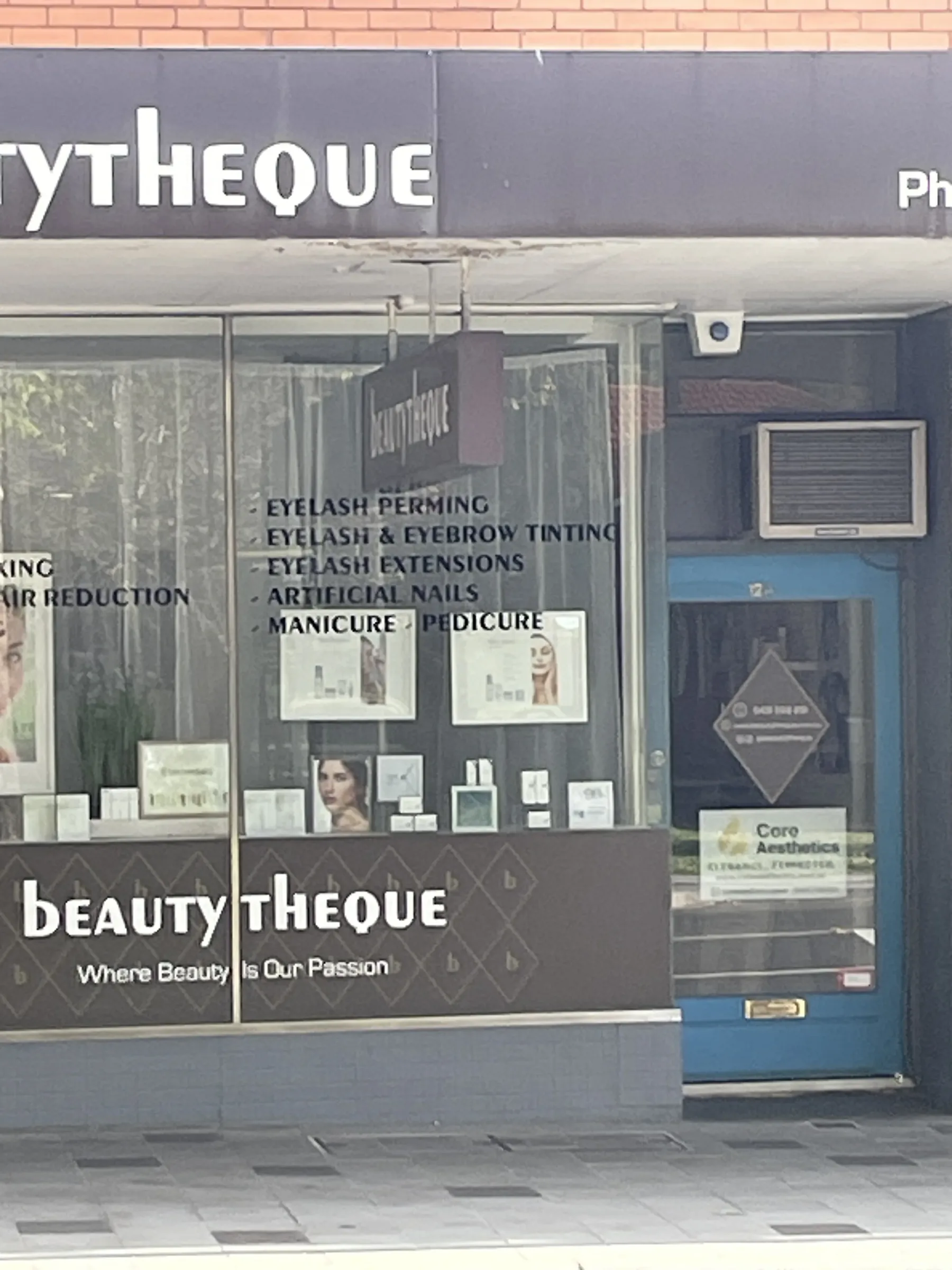
Core Aesthetics is at 12A Atherton Road in Oakleigh. Confirm the complete postal address and telephone number through the contact page before sharing health information or attending.
Which Sources Define These Boundaries?
This page was checked on 15 July 2026 against Ahpra’s guideline for practitioners performing non surgical cosmetic procedures, the NMBA Registered nurse standards for practice, the NMBA Decision making framework, the Ahpra public register and current TGA health service advertising guidance.
The page describes Core Aesthetics’ clinic boundary; it is not a legal opinion about another practitioner. Registration, professional scope, personal competence, authorisation, law, workplace governance and individual suitability must be considered together.
How Is The Disciplined-Scope Guide Different?
This page is the practical directory: what the clinic can assess, what it does not provide and where a reader should go next. Why Core Aesthetics keeps a disciplined clinical scope is the rationale page about why restraint and a deliberately narrow service model matter.
For national professional context, use the Australian scope guide. For an individual booking decision, continue to treatment suitability assessment, patient safety and why care may be declined.
Questions About What The Clinic Does And Does Not Do
What can Core Aesthetics provide?
The clinic provides adult, consultation-led aesthetic assessment with Corey Anderson RN. Relevant history, motivation, expectations, suitability, consent, alternatives and review planning can be considered. Any care must remain within professional, legal, governance and individual-suitability limits.
What does Core Aesthetics not provide?
It is not an emergency, general medical, surgical, dermatology, dental or mental health service. It does not diagnose unexplained symptoms or provide care outside the practitioner and clinic scope.
Does Registered Nurse registration authorise every cosmetic service?
No. Registration confirms the profession and current registration status. Ahpra also requires appropriate education, training, competence, experience, authorisations, insurance, law, governance and a suitable individual assessment.
Can this clinic diagnose a lump, changing lesion or infection?
No. Those concerns require an appropriate diagnostic pathway, such as a GP, dentist or relevant specialist. Severe, sudden or rapidly worsening symptoms need timely urgent medical attention.
Can I use the booking form for an emergency?
No. A routine booking is not emergency triage. Call emergency services for a life-threatening emergency and seek prompt medical care for severe or rapidly worsening symptoms.
Does the clinic provide elective cosmetic consultation to people under 18?
No. Core Aesthetics is adult-directed and does not provide elective cosmetic consultation to people under 18. Adult age still does not replace assessment of capacity, motivation, expectations, risk and pressure.
Does booking confirm that a concern is within Core Aesthetics’ scope?
No. Booking reserves assessment time only and cannot determine scope or suitability. The visit may finish with information, a request for records, additional assessment, waiting, independent review, referral or no cosmetic plan.
What happens when a request sits outside scope?
Corey should explain the boundary and, where appropriate, direct the person to a GP, dentist, specialist, urgent service or independent practitioner. Referral or declining care can be the responsible outcome.
How can I verify Corey Anderson and Core Aesthetics?
Search the Ahpra public register for Corey Anderson using NMW0001047575. Separately confirm the clinic identity, 12A Atherton Road address and current contact details on the verification and contact pages.
Is this for you?
Consider booking a consultation if
- Adults who want to understand the clinic boundary before booking
- People willing to disclose relevant history, motivation and expectations
- People open to records review, adjusted timing, review with another health professional or no cosmetic plan
- Readers who want to verify practitioner registration independently
This may not be for you if
- People under 18 seeking elective cosmetic consultation
- Anyone needing emergency, urgent or diagnostic medical assessment
- People seeking surgery, dentistry, dermatology, general practice or mental health treatment
- Anyone expecting a booking or payment to require that care be provided
Suitability is confirmed at consultation. This list is general guidance, not a substitute for clinical assessment.
Clinical references
- Ahpra: Performing non-surgical cosmetic procedures
- NMBA: Registered nurse standards for practice
- NMBA: Decision-making framework
- TGA: Advertising health services that involve therapeutic goods
- TGA: Advertising health services and cosmetic injections FAQs
- Ahpra: Advertising higher risk non-surgical cosmetic procedures
- Ahpra: Public register of practitioners