Core Aesthetics is organised around one named clinic practitioner, Corey Anderson RN, but that does not mean one person necessarily holds every clinical role. Before making a decision, identify who assesses you, who is the authorised prescriber where a prescription pathway is relevant, who performs any agreed procedure, and who provides review or backup care. Suitability, material risks, alternatives and the option of an agreed consultation plan still need individual discussion. Limited appointments reflect the capacity of a small clinic. They are not evidence of superior care and should never create pressure to book.
What Does Single Practitioner Actually Describe?
At Core Aesthetics, the regular clinic consultation is with Corey Anderson RN. That is a description of the local service structure, not a clinical quality ranking against a larger clinic.
It also does not remove the roles of other registered practitioners. A separate authorised prescriber may be involved where a prescription pathway applies. Another health practitioner may be needed for referral, urgent assessment, a second opinion or care when the usual practitioner is unavailable.
Use The Four Responsibility Check
| Responsibility | What to establish | What should be clear |
|---|---|---|
| Assessment | Name, profession, registration and scope of the person assessing you | Who took the history, examined the concern and decided what needs further review |
| Prescribing, where relevant | Name and role of the authorised prescriber | How that practitioner assessed you, what information they received and how questions reach them |
| Performance | Name of the practitioner who would perform an agreed procedure | Their registration, scope, setting and responsibility during and after the appointment |
| Review and backup | The usual review contact and the alternative arrangement | Who responds to routine questions, who acts when the usual clinician is absent and where urgent care belongs |
The same person may hold more than one responsibility. The useful test is whether every responsibility has a named, reachable and appropriately registered owner.

What Stays With Corey Anderson RN?
Within the Core Aesthetics clinic model, Corey conducts the local consultation, gathers the history, performs nursing assessment within his scope, discusses uncertainties and documents the plan. If a procedure is appropriate and within scope, the person should also know who would perform it and who to contact afterwards.
Registration can be checked through the Ahpra public register using NMW0001047575. Registration confirms a public professional record. It does not tell you that a particular procedure is suitable, that every service sits within scope or that another practitioner is unnecessary.
When Might Another Practitioner Be Involved?
Another registered practitioner may have a separate role when prescribing authority is required, when a concern needs medical diagnosis, when symptoms sit outside cosmetic nursing scope, when an independent opinion is wanted, or when planned review cannot be provided by the usual practitioner.
Ask for the person’s name and profession rather than accepting “our medical team” as a complete answer. Ahpra guidance requires patients to be told who will perform the procedure, who the prescriber is where relevant, and which other practitioners are involved.
A Prescriber Is Not A Background Signature
Where an authorised prescriber is separate from the person performing a procedure, the prescriber retains their own responsibilities. The prescribing interaction should be clinically meaningful, and you should know how concerns about that part of the pathway are handled.
This page does not describe medicines, product classes or individual prescribing decisions. It explains the accountability question: if prescribing is relevant, who made that decision and how can that practitioner be identified?
Continuity Is A Record, Not A Memory
Seeing the same practitioner can reduce repetition, but memory is not a clinical system. A useful record should capture relevant history, assessment, consent, photographs where appropriate, the decision, aftercare information, review arrangements and any referrals or communications with another practitioner.
Ahpra guidance says records should be detailed enough for another practitioner to take over care. That matters most in a small clinic because leave, illness, an emergency or a change of provider can interrupt the usual relationship.
Limited Appointments Are A Capacity Fact
One practitioner can conduct only a finite number of consultations and reviews. That can mean fewer appointment choices and changes when the practitioner is on leave, unwell or attending professional obligations.
None of that proves quality or popularity. Availability should not be framed as a countdown, a rare opportunity or a reason to decide quickly. If timing does not suit, waiting, choosing another appropriately registered practitioner or not booking are ordinary options.
The Trade Offs Should Be Said Plainly
| Possible feature | Practical benefit | Practical limitation |
|---|---|---|
| Same local practitioner | Fewer internal handovers during ordinary clinic visits | No on site choice between several clinic practitioners |
| Smaller appointment book | Capacity is easier to understand | Fewer dates and less cover for absence |
| Direct clinic contact | The routine contact path can be simple | Urgent or out of scope concerns still need another service |
| Familiar record | Previous reasoning can be reviewed in context | The record still has to be transferable and understandable to someone else |
Decide whether those trade offs fit your needs. Do not translate “boutique” into a clinical promise.
What Does Accountability Look Like At The Desk?
Accountability is visible in ordinary details: the practitioner introduces themselves and their profession, checks identity and history, states uncertainty, explains who else is involved, documents consent, gives usable contact information and is willing to refer or stop.
A polished room, private booking book or long consultation does not substitute for those steps. The test is whether you can explain who owns the next decision and what happens if the expected pathway changes.
Can You Ask For A Second Opinion Or Your Records?
Yes. A continuing relationship with one practitioner does not remove the option to pause, request records, ask another appropriately qualified practitioner for an opinion or move care elsewhere. A request for clarity is not disloyalty.
If records need to transfer, ask what can be supplied, how identity and privacy will be checked, and whether another practitioner or prescriber holds a separate part of the record.
Who May Not Suit This Clinic Structure?
- Someone who needs a broad choice of appointment times or several practitioners at one location.
- A person who wants an onsite medical service for symptoms outside cosmetic nursing scope.
- Someone who cannot access the stated review or backup arrangements.
- A reader who feels pushed by limited availability or wants time to compare clinics.
- Anyone needing urgent assessment rather than an elective cosmetic consultation.
A clinic model can be a poor practical fit even when the practitioner is properly registered.
Bring These Questions Before Any Decision
- Who is assessing me today, and what is their profession and registration?
- If prescribing is relevant, who is the authorised prescriber and how did they assess me?
- Who would perform any agreed procedure?
- Who provides routine review?
- Who is the alternative contact if that person is unavailable?
- Which symptoms belong with urgent or emergency care?
- Can another suitable practitioner understand and receive the record?
- Can I leave, compare options and decide later?
Which Details Should You Check Before Booking?
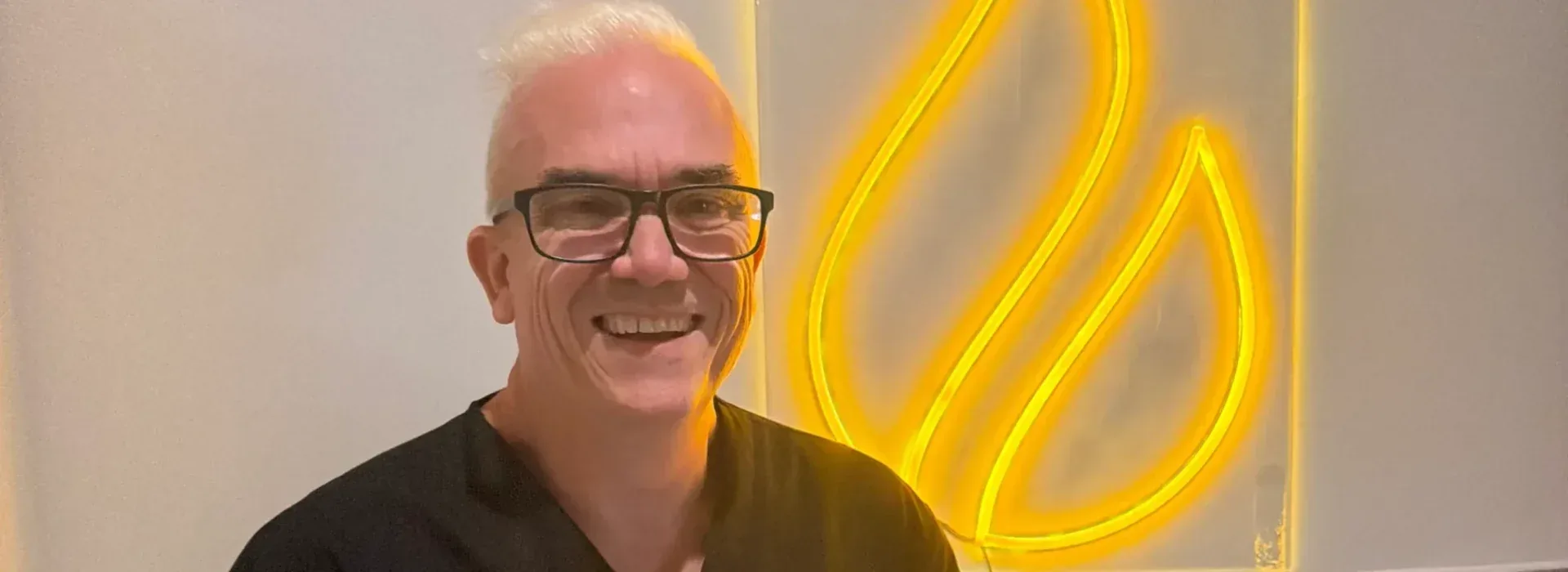
The team page identifies Corey Anderson RN. The verification page provides registration and clinic checks. What Ahpra registration means explains what registration does and does not prove.
For consent, read how informed consent works. For clinical boundaries, use the scope of practice guide. For broader safety planning, see patient safety in consultation.
Verify The Named Practitioner
Corey Anderson is a Registered Nurse at Core Aesthetics in Oakleigh. The public registration number supplied by the clinic is NMW0001047575. Phone 0491 706 705.
Use the independent Ahpra public register before sharing health information or paying. If another practitioner is involved in your pathway, verify that person separately.
Questions About A Single Practitioner Clinic
What does single practitioner clinic mean at Core Aesthetics?
It means the regular local consultation is organised around Corey Anderson RN rather than a roster of several clinic practitioners. It does not mean Corey necessarily holds every role, and another registered practitioner may be involved where prescribing, referral or alternative care is required.
Does a smaller clinic provide better care?
Not automatically. Clinic size does not prove skill, safety or suitability. Compare registration, assessment, consent, records, scope, review access and the willingness to refer or recommend no procedure.
Who should assess me?
You should know the assessor by name, profession and registration. They should gather relevant history, examine the concern within scope, explain uncertainty and identify when another health pathway is required.
Can a separate prescriber be involved?
Yes. Where a prescription pathway is relevant, an authorised prescriber may be separate from the practitioner performing a procedure. You should be told who that prescriber is and understand their role in your own pathway.
Who is responsible after a procedure?
The practitioner performing a procedure has responsibilities during and after it. A separate prescriber also retains their own responsibilities where relevant. Written information should identify routine review, backup care and urgent escalation contacts.
What happens when Corey is unavailable?
Are limited appointments a sign of high demand or quality?
No. Limited appointments primarily describe capacity. They should not be used as scarcity pressure, and there is no clinical reason to rush because a particular date is available.
Can another practitioner take over my care?
Sometimes, depending on their scope and access to adequate information. Records should be clear enough to support transfer, and any separate prescriber or external service may hold additional records that need to be requested.
Can I request a second opinion?
Yes. You can pause, ask questions, request relevant records and seek an independent opinion from an appropriately qualified practitioner. Continuity with one clinic does not remove those choices.
How do I verify Corey Anderson RN?
Compare the Core Aesthetics Verify page with the independent Ahpra public register using the name Corey Anderson and registration number NMW0001047575. Verify any other practitioner involved in your care separately.
Is this for you?
Consider booking a consultation if
- Adults who want one named local practitioner and clear responsibility at each step
- People comfortable with fewer appointment choices and explicit backup arrangements
- Readers willing to verify every practitioner involved in their own pathway
- People who value transferable records and the option to wait, refer or stop
This may not be for you if
- Anyone needing urgent assessment or emergency care
- People requiring several onsite practitioners or broad appointment availability
- Anyone who cannot access the stated review and alternative care arrangements
- People feeling pressured to decide because an appointment is limited
Suitability is confirmed at consultation. This list is general guidance, not a substitute for clinical assessment.