Tired or hollow under eyes are not one problem with one answer. A lower eyelid to cheek shadow, puffiness, darker colour, skin texture or a recent eye or health change can create a similar tired look. A cause first consultation separates those patterns. The next step may be monitoring, medical or eye care, skin advice, or a private discussion about whether cosmetic treatment is suitable.
Start with the pattern, not the label
“Tired eyes” is a description, not a diagnosis. One person notices a hollow that catches overhead light. Another sees a puffy lower lid, darker colour or a change in the skin.
Before deciding what to pursue, it helps to identify what is making the eye area look different. A long standing facial pattern calls for a different conversation from a new or uncomfortable change.
What might be creating the tired look?
The eye area is small, but several features meet there. A quick mirror check cannot reliably separate them. These are common patterns a clinician will sort through.
- A groove or fixed shadow: The lower eyelid to cheek transition, natural facial structure or an upper cheek change may be involved.
- A fuller lower lid: Puffiness or skin laxity can cast a shadow beneath it and make the area seem more hollow.
- Colour without much indentation: Pigment, visible vessels and thinner skin can make the eye area look darker.
- A new or symptomatic change: Allergy, irritation, injury, infection or another health issue may need care before a cosmetic conversation.
People often have a mix of these patterns. The most obvious line is not always the underlying issue.
Why can it look different from one day to the next?
A mirror or phone camera gives an impression, not a diagnosis. Light from above can deepen the lower eyelid to cheek junction. A restless night or a recent allergy flare can change what you see as well.
Those shifts do not reveal the cause. They do explain why one photograph is not enough to choose a cosmetic path. The story of when the change appeared is often as useful as the image itself.
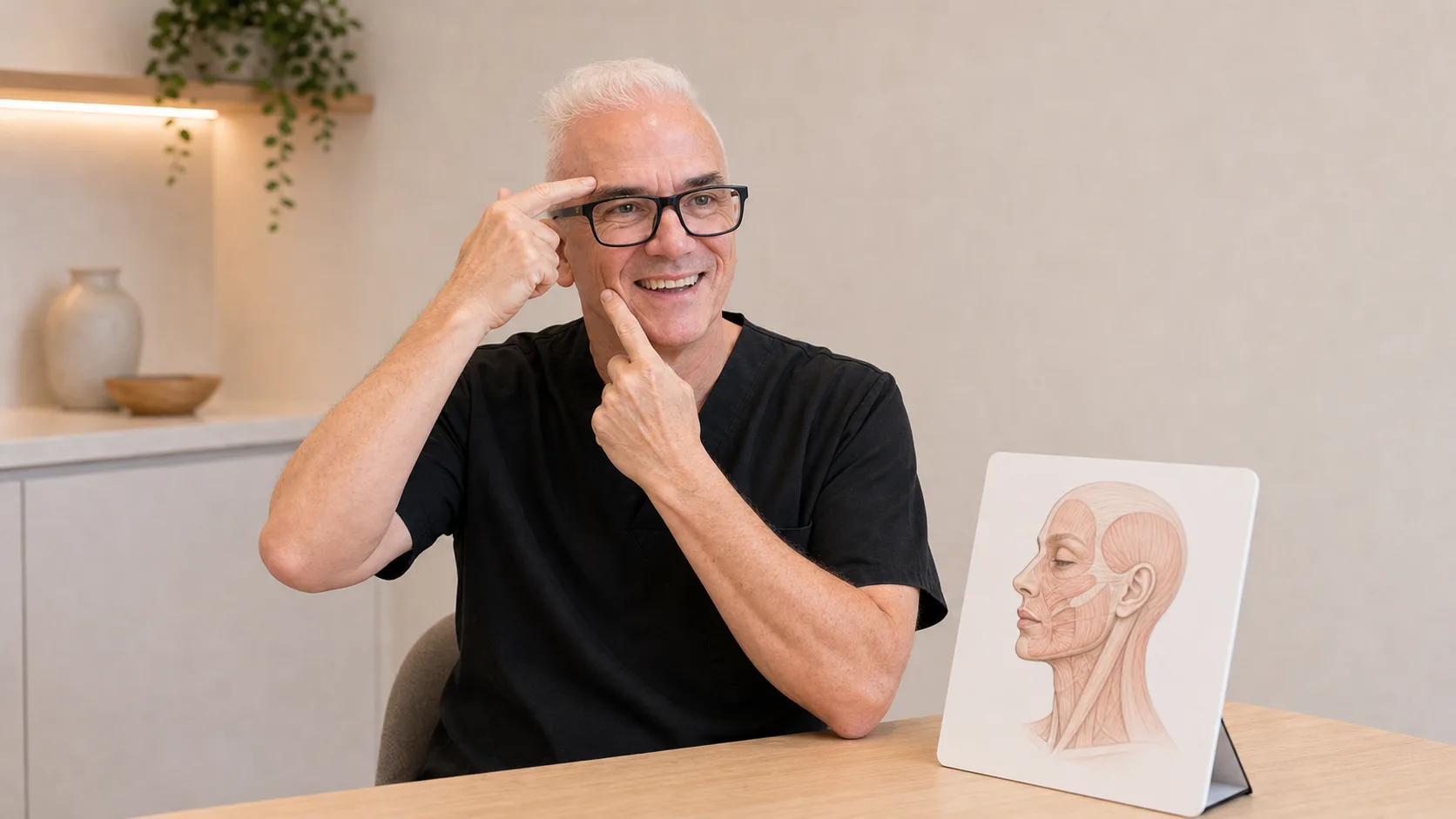
Could puffiness be making a hollow look deeper?
A fuller lower lid can create the darker line that is being mistaken for a hollow. Both features can be present, which makes the eye area harder to read at a glance.
Focusing only on the groove can miss the feature producing the shadow. If swelling is recent, pronounced or uncomfortable, health assessment comes before a cosmetic discussion.
Could colour or skin be the main issue?
Dark circles are not always a contour problem. Pigment, visible vessels and thin or crepey skin can make the area look darker even when there is little indentation.
An assessment of structure cannot be assumed to change every kind of colour or texture. Skin focused care, medical advice, dermatology input or simple monitoring may be more relevant when colour or texture is the main feature.
When should an eye change be checked urgently?
Do not use a cosmetic page to decide what a new eye symptom means. Seek urgent medical or eye care for new vision problems or unusual light sensitivity. If a swollen eye comes with severe eye pain, headache or nausea, seek medical care promptly. See a doctor as soon as possible if chemicals enter the eye. For an eye or facial injury, an urgent care clinic is appropriate.
If a swollen eye has not improved after a few days, an optometrist or doctor is the more appropriate first call. Any new or worrying change deserves health assessment rather than a cosmetic answer.
How can the cheek change what you see under the eye?
The lower eyelid meets the upper cheek. When that transition changes, an under eye shadow may look deeper or more abrupt. That is a reason to look at the surrounding face, not proof that the cheek is the answer.
If you are comparing those areas, read the tear trough or cheek assessment guide. It explains why a broader view can be useful without making a plan from a single line.
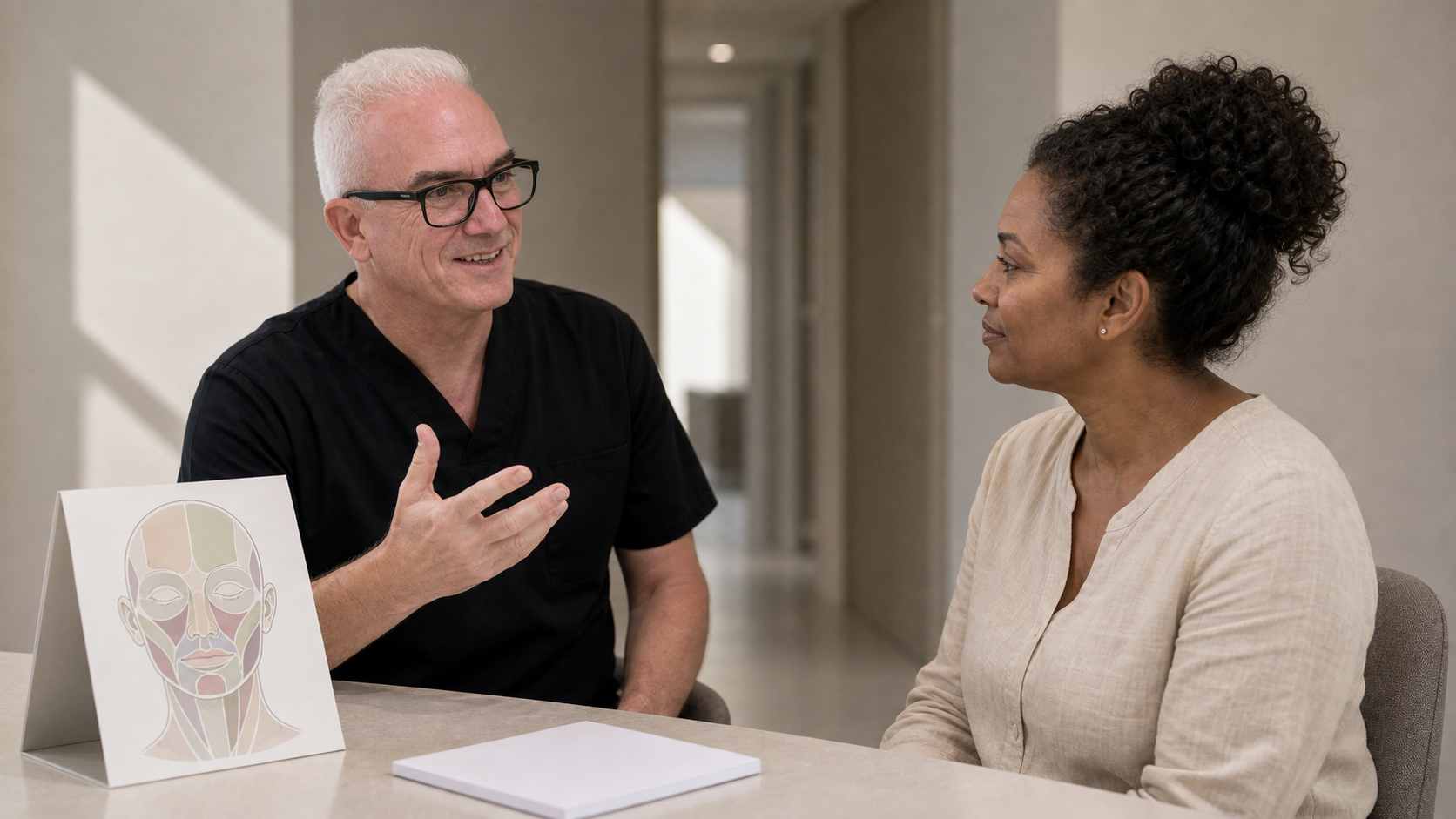
How does a cause first consultation work?
Corey Anderson RN considers the lower eyelid to cheek transition, skin, colour, puffiness, facial balance, relevant health information and any previous cosmetic care. He also asks what has changed and what has always been there.
You can talk through what you notice and what a sensible next step might be. That may be monitoring, medical or eye care, specialist input, a separate skin discussion or no cosmetic procedure. A booking is a conversation, not a promise that anything will go ahead.
For the wider decision process, read patient safety before aesthetic decisions.
Know who is assessing you
At Core Aesthetics, an under eye consultation is with Corey Anderson RN, Ahpra NMW0001047575. If you would like to check the practitioner and clinic details before booking, you can verify Corey’s registration and clinic details.
That is a sensible question, especially when an under eye concern may turn out to be an eye health issue or not a cosmetic concern at all.
Bring questions, not a preselected solution
A few honest questions make the conversation more useful:
- Is this mainly a shadow, puffiness, colour, texture or a mix?
- Could the surrounding cheek or skin be changing what I see?
- Would waiting or medical advice be more sensible?
- What limitations, alternatives and review needs matter in my case?
There is no benefit in arriving with a fixed answer. Good advice sometimes means changing direction when anatomy or health context points elsewhere.
Where should you read next?
For a stable groove, shadow or broader hollowing concern, read the under-eye and tear trough consultation guide.
For texture concerns, see crepey under eye skin. If you are weighing up the under eye and cheek together, read the tear trough or cheek assessment guide. For a broader explanation of why this part of the face often changes visibly, see why eyes age first.
Book a cause first consultation
If a tired, shadowed or hollow look is bothering you, a consultation offers a way to step back before settling on a solution. Corey can assess what you are seeing and explain whether monitoring, eye or medical care or another clinically appropriate pathway is the more sensible next step. If a cosmetic path is suitable and appropriate, it can be discussed after assessment and consent.
Is this for you?
Consider booking a consultation if
- You are an adult with a long standing tired, hollow, shadowed or dark eye area.
- You want to understand the mix of shape, puffiness, colour and skin before deciding what to do.
- You are open to a clinical conversation that may include adjusted timing, review with another health professional or no cosmetic path.
This may not be for you if
- You have new vision changes, light sensitivity, severe pain, injury, marked swelling or a chemical exposure. Seek prompt medical or eye care.
- You want a promised result from a photograph, mirror or online guide.
- You cannot provide informed consent or share relevant health information.
- You do not want to discuss limitations, risks, alternatives and the possibility of no intervention.
Suitability is confirmed at consultation. This list is general guidance, not a substitute for clinical assessment.
Frequently asked questions
Why do my eyes look tired even when I have slept well?
Sleep can change how the eye area looks for some people, but it is not the only influence. A tired look may come from a lower eyelid to cheek shadow, puffiness, colour, thin skin or a mix of features. A long standing pattern can remain even when you feel rested.
Are bags and hollow under eyes the same thing?
No. Hollowing is usually an indentation or shadow at the lower eyelid to cheek transition. Bags are a fuller or puffy lower lid. They can occur together, and a fuller lid can cast a shadow beneath it. The two concerns should not be treated as interchangeable.
Why can the area under my eyes look darker?
Darker colour may come from pigment, visible vessels, thin skin, a structural shadow or puffiness. More than one factor is common. If colour or skin texture is the main issue, a structural cosmetic conversation may not address the part that concerns you most.
Can the cheek make an under eye shadow more obvious?
It can. The lower eyelid and upper cheek meet at the same facial transition. A change in the surrounding cheek can make a shadow seem deeper or more abrupt. That does not make a cheek focused path right for everyone. It simply explains why the area is viewed in context.
When should I seek medical advice for an eye area change?
Seek urgent medical or eye care for new vision problems, light sensitivity, severe eye pain, a chemical exposure or an eye or facial injury. A swollen eye that is not improving after a few days should also be assessed by an optometrist or doctor. This page cannot diagnose an eye condition.
What does a cause first consultation involve?
Corey considers the lower eyelid to cheek transition, puffiness, colour, skin, facial balance, health information and previous cosmetic care. He also asks what has changed and what is long standing. The aim is to understand the concern before deciding whether any further discussion is useful.
What if a cosmetic procedure is not appropriate?
The conversation can still be useful. It may clarify why a particular path is unsuitable, identify a need for medical or specialist care, or support monitoring and review later. Sometimes no cosmetic procedure is the most considered recommendation when the likely value does not justify the limitations or risk.
Does booking mean that a cosmetic procedure will go ahead?
No. Booking creates time to discuss the concern, relevant health information, limitations, alternatives and consent. It does not mean a cosmetic procedure will be offered or performed. Adjusted timing, review with another health professional or no cosmetic path may be the better conclusion after a considered conversation.