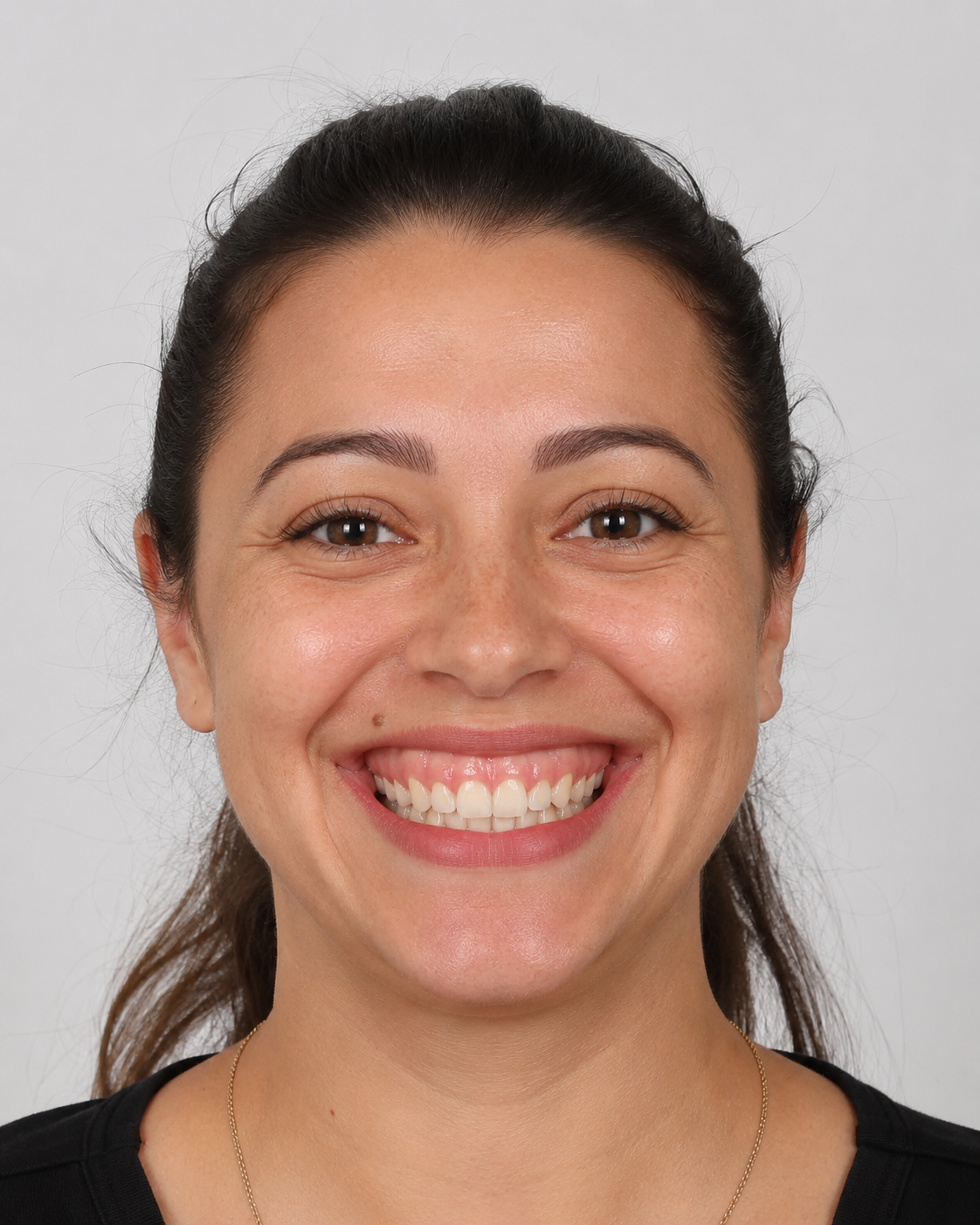
At a gummy smile consultation, Corey Anderson RN begins with what you notice and when it appears. He compares your mouth at rest, during ordinary speech, in a natural smile and in a full smile, then considers relevant health, dental history and your goals. You leave with a clearer next step, which may be reassurance, more time, dental or specialist review, or an appropriate personal option to discuss.
Start with the smile you recognise
You may notice more upper gum in a spontaneous laugh, a posed photograph, on one side or in almost every full smile. Bring the version that feels familiar to you. You do not need to arrive with a diagnosis or a treatment choice.
Corey begins by listening to what you have noticed, how long it has been present and what you would like the appointment to clarify. The purpose is to understand your smile in motion and help you find the most useful care pathway.
This page owns the focused appointment journey. For the broader question of why gum show can occur, read gummy smile explained. If you are comparing possible care pathways, use the gummy smile assessment guide.
Four ordinary moments tell a fuller story
Let your face settle
Corey notes relaxed lip closure, tooth show and whether any tension or asymmetry is present.
Speak naturally
Ordinary speech shows the upper lip and teeth without asking you to hold an unfamiliar pose.
Move from natural to full
Comparing your everyday smile with a full smile shows how lip, tooth and gum display change together.
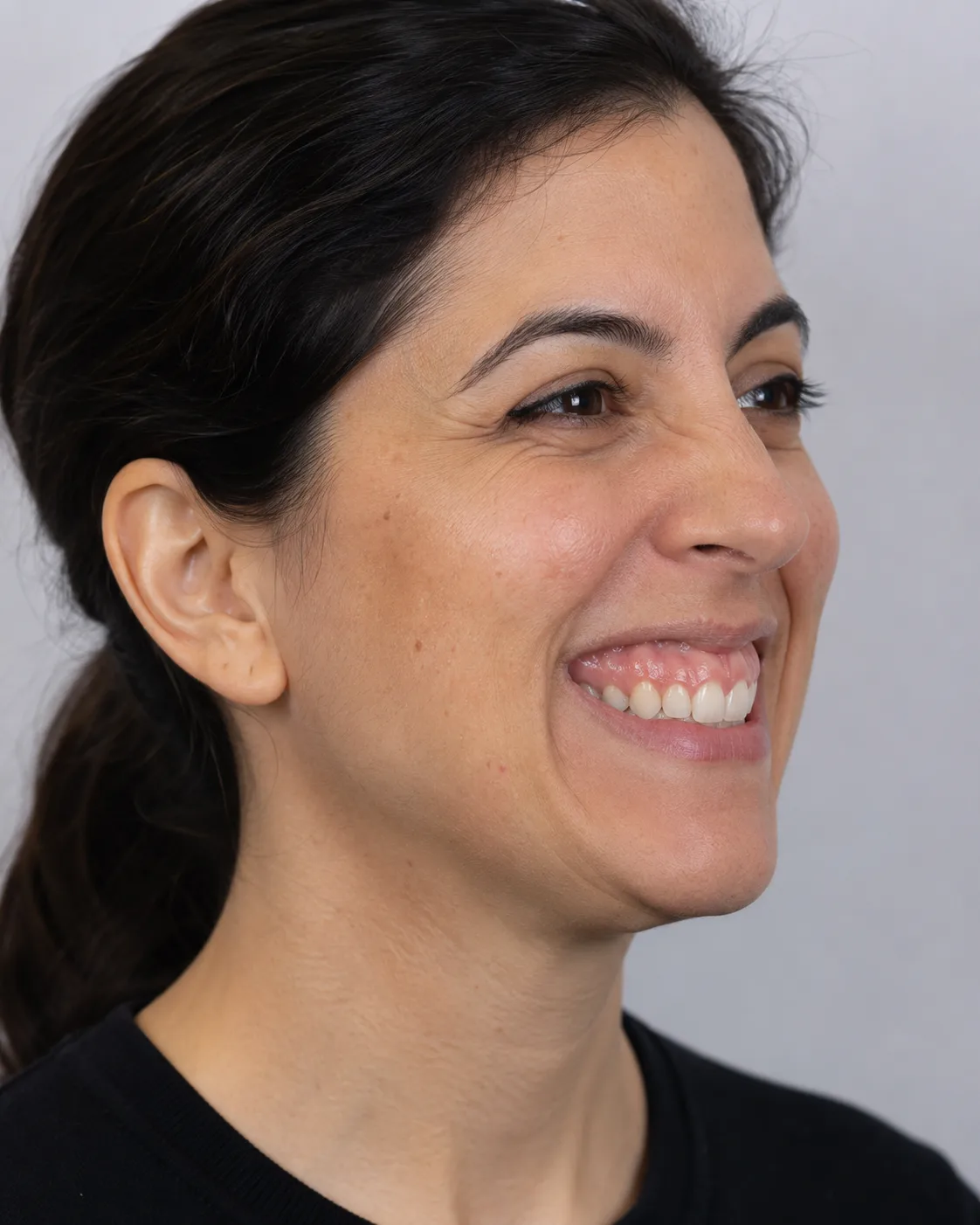
Corey looks at movement, not one frozen frame
A photograph can help you point to the expression that prompted your question, but angle, camera distance and the instruction to smile more broadly can change what appears most prominent.
Corey compares the front and side of your smile while it moves. He considers upper lip travel, tooth and gum display, symmetry and how the smile sits within the rest of your face. This observation helps define the question; it does not diagnose a dental or medical cause by itself.
If you have natural photographs or a short everyday video that shows the pattern clearly, you are welcome to bring them.
One label can have several starting points
Visible upper gum can relate to upper lip movement or length, tooth position or eruption, gum level or health, bite, jaw proportions, or more than one factor together. That is why a useful consultation starts with the pattern rather than assuming one answer.
For more detail on these contributors and the limits of online self-assessment, visit the anatomy and cause guide.
What can you leave the appointment with?
A clearer description of your smile
You may leave reassured, with a useful explanation of what Corey observed and no need to rush a decision.
A dental or specialist question
If teeth, gums, bite, jaw proportions or new symptoms appear central, referral may be the most helpful next step.
An option is appropriate to consider
Corey explains relevant limits, material risks, alternatives, costs and follow-up before you decide whether to proceed.

When dental review is the useful next step
Corey can describe the visible pattern and recognise when the central question sits outside his role. He does not diagnose gum disease, prescribe orthodontic care or assess jaw surgery.
Dental or specialist review may come first when you have bleeding, swelling or pain; a recent change in the gums; concerns about tooth position, bite or previous orthodontic movement; teeth that appear unusually short; or a marked jaw-proportion or functional concern.
That referral is not a failed appointment. It gives you a more precise question and directs it to the professional best placed to answer it. For appointment timing around dental care, read the dental work and aesthetic consultation guide.
Bring what makes the conversation personal
| Bring this | What it helps clarify | Keep it simple |
|---|---|---|
| Your observation | When you notice the gum show and whether it is longstanding or new. | A few words about the expression that catches your attention are enough. |
| Useful images | Natural photographs or a short video can show how the pattern changes. | Choose ordinary examples rather than trying to create a diagnostic pose. |
| Relevant history | Dental work, orthodontic history, previous cosmetic care, health changes and medicines provide context. | Bring records if they are readily available; you do not need to assemble a perfect file. |
A new or uncomfortable change needs the right care
Bleeding, swelling, pain or a recent unexplained change in gum appearance deserves dental or medical assessment rather than cosmetic planning. A new change in facial movement, weakness or another neurological symptom also needs prompt medical attention.
For a longstanding appearance concern without those symptoms, the consultation can stay calm and focused. It may end with explanation, referral, more time, an individual discussion or no cosmetic care.
What to expect at your visit
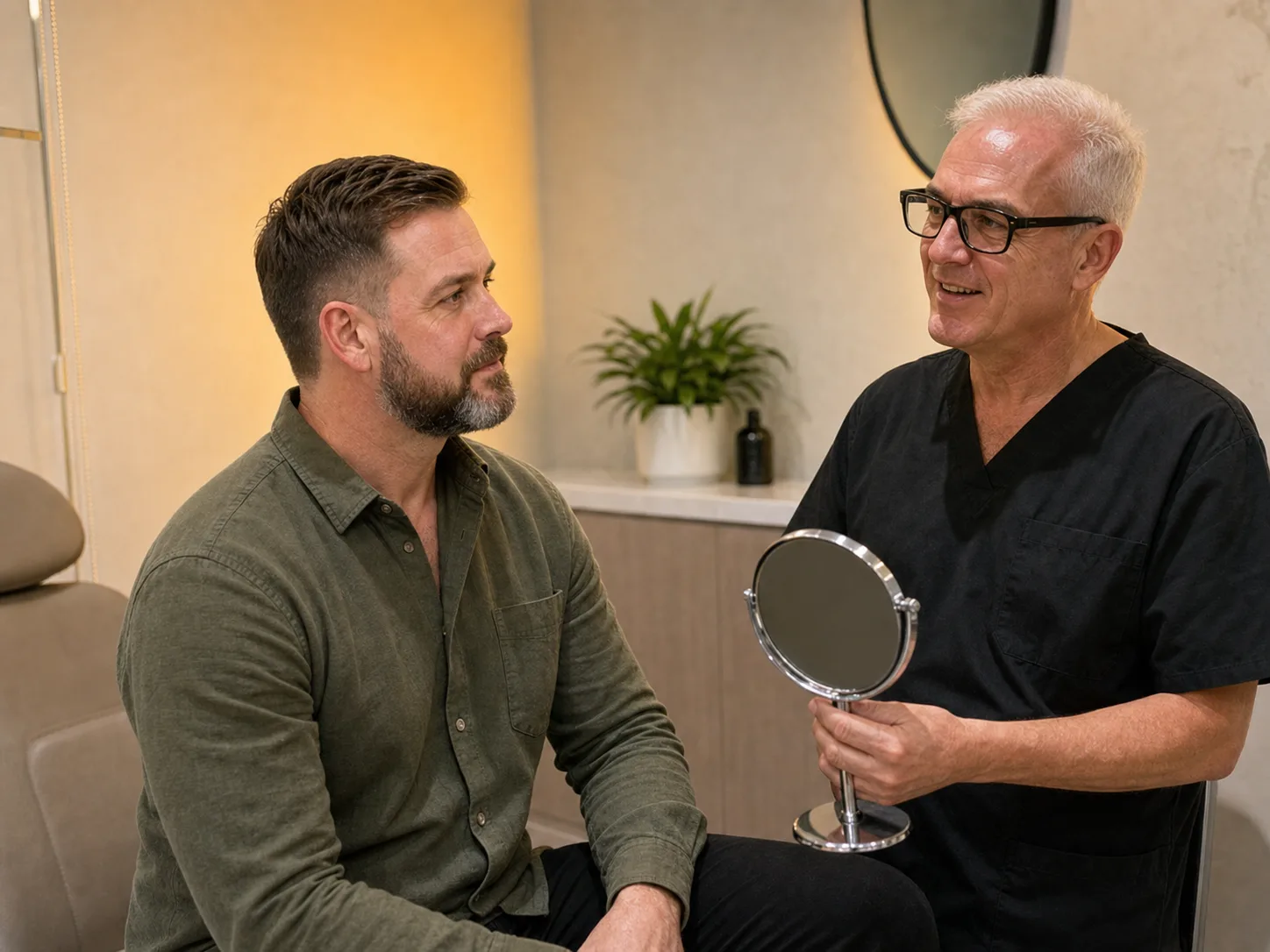
You will meet directly with Corey for a private conversation about your smile, your questions and what would feel useful to understand.
Corey compares rest, speech and smiling movement, then explains what he can assess and when another professional should lead the next conversation. If a personal option is appropriate to discuss, suitability, consent, material risks, alternatives and costs come before any decision.
Verify Corey and the clinicView the consultation and pricing guide
Come in with a question, leave with a clearer next step
Your appointment can be useful whether the answer is reassurance, referral, more time or a personal option to consider.
Is this for you?
Consider booking a consultation if
- Adults who want to understand gum show across rest, speech and smiling movement
- People who want a focused appointment without choosing a procedure first
- People open to reassurance, referral, waiting, a personal discussion or no cosmetic care
This may not be for you if
- Anyone seeking a diagnosis of gum disease, bite, tooth-position or jaw concerns from a cosmetic consultation
- Anyone with new pain, swelling, bleeding or an unexplained change that needs dental or medical assessment
- Anyone expecting a photograph or webpage to confirm suitability or an outcome
Suitability is confirmed at consultation. This list is general guidance, not a substitute for clinical assessment.
Frequently asked questions
What happens in a gummy smile consultation?
Corey asks what you have noticed and when it appears, then observes the mouth at rest, during speech, in an ordinary smile and in a full smile. Health, dental history, medicines, previous care, goals and consent are reviewed before deciding whether education, referral, waiting or an aesthetic discussion is appropriate.
Why is one smiling photograph not enough?
A photograph freezes one expression and can be altered by camera height, lens distance, head position and how strongly someone was asked to smile. Comparing several ordinary frames gives better context, but even that is an observation rather than a diagnosis.
What can contribute to visible gum when smiling?
Possible contributors include upper lip length or movement, tooth position or eruption, gum level, bite and jaw proportions. More than one factor may be present. The consultation does not assume that lip movement is the cause.
When might a dentist or dental specialist be the better next step?
Referral may be more useful when gum levels, tooth proportions, bite, tooth position, jaw relationships, dental symptoms or recent dental work appear central. Corey can explain why a question sits outside the clinic’s role without trying to provide a dental diagnosis.
Does a certain number of millimetres mean I need treatment?
No. A measurement can describe one frame, but it does not decide whether something is abnormal, whether it matters to you or whether any intervention is suitable. Function, cause, health, personal preference and the limits of each pathway all matter.
Should I bring old photographs or videos?
They can help show whether the pattern is longstanding, recent or mainly present in a particular expression. Bring natural examples rather than trying to manufacture a diagnostic pose. Images support the conversation; they do not predict suitability or an outcome.
Can the consultation end without an aesthetic treatment plan?
Yes. A useful outcome may be explanation only, more time, referral, review after dental care, or no intervention. Booking a consultation does not create an obligation to proceed.
Can medicine or procedure options be discussed on this public page?
Public advertising is not the place to promote prescription medicines or invite readers to select one. If an individual pathway is clinically relevant, its risks, alternatives, limits and costs can be discussed privately after an appropriate assessment.
How do I verify Corey Anderson before booking?
Corey Anderson is a Registered Nurse. Use Ahpra registration number NMW0001047575 on the Ahpra public register, and compare the clinic address and phone number with the Core Aesthetics verification page.
What is the role of photographs during the appointment?
Photographs can document the expressions reviewed and help compare rest with movement. They should be taken with consent, stored as a health record and interpreted in context. They are not proof of cause, suitability or a future result.