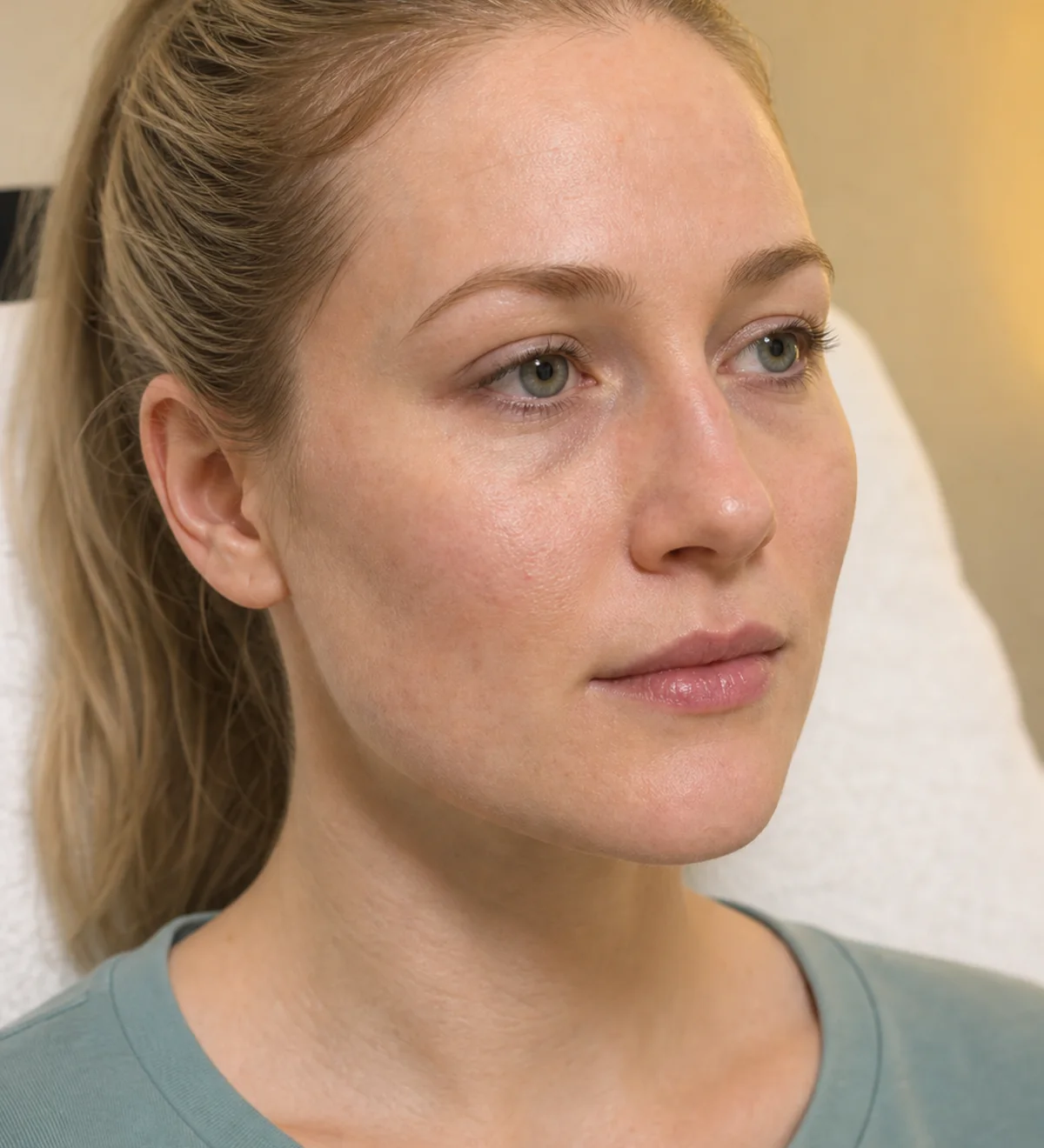
Crepey under-eye skin usually describes fine folding, crinkling or a thin-looking surface beneath the eyes. It does not identify one cause or one treatment. Notice whether the texture remains in soft light, appears mainly with blinking or smiling, changes with shadow, or sits beside puffiness or eye symptoms. Those details help you choose between a skin conversation, an under-eye assessment and appropriate medical or eye care.
Start with the detail that catches your eye
Fine folding beneath the eyes can become more noticeable in bright light, when makeup settles, during an ordinary smile or simply as the day changes. You can bring that concern to a consultation without having to name a cause or arrive with a preferred procedure.
A clinical review of infraorbital wrinkles and pigmentation describes lower-eyelid skin as distinct from skin elsewhere. A separate infraorbital assessment review groups several features together, including colour, anatomy, laxity, fat and fine lines. In practical terms, the word crepey can describe one visible layer while another feature shapes the overall impression.
Which pattern feels closest to yours?
Fine texture stays in soft light
Crinkling, dryness or flaking remains visible when the face is relaxed and the light is even.
Lines appear with a blink or smile
The surface looks smoother at rest and folds more during ordinary expression.
The darkness moves with the light
A groove or lid-to-cheek transition looks deeper from one angle and softer from another.
Fullness changes through the day
The area varies after waking, during allergy symptoms or from one day to the next.

Look in ordinary light, not a magnifying mirror
Begin with soft daylight and a relaxed face. Then notice the same area during one natural blink or smile. If you take a photograph, keep the distance and angle ordinary and turn off beauty filters, portrait blur and sharpening.
Next, move gently from front light to side light. Texture that remains in both views is a different observation from darkness that changes as a shadow moves. Neither observation proves a diagnosis, but the distinction makes a consultation more useful.
If a fixed groove or hollow is clearly the main feature, continue with the tear trough assessment guide. This page stays with fine surface texture and the features that can be mistaken for it.
One small area can tell more than one story
Fine texture, colour, shadow and puffiness can sit together. The most noticeable feature in a bathroom mirror may not be the feature that matters most in conversation.
If the broader impression is that your eyes look tired even after good sleep, the tired-looking eyes guide helps you compare hollowing, colour, fullness and skin without collapsing them into one answer.

Notice what changes through the day
If puffiness is part of the picture, compare the area after waking and later in the day on two or three ordinary days. Note whether allergies, rubbing, contact lenses, illness or a new product near the eyes appeared at the same time.
There is no need to provoke the concern or test unfamiliar products. A short record can simply say what changed, when it was most visible and whether both sides behaved similarly.
If the concern began after previous cosmetic care, use the under-eye correction guide. That sibling owns dates, records, original-clinic contact and escalation after an earlier event.
Choose the conversation that fits the pattern
Start with an individual assessment
When surface texture is the clear, gradual concern and there are no active eye or skin symptoms, Corey can assess the lower eyelid in the context of movement, colour, shadow and the upper cheek.
Ask for skin or health advice
Itch, burning, persistent flaking, redness or a reaction after a new product may belong with a GP, pharmacist, optometrist or dermatologist rather than cosmetic planning.
Choose eye or urgent care first
New vision change, severe eye pain, unusual light sensitivity, injury or sudden significant swelling needs prompt assessment through the appropriate health service.
Bring three ordinary observations
| Notice | A useful note | Why it helps |
|---|---|---|
| At rest and in movement | Does the fine texture stay visible or appear mainly with a blink or relaxed smile? | It keeps normal movement in the picture. |
| Front light and side light | Does darkness remain or change when the light moves? | It helps separate surface colour from shadow and contour. |
| Morning and evening | Is puffiness stable, variable or linked with symptoms? | It shows whether a single photograph is missing important context. |
When eye or medical care should come first
Healthdirect advises prompt medical or optometry care for new vision problems and urgent care for unusual light sensitivity. Severe eye pain with headache or nausea, chemical exposure, an object in the eye, facial injury or sudden significant swelling also needs an appropriate health pathway rather than a routine cosmetic booking.
Persistent redness, soreness, discharge, irritation or swelling that is not improving also deserves clinical review. This is the one point where symptoms should take priority over appearance.

What to expect if you visit
You will meet directly with Corey for a private conversation about what you see, when it became noticeable and what you would like to understand.
Corey considers the skin surface, ordinary movement, colour, puffiness, the lower eyelid and upper cheek, relevant health history and previous care. The next step may be education, skin advice, another health pathway, waiting or a personal cosmetic discussion. If an option is relevant, its limits, risks and costs are discussed before you decide.
Come in to make sense of the detail
If a stable under-eye texture concern is still catching your attention, Corey can help you understand what belongs to skin, movement, shadow or puffiness and what kind of next step fits.
Is this for you?
Consider booking a consultation if
- Adults with a gradual, stable fine-texture concern beneath the eyes
- People who want to distinguish surface texture from movement, shadow and variable puffiness
- People comfortable with assessment, skin advice, another care pathway, waiting or no cosmetic procedure
This may not be for you if
- Anyone with new vision change, severe eye pain, unusual light sensitivity, injury or sudden significant swelling who needs prompt health care
- People seeking a diagnosis or treatment choice from a photograph or webpage
- People whose concern began after previous cosmetic care and needs a chronology and records review
- Anyone assuming that a consultation confirms suitability or guarantees a particular appearance
Suitability is confirmed at consultation. This list is general guidance, not a substitute for clinical assessment.
Frequently asked questions
What does “crepey” under eye skin mean?
It is a visual description, usually referring to fine folding or skin that looks thin or textured beneath the eyes. It is not a diagnosis and does not identify whether surface quality, movement, shadow, swelling, irritation or several factors are responsible.
What are the four columns in the under eye record?
Record surface texture, lighting dependent shadow, variable swelling and symptoms. More than one can apply. The columns organise your observation and help choose the right clinician; they do not diagnose the cause.
How can I tell whether darkness is a shadow?
Compare soft front light with gentle side light at the same distance and angle. A marked change suggests lighting and contour contribute, but only an appropriate assessment can interpret the anatomy and decide whether any cosmetic pathway is suitable.
Why compare morning and evening?
Puffiness can vary over the day and from day to day. A consistent morning and evening record can show variability that a single photograph misses. It does not establish why swelling occurs.
Should I photograph blinking or smiling?
A neutral view plus an ordinary blink or relaxed smile can show whether fine folding relates to movement. Avoid exaggerated expressions, filters and repeated rubbing. Photographs remain observational only.
When should I see a GP or optometrist instead?
Seek appropriate health assessment for pain, tenderness, redness, swelling, discharge, persistent irritation or other eye symptoms. New vision change, severe eye pain, marked light sensitivity, trauma or sudden significant swelling can require urgent care.
Is this the same as a tear trough concern?
No. A tear trough question is mainly about a structural groove or hollow and its relationship with the junction between eyelid and cheek. Crepey skin is a surface description, although surface, shadow and structure can overlap.
How is this page different from the correction guide?
This page sorts a gradual or uncertain concern into surface, shadow, swelling and symptoms. The correction guide is for a concern that began after previous care and requires a chronology, records and an escalation plan.
Why can fine lines remain after cosmetic care?
Lower eyelid movement, anatomy, skin characteristics and lighting all affect what is visible. A responsible consultation should explain limits, alternatives, material risks and the option of no treatment.
Does booking mean care will happen on the same day?
No. Care on the consultation day is not automatic. Health history, symptoms, previous care, assessment, informed consent, clinical time and practitioner judgement all matter. Waiting, referral or no cosmetic treatment may be the outcome.
Clinical references
- Clinical Assessment, Diagnosis, and Management of Infraorbital Wrinkles and Pigmentation
- Nonsurgical Treatments for Infraorbital Rejuvenation: A Review
- Healthdirect Australia: Swollen eye
- Ahpra: Guidelines for advertising higher risk non-surgical cosmetic procedures
- TGA: Advertising health services that involve therapeutic goods