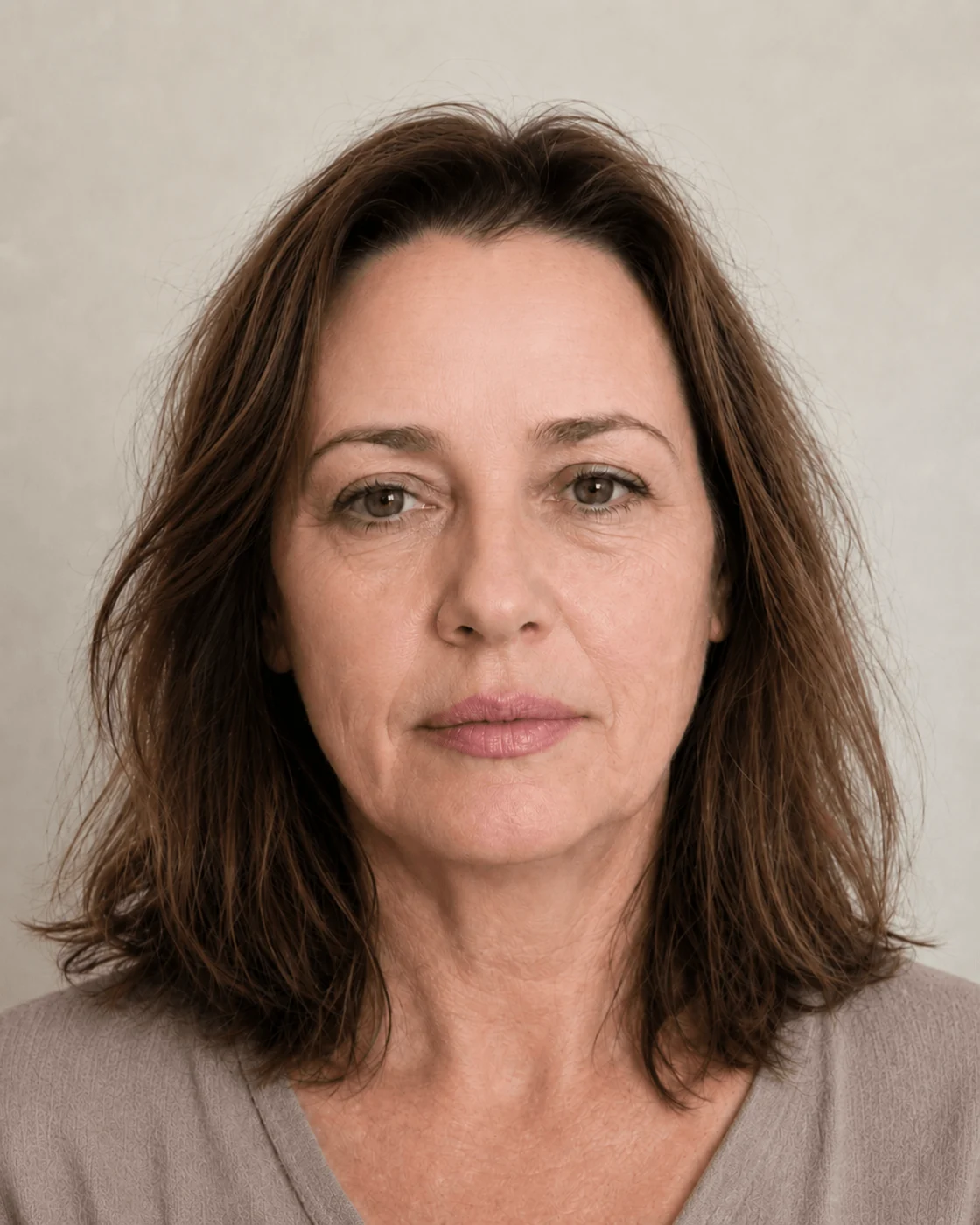
You may be a candidate for facial ageing treatment if you have visible or perceived changes in facial volume, structure, or skin quality that affect balance, definition, or appearance, and if a clinical assessment confirms that those changes are appropriate to address with cosmetic injectables. Suitability is determined more by anatomy than by age, the presence of relevant structural changes is more meaningful than the number of years a person has lived.
Why Suitability Is Not Simply About Age
One of the most persistent misunderstandings about cosmetic injectable treatment is that eligibility is primarily determined by age, that you must be a certain age to start, or that treatment is only for people above or below a certain threshold. In clinical practice, age is one contextual factor among many, but it is not the primary determinant of whether treatment is appropriate.
Suitability is determined by anatomy. The relevant questions are: have structural changes occurred in the face that are appropriate to address with cosmetic injectables? Is the degree of change proportionate to the intervention being considered? Is there a clear relationship between the visible concern and an identifiable anatomical cause that treatment can address? Are there any clinical contraindications that would make treatment unsuitable or inadvisable?
A 30-year old with significant volume loss and early structural changes may be a suitable candidate for a range of treatments. A 50-year old with minimal structural change and good facial anatomy may not be suited to, or not interested in, intervention at all. Age provides context; anatomy provides the answer.
Common Structural Indicators That May Suggest Candidacy
While suitability is ultimately determined through a clinical assessment, there are structural indicators commonly associated with appropriate candidacy for facial ageing treatment. These are not diagnostic criteria but anatomical patterns that, when identified, are worth discussing in a consultation context.
In the periorbital region, the development of under-eye hollowing, a visible valley between the lower eyelid margin and the upper cheek, is one of the most common structural indicators. This represents a volume change at the tear trough or malar region that, when appropriate to the individual anatomy, may respond well to a carefully assessed treatment approach.
In the midface, progressive flattening of the cheek and malar eminence, with increasing visibility of the nasolabial fold, reflects fat pad reduction and repositioning. This can affect overall facial balance significantly and is among the more structurally meaningful changes to address when anatomically appropriate.
In the lower face, early softening of the mandibular border, development of pre jowl hollowing, and reduction of chin projection reflect structural descent and bone remodelling. These changes affect the perceived sharpness and definition of the lower face and are common presenting concerns in mid to late stage facial ageing assessment.
Psychological Indicators. When the Face No Longer Reflects How You Feel
Beyond structural indicators, a common presenting experience among people seeking a facial assessment is the perception that their face no longer reflects how they feel internally. This is distinct from distress about appearance, it is more accurately described as a mismatch between internal and external experience that persists regardless of mood, lighting, or circumstances.
People describe this as looking tired when they feel energetic, looking older than they feel, or finding that photographs consistently produce an impression that does not match their internal self perception. These experiences are often triggered by volume led ageing patterns, particularly under-eye hollowing and midface flattening, that produce a persistent resting expression of fatigue or age that is independent of actual emotional state.
This psychological dimension does not independently determine suitability, a clinical assessment must still confirm that the structural cause is appropriate to address and that treatment is suitable for the individual. But it is a legitimate and meaningful part of the consultation conversation, and it is one of the primary reasons people seek assessment in the first place.
Who Is Unlikely to Be an Appropriate Candidate
Understanding who is unlikely to be an appropriate candidate is as important as understanding who may be. Cosmetic injectable treatment is not appropriate for everyone who presents, and a consultation based approach that includes genuine assessment of suitability will sometimes result in a practitioner advising that treatment is not indicated or not appropriate.
Individuals with very minimal or no visible structural changes are generally not well served by cosmetic injectable treatment, the risk to benefit ratio does not support intervention when no meaningful anatomical change has occurred. Treatment in the absence of indication tends not to produce perceptible improvement, because there is no deficit to address.
Individuals with unrealistic expectations about the degree of change achievable, particularly those expecting complete reversal of all visible ageing, or expecting results inconsistent with the actual anatomical situation, are not appropriate candidates until expectations can be aligned with clinical reality through careful consultation and discussion.
Individuals with relevant medical contraindications, certain autoimmune conditions, active skin infections overlying a treatment area, specific medication interactions, or other clinically relevant factors, may be unsuitable for specific treatments or for treatment at a specific time. These are identified through a thorough medical and clinical history at the consultation stage.
The Role of Clinical Contraindications
Cosmetic injectable treatments, like all medical procedures, have contraindications, circumstances in which treatment is inadvisable or unsafe. Some contraindications are absolute, meaning treatment should not proceed; others are relative, meaning treatment may proceed with modification or after the contraindication is resolved.
Common absolute contraindications include active infection at or near the treatment site, allergy to treatment components, and certain systemic conditions that affect clotting or tissue integrity. Pregnancy and breastfeeding are also contraindications to most cosmetic injectable treatments under current Australian guidelines.
Relative contraindications are evaluated individually and include some medications (particularly those affecting coagulation), certain immune system conditions, and specific anatomical characteristics that affect the safety or predictability of treatment in a particular region.
The identification of contraindications is one of the primary functions of the consultation process. This is why a standalone consultation, with adequate time to take a thorough medical history, evaluate the anatomy, and discuss the individual clinical picture, is required before any cosmetic injectable treatment is performed under AHPRA guidelines.
Suitability Is Not Binary. It Is Specific to Treatment Type and Zone
Suitability for cosmetic injectable treatment is not a simple yes or no. A person may be a suitable candidate for muscle relaxant treatment in the forehead but not appropriate for certain filler treatments in a specific anatomical region. A person may be suitable for a conservative early approach in one zone but unsuitable for more extensive treatment in another due to anatomical variation.
This zone specific and treatment specific nature of suitability is one reason why a general online assessment or self evaluation cannot substitute for a structured clinical consultation. The anatomy of each treatment region must be evaluated individually, the patient’s specific medical and clinical history must be considered, and the proposed treatment approach must be matched to both the anatomical finding and the individual circumstances.
The consultation process at Core Aesthetics is designed to produce this level of specificity, not a general determination of whether someone is ‘a candidate for cosmetic treatment’ but a precise evaluation of which treatments are appropriate for which zones in the context of the individual’s anatomy and history.
What the Consultation Process Involves
A first consultation at Core Aesthetics is a standalone appointment dedicated to assessment and discussion. It does not involve treatment. The consultation includes a review of medical history and any relevant clinical factors, a structural evaluation of the face, a discussion of which areas are changing and what anatomical layer is involved, and a conversation about whether treatment options exist and what those options would realistically involve.
This approach is consistent with the AHPRA September 2025 guidelines for registered health practitioners performing nonsurgical cosmetic procedures, which require that new patients attending for cosmetic injectables receive a standalone consultation before any treatment is performed. The mandatory cooling off period between consultation and treatment is a further safeguard, allowing adequate time for reflection and informed decision making before proceeding.
The consultation is useful regardless of the outcome. Whether it results in a treatment plan, a recommendation to monitor changes over time, or a finding that treatment is not indicated, it produces information that is valuable for understanding the individual facial anatomy.
About This Information
This page provides educational information about how suitability for facial ageing treatment is assessed. It is not a clinical determination of individual suitability and is not a substitute for a consultation with a registered health practitioner. Individual anatomy, medical history, and clinical circumstances vary considerably, and suitability can only be properly evaluated through a face to face assessment.
All information on this page complies with AHPRA guidelines for registered health practitioners performing nonsurgical cosmetic procedures and with the TGA Therapeutic Goods Advertising Code. No product or brand names are referenced. No treatment outcomes are promised or implied.
The Clinical Assessment That Determines Candidacy
Candidacy for facial ageing treatment is determined through a clinical assessment that considers anatomy, medical history, expectations, and the patient’s own goals. No checklist or self assessment tool can replace a direct examination by a qualified practitioner. The assessment considers what specific anatomical changes are present and to what degree, whether the changes are primarily structural, skin quality, or both, whether there are any medical factors that would affect treatment suitability or safety, what the realistic scope of improvement is for this individual’s anatomy, and whether the patient’s expectations are aligned with what is achievable. The outcome of a thorough assessment is a genuine recommendation about whether treatment is appropriate, appropriate now or more appropriately later, or not appropriate at this time for specific reasons. This is the standard of care that a conscientious practitioner provides, and it is what patients should expect when they attend a consultation.
Medical and Health Factors That Affect Suitability
Several medical factors can affect suitability for cosmetic injectable treatment and should be discussed at consultation. Certain medications, including blood thinners, increase the risk of bruising and should be reviewed prior to treatment. Known allergies to any components of injectable products are an absolute contraindication. Active skin infections in or near the treatment area require treatment before any injectable procedure is considered. A history of cold sores in or near the treatment zone is relevant as injectable procedures can trigger reactivation, and prophylactic antiviral treatment may be recommended. Certain autoimmune conditions may affect the response to treatment or the rate of filler metabolism. Pregnancy and breastfeeding are generally considered periods in which elective cosmetic procedures should be deferred. These are not reasons to avoid consulting a practitioner; they are information that the practitioner needs to form an accurate assessment and provide appropriate guidance.
Psychological Readiness and Expectations
Clinical suitability for treatment involves more than anatomy and medical history. A patient’s psychological readiness and the realism of their expectations are equally important determinants of a good outcome. Patients who are expecting treatment to substantially change how others perceive them, to resolve relationship difficulties, or to produce a result identical to that achieved in a photograph of a different person with a different anatomy are likely to find the experience less satisfying than those who have a more grounded set of goals. This is not a judgement about the validity of aesthetic concerns; it is an observation about the alignment between what treatment can realistically deliver and what a patient is expecting to receive. A practitioner who discusses expectations honestly, who explains the realistic scope of improvement for a given anatomy, and who is willing to defer treatment where expectations are not well aligned is acting in the patient’s interest.
When Waiting Is the Right Clinical Recommendation
Not every patient who presents for a consultation about facial ageing treatment is at the right point to proceed. Some patients present very early, with concerns that represent minor and expected variation rather than the kind of change that warrants intervention. Some present at a point where lifestyle modification, improved skincare, or simply more time for earlier treatment to settle would be more appropriate than additional intervention. Some present with concerns that are better addressed by a different approach than the one they anticipated, and the most appropriate recommendation is to redirect them to a more suitable option. A practitioner who is willing to recommend waiting, or to recommend against a treatment that a patient had their heart set on, is demonstrating the clinical judgement that good practice requires. Patients who receive this kind of honest guidance may initially be disappointed but are typically better served by it.
What Good Candidacy Actually Looks Like
A patient who is a good candidate for facial ageing treatment is one whose anatomy shows specific changes that are addressable with the available tools, whose expectations are realistic and aligned with what those tools can achieve, who does not have medical contraindications that would increase risk or affect outcomes, who has had a thorough consultation and understands what is proposed and why, and who has had time to consider the decision before proceeding. Good candidacy is not about having a certain severity of change, a certain age, or a certain budget. It is about the alignment between the anatomical reality, the available treatment, and the patient’s informed understanding of what to expect. A patient who meets this description and chooses to proceed is in a well grounded position. A patient who meets this description and chooses not to proceed is equally well grounded. The purpose of the assessment is to provide the information required for a genuinely informed decision.
Questions to Ask Yourself Before Booking Treatment
Before committing to any treatment for facial ageing, a set of personal questions is worth considering honestly. Do I have a clear understanding of what is being proposed and why? Have I been given an honest account of what the realistic improvement looks like for my specific anatomy, including any limits? Am I making this decision from a position of genuine informed consent rather than social pressure, a short term emotional state, or a response to a time limited offer? Does the proposed approach address what I am actually bothered about, or is it a generic protocol? Am I comfortable with the practitioner who will be performing the treatment, and do I feel that they have taken the time to assess my individual anatomy? Is this the right time in my life for this commitment, practically and personally? These questions are not designed to discourage treatment; they are designed to support the kind of considered decision that is most likely to result in a satisfying experience.
Is this for you?
This may not be for you if
- Those seeking a definitive suitability determination without a clinical assessment
- Individuals with active contraindications who have not yet sought medical advice
Suitability is confirmed at consultation. This list is general guidance, not a substitute for clinical assessment.
Frequently asked questions
Am I too young for cosmetic injectables?
Age alone does not determine suitability. Younger adults with structural changes, under-eye hollowing, early midface volume loss, or established expression lines, may be appropriate candidates. Younger adults without meaningful structural changes are generally not well served by intervention. Anatomy, not age, determines suitability.
Am I too old for cosmetic injectables?
There is no upper age limit for cosmetic injectable treatment as a general rule. Suitability in older patients is evaluated on the same anatomical basis as in younger patients, with consideration of any additional clinical factors relevant to age. Many patients in their fifties, sixties, and beyond are appropriate candidates for well considered treatment.
Do I need to have a certain amount of change before being considered a candidate?
No minimum threshold of change is required. What matters is whether the changes present are appropriate to address with treatment and whether treatment would produce a proportionate and meaningful improvement. This is evaluated through a consultation rather than by measuring degree of change against a fixed standard.
What makes someone NOT a candidate for cosmetic injectables?
Clinical contraindications including active infection, relevant allergies, certain medical conditions, and pregnancy are among the factors that may make treatment unsuitable. Unrealistic treatment expectations and the absence of meaningful structural change are also factors that would lead a practitioner to advise against treatment.
Can I be assessed for suitability without committing to treatment?
Yes. A consultation is an assessment appointment, not a commitment to treatment. Many people attend consultations to understand their anatomy and options without any immediate intention to proceed. The information produced by an assessment is useful independently of whether treatment follows.
Does AHPRA affect whether I can have treatment?
AHPRA guidelines affect how treatment is delivered rather than directly determining individual suitability. The requirement for a mandatory standalone consultation, the cooling off period, and the requirement for treatment to be performed by or under the supervision of a registered medical practitioner are all governed by AHPRA guidelines.
What is the mandatory consultation period for cosmetic injectables in Australia?
Under AHPRA September 2025 guidelines, new patients must have a standalone consultation before any cosmetic injectable treatment is performed, with a mandatory cooling off period between consultation and treatment. This applies to both anti-wrinkle injections and dermal fillers.