For a lip asymmetry concern, first establish whether the difference is long standing or new. Compare the mouth with the head level at rest, during ordinary speech, in a natural smile and across consistent photographs. Record swelling, pain, dental changes, injury and previous cosmetic or medical care. Sudden mouth droop, facial weakness, arm weakness or speech difficulty can be a stroke sign: call 000 immediately, even if the symptoms improve. A cosmetic consultation is only appropriate after urgent and diagnostic questions have been excluded.
Why Is “When Did It Begin?” The First Question?
A difference visible in childhood or years of ordinary photographs has a different context from a mouth corner that changed this morning. Write down the earliest reliable evidence and whether the appearance has been stable, intermittent or progressive.
Do not use a cosmetic appointment to investigate sudden weakness, numbness, speech difficulty or a rapidly changing face.
Which Signs Need Triple Zero Rather Than A Consultation?
Stroke Foundation Australia uses the F.A.S.T. check: face drooping, arm weakness, speech difficulty and time to call 000. If any of these signs occur, call 000 straight away. The advice applies even if the sign lasts only a few minutes.
Healthdirect also advises calling 000 for facial paralysis. Bell’s palsy can cause sudden one sided facial weakness, but it is diagnosed after other causes are excluded. A clinic page cannot make that distinction.
What Is The Four View Observation Record?
| View | How to record it | What the view can clarify |
|---|---|---|
| Rest | Head level, lips relaxed, teeth not clenched | Whether the difference is present without expression |
| Speech | Short front video while speaking normally | Whether one side changes during ordinary mouth movement |
| Smile | Small natural smile, then a broader smile | Whether the difference appears or increases with expression |
| Camera | Repeat at the same distance, height and lighting | Whether angle, mirroring or perspective is driving the impression |
How Should A Rest Photograph Be Taken?
Place the camera close to eye height and far enough away to avoid an exaggerated close perspective. Keep the head upright rather than aligning the mouth to the frame. Relax the jaw and lips instead of pressing them together.
Take one front image and one from each side. A photograph is a record of that setup, not an objective measurement of the face.

Why Record Speech As Well As A Smile?
A posed smile can recruit more muscle effort than everyday conversation. A short video saying an ordinary sentence may show whether the mouth corners, upper lip or lower lip move differently during speech.
The video is useful history for a clinician. It should not be used online to diagnose a nerve, muscle or dental problem.
What Should You Notice In A Natural Smile?
Notice which part changes: a mouth corner, the upper lip border, tooth show, the lower lip, the chin or the whole side of the face. Record whether the difference appears with a small smile, only with a broad smile or throughout the movement.
A movement difference does not by itself identify its cause or make cosmetic care appropriate.
How Can Camera Setup Manufacture A Difference?
Head turn, camera height, close distance, uneven lighting and mirrored front camera previews can change which side looks wider, higher or more projected. Screenshots taken mid speech can also freeze an expression no one holds in person.
Repeat the image under a consistent setup before treating one photograph as evidence of a fixed anatomical problem.
Which Landmarks Help Without Chasing Exact Symmetry?
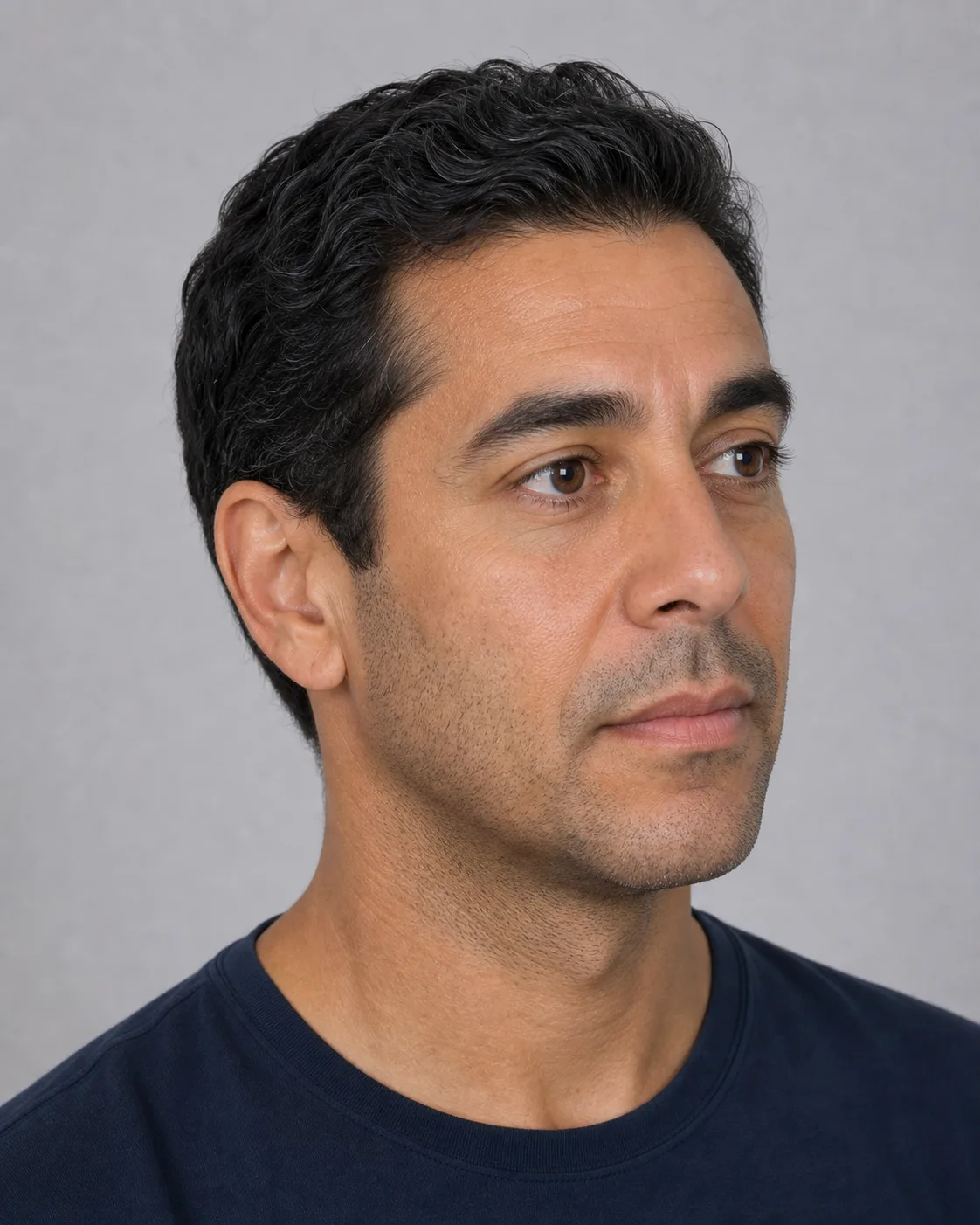
A clinician may observe the centre of the philtrum, the peaks of the upper lip, the mouth corners, visible upper and lower lip, tooth show and the relation of the lips to the chin and nose. These landmarks help describe where the difference sits.
They are not a template that every face should match. Small side to side differences are part of ordinary facial variation.
What Can Contribute To A Long Standing Difference?
Baseline facial anatomy, tooth and jaw support, bite, scarring, previous injury, facial movement and ordinary variation can all influence how the mouth reads. Facial hair can obscure part of the border or make one edge appear sharper after trimming.
The relevant history is individual. Being a man does not determine the cause, desired appearance or appropriate care.
When Does Dental Context Deserve Its Own Assessment?
Recent dental work, a changed bite, missing or restored teeth, jaw symptoms, denture changes or a difference in tooth show may justify dental assessment. Cosmetic observation of the lips cannot diagnose an occlusion, tooth or jaw condition.
Bring the timing of dental changes and the dentist’s details if the lip concern began around that care.
What If Swelling, Pain Or A Skin Change Is Present?
New swelling, pain, heat, redness, a wound, blistering, discharge, fever or difficulty eating may need prompt medical or dental assessment. Severe swelling, breathing difficulty or another emergency requires urgent help.
Do not keep manipulating the area or add an elective cosmetic procedure while the cause remains unclear.
How Should Previous Cosmetic Care Be Mapped?
Record the date, area, practitioner, product or medicine if known, amount if documented, which side was treated, early swelling, how the area changed and any review or correction. Bring photographs from before that care and request the clinical record where possible.
Memory such as “one side had more” is less useful than dates, diagrams and product records.
Why Can Early Swelling Give A False Baseline?
Swelling after a procedure, injury, dental care or illness can be uneven and can change over time. An early photograph may show a temporary state rather than the settled pattern.
Assessment timing depends on what occurred and whether symptoms are stable. Corey may recommend waiting or contacting the original practitioner rather than adding more intervention.
What Can Corey Anderson RN Assess?
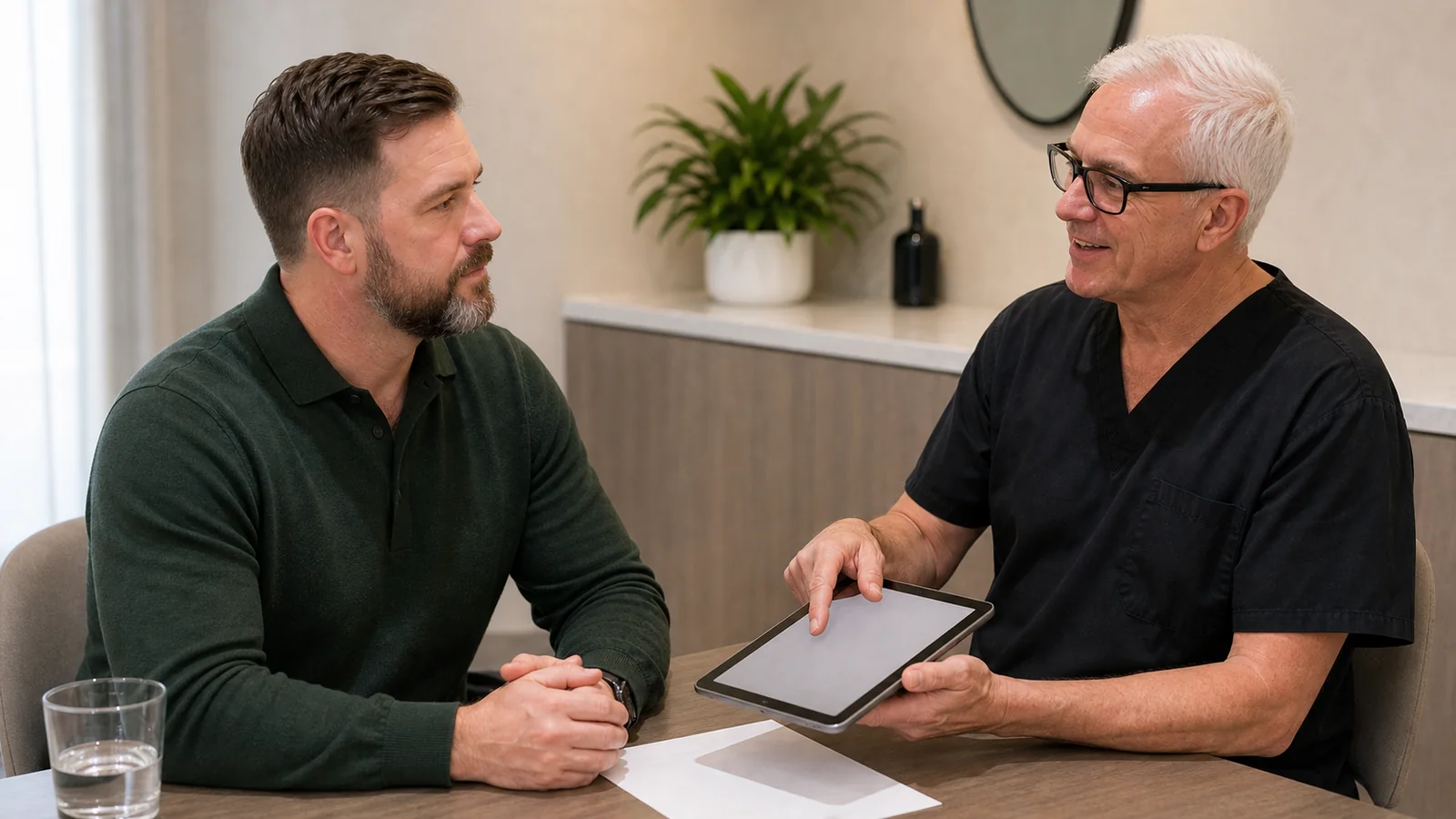
Corey can take a medical and cosmetic history, review photographs and records, observe the lips at rest and during expression, discuss expectations and identify whether the concern appears to fit cosmetic nursing scope. He can also recommend waiting or another clinician.
He does not diagnose stroke, Bell’s palsy, dental disease, nerve injury or other causes of facial weakness.
What Should The Consultation Avoid Assuming?
The consultation should not assume that a visible difference is a defect, that both sides can or should look identical, or that a procedure is the next step. It should ask what the person has noticed, how long it has been present and whether function or health has changed.
A request for subtlety also needs definition. For one person it means preserving the existing lip character; for another it means leaving a small difference untouched.
When Is Cosmetic Change A Poor Fit?
Cosmetic care may be a poor fit when the change is sudden or unexplained, the concern needs medical or dental diagnosis, swelling has not settled, previous records are missing, the difference appears only in one distorted photograph, or the requested precision is not realistic.
It may also be unsuitable when the expected tradeoff, risks or maintenance do not match the importance of the concern.
Which Risks Must Be Discussed If An Option Is Considered?
Risks depend on the option and the individual assessment. They may include pain, bruising, swelling, infection, asymmetry, an unwanted appearance, altered movement, lumps, tissue injury, vascular complications, delayed problems and further care.
Ahpra guidance requires risks specific to the person, alternatives, recovery, total costs and possible further treatment to be explained before informed consent. A general page cannot replace that discussion.
Can Aiming For Exact Symmetry Make The Decision Worse?
Yes. Faces move, camera conditions change and existing anatomy is not mathematically mirrored. Trying to remove every small difference can create new tradeoffs or shift attention to another landmark.
A more useful goal is specific and observable, such as understanding a mouth corner that changes only in a broad smile, while accepting that exact bilateral matching is not a realistic endpoint.
What Belongs In The Lip Difference Evidence Pack?
- the earliest photograph that shows the pattern
- front and side rest photographs under consistent conditions
- a short speech and natural smile video
- dates and records for cosmetic, medical, dental or injury history
- medicines, allergies and relevant health conditions
- the exact change you notice and what you would prefer not to alter
Do not delay urgent care to assemble this material.
How Can You Verify Corey Before Sharing Records?
Corey Anderson is a Registered Nurse with Ahpra number NMW0001047575. Compare the clinic verification page with the independent Ahpra public register.
Registration confirms identity and professional status. It does not establish a diagnosis or confirm that any cosmetic option is appropriate.
Men’s Lip Asymmetry, Movement And Referral Questions
Is some lip asymmetry normal in men?
Yes. Small side to side differences are common in human faces. The useful questions are whether the pattern is long standing or new, present at rest or only with movement, and associated with pain, swelling, weakness, dental change or previous care.
What if one side of my mouth suddenly droops?
Call 000 immediately. Stroke Foundation advises using the F.A.S.T. check for face drooping, arm weakness and speech difficulty. Healthdirect also advises emergency assessment for facial paralysis. Do not wait for a cosmetic consultation, even if the sign improves.
Why compare my lips at rest and when speaking?
A rest view shows the pattern without deliberate expression. Ordinary speech recruits changing mouth movements and may reveal a difference that is absent at rest. These observations help describe the concern but do not diagnose its cause.
Can a phone camera make lip asymmetry look worse?
Camera height, close distance, head turn, uneven light, mirroring and a frame captured mid expression can alter the impression. Repeat photographs at the same distance and height with the head level before treating one image as a stable baseline.
Could my teeth or bite affect how my lips look?
They can influence lip support, tooth show and mouth posture. Recent dental work, bite change, jaw symptoms or restored or missing teeth may justify dental assessment. A cosmetic consultation cannot diagnose a dental or jaw condition.
What records matter after previous cosmetic care?
Bring dates, treated areas, practitioner details, product or medicine information if known, documented amounts, early and settled photographs, review notes and any correction history. Records are more reliable than estimating from memory which side received more.
Should swelling settle before asymmetry is assessed?
Often the settled pattern is more informative, but timing depends on the cause and symptoms. New pain, heat, redness, wounds, fever or worsening swelling may need prompt medical or dental assessment rather than passive waiting.
Can a consultation aim for exact symmetry?
Exact bilateral matching is not a realistic endpoint because faces move and are not mathematically mirrored. Consultation should define the exact concern, likely tradeoffs and what should remain unchanged rather than treating every small difference as a defect.
Can the recommendation be timing or another clinically appropriate pathway?
Yes. Waiting may be appropriate while swelling settles or records are obtained. Referral may be needed for medical or dental questions, and no cosmetic procedure may be the sound decision when the difference is slight or the tradeoffs do not fit.
How can I verify Corey Anderson RN?
Corey Anderson is a Registered Nurse with Ahpra number NMW0001047575. Compare the Core Aesthetics verification page with the independent Ahpra public register. Registration confirms professional status but does not determine the cause of asymmetry or suitability for care.
Is this for you?
Consider booking a consultation if
- Adult men with a long standing or non urgent lip difference they want described accurately
- People willing to compare rest, speech, smile and consistent photographs
- People able to provide dental, injury and previous cosmetic care history
- Readers open to adjusted timing, review with another health professional or no cosmetic procedure
This may not be for you if
- Anyone with sudden facial weakness, mouth droop, arm weakness or speech difficulty
- People with a painful, rapidly changing or medically unexplained facial symptom
- Anyone seeking diagnosis of a dental, neurological or other medical condition
- People expecting exact bilateral symmetry or a predetermined procedure
Suitability is confirmed at consultation. This list is general guidance, not a substitute for clinical assessment.
Clinical references
- Stroke Foundation Australia: Signs of stroke and the F.A.S.T. test
- Healthdirect Australia: Bell’s palsy
- Ahpra: Guidelines for registered health practitioners who perform non-surgical cosmetic procedures
- Ahpra: Advertising higher risk non-surgical cosmetic procedures
- Ahpra: Public register of practitioners
- TGA: Advertising health services that involve therapeutic goods