A thin upper lip in men is assessed by reviewing upper-to-lower lip proportion, smile movement, lower-face balance, previous treatment and whether the concern is structural, movement-related or part of normal variation. Corey Anderson RN may recommend a suitable plan, a timing adjustment or another helpful pathway after assessment. If assessment and consent support proceeding, suitable care on the day can be discussed. Adjusted timing, more information, dental input or another clinical review may be useful when the concern involves function, movement or surrounding facial balance.
What Does A Thin Upper Lip Concern Usually Mean?
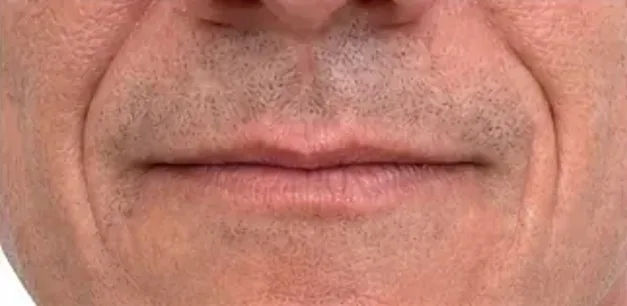
This page is for men who feel the upper lip looks too slight, disappears in smile, or feels out of balance with the lower lip or chin. Sometimes that concern is about the upper lip itself. Sometimes it is about overall lip proportion, profile balance or movement.
Consultation helps sort out which of those explanations is actually in play.
Why Is The Upper Lip Assessed With The Lower Lip And Smile?
The upper lip cannot be read in isolation.
| What is reviewed | Why it matters | What the assessment clarifies |
|---|---|---|
| Upper and lower lip relationship | The concern may be proportion rather than upper-lip size alone. | Whether the upper lip is truly the main issue. |
| Smile movement | Some lips appear thinner only in certain expressions. | Whether movement changes the planning conversation. |
| Chin and lower-face balance | The lower face can change how the upper lip is perceived. | Whether the concern belongs in broader facial assessment. |

What Can Make The Upper Lip Look Thinner?
Natural anatomy, ageing change, dryness, previous treatment, dental support and the way the lip moves can all influence the upper-lip appearance. That is why Corey does not treat a thin upper lip as one standard cosmetic problem with one standard answer.
Can The Goal Stay Conservative?
Yes, if conservative planning fits the anatomy and expectations. Some men want the conversation kept very restrained, especially when they are worried about visibility. Corey can discuss whether that concern is realistic, but no invisible result can be promised.
What If The Concern May Be Dental Or Functional?
If the concern relates to bite, trauma, scarring, dental support or another functional issue, a cosmetic pathway may not be the best first step. In those situations, another clinician may need to be involved before cosmetic planning is discussed further.
When Could The Best Answer Be a staged lip plan?
a staged lip plan may be the safer answer when the upper lip sits within normal anatomy, when the hoped-for change would not remain natural looking, when movement is the real issue, or when consent, timing or expectations are not stable enough for good planning.
What Corey Anderson RN Reviews Before Any Plan
Consultation reviews upper-to-lower lip proportion, smile movement, profile, prior treatment, medical history, timing, lower-face balance and what the patient wants to preserve. The outcome may be treatment discussion, review, timing or another clinically appropriate pathway.
Your consultation should provide clarity about suitable options, relevant risks and what happens next.
How Can You Verify The Clinic?
Core Aesthetics is located at 12A Atherton Road, Oakleigh VIC 3166. The clinic phone number is 0491 706 705. Consultations are led by Corey Anderson RN, Ahpra registration NMW0001047575.
If a thin upper lip is the concern, it is reasonable to verify the practitioner and clinic details before deciding whether to book. This page was reviewed on 2026-09-01.

Thin Upper Lip Questions For Men
Why can the upper lip look thin in men?
Natural anatomy, ageing change, smile pattern, dental support, previous treatment and overall lower-face balance can all influence how the upper lip reads.
Is a thin upper lip the same as a thin-lips concern?
Not always. Some men are mainly concerned about the upper lip specifically, while others are really describing overall lip proportion or lower-face balance.
Does the way the lip moves when I smile matter?
Yes. Smile movement can change how much of the upper lip is seen, so static photos alone may not tell the whole story.
What if the concern may be dental or functional?
If the issue relates to bite, dental support, trauma or another functional concern, another clinician may need to be involved before cosmetic planning continues.
Can I ask for a conservative plan?
Yes. Conservative planning can be discussed when suitable, but it does not mean visibility or outcome will be the same for every person.
What will a lip consultation clarify?
Some patients may be suitable for discussion of suitable options after assessment and consent, but this is never automatic.
Can the safest advice be to do nothing?
Yes. If the upper lip concern reflects normal anatomy, unrealistic expectations or another issue outside cosmetic scope, a staged lip plan may be the safer recommendation.
Is this for you?
Consider booking a consultation if
- Adult men who want an upper-lip concern assessed in whole-face context
- Patients who want to understand movement, balance and visibility before discussing treatment
- People who are open to timing or another clinically appropriate pathway if that is safer
This may not be for you if
- People expecting a fixed visible increase
- People seeking treatment without assessment and consent review
- People who are not adult patients
- People with a concern that may need dental, trauma or another clinical pathway first
Suitability is confirmed at consultation. This list is general guidance, not a substitute for clinical assessment.
Clinical references
- Ahpra guidelines for registered health practitioners who perform non-surgical cosmetic procedures
- Ahpra guidelines for advertising higher risk non-surgical cosmetic procedures
- Ahpra public register of practitioners
- TGA advertising health services and cosmetic injections FAQ
- TGA advertising health services that involve therapeutic goods