If you have put off asking about an appearance concern, start with an enquiry, not a treatment choice: 'I would like to discuss a concern, but I do not know whether anything needs doing. Can I book a consultation for advice only?'
You do not need the name of a procedure to ask that question.
For some men, the difficult part is explaining why they want to ask at all. Privacy, an unfamiliar setting or uncertainty about cost may be the barrier. These are possibilities, not a diagnosis of why men delay and not evidence that every longstanding concern needs treatment.
Direct Answer
You can ask about an appearance concern without deciding to change it. When arranging a first cosmetic consultation, say what you want to discuss, ask about the fee and explain if you want information only. Bring a short account of the concern and your health history. If appearance worries are disrupting everyday life, start with a GP or mental health professional instead.
Table of Contents
- What do I say when I make the first enquiry?
- How do I explain the concern without choosing a procedure?
- What can I ask about privacy and photographs?
- When is a GP a more useful first appointment?
- How do I leave with an answer I can use?
What do I say when I make the first enquiry?
Keep the booking message short. Describe the general subject, ask how long the appointment takes and whether there is a fee. You can save sensitive detail for the consultation and ask how the clinic prefers to receive any relevant records. If you are nervous, say which part concerns you: being examined, being photographed, the cost or feeling expected to proceed.
At Core Aesthetics, the initial consultation is free and usually takes 30 minutes. Appointments are preferred, not mandatory; check live availability before travelling. Call 0491 706 705 if you want to clarify the visit first. Consultations are with Corey Anderson, Registered Nurse, Ahpra NMW0001047575. The clinic is at 12A Atherton Road, Oakleigh VIC 3166, inside BeautyTHEQUE, with direct entry and one step at the entrance. Mention an access requirement before your visit.
How do I explain the concern without choosing a procedure?
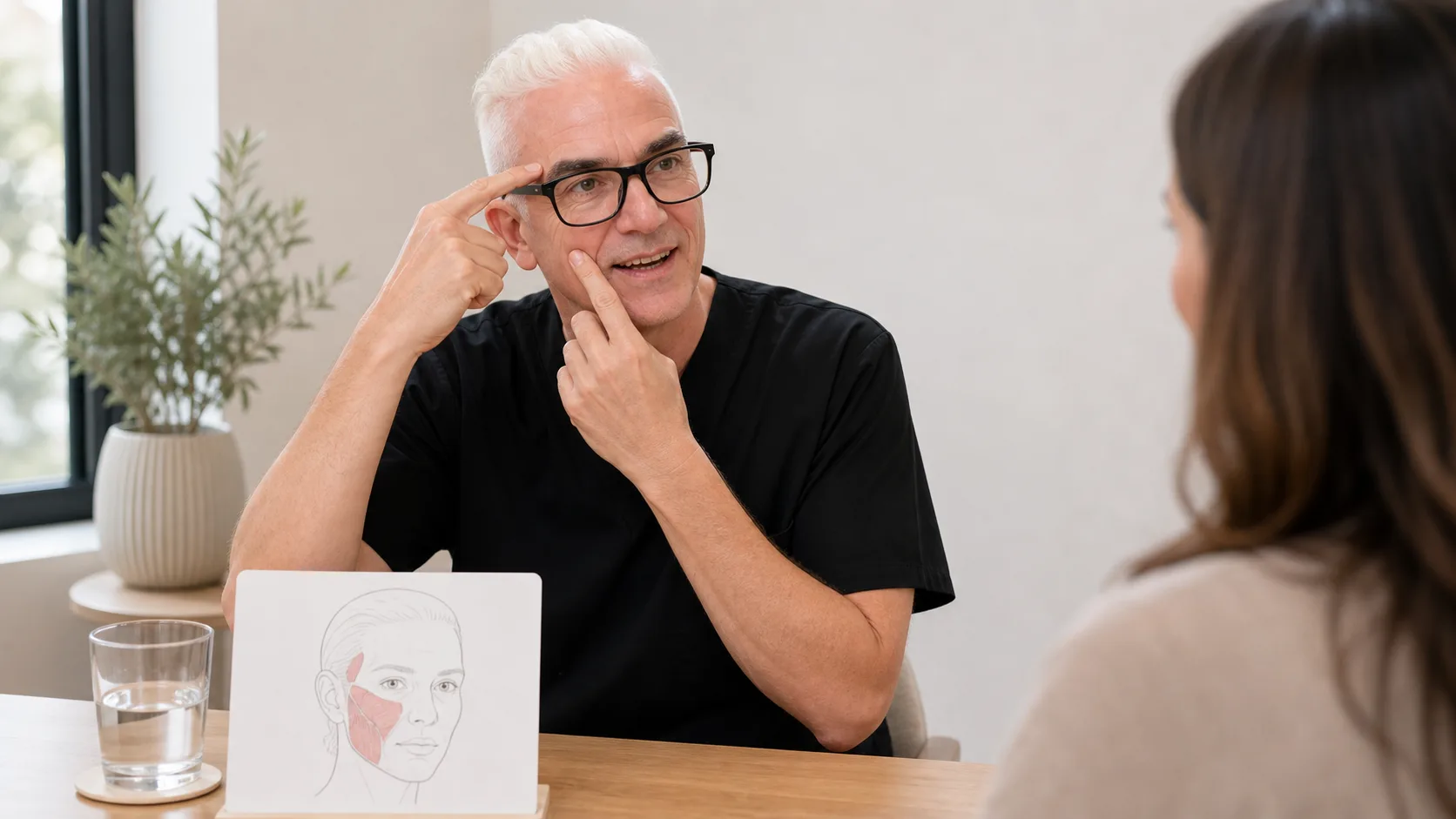
Write three things in your own words: what you notice, when you first noticed it and the question you want answered. For example: 'I notice a difference between the two sides of my face when I smile. Has it changed, and is there a reason to have it assessed?' This is a question you could use, not a patient story or a suggestion that asymmetry needs correction.
Bring an accurate list of medicines, supplements, allergies and relevant health conditions, plus any records of previous treatment. If you cannot remember a detail, say so rather than guessing. Include what you would not want to change. Ahpra's practitioner guidelines require an assessment of health, motivation and expectations, with alternatives including no procedure. Being prepared helps that discussion; it does not establish suitability in advance.
What can I ask about privacy and photographs?
If privacy is the reason you have not called, ask concrete questions: 'How will you contact me? Who can access my records? If photographs are proposed, what are they for?' Check the contact details you provide, especially if other people can see your messages. Ask the clinic to explain what contact preferences it can accommodate; do not assume an anonymous or record-free appointment.
Ahpra's practitioner guidelines distinguish clinical images from advertising use. The practitioner must explain the purpose, storage and access arrangements for proposed images and obtain consent. Advertising consent must be separate, and you can refuse it. You can ask to read the image-consent information before deciding. A promise that an image will never be seen by anyone is not a substitute for understanding how clinical records are used.
When is a GP a more useful first appointment?
Worrying about a feature is not, by itself, body dysmorphic disorder. Healthdirect describes more concerning patterns such as repeated checking or comparison, substantial distress and avoiding people or activities because of appearance. If these are happening, tell a GP how much time the worry takes and what it stops you doing. That makes the impact easier to assess than simply saying you dislike a feature.
A new physical symptom or an unexplained change also belongs in medical care, rather than being assumed cosmetic. Tell the GP when it started and whether it is changing. For appearance-related distress, you could begin: 'I am spending a lot of time checking this and have started avoiding things.' You do not need to arrive with a mental health diagnosis. A cosmetic consultation is not treatment for that distress.
How do I leave with an answer I can use?
Before leaving, explain back what you understood and ask about any gap: 'Have I understood correctly that you recommend waiting?' or 'What would make you advise against this option?' Ask for information you can reread, rather than relying on remembering a discussion while nervous. You can leave without booking a procedure.
If a procedure is proposed, ask for the likely limitations, your individual risks, recovery requirements and full costs in writing before deciding. If the recommendation is referral or no treatment, ask why and who to contact next. The useful outcome of this first visit is a question answered and an understandable next step, which may be no further cosmetic appointment.
FAQ
Do I need to know which cosmetic procedure I want?
No. Describe the concern and the question you want answered. Assessment may lead to advice about skin care, waiting, another health professional or no treatment; a procedure is not the assumed outcome.
Can I say that I only want information?
Yes. Say this when making the enquiry and again at the appointment if helpful. At Core Aesthetics, booking the free initial consultation does not commit you to a procedure.
Will consultation photographs be used on social media?
Consent for advertising images must be separate from consent to a procedure under Ahpra's guidelines, and you can refuse advertising use. Ask what any proposed photographs are for, where they will be stored and who can access them.
What if I forget what I wanted to ask?
Bring a short written question and put it in front of you at the start. Ask the practitioner to explain unfamiliar terms and summarise the recommendation before you leave. You can request written information to consider afterwards.
Does waiting years mean I should finally have treatment?
No. The length of time you have thought about a concern does not establish a clinical need or make a procedure appropriate. If the concern is disrupting your life, discuss its impact with a GP rather than treating duration as a reason to proceed.
Source And Further Reading
Sections 2 and 5 explain assessment and consent, including how consent for photographs differs from advertising consent. Ahpra: performing non-surgical cosmetic procedures
Information about appearance-related distress and when to speak with a doctor or mental health professional. Healthdirect: body dysmorphic disorder
Choose the smallest next action that addresses the actual barrier: clarify the fee, ask about contact privacy, write the question down or arrange a GP appointment. There is no deadline created by having wondered about a feature for years.
General information for adults. A first enquiry can clarify how an appointment works; individual health concerns need assessment by the appropriate health professional.