Mens Health Week 2026

Male Hyperhidrosis: Why The Spare Shirt System Isn’t Enough

Man wiping sweat outdoors with a towel after physical activity.

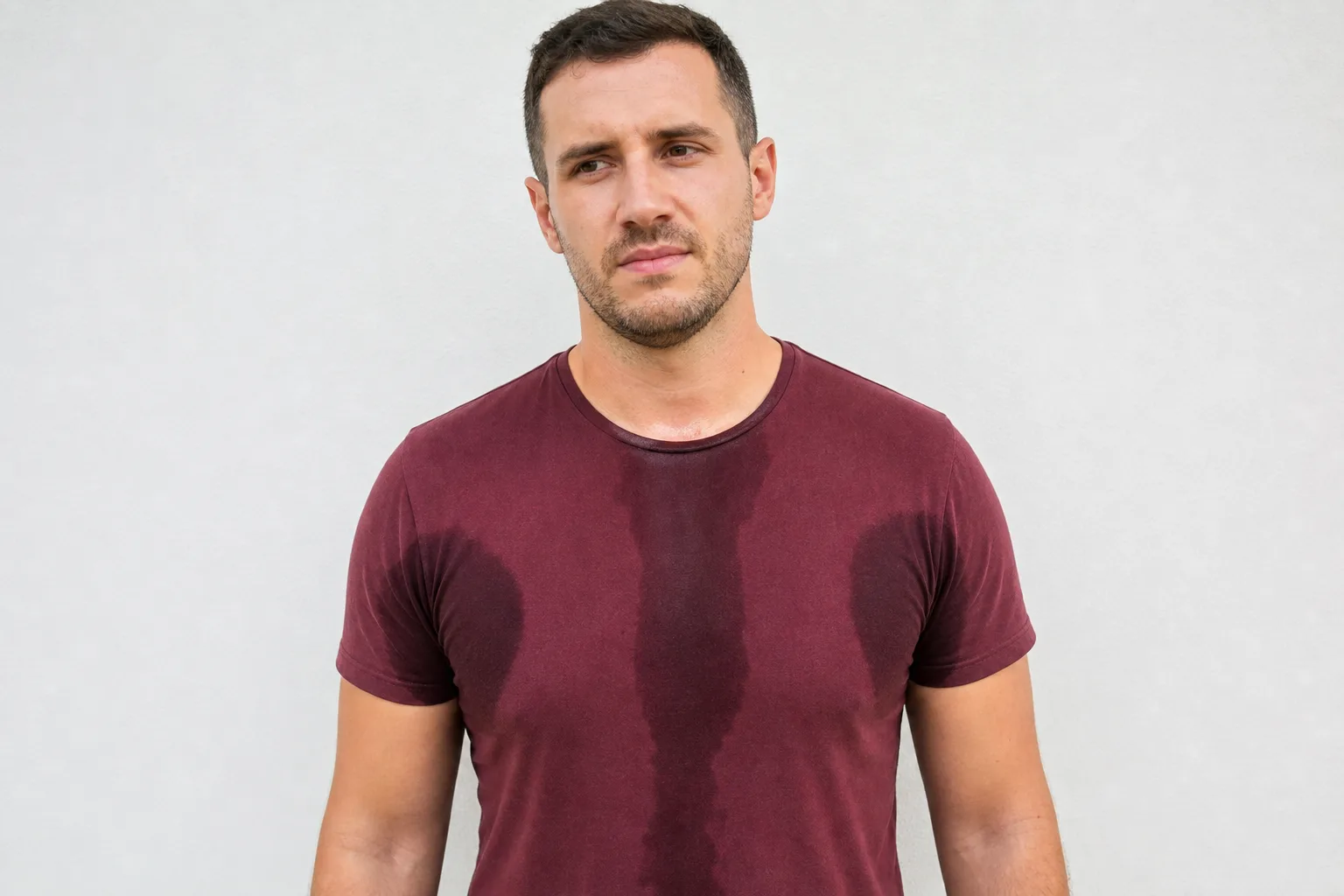
There are many private systems men build to manage excessive sweating. The black shirt system. The spare shirt in the car system. The "never wear grey" system. The early arrival system, so there is time to cool down before a meeting. The strategic arm position system. The please do not make me shake hands system. None of these systems come with a brochure, but plenty of men know them. What many do not know is that this condition has a clinical name: male hyperhidrosis. It is one of those problems that can sound small until you have to plan your day around it.

Table of Contents

It is easy for other people to say, "Everyone sweats." That is true. Everyone also sleeps, but if someone is awake at 3 am every night, we do not tell them to simply try enjoying the concept of rest. For some people, sweating is not just a response to heat or exercise. It can be excessive, persistent and difficult to control. It may affect underarms, hands, feet, face or other areas. It can turn simple activities into calculations. What shirt can I wear? Will this show? Can I take my jacket off? What if I have to present? Do I need to bring another top? Will people think I am nervous?

That last one can be particularly frustrating for men. Sweating can make someone look anxious even when they feel calm. It can make a professional presentation feel like a physical challenge before it even starts. It can affect relationships, social confidence, work clothing and the willingness to be seen. This is why hyperhidrosis deserves to be part of men's health conversations. It is not vanity. It is not simply grooming. It is not always solved by stronger deodorant, more showering or pretending linen is a personality.

The Hidden Cost Of The Spare Shirt System

The systems men build are ingenious, but they come at a cost. The black shirt rule means a wardrobe built around hiding, not preference. The spare shirt in the car means every day begins with a backup plan. The early arrival tactic means calculating travel time plus cooling down time before every meeting. The strategic jacket stays on through summer lunches, outdoor events and warm offices because removing it is not worth the risk.

These workarounds are a sign of a deeper issue, not a solution. They are coping mechanisms that quietly shrink a person's world. A man who always keeps his arms pressed to his sides during a presentation is not fully present. A man who dreads handshake lines at networking events may start avoiding those events altogether. A man who cannot wear the lighter coloured shirt he actually likes is making small concessions that add up over years.

Man seated in a workplace setting while managing private discomfort.

What makes this particularly striking is how few men seek help. According to the Royal Australian College of General Practitioners, only one in three people with hyperhidrosis ever discusses it with their GP. The other two manage it privately, often for years or decades. They build their systems and assume this is simply how life works. In Australia, this silence can be compounded by heat and humidity that make sweating feel inevitable. When everyone is hot, it is easy to dismiss excessive sweating as normal. The pressure to appear cool and collected in professional and social settings adds another layer. A man who is already self conscious about sweating may feel doubly exposed in a culture that values looking relaxed and in control.

The spare shirt system is not a failure of character. It is a logical response to a problem that has not been properly named. But it is also a sign that it might be time to ask a different question: not "how do I hide this?" but "why is this happening?"

What Is Male Hyperhidrosis? (And What It Is Not)

The Clinical Distinction

Male hyperhidrosis is not simply sweating more than average on a hot day. It is a medical condition characterised by sweating that exceeds what the body needs for temperature regulation. Understanding the distinction between its two main forms is essential because they point to different causes and different pathways for care.

Primary focal hyperhidrosis is excessive sweating that occurs in specific areas: the underarms, palms of the hands, soles of the feet, or the face. It is caused by overactive eccrine sweat glands that receive faulty nerve signals, triggering sweating even when the body does not need to cool down. It is not a response to heat or exercise, though those can make it worse. It is a neurological and physiological condition, not a hygiene problem or a sign of poor fitness.

Key characteristics of primary focal hyperhidrosis include sweating that is bilateral and symmetrical, meaning it affects both sides of the body equally. It typically begins before the age of 25, and roughly two thirds of people with the condition report a positive family history. It also tends to stop during sleep, which is an important clinical detail that helps distinguish it from other causes.

Clinician writing notes during a private consultation.

Secondary hyperhidrosis is different. It involves sweating across the whole body and is caused by an underlying medical condition or medication. Thyroid disorders, diabetes, menopause, infections and certain cancers can all trigger generalised sweating. Medications are another common cause. The Cleveland Clinic identifies specific drugs that can produce excessive sweating as a side effect, including certain antidepressants, pain relievers, diabetes medications and hormonal treatments. If sweating is new, generalised across the whole body, or accompanied by night sweats, it warrants a thorough medical review by a GP.

The prevalence of hyperhidrosis is higher than many people realise. According to healthdirect.gov.au, an Australian government funded health information service, approximately four in every 100 Australians are affected. That is a significant number of people, most of whom are managing the condition without professional guidance.

The "Just Use Stronger Deodorant" Myth

One of the most persistent misconceptions about hyperhidrosis is that it can be solved with better grooming. The advice sounds reasonable: use a stronger antiperspirant, shower more often, wear natural fibres. For someone with mild sweating, these steps might help. For someone with moderate to severe primary focal hyperhidrosis, they are often ineffective, and the repeated failure can feel like a personal shortcoming.

Standard antiperspirants work by temporarily blocking sweat ducts with aluminium based compounds. They are designed for typical sweating, not the excessive output of overactive glands receiving faulty nerve signals. When they do not work, the person using them may conclude that nothing will work. This is a dangerous assumption because it stops people from seeking proper assessment.

It is also worth stating clearly: hyperhidrosis is not a hygiene issue. A man who showers twice a day and still soaks through a shirt by mid morning is not dirty. His sweat glands are receiving signals to produce sweat at a rate that has nothing to do with cleanliness. Framing hyperhidrosis as a grooming problem misses the point entirely and adds unnecessary shame to a condition that already carries significant social weight.

Why It Stays Hidden: The Men’s Health Blind Spot

There is a particular silence that surrounds men's health issues that do not fit neatly into familiar categories. Men are often expected to tough things out, to treat physical discomfort as a minor inconvenience, and to avoid making a fuss about problems that seem cosmetic or trivial. Sweating falls squarely into this blind spot. It is not a heart condition. It is not a visible injury. It is something that happens to everyone, so complaining about it can feel weak or vain.

The reality is that the psychosocial toll of untreated hyperhidrosis is substantial. It affects social confidence in ways that ripple through every part of life. A man who avoids shaking hands may be perceived as unfriendly or aloof. A man who keeps his jacket on during a summer wedding may look uncomfortable or out of place. A man who dreads dating because of visible sweat marks may withdraw from romantic opportunities altogether. At work, the impact can be career limiting. Presentations become ordeals. Networking events become threats. Client meetings become exercises in strategic positioning.

Corey Anderson, an AHPRA registered Registered Nurse and sole practitioner at Core Aesthetics in Oakleigh, sees this pattern regularly. "Men often try to manage excessive sweating privately for a long time before asking for advice," Corey says. "By the time they mention it, they may have already tried multiple products, changed their clothing and built routines around hiding it."

That quiet problem solving can delay useful care. The years spent managing the condition alone are years that could have been spent understanding it and exploring evidence based management pathways. The silence also reinforces the misconception that nothing can be done. If no one talks about hyperhidrosis, no one learns that assessment and care options exist.

This is why the condition sits exactly where many men's health issues sit: hidden in plain sight. It is in the washing basket. It is in the jacket kept on during summer. It is in the avoided handshake. It is in the meeting room chair chosen closest to the air conditioning. The evidence is everywhere, but the conversation is nowhere.

When To Stop Managing And Start Asking

The Self Check Questions

There is a difference between sweating that is a normal response to heat or exertion and sweating that is shaping the way someone lives. A few simple questions can help clarify where a person sits on that spectrum.

Is sweating shaping your decisions about what to wear, where to sit, or whether to shake hands? If clothing choices are made primarily to hide sweat rather than to express preference or meet a dress code, that is a signal worth paying attention to. If seating at meetings or events is chosen based on proximity to air conditioning or distance from other people, that is another signal.

Do you bring a spare shirt or change clothes multiple times a day? The spare shirt in the car is a practical solution, but it is also a sign that the body is producing more sweat than the situation requires. Changing clothes during the workday to manage sweat is not something most people need to do.

Does sweating happen without a clear trigger? Sweating during a workout or on a 40 degree day is expected. Sweating while sitting still in an air conditioned room is not. If the body is producing significant sweat without heat, exercise or obvious stress, the eccrine glands may be receiving faulty signals.

Does sweating wake you up at night? This is a particularly important question. Night sweats can indicate secondary hyperhidrosis caused by an underlying medical condition. If sweating occurs during sleep, a GP review is essential to rule out conditions that require medical management.

The First Step Is Assessment, Not Treatment

The most important message for anyone recognising themselves in these questions is that the first step is proper assessment, not assumptions. Excessive sweating can have different causes and different management pathways. Some people need review by a GP or specialist. Some severe cases may have Medicare or other health system pathways depending on eligibility and clinical assessment. The key point is that people should not have to guess their way through it forever.

A good consultation should ask practical questions. Where does it happen? How long has it been going on? Is it symmetrical? Is it new or long standing? Does it happen at night? Has anything changed medically? What has already been tried? Is referral needed? What are the risks, limits and aftercare considerations for any possible treatment pathway?

The goal is not to push anyone towards a particular treatment. The goal is to replace private uncertainty with professional clarity. If sweating is making decisions for you, what you wear, where you sit, whether you shake hands or how you handle work, it is reasonable to ask for proper advice.

What A Responsible Consultation Looks Like

A responsible consultation for hyperhidrosis should protect the patient from overpromising. Hyperhidrosis care is not a magic switch. Outcomes vary and suitability matters. The conversation should be about assessment, options, limitations and when another pathway may be more appropriate.

In an AHPRA compliant and TGA safe setting, this means several things. No therapeutic product names are used in a way that implies endorsement or guaranteed results. No outcome promises are made, and no before and after style claims are presented. All treatment references are consultation led and suitability dependent. There is no pressure to book or proceed with any particular pathway.

The discussion should cover risks, limits and aftercare considerations honestly. If a treatment is not suitable, that should be stated clearly. If a GP or specialist referral is more appropriate, that referral should be made without hesitation. The patient's wellbeing comes before any treatment pathway.

This approach respects the complexity of hyperhidrosis. It acknowledges that what works for one person may not work for another. It ensures that anyone seeking help receives individualised advice based on their specific history, symptoms and needs. And it protects people from the disappointment of unrealistic expectations.

Frequently Asked Questions About Male Hyperhidrosis

Is hyperhidrosis hereditary? Yes, roughly two thirds of patients with primary focal hyperhidrosis report a positive family history, according to the Royal Australian College of General Practitioners. If a parent or sibling has the condition, the likelihood of developing it is higher.

Can hyperhidrosis be cured? There is no single cure for hyperhidrosis, but many management pathways exist. The appropriate pathway depends on the type, severity and location of sweating, as well as individual health factors. Treatment is always consultation led and suitability dependent.

Does hyperhidrosis go away with age? It may improve for some people over time, but this is not guaranteed. Many adults continue to manage the condition long term. Relying on the hope that it will simply disappear can delay seeking useful advice.

What medications can cause excessive sweating? The Cleveland Clinic identifies several common triggers, including certain antidepressants, pain relievers, diabetes medications and hormonal medications. If sweating began or worsened after starting a new medication, this should be discussed with a GP. Medication should never be stopped without medical advice.

Is hyperhidrosis a sign of something serious? Secondary hyperhidrosis can be. If sweating is new, generalised across the whole body, or accompanied by night sweats, chest pain, dizziness or unexplained weight loss, a GP review is essential. These symptoms can indicate underlying conditions that require medical investigation.

The Takeaway: It Is Reasonable To Ask

The message is not that every sweaty shirt needs a clinic appointment. The message is that if sweating is shaping decisions, confidence or daily life, it is reasonable to ask for proper advice. You do not need to suffer in silence or rely on a spare shirt in the car forever. The systems you have built to manage this condition are evidence of resourcefulness, but they are not a long term solution. For a proper assessment and to discuss your individual situation, speak with a qualified health professional who can help you understand what is happening and what pathways may be appropriate for you.

Written and reviewed by Corey Anderson RN, AHPRA NMW0001047575 · Reviewed June 2026 · TGA and AHPRA guidance is regularly reviewed in preparing this website.

Begin With A Conversation

Book your consultation.

No commitment, no pressure. A considered first step toward understanding what is and isn’t right for you.

Book Consultation

Elegance, Perfected.