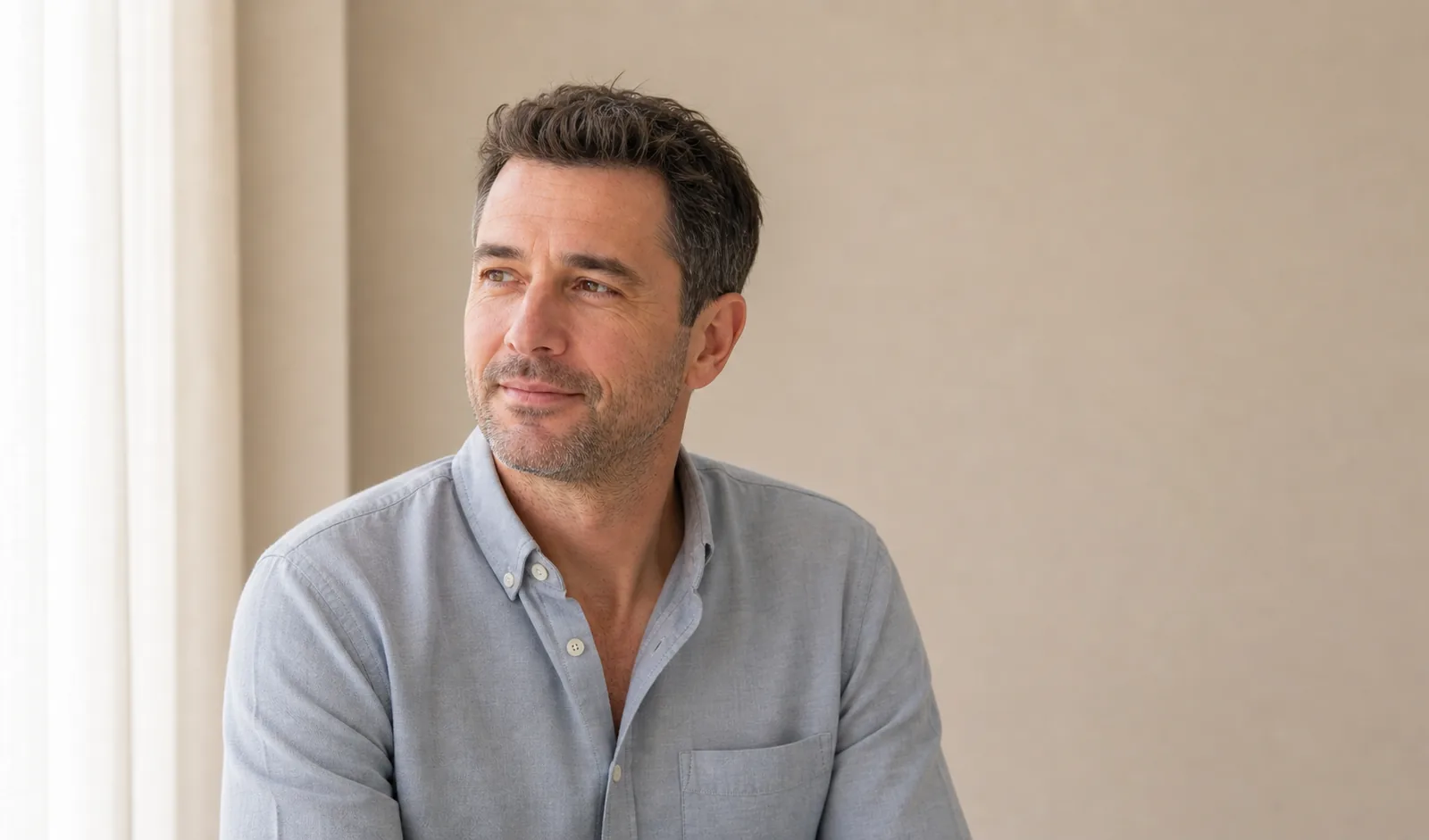
When men ask "will anyone notice?", they are often asking something bigger.
Will people judge me? Will my mates tease me? Will I look like I care too much? The social fear can be louder than the appearance concern.
Separate a reasonable wish for privacy from the shame that makes an appearance question feel secret, urgent and impossible to discuss.
Direct Answer
When men ask whether anyone will notice an appearance decision, the real question is often about privacy, judgement and pressure. Privacy is valid. Secrecy and rushed choices are different. A useful next step is to name the concern plainly, test whether it is stable, and seek advice that gives information without pressure, guarantees or a need to hide the decision.
Table of Contents
- Privacy And Shame Are Different
- Name What You Fear People Will Notice
- Choose Who Actually Needs To Know
- When Anxiety Is Leading The Decision
- Care Can Stay Private Without Becoming Secret
Privacy And Shame Are Different
Privacy is valid. Shame is different. Privacy lets you make a quiet decision. Shame makes the decision feel rushed, lonely and loaded.
Privacy lets a man choose how communication happens and who is involved. Shame makes the choice feel rushed, lonely and difficult to question, even when the appearance concern itself is small.
Name What You Fear People Will Notice
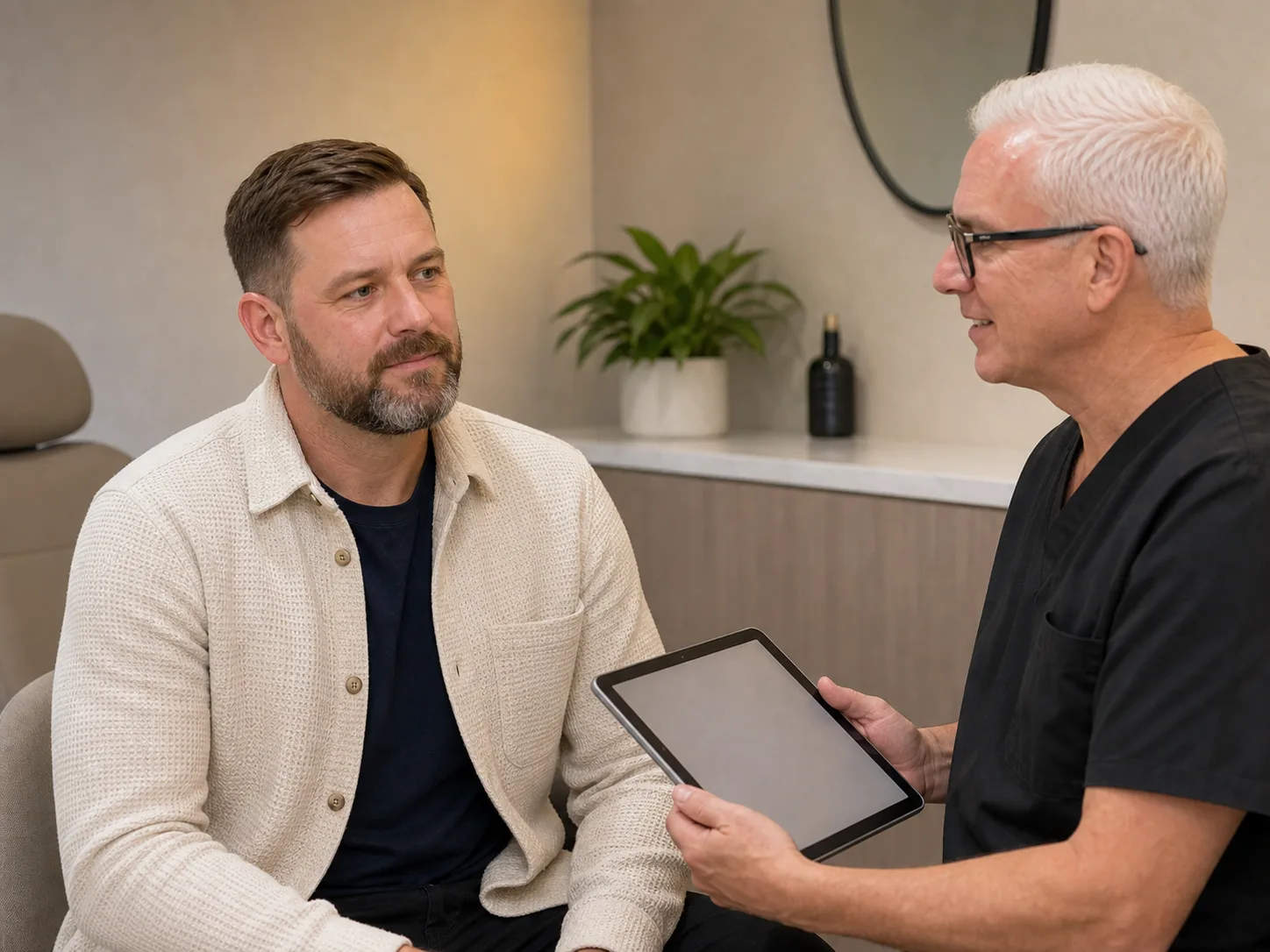
Notice what you are afraid people will say, and whether that fear belongs to the decision itself or to old rules about what men are allowed to care about.
Write the feared response in plain words: teasing, judgement, looking vain or appearing to care too much. Then ask whether that fear belongs to the feature or to an old rule about masculinity.
Choose Who Actually Needs To Know

Talk it through with one trusted person or write it down without editing. If the concern becomes clearer, you can decide the next step. If it fades, that is useful too.
A trusted person, a private note or a qualified consultation can help clarify the concern without turning it into a public announcement. The reader still controls which non essential details are shared.
When Anxiety Is Leading The Decision
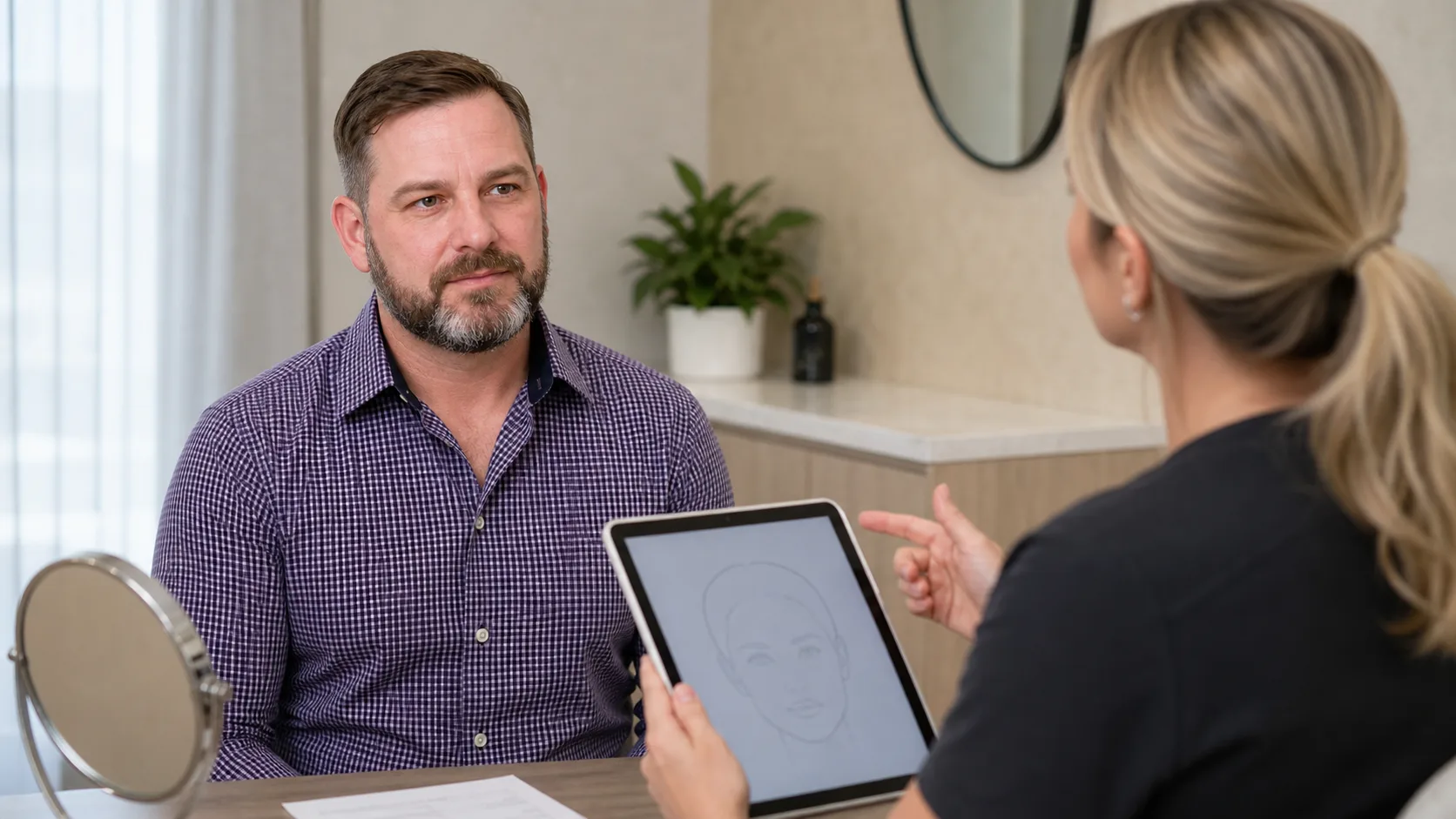
Qualified advice should never depend on secrecy or pressure. If distress or obsessive checking is part of the story, mental health support may be the better first door.
If repeated checking, avoidance or distress is driving the decision, mental health support or more time may be more useful than appearance planning. Qualified advice should never depend on secrecy or pressure.
Care Can Stay Private Without Becoming Secret
You are allowed to care without turning the whole thing into a public announcement.
A private decision can remain calm, informed and reversible. It should still include suitability, risks, limits, alternatives and the option not to proceed.
FAQ
Is it normal for men to worry that people will notice?
Yes. Many men are not only asking about appearance. They are asking whether they will be judged, teased, questioned or seen as caring too much. That social fear is real, and it deserves a calm conversation rather than a rushed decision.
What is the difference between privacy and shame?
Privacy lets you make a quiet decision with clear information. Shame makes the decision feel lonely, urgent or loaded. If secrecy is the only thing making a decision feel possible, it is worth slowing down and asking what pressure is sitting underneath it.
Should a consultation promise that nobody will notice?
No. A responsible consultation should not promise invisibility or a specific social reaction. It should explain suitability, limits, risks, alternatives, timing and the option of no action so the choice is informed rather than built around fear.
When should anxiety be handled before appearance advice?
Anxiety should come first if the concern is tied to obsessive checking, low mood, panic about being seen, repeated reassurance seeking, body image distress or feeling unable to stop thinking about appearance. A GP, psychologist or other qualified mental health professional may be the better first door.
Write what you fear others will notice and decide who actually needs to know. A useful consultation should reduce confusion without demanding public disclosure or a quick decision.
This is general information, not personal medical advice. If appearance privacy anxiety is worrying you, changing quickly or affecting daily life, speak with an appropriately qualified health professional. If you are unsure, ask early and keep the next step simple.