Migrated treatment is a patient description, not a diagnosis. A concern may relate to settling, swelling, anatomy, facial movement, previous treatment, ageing or true movement of product. The safest next step is assessment, especially if symptoms are worsening, painful, unusual or difficult to explain from photos alone.
What People Usually Mean By Migrated Treatment
People often use the phrase migrated treatment when something looks different from what they expected. They may notice fullness outside the area they thought was treated, a new shadow, a border that looks less defined, puffiness, heaviness or a contour that feels different under the skin.
That concern deserves to be taken seriously, but the label should not be treated as a diagnosis. The same appearance can come from early swelling, bruising, natural asymmetry, muscle movement, ageing changes, weight change, lighting, posture or previous treatment history.
At Core Aesthetics, Corey reviews the concern clinically rather than assuming migration from a description or photo alone.
Why A Change Can Look Like Migration
Facial tissue is not static. Skin, fat compartments, muscle activity, ligament support and bone structure all influence how cosmetic treatment settles and how the face appears over time. A change that looks like movement may actually reflect normal settling, swelling resolution or the way surrounding tissue responds.
Previous treatment can also change the assessment. If treatment has been performed elsewhere, more than once, or over a long period, Corey may need to consider layering, tissue response, timing and whether the current concern is related to treatment, anatomy or both.
This is why review is more useful than guessing. The question is not just whether something has moved. The better question is what is creating the appearance now and what, if anything, should be done about it.
Signs Worth Reviewing
Review is sensible if you notice a new contour that does not settle, visible puffiness outside the intended area, increasing asymmetry, firmness, persistent heaviness, a border that looks blurred, or a change that keeps drawing your attention after the usual settling period.
It is also reasonable to seek review if you feel unsure. Cosmetic concerns can become mentally noisy, especially when you are checking a mirror in different lighting every few hours. A calm clinical assessment can separate what needs action from what needs time.
Do not try to diagnose the concern by comparing yourself with someone else’s photos. Faces, treatment histories and healing patterns vary too much for that to be reliable.
When It May Not Be Migration
Not every irregularity or change means treatment has migrated. Early swelling can distort shape. Bruising can create shadows. Normal facial asymmetry can become more noticeable after you start looking closely. Weight change, dental work, illness, skin inflammation and ageing changes can also alter the way the face reads.
There are also situations where the original treatment plan was not ideal for the anatomy, even if the treatment has not moved. In that case, the review may focus on planning, proportion and whether more treatment would help or make the concern worse.
A good review leaves room for several possible explanations rather than forcing the concern into one category too early.
What Should Be Reviewed First?
| Concern | Why review matters | Next step |
|---|---|---|
| New contour | May reflect swelling, anatomy, ageing or placement. | Compare timing, symptoms and records first. |
| Pain or colour change | Can need faster advice than appearance alone. | Contact the treating clinic or urgent care. |
| Treatment elsewhere | Records change what can be assessed safely. | Bring dates, areas and aftercare advice. |
| Pressure to fix | Rushing can blur risk and consent. | Review before any correction discussion. |

Why Photos Alone Are Not Enough
Photos can help document change, but they are not enough for a full assessment. Lighting, camera angle, facial expression, lens distortion and posture can all exaggerate or hide the concern. A photo may show that something bothers you, but it usually cannot explain why.
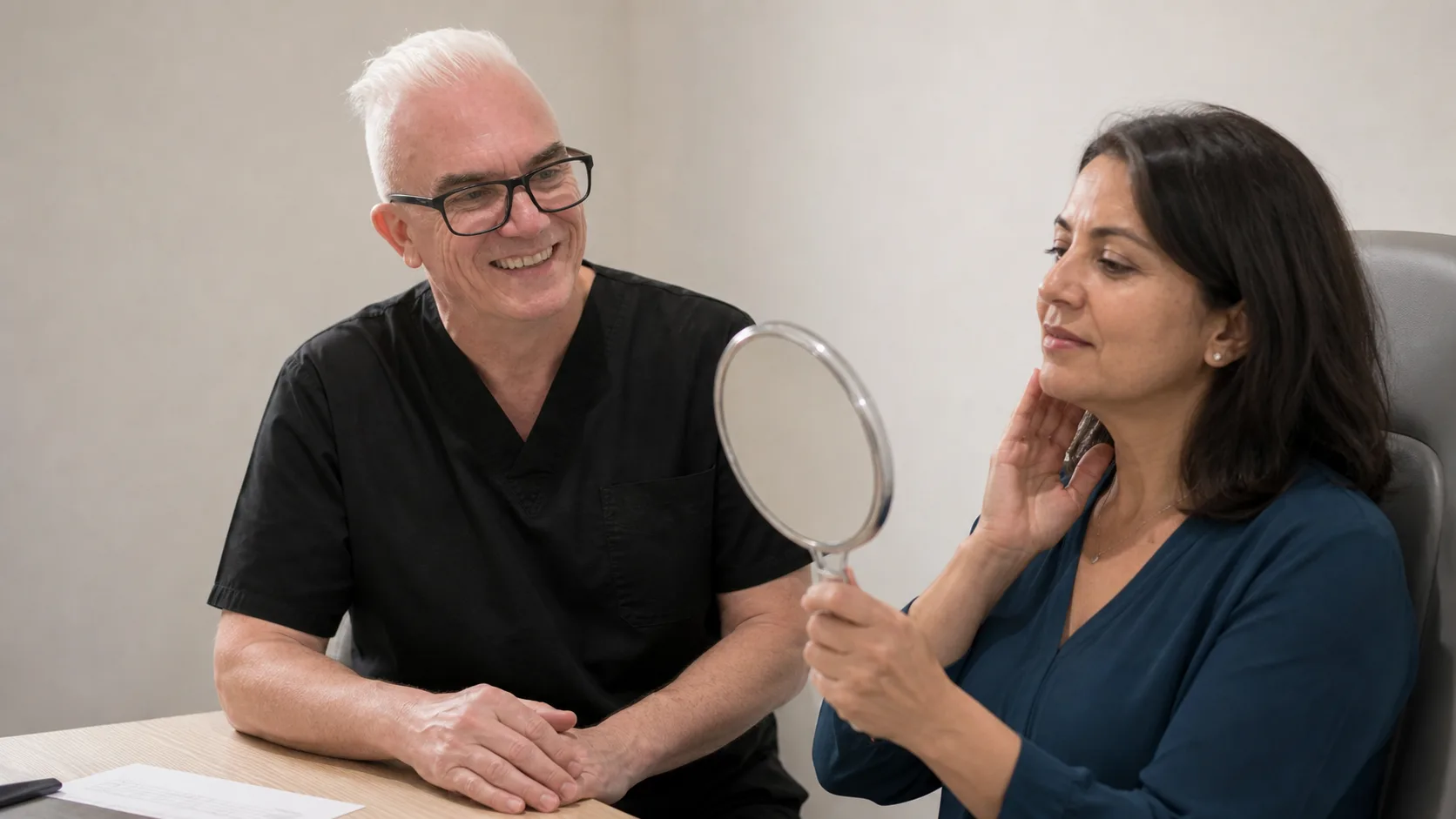
Corey assesses the face at rest and in movement, reviews the area from multiple angles, asks about timing and previous treatment, and considers whether symptoms suggest a routine review or something more urgent.
If you have older photos from before treatment, bring them. They can be useful context, especially when the question is whether the current appearance is new, longstanding or part of normal facial variation.
What Corey Assesses At Review
A migration review is not a quick glance followed by a correction plan. Corey looks at the treated and surrounding areas, tissue quality, symmetry, movement, medical history, previous treatment timing, aftercare history and whether there are any symptoms that change the level of concern.
The review may lead to reassurance, planned observation, review with another health professional, correction discussion, reversal discussion, a staged plan or a recommendation not to treat. Sometimes the safest answer is to wait longer before deciding.
This is also where restraint matters. Adding more treatment to an unclear concern can make the anatomy harder to read and may not solve the problem the patient is actually noticing.
When To Seek Prompt Advice
Seek prompt advice if you have severe or worsening pain, spreading skin colour change, marked blanching, increasing swelling, unusual heat, visual symptoms, or anything that feels clinically wrong. If symptoms feel urgent and you cannot reach the clinic, seek urgent medical care.
These symptoms are different from a purely cosmetic concern about shape or contour. They should be treated as a risk rather than something to monitor casually at home.
Do not restart exercise, apply pressure or attempt massage while concerning symptoms are present unless a suitable health practitioner has assessed you and advised it is appropriate.
Why Correction Starts With Careful Assessment
If migration or another treatment related issue is suspected, the correction pathway starts with careful assessment. The first step is understanding what is present, what may settle on its own, what can be safely reviewed later and what needs a different pathway.
Reversal or correction discussions require informed consent, risk discussion and clinical judgement. Some patients may be better served by waiting. Others may need referral or a staged plan. More treatment is not always the answer.
Corey will explain the reasoning clearly so you can understand the options and the limits of each option before making a decision.
Which Records Help A Migration Review?
Useful information includes the date of treatment, the areas discussed, any aftercare advice, symptom timing, whether the concern is changing, and whether pain, colour change, heat or visual symptoms are present. If treatment was performed elsewhere, Corey may need to explain what can and cannot be assessed without the original clinical record.
Can Migration Be Prevented
No practitioner can promise that every cosmetic treatment will settle exactly as planned. Risk can be reduced through careful assessment, conservative planning, appropriate technique, realistic volume decisions, aftercare instructions and review, but uncertainty cannot be removed entirely.
Patient behaviour also matters. Heat, pressure, massage when not directed, intense exercise too early and repeated touching can sometimes aggravate settling or swelling. Following aftercare advice is part of the treatment plan, not an afterthought.
The aim is to make treatment decisions carefully enough that preventable problems are less likely and any concern can be reviewed promptly if it occurs.
Previous Treatment Changes The Conversation
If you are worried about treatment performed elsewhere, bring as much detail as you can: dates, areas treated, what was discussed, photos, any aftercare instructions and when the concern first appeared. You do not need complete records, but context helps.
Corey may recommend observation, further information, referral or a staged correction review rather than acting immediately. This can feel slower than the answer people want, but it is often the more responsible path.
A review appointment is not about blame. It is about understanding the current face in front of the practitioner and deciding what is safest now.
How suitable options are discussed
Core Aesthetics is consultation led. Some patients may be suitable for treatment, correction discussion or review planning after individual assessment, but only when Corey determines it is clinically appropriate and the patient has provided informed consent.
The appointment creates time for assessment, questions and a clear plan. It gives Corey the opportunity to assess the concern, explain risks and decide whether a suitable option, delayed review or another clinical pathway fits better.

A Calm Next Step
If something looks or feels wrong after cosmetic treatment, book a review rather than trying to solve it through online comparison. A consultation gives Corey time to assess the concern, explain what may be contributing to it and discuss whether adjusted timing, review with another health professional, correction or a clearer care pathway is the most appropriate next step.
The aim is not to rush to an answer. The aim is to get the right answer before anything else is done.
General Information Only
This page is general education only and does not replace advice from a qualified health practitioner who has assessed you. Suitability, risk, aftercare advice and correction pathways vary between patients.
If you have severe, worsening or unusual symptoms, seek clinical advice promptly.
Which Pages Help With This Decision?
Useful supporting pages include how to think about treatment migration, whether treatment can migrate over time, what settling can feel like, treatment correction assessment, patient safety in consultation and the verification page.
How Can You Confirm The Clinic Before A Migration Review?
Core Aesthetics consults from Oakleigh, phone 0491 706 705. Consultations are led by Corey Anderson RN, Ahpra registration NMW0001047575.
This migration review guide was reviewed on 2026-09-01 for consultation-first wording, consent, suitability, image safety and risk framing. Migration concerns are assessed as individual clinical concerns, not as proof that correction is required. You can also use the verification page before booking or contacting the clinic.
If you want to compare fees or arrange a review, read the pricing page and book a consultation.
Is this for you?
Consider booking a consultation if
- You are an adult concerned that previous cosmetic treatment may have shifted, spread or settled unevenly
- You want assessment before deciding whether correction is needed
- You have previous treatment history and can provide timing or photos where available
- You are open to adjusted timing, review with another health professional, correction discussion or an appropriate alternative depending on assessment
This may not be for you if
- You have severe, worsening or unusual symptoms that need prompt clinical advice
- You want online photo comparison to replace an assessment
- You are not an adult patient
- You are pregnant or trying to conceive and are seeking elective cosmetic treatment
Suitability is confirmed at consultation. This list is general guidance, not a substitute for clinical assessment.
Frequently asked questions
What does migrated treatment mean?
Migrated treatment is a patient phrase for treatment that appears to have shifted, spread or settled outside the intended area. It is not a diagnosis by itself. An assessment is needed to assess what is actually contributing to the concern.
Is swelling the same as migration?
No. Swelling can temporarily change shape and make an area look different while it settles. Persistent, worsening or painful change needs review because it may have a different cause. If colour change, unusual heat, severe pain or visual symptoms occur, contact the treating clinic or seek urgent advice rather than waiting.
Can treatment appear to migrate over time?
Some patients notice changes over time, but the cause may be settling, tissue movement, ageing, weight change, previous treatment, facial expression or treatment placement. A review helps separate appearance concerns from clinical signs. It also helps decide whether adjusted timing, review with another health professional, documentation or a correction discussion is more appropriate.
How do I know if I need correction?
You cannot reliably decide this from photos or mirror checks alone. Corey assesses the area, symptoms, timing, previous treatment history, health factors and risk before discussing whether correction, referral, timing or another clinical pathway fits better. A visible difference does not by itself determine the correction pathway.
Should I massage an area that looks migrated?
Do not massage or apply firm pressure unless your treating practitioner has specifically advised it. Unplanned pressure can worsen irritation, blur the symptom timeline or make assessment harder. If you are worried, document what you can see and feel, then contact the clinic for review advice.
When should I seek urgent advice?
Seek prompt advice for severe or worsening pain, spreading colour change, marked blanching, increasing swelling, unusual heat, visual symptoms or anything that feels clinically wrong. If urgent and you cannot reach the clinic, seek urgent medical care.
Is reversal always needed for migrated treatment?
No. Reversal or correction starts with careful assessment. Some concerns settle, some need monitoring, some need referral and some may be better managed through staged review. The decision depends on clinical assessment, symptoms, timing, risk, consent and whether a correction pathway is genuinely appropriate.
Can migrated treatment be reviewed at Core Aesthetics?
Yes, a consultation can be arranged to review the concern. Corey will assess the area and explain whether adjusted timing, review with another health professional, correction discussion or a focused review plan is appropriate. Bring dates, areas treated, aftercare advice and any symptom timeline, especially if the original treatment was performed elsewhere.