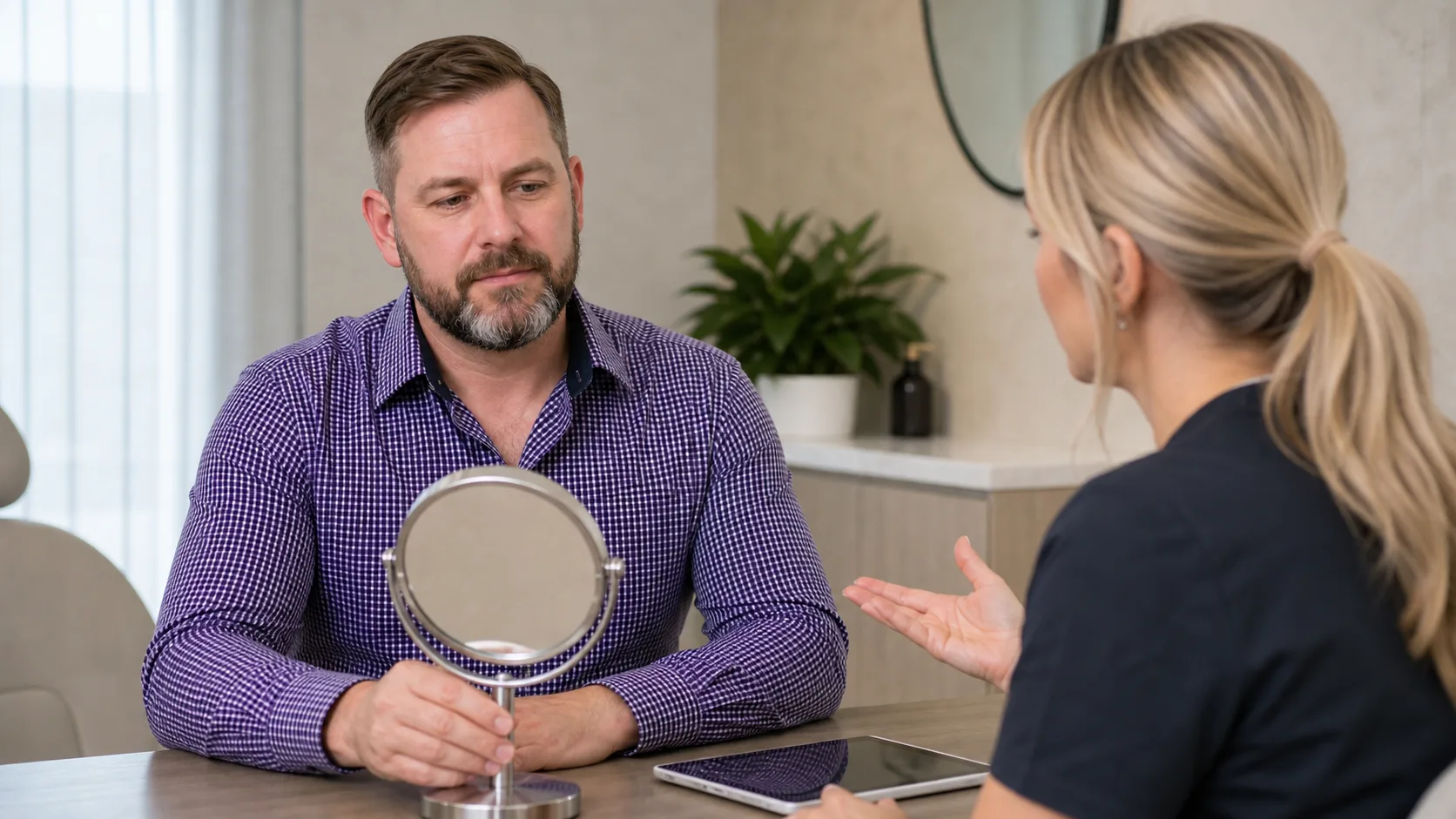
It is 7:15 on a Tuesday morning in a share house in Footscray, and Liam, a 26-year-old graphic designer, has been in the bathroom for 22 minutes. His girlfriend, coffee in hand, knocks with a smirk. Inside, he is on step four of a six-step routine: double cleanse, exfoliating toner, hyaluronic acid serum, eye cream, moisturiser, and SPF. Tonight, he will use a retinol. On Sunday, he has a hydrafacial booked in Fitzroy. Liam is not a model or an influencer. He is a regular guy who simply believes his skin deserves the same attention as his gym program. A decade ago, this scene might have been played for laughs in a sitcom. In 2026, it barely raises an eyebrow. The question is no longer whether men are spending more time and money on their appearance, but what that shift actually means. Are men becoming more high-maintenance than women, or is the entire concept of "high-maintenance" overdue for a rewrite? The answer lies in understanding the forces shaping modern male beauty.
Table of Contents
- Redefining 'High-Maintenance' in 2026
- The Rise of the Modern Male Beauty Industry
- The Pressure Cooker: Why Men Feel the Heat
- A Tale of Two Standards: Cultural and Generational Differences
- The Dark Side: Extreme Measures and Health Risks
- Is There a Brighter Side? Empowerment and Choice
- The Verdict: Are Men Becoming More High-Maintenance?
- Frequently Asked Questions About Modern Male Beauty
Redefining ‘High-Maintenance’ in 2026
The old binary was simple and, frankly, lazy. Women were expected to labour over their appearance; men were praised for a quick shave and a splash of something that stung. That framework is now obsolete. In 2026, maintenance encompasses skincare regimens, hair treatments, gym programming, nutritional planning, cosmetic dentistry, injectables, and a growing list of non-surgical aesthetic procedures. The definition has expanded so far beyond makeup that using it as a gendered yardstick no longer makes sense.


Australian men are increasingly normalising treatments once marketed exclusively to women. Laser hair removal, anti-wrinkle injectables, dermal fillers, and professional-grade facials are now standard bookings at clinics across Sydney, Melbourne, and Brisbane. The term "high-maintenance" has quietly shed its pejorative edge. It now functions less as an insult and more as a neutral descriptor of the time, money, and effort an individual chooses to invest in their appearance. This shift reflects a broader cultural move toward self-optimisation, where caring about how you look is framed as discipline, not vanity. The real story is not that men have suddenly become vain; it is that the permission to care has finally been granted.
The Rise of the Modern Male Beauty Industry
From Aftershave to Actives
The global men's grooming market is no longer a niche. It is a juggernaut, and major luxury houses have taken note. Shiseido, Chanel, and Tom Ford now market dedicated male makeup and skincare lines without apology or euphemism. These are not products hidden behind matte-black packaging labelled "grooming balm" to protect fragile masculinity. They are serums, concealers, and tinted moisturisers sold on their efficacy, not their gendered acceptability. In Australia, retailers like Mecca and Sephora stock unisex and male-specific ranges prominently, signalling that mainstream acceptance has arrived. The local pharmacy aisle has also evolved: where there was once a single shelf of generic aftershave and deodorant, there are now actives-led ranges from La Roche-Posay, The Ordinary, and local brands like Hunter Lab.


The 'Gymfluencer' Effect
Social media has not just reflected the modern male beauty ideal; it has manufactured it. The algorithmically curated ideal is specific and relentless: a lean, muscular physique with clear skin, a sharp jawline, thick hair, and symmetrical features. Platforms like TikTok and Instagram reward this aesthetic with visibility, and a generation of "gymfluencers" has emerged to monetise it. The Guardian reported in 2026 on a surge in body "hacks," peptide use, and cosmetic dental tourism among young Australian men. The phenomenon of "Turkey teeth" (travelling abroad for aggressive, low-cost veneers) is one visible symptom of a much deeper pressure. The gym is no longer just about strength or health; it is about sculpting a body that photographs well from multiple angles.
Unisex Beauty and the Blurring of Lines
Gen Z is leading the charge in rejecting gendered product categories altogether. For a 20-year-old in 2026, the idea that a moisturiser has a gender is as outdated as the idea that only women should care about sun protection. Skincare is skincare. Makeup is makeup. Brands have responded with gender-neutral packaging and marketing that focuses on results, not masculinity. This shift is not about men "acting like women"; it is about dissolving the arbitrary boundaries that told one half of the population they could not care about their pores. The result is a market where a young man can buy a brow gel without a crisis of identity, and where his father might still hesitate but is increasingly the outlier.
The Pressure Cooker: Why Men Feel the Heat
Social Media and the Algorithm of Insecurity
The same platforms that normalise male grooming also fuel the anxiety that makes it feel compulsory. TikTok and Instagram serve an endless scroll of "ideal" male faces and bodies, each one subtly filtered, lit, and posed to maximise perceived flawlessness. Specific physical traits have been codified online with clinical precision: deep-set hunter eyes with thick eyelashes, plump heart-shaped lips, high cheekbones, a sharp jawline, and a muscular-but-lean frame. These features are discussed in forums and comment sections as though they are a checklist, and falling short can feel like a personal failure. The algorithm does not care about your self-esteem; it cares about engagement, and insecurity drives engagement.
The Mental Health Toll
Women have had decades of public discourse about body image, eating disorders, and the psychological toll of impossible beauty standards. Men are only beginning to have that conversation, and the silence has been costly. Vulnerability is still frequently equated with weakness, making it harder for men to seek help for body dysmorphia, disordered eating, or the anxiety that accompanies constant comparison. A man who admits he feels inadequate because his jawline does not look like the ones on his feed risks mockery in spaces that have not yet learned to take male body image seriously. The pressure is real, but the language to articulate it is still catching up.
The Cost of Conformity
Achieving the modern male beauty ideal is expensive, and the financial burden is rarely discussed. Gym memberships, supplements, quality skincare, and cosmetic procedures add up quickly. A basic routine of medical-grade skincare can run several hundred dollars every few months. Injectables require maintenance appointments. Hair transplants cost thousands. The "gymfluencer" lifestyle often implies a level of disposable income that most young Australian men simply do not have. The pressure to keep up is not just psychological; it is economic, and it creates a two-tier system where those with means can buy proximity to the ideal while others are left feeling they have failed before they have even started.
A Tale of Two Standards: Cultural and Generational Differences
Western vs. East Asian Ideals
The modern male beauty ideal is not universal, and understanding its cultural variations reveals how constructed it truly is. In the West, the dominant ideal remains muscular and angular, with roots that scholars trace to colonial and eugenicist frameworks privileging fair skin, high nose bridges, and "strong" facial architecture. In East Asia, particularly South Korea, the K-pop androgynous aesthetic holds sway: slim bodies, vibrant hair, and visible makeup are not just accepted but celebrated. Yet even there, the lines are contested. Male celebrities in China have faced public backlash for being "too feminine," revealing that cultural standards are never static and always political.
Gen Z vs. Older Generations
The generational divide is stark. Men under 30 are far more comfortable with skincare, grooming, and even makeup than their fathers or grandfathers ever were. For a Gen Z man, a multi-step skincare routine is unremarkable; for a Baby Boomer, it might still register as transgressive. Older men face a different kind of pressure: the need to maintain youthfulness in a workforce that often equates age with decline. Hair colour, anti-ageing treatments, and cosmetic dentistry are not about vanity for this demographic; they are about economic survival in a culture that has little respect for visible ageing.
The Australian Context
Australian men occupy a distinct position in the global grooming landscape. They are less conservative than their American counterparts but not as experimental as men in parts of Europe or East Asia. The local culture adds unique pressures: the "beach body" ideal is pervasive, and the outdoor lifestyle makes sun protection, tanning, and body hair management local priorities. An Australian man might not wear foundation, but he is increasingly likely to use a tinted SPF and have strong opinions about laser hair removal for the summer months. The climate shapes the aesthetic, and the aesthetic shapes the market.
The Dark Side: Extreme Measures and Health Risks
Bonesmashing and Dangerous Trends
Not all responses to the modern male beauty ideal are benign. Wikipedia uniquely cites "bonesmashing," a controversial and dangerous facial restructuring practice involving repeated blunt force to the face in an attempt to reshape bone structure. This is not mainstream, but its existence in online forums points to a desperation that the industry rarely acknowledges. Other extreme measures include anabolic steroid use, unregulated peptide injections, and radical dieting to achieve the "lean muscle" look promoted by influencers. These practices carry serious risks, and they flourish in the gap between aspiration and accessible, safe treatment.
Long-Term Health Consequences
The long-term health consequences of extreme aesthetic pursuit are underreported. Surgical complications from rhinoplasty, jaw implants, and hair transplants can be life-altering. Steroid use carries well-documented risks of hormonal imbalance, cardiovascular damage, and mental health side effects including aggression and depression. Peptide use, often marketed as a "safer" alternative, is largely unregulated and poorly studied in the long term. Men are often reluctant to report complications or seek help, compounding the harm.
The TGA and Safe Practice in Australia
In Australia, the Therapeutic Goods Administration (TGA) regulates cosmetic injectables and devices, providing a framework for safety that does not exist in many other countries. This is a critical point for any Australian man considering aesthetic treatments. Registered practitioners must meet specific standards, and products must be approved. The rise of unregulated "injectors" operating through social media, often offering cut-price treatments in private homes, represents a genuine public health risk. The advice is straightforward: always consult a qualified, TGA-registered practitioner, verify credentials, and be deeply sceptical of anyone offering "deals" that seem too good to be true. Your face is not the place to bargain-hunt.
Is There a Brighter Side? Empowerment and Choice
Reclaiming Masculinity Through Beauty
The narrative so far has been largely critical, but there is a positive counterpoint worth taking seriously. Some voices in the industry frame the modern male beauty movement as a reclamation of masculinity, not a surrender to pressure. For many men, skincare and grooming are not driven by insecurity but by self-respect. Taking care of your appearance can be an act of agency, a way of presenting yourself to the world with intention. The man who uses a concealer to cover a blemish or a tinted moisturiser to even out his skin tone is not necessarily a victim of consumer culture; he might simply be someone who likes how he looks when he does.
The 'Big Shave' and Other Practical Coping Strategies
Not all solutions are expensive or extreme. One of the most practical pieces of advice circulating in men's grooming communities is the "big shave": embracing baldness by shaving your head rather than fighting hair loss with expensive treatments. It is a low-cost, high-impact strategy that reframes a perceived flaw as a deliberate choice. Other practical, grounded approaches include building a simple skincare routine (a gentle cleanser, a moisturiser, and a broad-spectrum SPF 50+ sunscreen), finding a gym routine that feels good rather than punishing, and critically curating your social media feed to unfollow accounts that trigger comparison. These strategies cost little and can shift the focus from fixing perceived flaws to maintaining health.
Confidence Culture vs. Consumer Culture
The line between healthy self-improvement and consumer-driven insecurity is thin, and the modern male beauty industry profits from blurring it. The key question is one of intentionality: are you doing this because you genuinely want to, or because you feel you have to? Confidence culture tells men that they are worth the investment, and in many ways, they are. Consumer culture tells them they are incomplete without the next product, the next treatment, the next upgrade. Learning to distinguish between the two is perhaps the most important skill a man can develop in 2026. The goal is not to opt out of caring; it is to care on your own terms.
The Verdict: Are Men Becoming More High-Maintenance?
By any measurable metric (time, money, mental energy), men are investing more in their appearance than any previous generation. In that narrow sense, yes, they are becoming more high-maintenance. But the more interesting story is that the conversation itself is shifting. "High-maintenance" as a critique is giving way to "self-care" as a norm, and that is not inherently a crisis. The danger lies not in the grooming, the skincare, or even the injectables. It lies in the unrealistic standards and commercial exploitation that accompany them. The healthiest approach is one of balance: invest in yourself, but stay grounded. The goal is confidence, not conformity, and the modern man who understands that distinction is not high-maintenance. He is simply paying attention.
Frequently Asked Questions About Modern Male Beauty
What is the modern male beauty ideal in 2026?
The current ideal is a lean, muscular physique with clear skin, a sharp jawline, thick hair, and symmetrical facial features. It is heavily influenced by social media algorithms and celebrity culture, though it varies significantly across cultures.
Are men using makeup in Australia?
Yes. Tinted moisturisers, brow gels, and concealers are increasingly popular among younger Australian men, particularly those influenced by K-pop and unisex beauty trends. The products are marketed for their results, not their gender.
How can men start a skincare routine without feeling overwhelmed?
Start simple: a gentle cleanser, a moisturiser suited to your skin type, and a broad-spectrum SPF 50+ sunscreen every morning. Build from there based on specific concerns like acne, ageing, or dryness. Consistency matters more than complexity.
Is it safe for men to get cosmetic injectables?
Yes, when performed by a qualified, TGA-registered practitioner. Always research credentials, ask about product sourcing, and avoid heavily discounted treatments from unverified providers. Safety should never be compromised for price.