Men's Health Week 2026

Make a Rural Health Appointment Worth the Trip

Man in a gray t-shirt sits at a table with a notebook and pen, gazing thoughtfully to the right.

When the clinic is a long drive away, a routine appointment is rarely just an hour in the diary. It can mean fuel, an early start, weather, time away from work and finding someone to cover the jobs that cannot wait.

That is a real access problem, not a lack of care. A short call before you leave can turn a vague health trip into a workable plan: the right appointment, the right records and a clear idea of what can happen now, what needs another service and what may be handled without another drive.

The aim here is simple: make the concern easier to name, easier to sort, and less likely to sit in the too-hard basket for another year.

Direct Answer

If distance is delaying a non-urgent health appointment, call the service before travelling. Describe the main concern, ask which clinician and appointment length fit, whether several items can be discussed, what records or medicines to bring, whether tests need separate bookings, and whether telehealth is suitable for planning or follow-up. Healthdirect advises that rural access can be harder and that virtual care and travel support may help. A clinician still needs to decide what can safely be combined or handled remotely.

Table of Contents

Why It Gets Put Off

Waiting can feel practical when a concern settles between busy weeks or the trip seems too large for one question. The problem is not that every delay causes harm. It is that distance can keep moving the decision before anyone has helped sort its urgency. Write down what changed, when it began, whether it is returning or progressing, and what it now interrupts. If you would make the drive for a mate with the same pattern, give yourself the same permission to ask how soon it needs attention.

A useful question is simple: has this been taking more space than I want to admit?

It is worth asking who benefits when the issue stays private. Usually it is not you. Silence protects the awkward feeling, not the person carrying it.

A useful check is whether the issue keeps changing how you move through the week. Delaying care, working around it, avoiding conversations, snapping at people or changing routines can all be clues.

What Is Actually Changing?

Adult man seated with a notebook while organising records and questions for a health appointment
Bring the rough list: the main concern, medicines, relevant results and the questions you do not want the long drive to erase.

Make one travel list, not a shopping list of tests. Start with the main concern, then add current medicines and supplements, relevant family history, recent results, scripts or referrals nearing expiry, and one or two other questions you keep postponing. Ask the clinic what belongs in the same appointment and what needs a separate provider or preparation. Health checks depend on age, history, symptoms and risk, so a clinician should decide what is useful rather than the distance pushing you towards an all-in-one test package.

If you would tell a mate to get it checked, give yourself the same standard. Men are allowed to use the advice they give everyone else.

The detail does not have to be dramatic to count. A repeated worry, a changed habit, a symptom that keeps returning or a decision you keep postponing is enough to take seriously.

Do not try to remember everything under appointment pressure. Write the rough version first. The rough version is usually the truthful one.

Make It Easier To Act

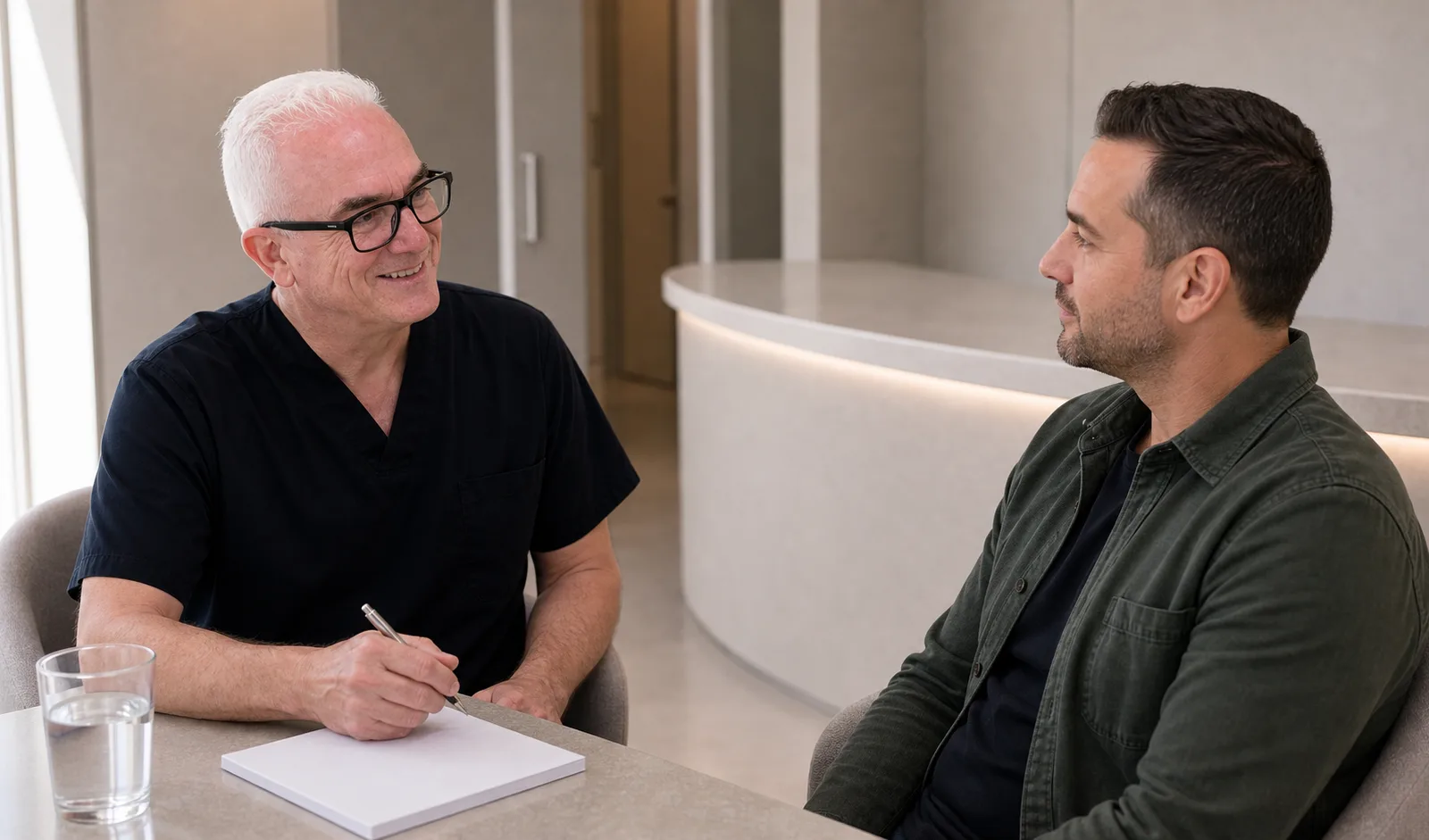
Adult man speaking face to face with a health professional during an illustrative consultation
A useful appointment should end with the next action, who owns it and whether follow-up can happen without another trip. The visitor shown is a model.

Use a plain call-ahead script: "I have a long trip to get there. My main concern is this, and I also have these two health jobs. Which appointment should I book, how long should I allow, what should I bring, and can anything be organised before I travel?" Ask whether pathology, imaging or another service is on site, whether fasting or other preparation is required, when results will be available, and whether an appropriate follow-up can occur by phone or video. Australian Government guidance says telehealth is available through several health professions when the practitioner considers it clinically appropriate. It will not replace every examination, test or urgent assessment.

Do the version you can complete today. A note, a booking, a message or a question asked plainly is better than a perfect plan that never leaves your head.

Do the unglamorous version first. Put the number in your phone, check the clinic hours, ask the cost, send the text, or make the note you can bring with you.

If a phone call feels like too much, use online booking where it is available or write the script before you call. Reducing friction is not cheating.

Choose The Right Help

Match the journey to the problem. A GP or local health service is a practical first door for general health review, symptoms, screening advice and coordination. Healthdirect lists local service finding, virtual care and state or territory travel-support pathways for rural and remote patients. In Victoria, VPTAS may subsidise eligible long-distance travel and accommodation for approved specialist medical or dental care, but it is not a general travel rebate and eligibility must be checked before relying on it. Call Triple Zero (000) for an immediate or life-threatening emergency. Sudden or severe symptoms need urgent advice, not a carefully bundled routine trip.

The right professional will not need you to perform certainty. Turning up unsure is normal, and often the whole reason for the appointment.

If the answer is simple, good. If it needs follow-up, also good. Either way, you have moved from guessing to something more useful.

Good advice should include what to monitor after the conversation. That might be symptoms, timing, recovery, mood, sleep, habits or whether the concern keeps returning.

Keep The Next Step Human

The useful result is not fitting every health task into one day. It is leaving home with a clear reason for the trip and leaving the appointment with the next step written down. If your journey is specifically for an appearance concern at Core Aesthetics in Oakleigh, call before travelling so the team can confirm practical appointment details. You will meet Corey Anderson, Registered Nurse, for a private assessment of that concern. Corey can review relevant history, explain what sits within his scope and direct general medical questions to the appropriate service. The consultation can be used for information and questions, with no pressure to proceed.

A good article should leave you with a next step, not a sales mood. Use the week for that.

Men do not need another lecture about being better. They need fewer barriers between noticing something and doing the next sensible thing.

This is how health action becomes less theatrical. It turns into one ordinary thing you actually do.

FAQ

How can rural men make health checks easier to reach?

Call the clinic before booking and ask what can be handled in one visit. It may be possible to plan a GP review, blood tests, medication review, scripts, skin check referrals, referrals or follow-up questions together so the trip does more work.

Can telehealth help rural men with health checks?

Telehealth can help with some follow-up, planning, results, medication questions and early advice when it is clinically appropriate. It does not replace every physical examination or urgent assessment, but it can reduce unnecessary travel and help decide the right next step.

What should I ask before travelling for an appointment?

Ask about fees, Medicare, appointment length, what to bring, whether tests can be arranged before or after the visit, whether more than one concern can be discussed, and whether travel or accommodation support is available through local or state services.

When should distance not delay care?

Distance should not delay care for sudden, severe or dangerous symptoms such as chest pain, severe breathlessness, stroke signs, collapse, serious injury, heavy bleeding, severe pain or feeling unsafe. In an emergency, call 000 or use the nearest urgent care pathway.

What can telehealth do before or after a rural health appointment?

When the practitioner considers it clinically appropriate, telehealth may help with planning, some follow-up, results and questions that do not require an in-person examination. Ask the service what can be handled by phone or video and what still needs a physical visit, test or urgent assessment.

What should I bring when health care is a long drive away?

Bring a short timeline of the main concern, current medicines and supplements, relevant results, referral or script details, family history you know and the questions you want answered. Confirm preparation and records with the clinic before leaving, because requirements vary by appointment.

Is travel support available for rural medical appointments?

State and territory schemes may help eligible patients with some travel or accommodation costs. Rules differ. In Victoria, VPTAS is for eligible long-distance travel to approved specialist medical or dental care and does not cover every appointment or every cost. Check the current scheme before booking around an expected subsidy.

Can Core Aesthetics provide a rural men's health check?

No. Core Aesthetics provides consultation-led appearance assessment within the clinic's scope. A GP or appropriate local health service is the first door for general health checks, symptoms, screening and medical coordination. If you are travelling to Oakleigh for an appearance concern, call the clinic first to confirm practical appointment details.

If you take one thing from this, make it practical. Name the concern, choose the right level of help, and avoid letting planning a useful rural health appointment when distance makes access harder become another private job with no deadline. The more ordinary the next step feels, the more likely it is to happen in a real Australian week with work, family, weather and interruptions.

General information only. If there is danger, severe symptoms or a concern that will not settle, use the right health service rather than trying to manage it alone. If you are unsure, ask early and keep the next step simple.

Practitioner details: Corey Anderson RN, AHPRA NMW0001047575 · TGA and AHPRA guidance is regularly reviewed in preparing this website.

Start With A Conversation

You Do Not Need To Choose A Treatment First

Tell Corey what you have noticed, what matters to you and what you want to understand. The appointment can be used for questions and planning only.

Come with questions. Leave with context.