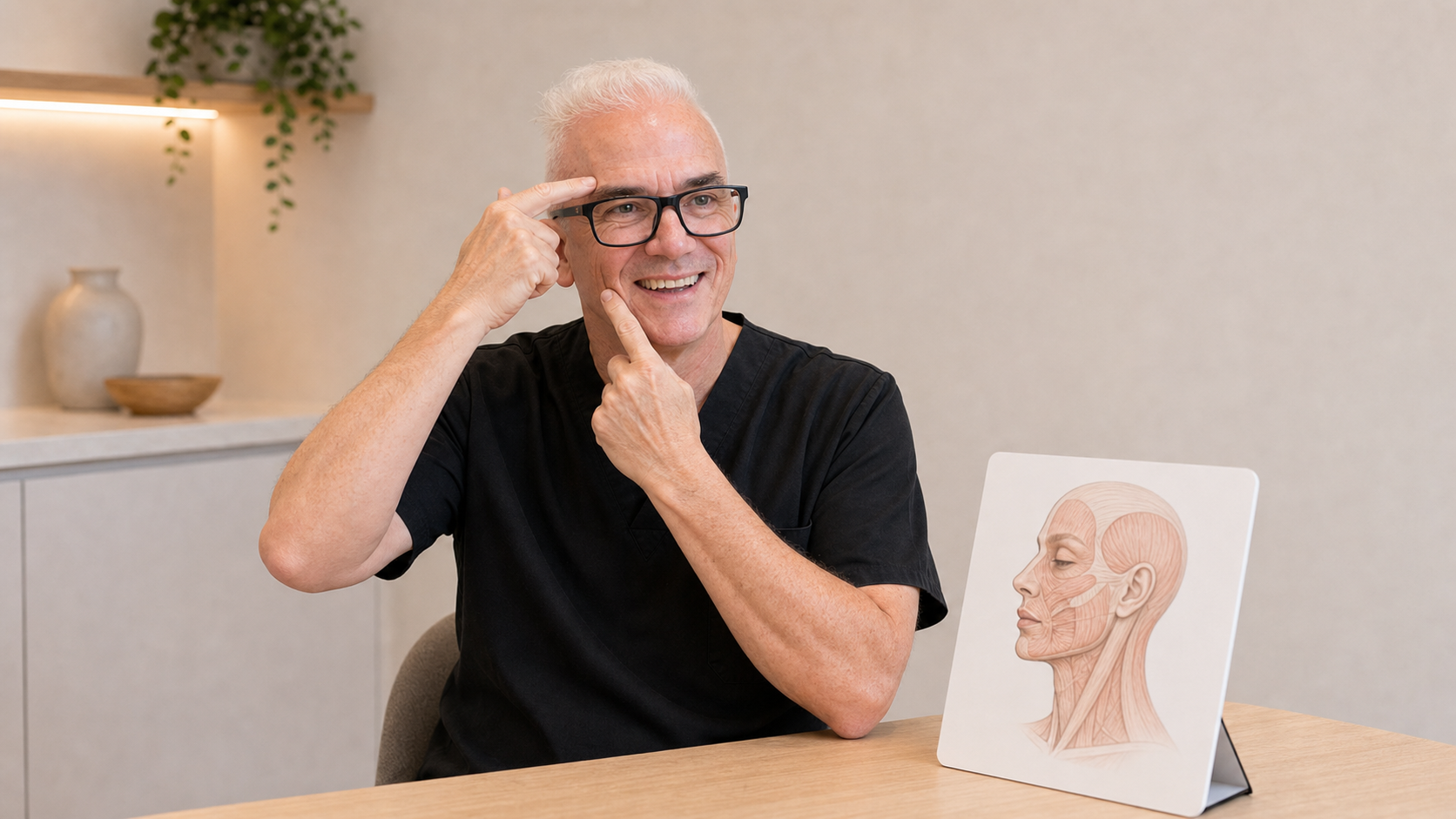
For a facial volume consultation near Burwood, locate whether the concern sits within one feature or at a transition: temple to cheek, lower eyelid to cheek, cheek to lower face, or lip to chin. Note whether the handoff appears stable, changes with light or movement, and whether recent health, weight, dental or previous care history is relevant. Corey Anderson RN assesses the whole face before explaining suitable choices. Suitable care can be planned when individual assessment and informed consent support it.
What Is A Facial Handoff?
A handoff is the visible transition between neighbouring facial areas. The concern may be the slope, shadow or change in direction where one area meets the next.
Naming the transition keeps the assessment broader than a request to add volume to one isolated point.
Which Transition Best Matches The Concern?
| Handoff | Useful observation | Nearby context |
|---|---|---|
| Temple to cheek | Side width, light and upper cheek contour | Brow, temple and cheek structure |
| Lower eyelid to cheek | Shadow or change in slope | Skin, light and midface support |
| Cheek to lower face | Front and angled contour transition | Movement, width and natural asymmetry |
| Lip to chin | Profile and comfortable closure | Dental history and lower face balance |
How Is A Transition Different From A Single Feature?
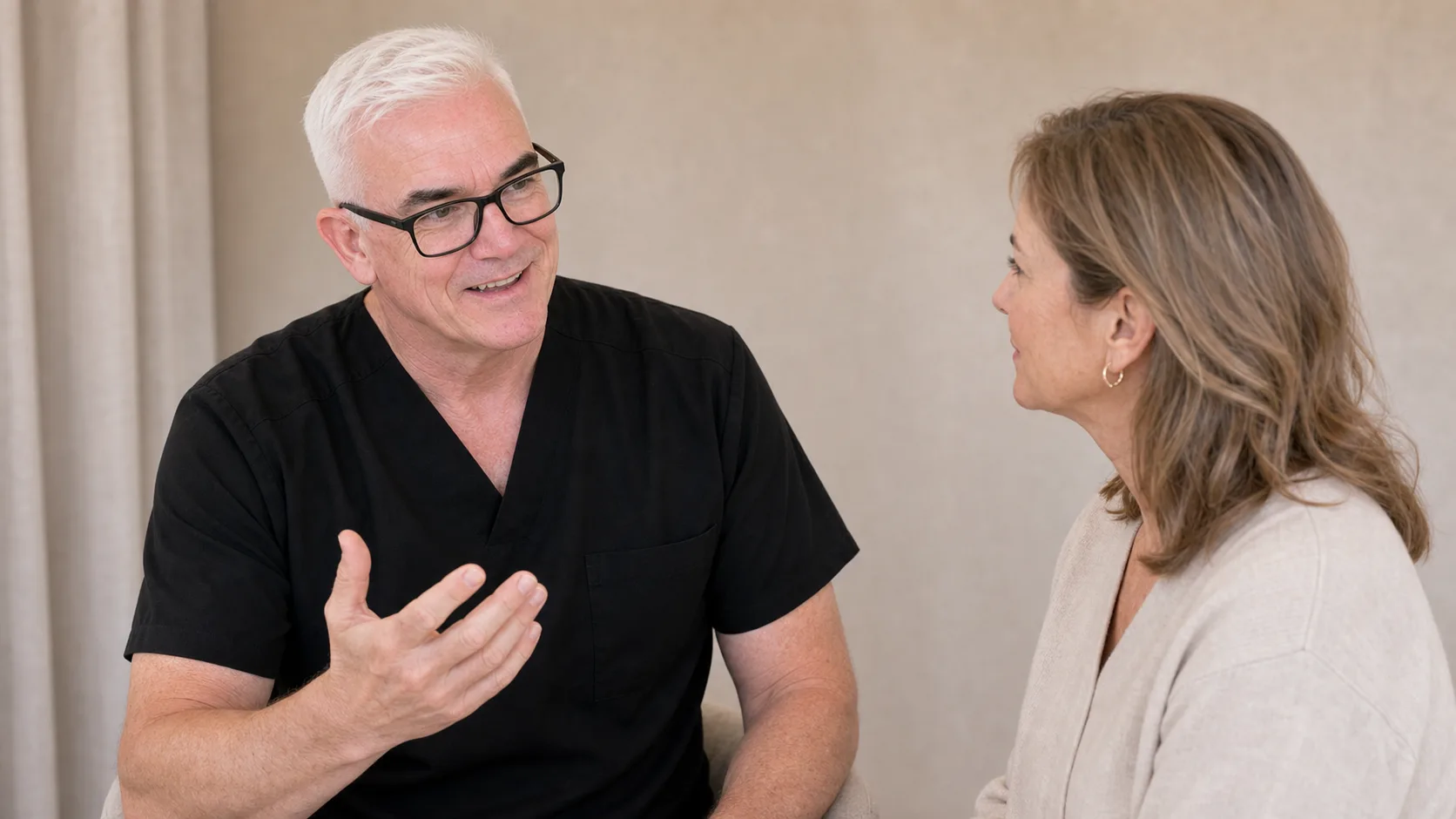
A single feature can be named on its own. A transition depends on the relationship between two areas, so changing one part may alter how the other is perceived.
Corey observes both sides of the handoff and the whole face before deciding which questions are clinically relevant.
Why Can Light Change A Handoff?
Overhead, side and front light create different shadows across curved facial surfaces. A transition may appear deeper in one setting without reflecting a structural change.
Corey uses neutral viewing and natural movement to separate a repeatable contour from a light dependent impression.
What Does Natural Movement Add?
Speaking, smiling and blinking can change the lower eyelid to cheek, cheek to lower face and lip to chin relationships. Corey assesses these transitions in motion as well as at rest.
The familiar expression you want to preserve remains part of the planning discussion.
Which History Can Change A Transition?
Health, medicines, skin, meaningful weight change, dental care, previous cosmetic care and the timing of the concern may all add context. Bring dates and broad details rather than trying to diagnose the cause yourself.
Corey separates longstanding structure from a recent or unexplained change before discussing a cosmetic plan.
How Do You Record A Handoff Without Overchecking?
| Record | Simple approach | Boundary |
|---|---|---|
| Location | Name the two areas that meet | Avoid broad labels such as tired |
| Setting | Note ordinary light and distance | Do not chase a perfect angle |
| Movement | Notice rest, speech or smile | Do not repeatedly pose |
| Timeline | Record when it became noticeable | Seek assessment for sudden change |
When Does A Facial Handoff Need Another Pathway?
A recent, painful, rapidly changing or unexplained facial concern, or one accompanied by weakness, numbness, visual symptoms, dental pain, fever or significant swelling, needs assessment by an appropriate health professional.
For a stable cosmetic concern, more information, adjusted timing, another clinical review or a different pathway can be incorporated when useful.
Where Is The Burwood Facial Support Review Held?
Core Aesthetics is at 12A Atherton Road, Oakleigh VIC 3166. Phone 0491 706 705. Corey Anderson is a Registered Nurse with Ahpra registration NMW0001047575.
Bring the handoff map, relevant health and dental history and previous care details. Use the verification guide and independent Ahpra register to confirm practitioner information.
Book A Facial Handoff Assessment
Assess both sides of the transition
Corey can map the concern within whole face structure, then explain which suitable choices deserve discussion.
When clinically appropriate and informed consent is complete, suitable care can be planned. Corey explains material risks, alternatives, uncertainty, likely limits, total cost, aftercare and follow up first.
Official guidelines for registered health practitioners who perform non-surgical cosmetic procedures support individual assessment and consent. These cosmetic procedure guidelines inform the consultation process. TGA advertising guidance explains why prescription products are not promoted here.
Is this for you?
Consider booking a consultation if
- Adults from Burwood who want a whole-face consultation before choosing any next step
- People who want facial structure, skin, natural movement and previous care considered together
- People who value seeing the same practitioner for assessment, questions and any later review
- People comfortable with education, timing or another clinically appropriate pathway as possible outcomes
This may not be for you if
- Anyone seeking a fixed appearance promise or a treatment decision without individual assessment
- Anyone with a sudden, painful, swollen, one-sided or otherwise unexplained facial change requiring medical assessment
- Anyone with active infection, unhealed skin or unresolved concerns after recent care
- Anyone unable to provide informed consent for elective cosmetic care
Suitability is confirmed at consultation. This list is general guidance, not a substitute for clinical assessment.
Frequently asked questions
What is a facial handoff?
It is the visible transition between two neighbouring areas, such as the lower eyelid and cheek or the lip and chin. The relationship may matter more than either feature alone.
Why can a handoff look different in different light?
Light direction changes shadows across curved surfaces. Corey compares neutral light, ordinary distance and natural movement before deciding whether the concern reflects a repeatable contour.
Does a shadow prove facial volume loss?
No. Shadow can reflect light, skin, structure, movement or several factors together. Corey compares the pattern across neutral light, ordinary distance and movement before discussing cause, suitability or a personal plan.
Why include the lip to chin relationship?
The lips and chin contribute to lower face profile and comfortable closure. Dental context, posture and movement can influence the relationship, so one feature is not assessed in isolation.
What if the transition changed after previous care?
Bring approximate dates, areas, response and any records. Corey compares current findings with your remembered baseline and considers whether more time or earlier clinical information would help.
What should I bring to the review?
Bring the two areas that form the handoff, when you noticed the change, relevant health and medicines, dental and weight history, previous care details and a few useful questions.
Is Core Aesthetics located in Burwood?
No. Core Aesthetics is in Oakleigh. Check the trip from your actual starting point and make sure returning to the clinic for review would be practical.