There is no responsible one-title answer to who may perform every aesthetic procedure in Australia. Apply five gates: the person holds the relevant current registration where registration is required; applicable law and professional rules authorise the specific act; the practitioner has current education, training and competence; the setting has appropriate governance, records, support and escalation; and an individual assessment finds the proposed care suitable with informed consent. Ahpra states that its cosmetic procedure guidelines do not themselves authorise a practitioner or expand a profession’s scope. Some procedures are restricted to particular professions or require an authorisation available only to certain registered practitioners.
Why Is “Who Is Allowed?” The Wrong First Question?
The question sounds as if one job title unlocks every cosmetic procedure. Australian practice does not work that way. The answer can change with the exact act, the profession, medicines or devices involved, state or territory rules, the practitioner’s competence, the setting and the person being assessed.
A safer first question is: can this named practitioner show that all five gates are open for this exact situation?
Use The Five Gate Scope Test
| Gate | Evidence to check | What it cannot prove alone |
|---|---|---|
| 1. Registration | Current public register entry, profession and conditions | Competence for every cosmetic procedure |
| 2. Legal authority | Authority for the specific act, medicine or restricted function | That the care is suitable for this person |
| 3. Competence | Relevant education, supervised learning, current skill and limits | That the clinic setting is adequate |
| 4. Clinical setting | Governance, records, infection control, support, aftercare and escalation | That consent is informed or voluntary |
| 5. Individual decision | Assessment, material risks, alternatives, consent and review plan | A fixed outcome |
What Does Ahpra’s Cosmetic Procedure Guidance Explicitly Say?
Ahpra and the National Boards state that the guidelines for registered health practitioners who perform non-surgical cosmetic procedures do not, by themselves, authorise or permit a practitioner to perform those procedures. The guidelines also do not expand any profession’s scope.
The same guidance says registered practitioners must work within the limits of their skills, training and experience. It notes that some procedures are restricted to particular professions or require an authorisation available only to certain registered practitioners.
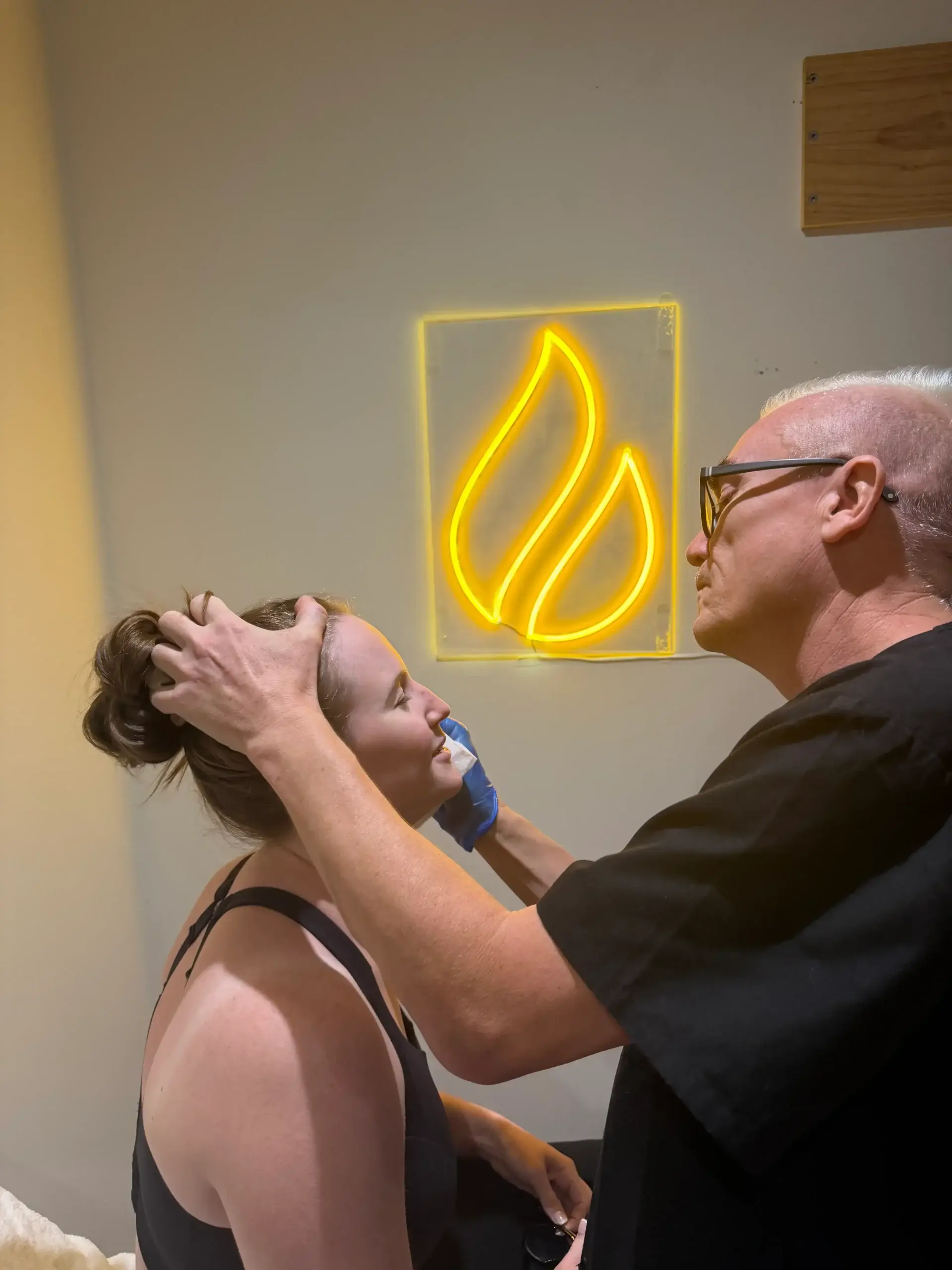
Gate One: What Does Registration Tell A Patient?
The Ahpra register can confirm a practitioner’s name, profession, registration status and publicly recorded conditions or undertakings. Match the person at the consultation with the register entry rather than relying on a social profile or an unqualified clinic title.
Registration is meaningful, but it does not show every course completed, every skill maintained or whether a particular procedure sits within that person’s current competence.
Gate Three: How Is Competence Different From Permission?
Permission sets an outer boundary. Competence asks whether this practitioner can perform the work safely now. Relevant evidence can include education, supervised practice, anatomical and clinical knowledge, recency of practice, complication recognition and willingness to seek help.
The NMBA Registered nurse standards for practice provide the framework for assessing RN practice. A nurse’s scope develops through education, authority, context and demonstrated competence; the letters RN are not a universal procedure list.
Gate Four: Why Does The Setting Matter?
A practitioner can have a valid registration and still be working in a setting that is unsuitable for the proposed care. Check identity procedures, privacy, health records, infection control, medicine and device governance where relevant, emergency planning, aftercare contacts and access to review.
Online assessment also has limits. The clinic should explain when in-person examination, another clinician or a different facility is required.
Name The Four People In The Care Chain
| Role question | Name to record | Responsibility to clarify |
|---|---|---|
| Who assesses? | The clinician taking history and deciding whether the concern fits | Assessment, alternatives and referral |
| Who authorises a restricted step? | The appropriately authorised practitioner, where required | Independent clinical responsibility for that decision |
| Who performs the care? | The person physically providing it | Competence, consent check and record |
| Who reviews a concern? | The accountable clinic contact and escalation clinician | Aftercare, records, review and referral |
One person may hold more than one role. The important point is that every role is named and understood.
Gate Five: Why Can A Lawful Service Still Be Unsuitable?
Scope is not complete until the individual decision is sound. Health history, medicines, skin status, previous care, expectations, timing, capacity to consent, material risks and access to review can all change the answer.
A procedure may sit within a practitioner’s professional scope while being inappropriate for a particular person or day. Timing or another clinically appropriate pathway can be the correct result.
Do TGA Advertising Rules Decide Practitioner Scope?
No. The TGA regulates therapeutic goods and advertising of those goods. It does not determine a health practitioner’s professional scope simply because a clinic advertises a consultation.
The TGA says health-service advertising must not directly or indirectly promote prescription medicines to the public. Advertising compliance, professional scope and individual clinical suitability are separate checks; passing one does not establish the others.
What Changes When The Practitioner Is A Registered Nurse?
Verify the nurse’s current NMBA registration, then ask how the specific work fits their education, authority, competence and clinic governance. Where another authorised practitioner has a separate role, that role should be independent and explicit rather than implied by a logo or remote availability.
At Core Aesthetics, Corey Anderson is a Registered Nurse. That title is stated transparently, and it does not replace the five-gate check for any individual pathway.
What Changes When The Practitioner Is A Doctor Or Another Profession?
A medical title or another registered profession still does not remove the need to check relevant training, competence, setting, consent and follow-up. Different professions have different legal functions and Board requirements, so compare the actual role rather than ranking titles as a shortcut.
If the clinic cannot explain who owns each decision, pause before sharing health information or making a payment.
Which Claims Should Make You Ask Another Question?
- “Anyone with this title can do it”
- “The prescriber is available somewhere online” without a named role
- “Registration proves specialist cosmetic expertise”
- “The procedure is legal, so it must be suitable”
- “The clinic has emergency equipment, so every complication is covered”
- “You signed consent, so the practitioner’s responsibility has ended”
Replace each claim with a request for the named person, applicable authority, competence evidence, setting and follow-up plan.
When Does The Question Belong Elsewhere?
New pain, weakness, vision change, rapidly changing swelling, severe headache, skin injury or another acute symptom is not a website scope exercise. Contact the treating clinic and use an appropriate health service. Call triple zero for a critical or life-threatening emergency.
General medical diagnosis, surgery, dental care, skin cancer assessment and mental health crisis care sit outside Core Aesthetics clinic scope.
How Does Core Aesthetics Apply The Five Gates?
Corey Anderson RN leads consultations at the Oakleigh clinic and is listed on the Ahpra register under registration number NMW0001047575. The consultation reviews the concern, health history, previous care, expectations, risks, consent readiness and access to review.
The outcome can be further discussion, records first, timing or another clinically appropriate pathway. Corey uses the assessment to explain useful options, relevant limits, timing and follow-up.
Verify The Named Person, Place And Contact Chain
Start with the independent Ahpra register, then compare the name, professional role and Oakleigh clinic details with the Core Aesthetics verification page.
Use the published contact channel if a message names another person, location or payment route. Verification should happen before sensitive health information is sent.
Take This Five Line Note To A Consultation
- The practitioner’s name, profession and register entry.
- The source of authority for any restricted role.
- The competence and limits relevant to the proposed care.
- The clinic’s records, support, aftercare and escalation plan.
- The reasons this pathway is or is not suitable for you.
If one line cannot be completed, ask for clarification or allow more time before deciding.
Corey’s Practical Questions About Clinical Responsibility
Verify My Title Then Keep Going
Corey Anderson RN: Verify my professional title and registration. Then keep going. Ask what supports the particular scope being discussed, because education, supervised experience, current competence and the clinical setting each answer a different part of that. The public register and the relevant National Board stay the primary sources for the registration piece. A title starts the check. Explaining present capability takes more than a title.
Separate Permission From Competence
Corey Anderson RN: Legal authority, practitioner competence and personal suitability are three separate checks. I keep them distinct because a service can be perfectly legal and still sit outside someone’s current capability, or simply be wrong for the person being assessed. Ask me to explain my role, my limits, and the point at which another clinician or service becomes the better pathway. A clear boundary is useful clinical information, not an inconvenience.
Ask Who Is Responsible At Each Step
Corey Anderson RN: Name responsibility across assessment, any required authorisation, treatment, individual instructions, review and urgent escalation. Those roles may sit with different people, which is fine, so ask who owns each decision and how information moves between them. The answer should identify practitioners and contact routes rather than leaning on a clinic brand. I’d pause if an important role stays unnamed, or exists only somewhere at the end of a phone line.
Questions About Australian Scope Of Practice
Does Ahpra registration authorise every cosmetic procedure?
No. Registration confirms a registered profession and current status. Ahpra states that its cosmetic procedure guidelines do not themselves authorise a practitioner or expand a profession’s scope. Authority, competence, setting and individual suitability still need separate checks.
What are the five gates in a scope check?
Check current registration, legal authority for the specific act, relevant and current competence, an appropriate clinical setting, and an individual assessment with informed consent. One gate cannot substitute for another.
What is the difference between legal authority and competence?
Legal authority concerns whether the practitioner may carry out a particular function. Competence concerns whether that practitioner has the current knowledge and skill to perform it safely in the actual setting. Both are required.
Why should I ask who assesses, authorises, performs and reviews?
Those roles can belong to different people. Naming them makes responsibility visible and helps you understand who owns assessment, any restricted decision, the care record, aftercare and escalation.
Does a doctor or nurse title prove cosmetic expertise?
No. A title identifies a profession but does not prove competence for every cosmetic procedure. Verify registration, then ask about the specific role, education, current skill, governance and limits.
Does the TGA decide a practitioner’s scope of practice?
No. The TGA regulates therapeutic goods and advertising of those goods. Professional scope is governed through applicable law, National Boards, registration requirements and professional standards. Individual suitability is a further clinical decision.
Can a service be lawful but unsuitable for me?
Yes. A lawful service can still be inappropriate because of health history, medicines, timing, expectations, capacity to consent, material risks or poor access to review. Timing or another clinically appropriate pathway may be appropriate.
How can I verify Corey Anderson RN?
Search the independent Ahpra register for Corey Anderson and registration number NMW0001047575, then compare the entry with the clinic verification and contact pages before sharing health information.
What should I do if the care chain is unclear?
Ask for each person’s name, role and responsibility in writing. If the clinic cannot explain who assesses, owns any restricted decision, performs the care and manages review, pause the decision.
Is this page a legal ruling about a specific procedure?
No. It is a general verification framework. The legal answer can depend on the exact act, profession, jurisdiction, authority and circumstances. Obtain advice from the relevant regulator or a qualified legal professional for a specific legal question.
Is this for you?
Consider booking a consultation if
- Adults verifying practitioner roles before a cosmetic consultation
- People comparing registration, authority and competence
- Readers checking clinic governance and review responsibility
- Anyone prepared to pause when a gate is unclear
This may not be for you if
- A legal ruling about a specific practitioner or procedure
- Diagnosis or urgent symptom assessment
- A shortcut based only on a professional title
- Confirmation that a particular cosmetic pathway is suitable
Suitability is confirmed at consultation. This list is general guidance, not a substitute for clinical assessment.
Clinical references
- Ahpra: Guidelines for registered health practitioners who perform non-surgical cosmetic procedures
- Ahpra: Guidelines for advertising higher risk non-surgical cosmetic procedures
- NMBA: Registered nurse standards for practice
- Ahpra: Register of practitioners
- TGA: Advertising health services that involve therapeutic goods