Men's Health Week 2026

You Can Ask Without Committing to Treatment

Core Aesthetics 05 mens expression assessment mark corey locked v3

Maybe you have a question about your appearance, but booking feels like the moment you lose the right to say no. It is easy to picture a consultation as a conveyor belt: sit down, be polite, then find yourself agreeing to more than you intended.

That is not what an assessment should ask of you. You can meet Corey Anderson, Registered Nurse, describe the concern in ordinary words, ask what is and is not suitable to discuss, then leave with information. Booking the conversation does not book a cosmetic treatment.

For Men's Health Week, the practical move is simple: name the issue early, choose the right help, and do not let the awkward bit run the whole decision.

Direct Answer

No. Booking a cosmetic consultation gives you time to describe the concern, hear an assessment and ask questions. It does not commit you to treatment, payment for treatment or a decision in the room. You can take notes, leave to think, seek another opinion, wait or do nothing.

Table of Contents

Why The Pressure Gets Loud

Commitment anxiety often starts before the clinic door. You may worry that asking wastes the practitioner's time unless you are ready, that saying no will feel rude, or that a recommendation will be difficult to resist once you hear it. Those thoughts can keep a small, stable question circling for months. The useful distinction is simple: asking gathers information; deciding happens only after you understand the assessment and still want to proceed.

The useful answer is not a lecture. It is a next move clear enough that a busy man can actually do it.

For a lot of men, the issue does not arrive as one big moment. It shows up as a small adjustment, then another one, until avoidance starts feeling normal.

One way to test the pattern is to ask what has changed in the last month. If the honest answer is behaviour, mood, sleep, work, relationships or confidence, it has already become practical enough to address.

What Are You Really Noticing?

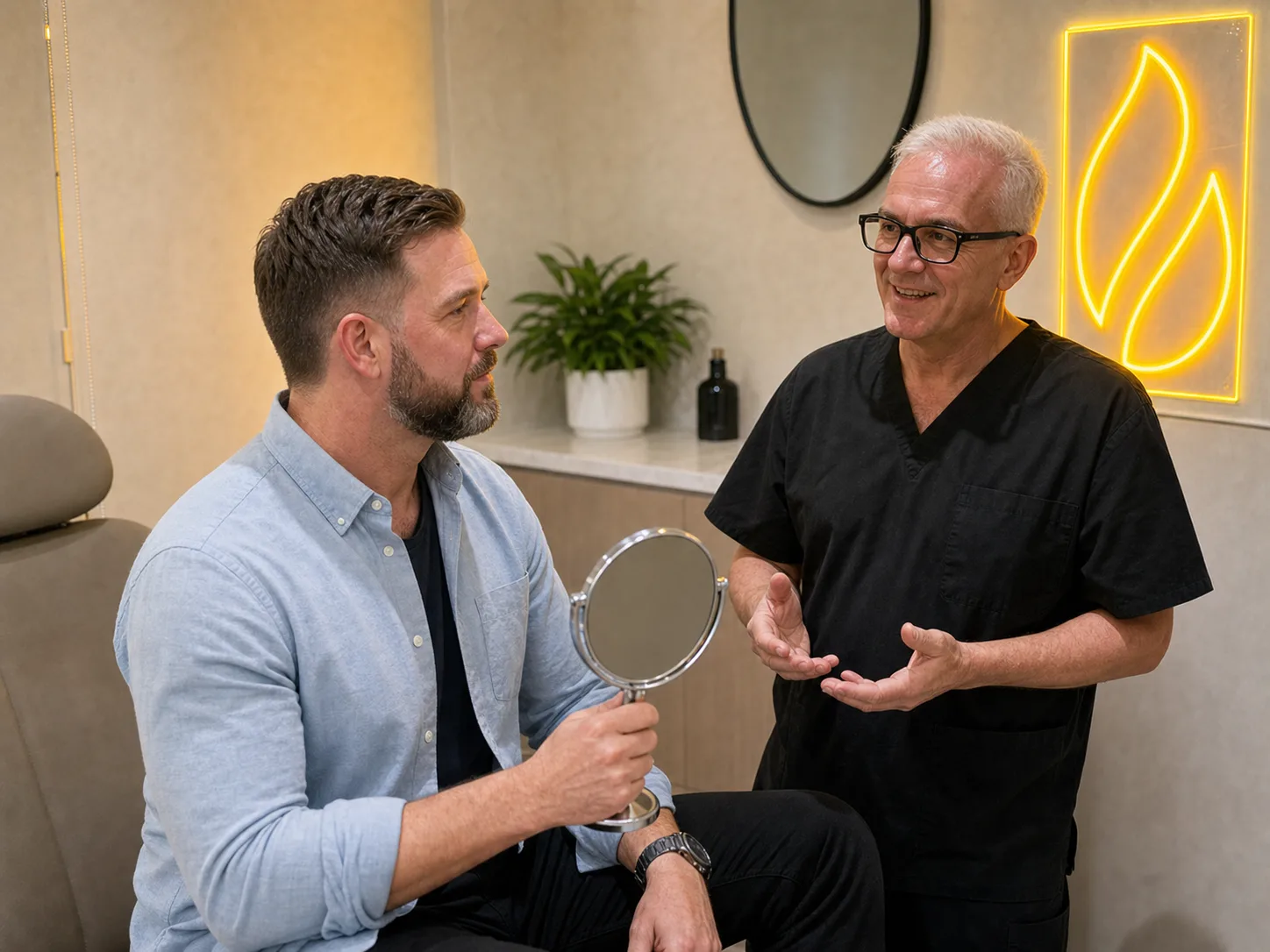
Adult man considering a stable appearance concern before an assessment
A short note about the concern, timing and boundaries can make the first conversation feel less loaded.

Give the appointment one clear job. Write down what you notice, when it became relevant and what you want help understanding. Add two boundaries, such as "I am here for information today" or "I do not want to make a decision in the room." Bring relevant health history, medicines, allergies and previous cosmetic care. Ahpra's current guidance requires a holistic assessment, enough information for an informed decision, discussion of alternatives including no procedure, and a practitioner to decline when a procedure is not appropriate.

Keep the notes boring: dates, changes, triggers, what you have tried and what worries you. Boring notes are often exactly what makes an appointment useful.

The useful detail is usually the one you nearly leave out because it feels too small. How long it has been happening, what changed around the same time, and what you have already tried can all matter.

Use ordinary words. A note that says "worse after work", "happens when I drink", "started after the move" or "I keep avoiding photos" can be more helpful than a polished explanation.

Slow The Decision Down

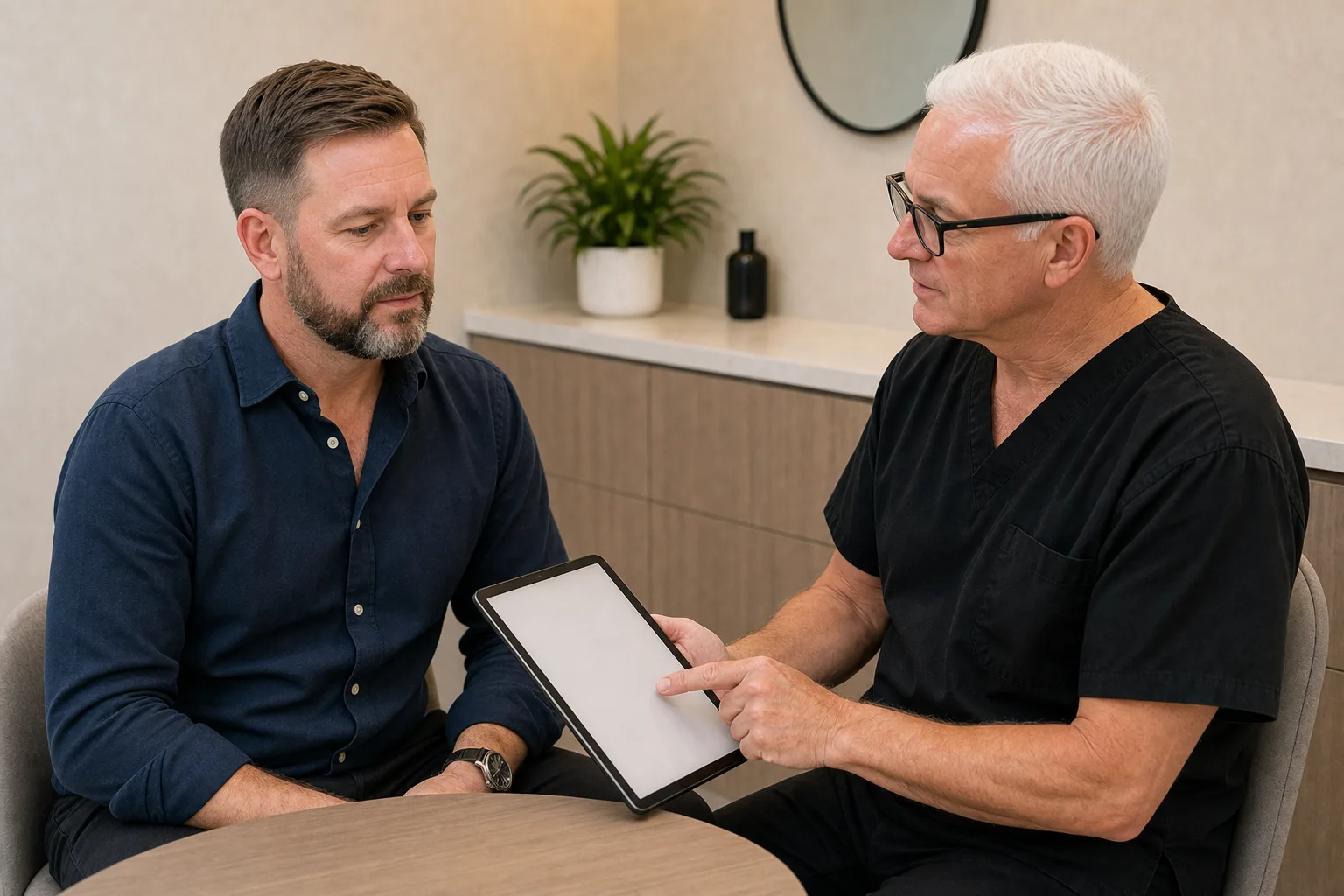
Adult man and practitioner reviewing an appearance concern during an assessment
The assessment should make the concern, limits and alternatives clearer before any separate decision.

At the Oakleigh clinic, you meet Corey and can begin with the rough version of the question. Corey reviews the concern and relevant history within his scope, asks what is motivating the timing, and explains realistic limits, material risks, alternatives, likely costs and whether another professional is the better first step. You can ask for unfamiliar terms to be put in plain language, take notes and leave without deciding. If you return for an agreed next step, practitioner continuity means you speak with the same registered nurse who heard the original concern.

The first step should feel almost too small. That is the point. Small steps survive work, family, weather and the usual later routine.

Make the action practical enough that you do not need a burst of motivation. If it needs courage, give it a date, a time and a very plain reason.

If you need accountability, borrow it from the calendar. Make the booking, set the reminder, or ask someone to check whether you did the thing you said you would do.

When To Ask For Advice

Corey Anderson RN seated with a laptop and written consultation notes
Corey remains the same practitioner for the first assessment and any agreed follow-up.

Use the conversation actively. Ask what Corey thinks the concern is, what shaped his assessment, what the alternatives are, what doing nothing would mean and what would make a later review useful. Say if you feel unsure, pressured or not ready. Consent is not a courtesy you owe the room. New pain, rapid change, bleeding, a wound that is not healing, significant distress or another possible health symptom belongs with an appropriately qualified medical service rather than a cosmetic appointment.

Good advice should make the situation clearer, not more loaded. If a conversation creates shame, urgency or confusion, slow it down and choose a better source.

A good appointment or support conversation should leave you knowing what to watch, what to do next and when to come back if things change.

The right support should also help you understand what would make the issue more urgent. Knowing when to act again is part of good care.

Keep The Choice Yours

If a stable appearance question has been sitting in the background, the next step can stay small. Book one private assessment with Corey in Oakleigh and use it to ask, listen and take notes. You are welcome to leave with the information, think in your own time and decide that waiting or doing nothing suits you. A good consultation gives the choice back to you.

Awareness weeks work best when they help men act without making them feel defective. That is the standard here.

That is the kind of awareness that respects men. It does not shout at them, shame them or sell them a new identity. It gives them a clearer way to act.

There is no prize for making the problem sound bigger than it is. There is also no prize for making it smaller until it runs the week.

FAQ

Does booking a cosmetic consultation mean I have agreed to treatment?

No. Booking reserves time for a conversation and assessment. Treatment requires a separate informed decision after you understand the recommendation, material risks, alternatives, costs and the option of no procedure.

Can I say that I only want information today?

Yes. Say it when you book or at the start of the appointment. You can ask questions, take notes and leave without deciding. A clear boundary helps the practitioner understand what you need from the visit.

What should I bring to a first appearance consultation?

Bring a plain description of what you notice, when it became relevant, your questions, relevant health history, medicines, allergies and previous cosmetic care. You do not need to arrive with a diagnosis or chosen procedure.

What happens during a consultation with Corey Anderson RN?

Corey reviews the appearance concern and relevant history within his scope, asks about your motivation and expectations, and explains realistic limits, material risks, alternatives, costs and possible next steps. You can use the appointment for information only.

Can I leave and decide later?

Yes. You can take time after the appointment, seek another opinion or decide that waiting or doing nothing is right for you. Ask Corey what, if anything, would make a later review useful.

What if I feel pressured or too polite to say no?

Use a prepared sentence such as "I am not making a decision today" or "I need time to think." You can pause the conversation, ask for written information or end the appointment. Consent must be your informed and voluntary choice.

Will I see the same practitioner if I return?

At Core Aesthetics, your consultation is with Corey Anderson, Registered Nurse. If you return for an agreed next step or follow-up, that continuity means the practitioner already knows the concern, context and questions discussed at the first visit.

When should I see a doctor instead of booking a cosmetic consultation?

Use an appropriately qualified medical service for new pain, rapid change, bleeding, a wound that is not healing, significant distress or another possible health symptom. A cosmetic appointment should not delay medical assessment.

A helpful way to finish is to choose the next action while the topic is still clear in your head. With asking about an appearance concern without committing to treatment, that might mean booking something, writing down the pattern, asking one person for help, or deciding what would make the issue more urgent. The action does not need to impress anyone. It just needs to move the concern out of the vague pile.

General information only. If there is danger, severe symptoms or a concern that will not settle, use the right health service rather than trying to manage it alone. If you are unsure, ask early and keep the next step simple.

Practitioner details: Corey Anderson RN, AHPRA NMW0001047575 · TGA and AHPRA guidance is regularly reviewed in preparing this website.

Start With A Conversation

You Do Not Need To Choose A Treatment First

Tell Corey what you have noticed, what matters to you and what you want to understand. The appointment can be used for questions and planning only.

Come with questions. Leave with context.